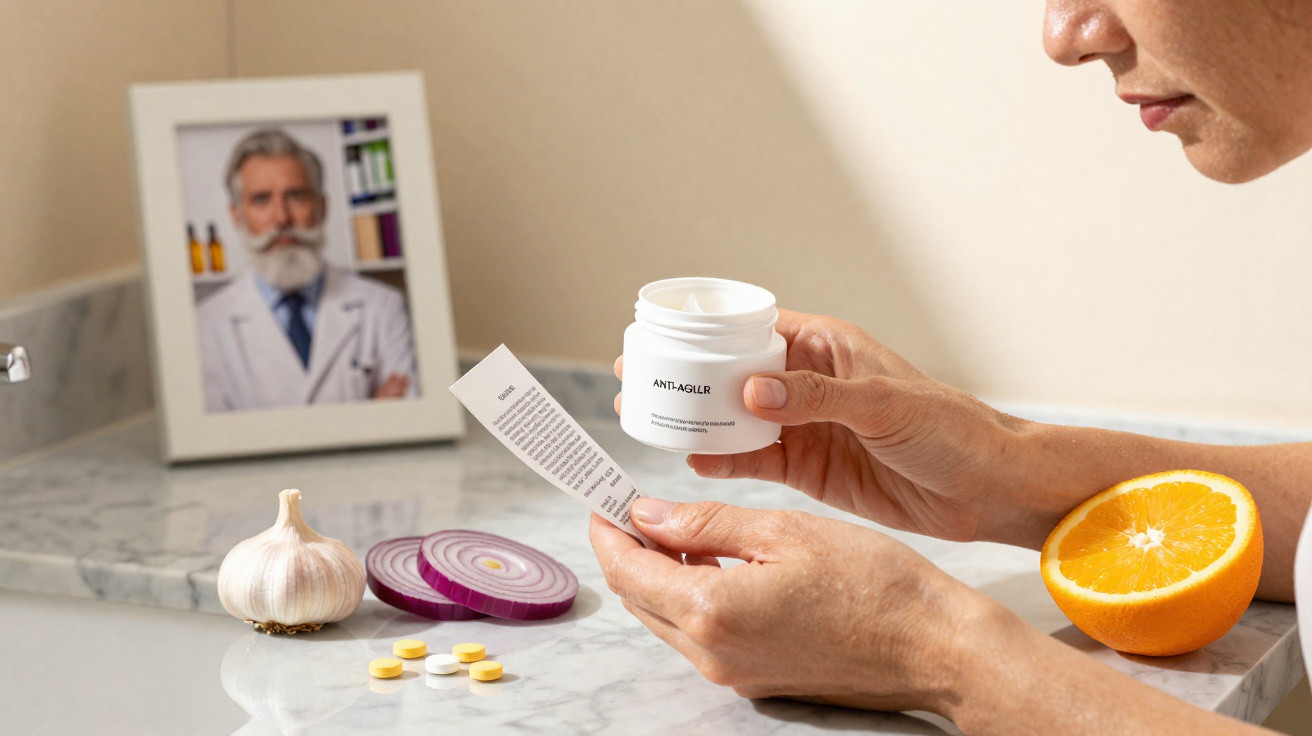
Beauty enthusiasts may have reason to pause.
French microbiologist Didier Raoult, formerly at the heart of the hydroxychloroquine controversy, is now entering the bathroom cabinet market. He is supporting a premium anti-ageing brand that says it is reconsidering the ingredients used in skincare creams.
The scientist who exchanged prescriptions for promises
Raoult did not disappear from public view after being banned from practising medicine in France for two years. Instead, he reappeared in a surprising field: skincare. With entrepreneur Nina Basri, he introduced Magnifiscience, a brand claiming to use “science” to address visible ageing and provide an alternative to injections and surgical facelifts.
Its positioning is unmistakable: advanced technology, ambitious claims and premium prices. Magnifiscience says its products work “in depth” on ten age-related issues, ranging from wrinkles to uneven skin tone. The appeal is aimed at people who dislike needles but remain concerned about fine lines and loss of firmness around the cheeks.
Magnifiscience promises deep action on ten visible signs of ageing, from wrinkles and loss of firmness to enlarged pores.
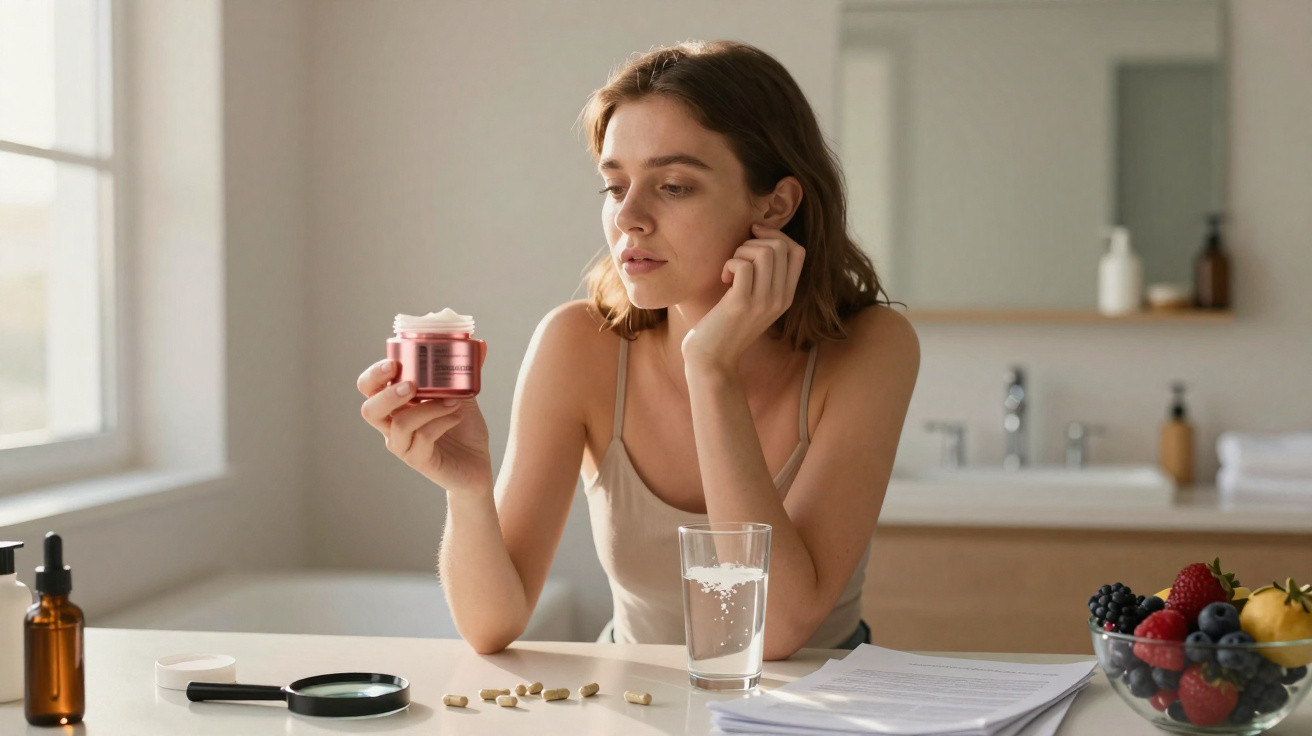
However, as the range gains exposure on social media and in French media, a further question arises: do the ingredients live up to the narrative-and, more importantly, to the price?
What is really in Raoult’s Magnifiscience anti-ageing cream?
Laurence Coiffard, a French professor of pharmacy, reviewed the ingredient list for Magnifiscience’s leading anti-wrinkle cream. Her conclusion casts doubt on the product’s image as a disruptive, science-led formulation. Rather than the familiar high-performance ingredients used by dermatological anti-ageing ranges, she found a much more standard-and at times perplexing-mix.
No retinol, peptides or hyaluronic acid
For a brand presenting itself as an anti-ageing revolution, the lack of the best-researched ingredients is notable. Coiffard says the cream has no:
- Retinol or any other vitamin A derivatives
- Peptides known for their firming or wrinkle-smoothing properties
- Hyaluronic acid, now a near-standard component of modern moisturisers
The formula is instead built around sunflower and safflower oils. These oils can nourish and soften the skin, but they are not cutting-edge ingredients. Squalane and propylene glycol provide hydration; the latter is a humectant often seen as less effective than glycerin or hyaluronic acid for sustained plumping.
Behind the scientific branding, the cream leans on familiar plant oils and basic humectants rather than established anti-age actives.
Vitamin C in a low amount-and from a debatable source
Magnifiscience also draws attention to vitamin C, widely valued in dermatology for boosting brightness and supporting collagen production. The concern is both its concentration and its source. Here, vitamin C is supplied through orange extracts rather than a pure, stabilised derivative with a stated percentage.
Coiffard notes that clinical research generally finds anti-ageing benefits at concentrations of roughly 15–20%. Fruit extracts seldom achieve such levels. She also raises a further issue: citrus extracts may cause photosensitivity and irritation, particularly if adequate sun protection is not used.
This leaves consumers with a contradiction. The product promotes radiance and anti-wrinkle results while relying on a form of vitamin C that could be too weak to produce meaningful structural improvement, but sufficiently reactive to trouble sensitive skin in daylight.
Garlic, onion and an element of controversy
Magnifiscience places considerable emphasis on botanical extracts, including some that seem unusual in an expensive face cream. As well as ginseng, orange and apple, its products contain garlic and onion bulb extracts.
Ingredients more at home in a kitchen than a night cream
Garlic and onion contain antioxidant and sulphur compounds, which can appear appealing in theory. Yet they are rarely used in mainstream facial skincare for an obvious reason: they may irritate the skin and provoke allergies. They also carry a particular association-most people link them with cooking and pungent odours, rather than luxurious textures and indulgent skincare rituals.
Silicones and synthetic polymers are also included to help the cream spread easily and give it a smoother finish. Although this is not unusual, it sits uneasily with the more “scientific and pure” image suggested by the brand.
Between potential allergens like garlic and onion, and standard silicones, the formula looks more conventional than revolutionary.
“At this price, we expected more”
Coiffard says the 60 ml pot costs approximately €75, placing it broadly alongside numerous premium pharmacy and department-store brands. At that price, customers would typically anticipate:
- High levels of proven anti-ageing active ingredients
- Transparent clinical evidence or substantial testing
- Careful consideration of tolerance and allergen risks
Her judgement is direct: given the limited number of notable active ingredients and a meaningful potential for allergens, the cream has “limited interest” next to other products available, including basic lower-priced moisturising creams.
| Aspect | Magnifiscience cream | Typical evidence-based anti-ageing cream |
|---|---|---|
| Key anti-age actives | Plant oils, fruit extracts, garlic/onion | Retinol/retinal, peptides, niacinamide, HA |
| Hydration strategy | Squalane, propylene glycol | Glycerin, hyaluronic acid, ceramides |
| Price (approx.) | €75 / 60 ml | €30–€90 / 50–60 ml |
| Allergen risk | Garlic, onion, citrus extracts | Often fragrance-free or low-allergen |
Why celebrity science brands continue to grow
Magnifiscience has not emerged in isolation. Over the past decade, the beauty sector has seen a surge in doctor-branded and expert-fronted product lines. From US dermatologists to UK plastic surgeons, medical credentials increasingly appear on jars and bottles as a quick signal of authority.
Raoult’s involvement brings an additional level of controversy, however. His public profile is divisive, and that polarising reputation extends into the retail space. Some prospective buyers may take comfort from seeing a “professor” linked to the brand. Others may regard it as opportunistic, especially where the formulas do not obviously represent leading dermatological science.
The case reflects a change in the way people assess skincare. A lab coat and a confident promise are no longer enough. Consumers who understand ingredients examine INCI lists, follow cosmetic chemists on social media, and compare claims with independent reviews and regulatory databases.
What customers can take from the Magnifiscience discussion
The debate surrounding Raoult’s creams provides a useful introduction to interpreting anti-ageing claims. Before paying £60 or more for a pot, it is worth considering several questions:
- Does the formula include at least one thoroughly studied anti-ageing molecule at a credible concentration?
- Do potentially irritating or allergenic botanical ingredients appear high in the ingredient list?
- Is the brand transparent about its testing, whether clinical studies, consumer trials or instrumental measurements?
- Is the advertising chiefly built around a personality, or around clear data?
For many skin types, several straightforward products containing identifiable active ingredients may work better than one costly “miracle” cream. A routine of a basic cleanser, a well-formulated vitamin C serum, a retinoid at night and broad-spectrum SPF each morning can often create more visible improvement than a pot containing vague plant complexes.
Beyond Raoult: the genuine foundations of effective anti-ageing
Behind the attention surrounding Magnifiscience is a more practical truth: most dermatologists still highlight a limited group of measures that improve skin over time. Daily sun protection remains the foremost anti-ageing step, because UV exposure drives wrinkles, dark spots and diminished firmness. No cream can undo years spent without adequate protection.
Combine this with a retinoid your skin can tolerate, a stable antioxidant such as vitamin C, and regular moisturisation using ceramides or hyaluronic acid, and the essential elements of an effective routine are already in place. Other ingredients, including garlic extracts and exotic fruit complexes, generally have a supporting function or serve a primarily marketing purpose.
For people in the UK or US following the Magnifiscience story, the takeaway applies just as well. Before placing faith in the latest doctor-led brand, look beyond the name and press attention. Check the ingredient list rather than the legend. The most sensible “scientific” option often involves less glamour and more dependable, well-established chemistry in the pot.




Comments
No comments yet. Be the first to comment!
Leave a Comment