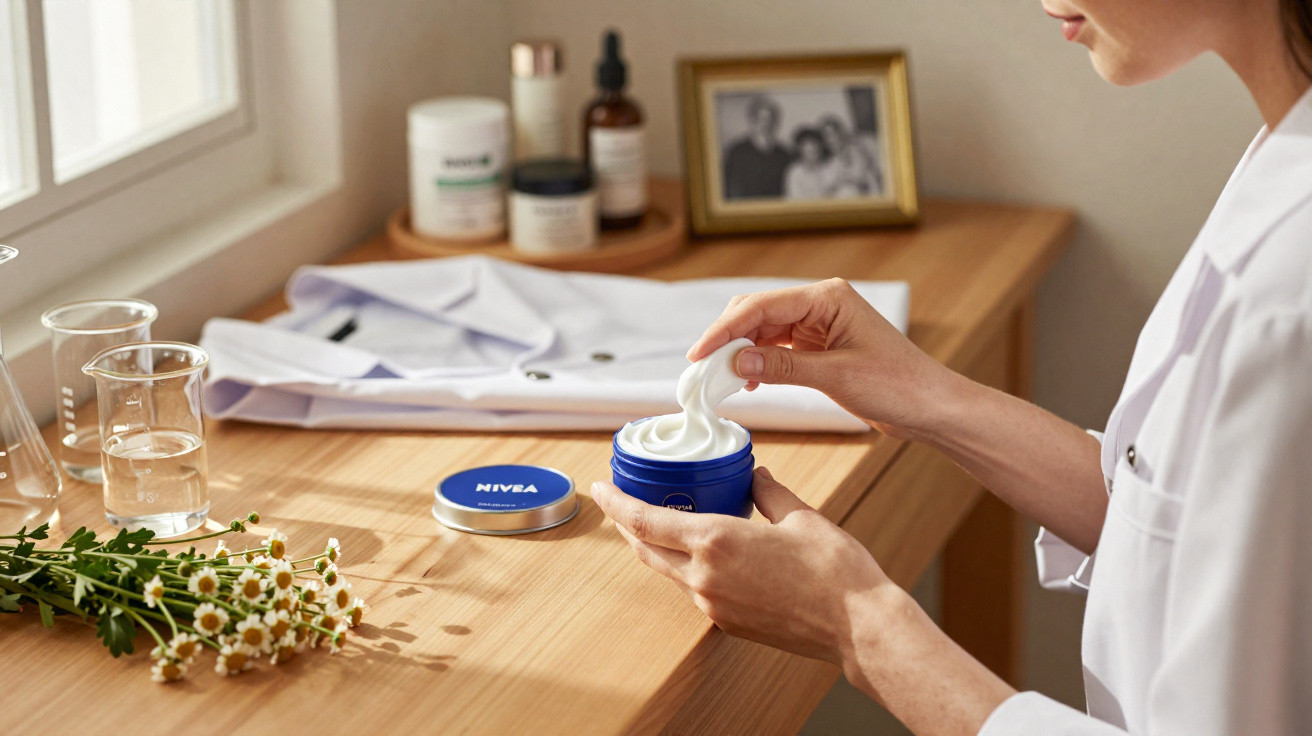
Few bathroom cabinets seem truly complete without the recognisable blue tin, but recent laboratory tests are discreetly questioning its legendary status.
For decades, Nivea cream has been handed down from grandparents to grandchildren as part of a family tradition. New expert research is now examining what this cult product actually does for the skin, what its formula contains and who ought to use it every day.
A much-loved classic under scrutiny
Nivea cream occupies an unusual position: it is at once a nostalgic item, an affordable essential and a substantial cosmetic formulation. This blend of sentiment and science makes it an intriguing subject for detailed testing.
In Spain, experts collaborating with a leading consumer organisation enlisted volunteers to use the classic Nivea cream twice daily for two weeks on chosen body areas. Their aim was straightforward: to measure changes in hydration, comfort and skin-barrier condition rather than depending solely on recollection or advertising promises.
After 15 days of use, measurements showed a clear gain in skin hydration, suppleness and surface protection among most testers.
Electronic corneometers, devices that measure skin moisture, found increased levels in treated areas compared with untreated control areas. Dermatologists participating in the protocol also reported fewer concerns about tightness and discomfort, particularly on dry shins, elbows and hands.
It may not be particularly glamorous research, but it is significant. A cream that consistently brings water into the skin’s outer layers, limits evaporation and remains stable at room temperature already fulfils a large part of what consumers genuinely require.
A formula based on traditional chemistry
For many readers, one of the more unexpected findings is that the iconic blue tin still uses a largely conventional base. Rather than fashionable botanical extracts with elaborate names, classic Nivea cream combines mineral oils, waxes and a limited selection of humectants and emulsifiers.
The current formula avoids parabens, BHT and the most controversial preservative systems, opting for simpler, well-known components.
What specialists value in the ingredients
- Mineral oils and waxes: form a semi-occlusive layer that limits moisture loss and protects the skin against friction and wind.
- Glycerin and comparable humectants: attract water into the skin’s upper layers, creating the plumper feel reported by volunteers.
- A straightforward preservative approach: established through decades of testing and less likely to deteriorate unpredictably than certain newer systems.
- A stable texture: the cream retains its consistency over a broad range of temperatures, which is useful in daily use and while travelling.
This type of formulation is unlikely to be celebrated for being botanical or innovative. However, toxicologists often prefer a concise, predictable ingredient list to complicated blends containing dozens of plant extracts with restricted safety evidence.
The understated debate over mineral oils
Mineral oils frequently divide consumers. Because they originate from petroleum refining, they can concern people seeking a “natural” product. Yet cosmetic-grade mineral oils undergo extensive purification, and regulators in Europe and North America regard them as safe for topical application within existing limits.
For dermatologists managing compromised skin barriers, mineral oil can provide a dependable, non-reactive protective layer. The situation is less appealing for those prioritising low environmental impact and biodegradable formulations. This conflict helps explain why some newer brands favour plant oils, and why consumers may be hesitant even when their skin responds positively.
The fragrance associated with a lifetime of memories
Hydration was not the only subject raised by volunteers during the Spanish tests. Many mentioned the fragrance without prompting. To them, it recalled childhood, steamy bathrooms and a parent’s hands rubbing cream into winter-dry cheeks.
The fragrance of Nivea cream behaves almost like a time machine, switching on emotional memory as strongly as tactile comfort.
This emotional connection matters for something used daily. People are more likely to continue applying a cream that evokes security and routine. However, the same scent that appeals to many users creates a technical concern: fragrance allergens.
A number of aromatic compounds used in cosmetics, including those derived from natural sources, can cause redness, itching or patches of eczema in sensitive individuals. Laboratory testing confirms that the classic Nivea scent includes potential allergens that must legally be listed among the ingredients in many countries.
Who needs to take care with the fragrance?
| Skin profile | Fragrance tolerance | Expert advice |
|---|---|---|
| Normal to dry, no history of allergy | Generally good | Apply to the body and hands as required |
| Sensitive or reactive skin | Variable | Patch-test behind the ear or on the inner arm for a few days |
| Fragrance allergy or chronic eczema | Low | Choose fragrance-free alternatives prescribed or recommended by a dermatologist |
The texture that divides opinion
Although hydration results were broadly favourable, the Spanish study also highlighted the chief criticism of Nivea cream: its texture. Volunteers soon split into two distinct groups.
Fans called the cream “comforting”, “rich” and “perfect for dry patches”. They appreciated the protective coating it left on knuckles, feet and elbows. They also said that its mild greasiness felt beneficial at night rather than inconvenient.
Others disagreed. They considered it dense, slow to absorb and difficult to distribute across larger areas. On combination or oily faces, it could leave a glossy film and, for a minority, a feeling of congestion. Several testers began using it exclusively as a body cream and avoided the T-zone altogether.
Experts agree that the texture behaves best on dry or weather-worn skin, and less well on oil-prone, acne-prone or very hot climates.
How to apply it without using too much
Chemists and dermatologists advise approaching classic Nivea cream more as an ointment than as a lightweight everyday lotion. In practice, this means applying it to specific areas at suitable times instead of using generous amounts everywhere in all circumstances.
- Smooth on a thin layer over extremely dry areas, including heels, elbows, hands and shins after showering.
- Use it as an overnight treatment on the backs of hands or feet, with cotton gloves or socks over the top.
- Do not apply thick layers to acne-prone skin or beneath heavy make-up during hot weather.
- Carry a small tin for occasions such as windburn, dryness after swimming and long-haul flights.
Used in this manner, the rich consistency becomes a useful tool rather than a drawback: something to reach for when the skin barrier feels vulnerable, rather than necessarily a universal face cream.
What Nivea cream means for contemporary skincare routines
The latest analysis of Nivea cream prompts a broader discussion about how people construct skincare routines in 2025. Many bathrooms now hold serums rich in active ingredients, exfoliating acids and retinoids. A basic occlusive cream can still have a place, although its function is different.
Dermatologists often advise combining powerful actives with simple, non-irritating moisturisers that soothe and seal the skin. From this perspective, an uncomplicated formula without harsh preservatives or strong acids can be useful, so long as its fragrance does not trouble the user.
Consumers are also dealing with a cost-of-living squeeze. Not everyone can afford an array of specialised products. A dependable moisturiser in a metal tin, able to withstand travel, storage and being shared by a family without complication, meets a genuine need. This partly explains why sales remain robust in numerous markets despite the influx of new brands.
Beyond the blue tin: useful lessons for your skin
For anyone deciding whether a product such as Nivea cream belongs in their routine, experts recommend beginning with three considerations: skin type, climate and fragrance tolerance. People with dry skin who live in cold or windy locations are often those who benefit most.
As a simple comparison, picture two winter evenings. On one, you use a light gel moisturiser that disappears within seconds. On the other, you work a richer cream into cracked knuckles and rough heels before putting on soft cotton socks. The first feels refreshing; the second restores comfort and reduces moisture loss overnight. Both can be useful, but they do not serve the same purpose.
There is a psychological aspect too. Applying a product associated with childhood may improve compliance. People are more inclined to keep using something that feels familiar and safe, which can stabilise routines and enhance long-term outcomes. Still, nostalgia must not drown out messages from the skin. Redness, itching, breakouts or burning are clear signs to stop and reconsider.
The story of Nivea cream illustrates how one very simple cosmetic product can contain layers of chemistry, memory, comfort and debate within a small blue tin. For consumers, the real value lies neither in unquestioning loyalty nor outright rejection, but in understanding their own skin and using even the most iconic products with care and moderation.














Comments
No comments yet. Be the first to comment!
Leave a Comment