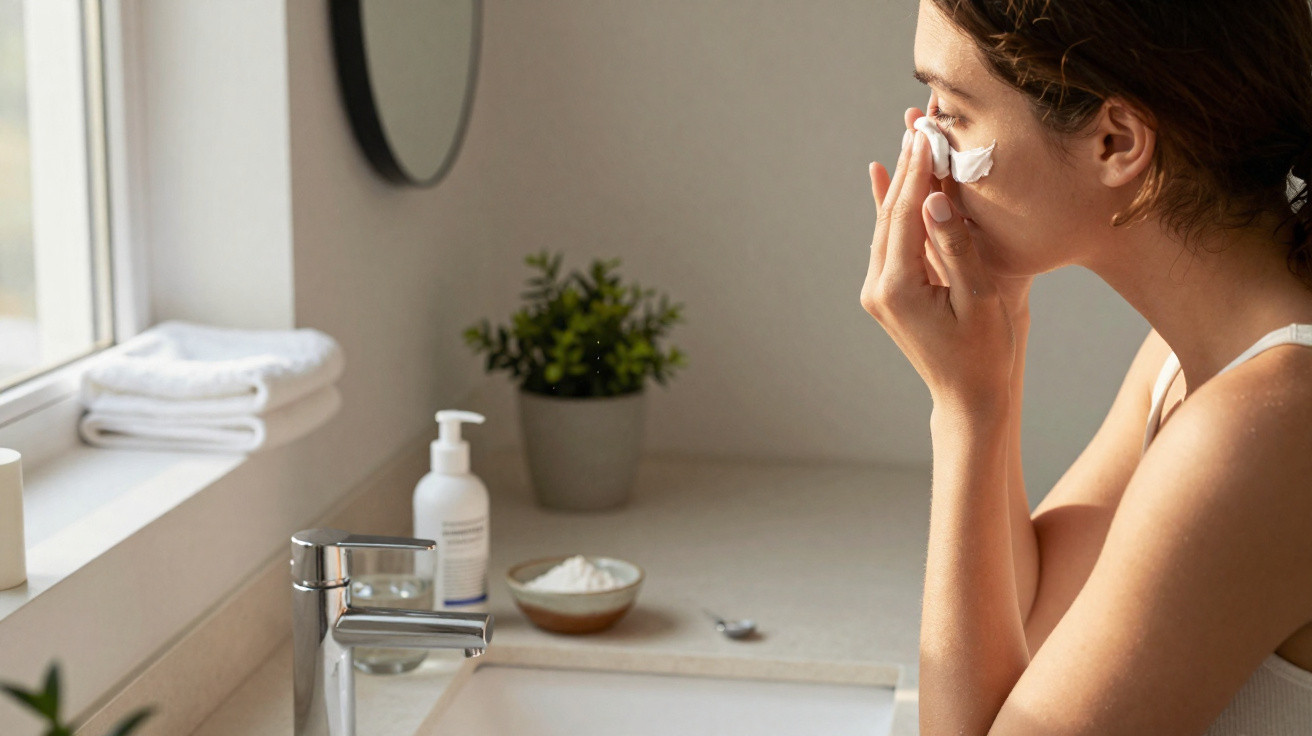
Baking soda is central to this micro-trend, marketed as an inexpensive answer to wrinkles, dark spots and under-eye shadows. The truth is more nuanced, although some aspects of the idea do have merit.
What baking soda can actually do
Also known as sodium bicarbonate, baking soda is mildly alkaline with a light abrasive quality. Applied to the skin, it may dislodge dead skin cells and remove surface oil. A brief application can leave skin feeling softer and appearing slightly more radiant. This is the result of mild exfoliation and oil reduction, rather than anything miraculous.
With a pH of about 8, it shifts skin away from its naturally acidic state. Take that too far, and the skin barrier can become impaired. Tightness, redness and flaking may then follow. The safest approach is short, infrequent use away from sensitive areas.
Use baking soda as a rare texture tune-up, not as a daily cleanser or eye treatment. Your barrier decides how far you can go.
Claims vs reality for wrinkles, spots and dark circles
Online claims tend to exaggerate the results. Here is a more realistic view based on skin function and the effects of exfoliation.
| Concern | What people claim | What evidence says | If you still try it |
|---|---|---|---|
| Wrinkles and fine lines | “Erases crow’s feet fast” | Smoothing the skin’s surface may temporarily soften the appearance of very fine lines. It cannot restore collagen or undo sun damage. | Keep it to occasional, gentle exfoliation. Use sunscreen and retinoids on separate evenings for meaningful improvement. |
| Dark spots | “Fades hyperpigmentation in days” | Exfoliation can remove dull, oxidised surface cells. However, pigment lies deeper in the skin and requires targeted active ingredients. | Apply no more than once weekly. Depend on vitamin C, azelaic acid or niacinamide for gradual results. |
| Dark circles | “Lightens under-eye shadows” | Blood vessels, thin skin and facial bone structure cause most dark circles. Alkaline exfoliants may irritate this delicate region. | Do not use it anywhere around the eye socket. Opt for caffeine gels, gentle eye retinol and good sleep habits instead. |
A cautious at-home recipe
If you would like to try the trend without overwhelming your barrier, use a straightforward buffered mixture. Do not use harsh oils or potent essential oils beneath the eyes.
Gentle paste for texture
- 1 teaspoon baking soda
- 2 teaspoons plain yogurt or oat milk (adds lactic comfort)
- 1 teaspoon honey for soothing slip
- Optional: 1–2 drops of lavender or tea tree diluted in 1 teaspoon of jojoba oil; avoid if reactive
Mix into a smooth, soft paste. Start by cleansing. Apply a thin layer only to the T-zone or areas with rough texture. Massage very gently for 20–30 seconds, then leave it in place for no more than 2–3 minutes. Rinse using lukewarm water, followed by a splash of cool water. Pat the skin dry before applying a basic moisturiser.
Do not apply on the eyelids, under-eye area, broken skin, or active eczema. Keep total use to once a week or less.
How to apply without upsetting your skin
Patch test and frequency
- Patch test: prepare a pea-size amount, place it behind the ear for 5 minutes, rinse and monitor the area for 24 hours.
- First full use: apply for 60 seconds to the T-zone alone. Rinse straight away if you experience sharp tingling or burning.
- Maximum frequency: weekly for oily or resilient skin; every two to four weeks for normal skin; avoid altogether if your skin is very dry or sensitive.
What to pair and what to avoid
- Pair with: ceramide moisturisers, petrolatum as a protective buffer at the corners of the nose, and broad-spectrum sunscreen the following morning.
- Avoid on the same night: retinoids, AHAs/BHAs, benzoyl peroxide, scrubs or dermaplaning. Combining them quickly increases the likelihood of irritation.
- Avoid after shaving or waxing. The skin is already compromised and more alkaline.
Who should skip it outright
Certain skin types react badly to alkalinity from the outset. If that applies to you, it is perfectly sensible to avoid it.
- Active dermatitis, eczema or rosacea flare-ups
- A weakened barrier caused by over-exfoliation
- A history of perioral dermatitis or frequent stinging from basic cleansers
Warning signs: stinging that lasts more than a minute, tight “squeaky” feel after rinsing, redness the next morning, or flaking within two days.
Why it sometimes “works” overnight
Baking soda can loosen surface build-up and absorb excess oil. Together, these effects improve light reflection and can make pores appear smaller. On camera, skin may therefore look brighter and smoother. That apparent glow generally disappears as the barrier returns to equilibrium. Lasting changes to wrinkles depend on collagen support and sun avoidance, not occasional scrubbing.
Budget math and smarter swaps
A box of baking soda is inexpensive and can last for months. For careful users seeking a temporary texture boost, that may be reasonable. For pigmentation and lines, however, targeted active ingredients provide better value when results over a month are considered.
- Lactic acid 5% weekly: mild brightening at a pH that is comfortable for skin
- Azelaic acid 10%: helps control pigment and soothe redness
- Niacinamide 4–5%: supports oil balance and the skin barrier
- Retinoid at night: encourages collagen signalling and gradually refines texture
- Mineral or chemical sunscreen SPF 30+: prevents the main cause of many lines and spots
Sunscreen remains the strongest anti-wrinkle product in your cabinet. Every sunny hour without it quietly adds lines.
Extra context that helps the trend make sense
Skin functions best at a slightly acidic pH. This acidity helps the enzymes that hold the barrier together and limits harmful bacteria. Alkaline products raise that pH. When used rarely, the skin can recover; when used regularly, the barrier may lose water and become prone to irritation. Baking soda is alkaline, explaining both its immediate polishing effect and its potential drawbacks.
Dark circles are commonly linked to circulation and facial anatomy, which topical products can only influence to a limited degree. Vitamin C serums to brighten the mid-face, sleeping on two pillows and gentle eye massage may offer modest help. No cupboard-based paste, however, can remove hollows or alter genetics.
For a lower-risk DIY option, consider an oatmeal paste or yogurt mask. Both are closer to the skin’s pH, provide humectants and can ease redness. Neither will break down pigment, but sensible use rarely causes problems.
One useful precaution is to keep baking soda in a dry, airtight container marked “for skin-do not ingest.” Moisture in the kitchen can make the powder clump, affecting how evenly it applies. Use a separate spoon to prevent contamination.
Timing is important too. Treat your baking-soda evening as a reset night. Keep everything else uncomplicated: cleanser, the short paste application, rinse and then a fragrance-free moisturiser. Save acids and retinoids for another evening. This simple adjustment preserves the brief benefit without triggering a cycle of irritation.















Comments
No comments yet. Be the first to comment!
Leave a Comment