In brief
- ❄️ Cold spells and central heating increase transepidermal water loss (TEWL), compromise the skin barrier and provoke redness; counter them with a pH-balanced cleanser, layered humectants and occlusives, and consistent fragrance-free care.
- ☔ UK humidity is not a moisturiser: extended dampness can lead to maceration and congestion. Opt for breathable clothing, cleanse promptly after becoming soaked or sweaty, and use gentle PHA/BHA to limit build-up.
- 🌥️ Clouds do not stop UVA, while wind can disguise the risk of burning. Make a wearable broad-spectrum SPF 30–50 a priority, reapply it regularly, and use balms to guard against windburn and salt-spray stinging.
- 🗓️ Through the seasons: winter calls for humectant plus occlusive layers; spring brings wind and the first sunburns; summer increases UV exposure and oil; autumn requires less exfoliation and more ceramides.
- 🧴 The key is forecast-aware fundamentals: mild cleansing, targeted moisturising, everyday UVA protection, better textile choices and an easy-to-carry kit for reapplication while out and about.
The UK forecast is forever changing-rain at lunchtime, sunshine by tea, then a sharp breeze after nightfall-and skin registers every variation. Whether it is salt-heavy winds on the Cornish coast or the chilly dampness of a Leeds commute, these microclimates can alter your complexion in subtle, measurable ways. Repeated small changes in temperature, humidity and UV produce cumulative stress on the skin barrier. Having tested routines from Hebridean winters to July heat spikes, I have watched barrier health, oil balance and inflammation rise and fall with British weather. Here are the evidence, common mistakes and more considered habits for protecting your face from the forecast.
Cold Snaps, Central Heating, and the Barrier Problem
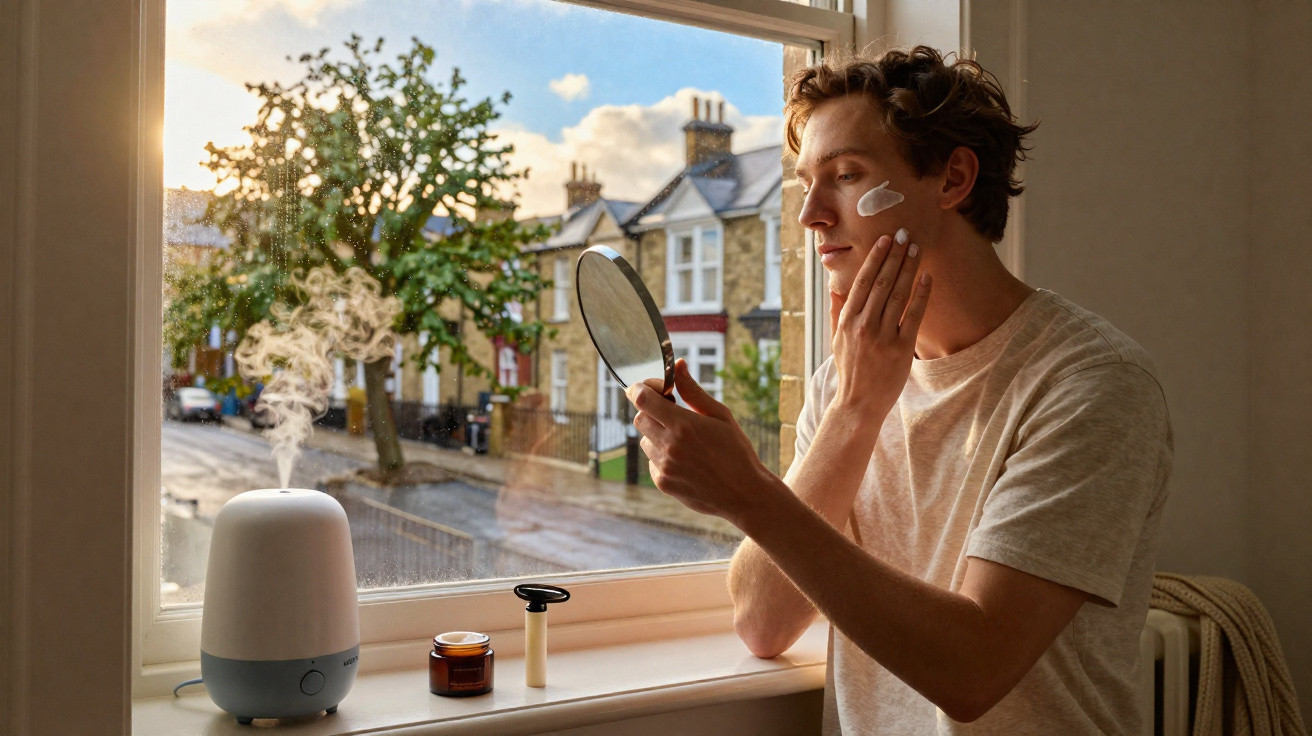
As cold air contains less moisture, it speeds up transepidermal water loss (TEWL) and can make the stratum corneum fragile. Indoors, conditions swing in the other direction: radiators dry out the air, worsening dehydration. This back-and-forth depletes the skin’s lipid matrix-ceramides, cholesterol and fatty acids-so fine lines appear more pronounced and redness becomes more noticeable. In Manchester last January, I spoke with a nurse whose cheeks flared during every night shift; changing from a foaming wash to a non-soap, pH-balanced gel, then layering a humectant such as glycerin beneath a light occlusive such as squalane or petrolatum, eased the stinging within one week. Barrier repair is less about “thicker cream” and more about the right ratios and layers.
Cold weather also reduces sebum flow, meaning skin that feels dry and tight may still become blocked, particularly when thick scarves and masks cause friction. Flakes alongside bumps suggest “dehydrated yet congested.” A restrained approach is useful: avoid hot showers, cleanse gently and bring active ingredients back slowly. A 5% niacinamide serum may help regulate oil and calm redness; if tolerated, alternate retinoids at night and finish with a ceramide-rich moisturiser. Readers prone to eczema should patch test and make fragrance-free products their priority. Consistency beats intensity in cold weather.
- Benefits of cooler air: reduced oil production and less congestion caused by sweat.
- Drawbacks: greater TEWL, eczema/rosacea flare-ups and tiny cracks caused by wind-chill.
- Do: Run a humidifier at 40–50% RH, layer humectant + occlusive products and wear SPF every day.
- Don’t: Exfoliate excessively or turn radiators up high without increasing humidity indoors.
Rain, Humidity, and Why ‘Moist’ Air Isn’t Always Better
The UK’s damp conditions can make it seem as though dehydration is no concern. That is not quite true. Although high ambient humidity may soften the skin’s outermost layer, sustained wetness can cause maceration-the wrinkled, pruney effect that weakens barrier proteins and encourages irritation. Beneath hoods and waterproof jackets, sweat creates an occluded environment in which yeasts and bacteria can flourish. I learned this on Bristol’s cycle lanes: one commuter’s jawline “spots” disappeared after he replaced a rich balm with a lightweight non-comedogenic gel and cleansed within 20 minutes of his ride. Humidity isn’t a moisturiser; it’s a variable-your products must do the precision work.
If you remain perpetually dewy outside but feel tight at your desk, indoor heating is again the likely explanation. The balance depends on fabrics and timing: breathable layers lessen friction, rinsing off after exercise helps, and PHA or low-strength BHA a few evenings each week can loosen sweat-and-sebum build-up without damaging the barrier. For body care, apply a silicone-based glide product to areas prone to chafing and wash promptly after rain-soaked runs. Zinc pyrithione or ketoconazole shampoos may be useful for the scalp or beard when humidity causes flaking. Think airflow first, actives second.
- Benefits of humid weather: the outer skin may be more flexible, with temporarily softer-looking fine lines.
- Drawbacks: maceration, folliculitis beneath waterproof clothing and friction acne (“maskne”).
- Quick fix: Carry a microfibre towel, then cleanse-or at minimum rinse-after being drenched.
Sun, Wind, and Seasonal Shifts Across the UK
British cloud cover does not eliminate UVA; it scatters it. UVA penetrates glass and drives quiet collagen damage year-round, whereas UVB rises sharply in late spring and summer, particularly across the South East and at higher elevations in the Highlands. During heatwaves, the UV Index can become high, but coastal winds can leave you feeling “cool”, leading to missed reapplications and sunburn. Combine that with salt spray, and the edges of the skin barrier may sting. The practical answer is a broad-spectrum SPF 30–50 with a high UVA rating, applied using the two-finger rule for the face and reapplied every two hours while outdoors; pause or adjust retinoids around beach days.
Sunscreens are not all equal in practice. An SPF 30 that is reapplied diligently offers better protection than an SPF 50 that is ignored. Select textures you will genuinely wear: gels for oily T-zones and creams for dry cheeks exposed to wind. My Orkney assignment bag always contains lip SPF and a mineral stick for the nose and ears, as it stays put in strong gusts. With windburn, prevention matters: apply balms as a windbreak before a run, wash away salt afterwards and use panthenol or cholesterol-ceramide creams overnight to replenish the skin.
| Season | Typical UK Conditions | Likely Skin Impact | Action |
|---|---|---|---|
| Winter | Cold, dry air; indoor heating | Barrier dryness, redness | Humectant + occlusive; gentle cleanse; SPF daily |
| Spring | Changeable sun, wind | First UV burns, wind-chill | Broad-spectrum SPF; lip balm SPF; windproof layers |
| Summer | Higher UV; humidity spikes | Oiliness, congestion, sunburn | Light gel SPF; BHA/PHA; frequent reapplication |
| Autumn | Rain, gusts, cooler nights | Patchy dehydration | Reintroduce ceramides; reduce exfoliation |
- Why a Higher SPF Isn’t Always Better: When a heavy SPF 50 discourages reapplication, its real-world protection falls. Pick an elegant formula that you will apply generously and frequently.
Weather is an ever-present British topic, and your skin joins that conversation whether you want it to or not. The answer is not a bathroom crowded with products, but forecast-aware fundamentals: gentle cleansing, purposeful moisturising, daily UVA protection and fabrics that handle both sweat and wind. Small, consistent habits beat heroic rescues. Stash a compact kit-SPF, lip balm and a microfibre cloth-in your bag, then adjust textures as the Met Office app changes. Which weather quirk-sea wind, city drizzle or heating-dry offices-has the greatest effect on your skin, and what single adjustment will you try this week to outsmart it?














Comments
No comments yet. Be the first to comment!
Leave a Comment