Whether short, mid-length or cleverly layered, 2026’s most flattering haircuts can freshen your features without pursuing youth at any price.
In salons from London to Los Angeles, women over 50 are discreetly revising the rules around “age‑appropriate” hair. With updated professional methods and gentler silhouettes leading the way, this year’s styles are less about concealing age and more about defining bone structure, illuminating the complexion and creating convincing movement.
The 2026 shift: from anti-ageing to pro-face framing
Hair trends for 2026 are leaving behind weighty styles that demand constant upkeep. Celebrity stylists are instead choosing cuts that complement natural texture rather than battling it. The result is hair that appears fresher, lighter and more fluid, with a modern finish rather than one that looks overly “done”.
For women over 50, the change comes at a particularly useful time. With age, hair can become finer, drier or less full, while colour may start to appear flat. The right haircut can counterbalance each of these concerns.
Rather than chasing youth, the strongest looks of 2026 frame the face, boost movement and gently lift the features.
Below are the principal haircut and colour ideas specialists suggest when you want your hair to subtly take a few years off your overall appearance.
The midi flick: mid-length hair with a soft kick
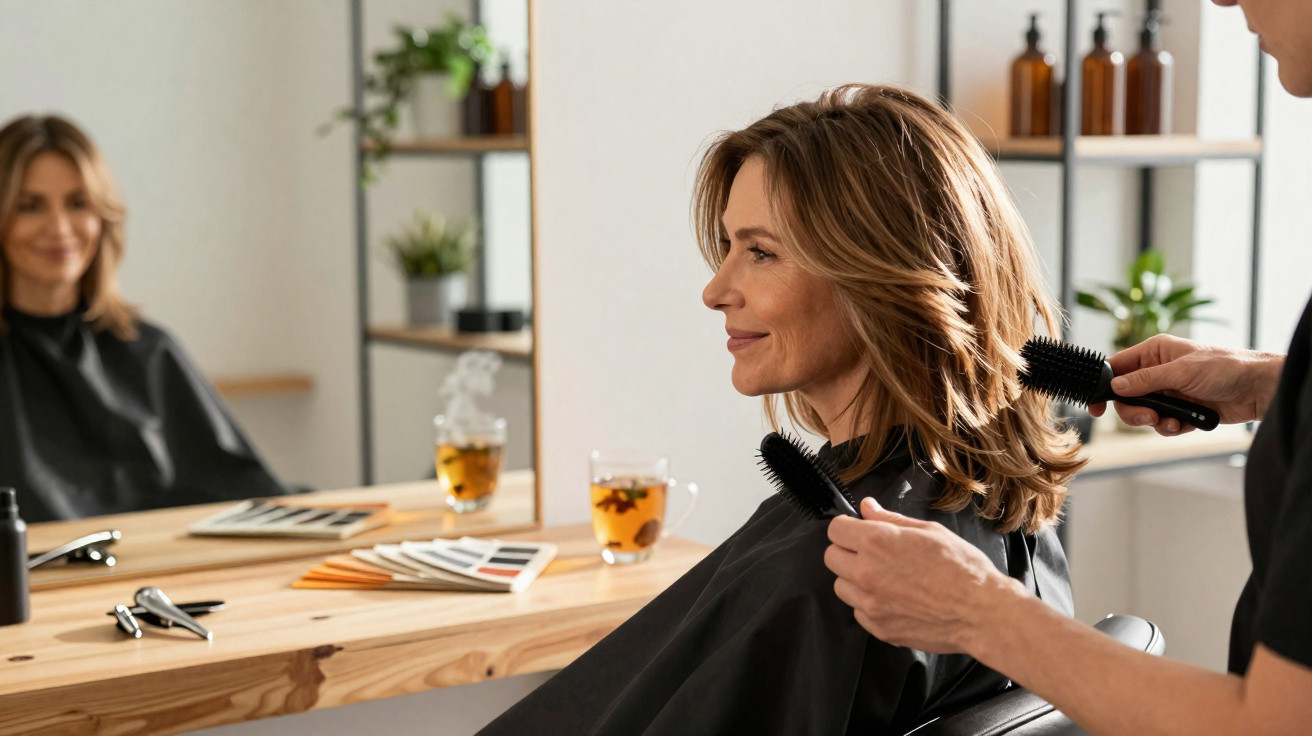
Among 2026’s defining shapes is the “midi flick”. Picture hair that skims the collarbone, falling somewhere between a lob and a traditional mid-length style. Gentle layering is paired with ends that turn outwards or bend away from the face.
Why the midi flick flatters over-50 faces
- Collarbone length helps to visually lengthen the neck and refine the jawline.
- Soft layers build volume through the middle lengths instead of concentrating it only at the ends.
- Loose waves soften stronger contours and blur fine lines around the chin and mouth.
Stylists advise requesting a textured, layered cut that falls at the clavicle, then finishing it with loose, “undone” waves. Salt spray or texturising spray will retain an airy effect instead of making the hair look rigid.
The midi flick is ideal if you feel a bob is too severe but long hair is feeling heavy or lifeless.
With straight hair, use a round brush and briefly flick the tips using a hairdryer to produce this restrained, face-opening movement. For naturally wavy or curly hair, use a diffuser to enhance the existing pattern for a relaxed, seemingly effortless finish.
The anti-fringe: long, face-hugging layers instead of a blunt bang
Fringe trends are becoming softer in 2026. The “anti-fringe” is not a severe, blunt-cut bang; instead, it consists of longer layered sections that graze the cheekbones and jawline while curving around the face.
What makes the anti-fringe so wearable
Rather than creating a flat line over the forehead, these extended pieces are shaped to follow the face’s natural oval. They can be centre-parted, swept sideways, placed behind the ears or blow-dried for added volume.
For women over 50, the style offers several benefits:
- Visually refines the jawline through vertical lines running down either side of the face.
- Softens forehead lines without the drawback of a heavy, short fringe requiring frequent trims.
- Suits both bobs and longer cuts, delivering movement while retaining length.
Think of the anti-fringe as a built-in soft-focus filter that frames, rather than covers, the face.
It is also highly adaptable. When you prefer a clean, open appearance, simply sweep the longer sections back. For a more glamorous evening look, blow-dry them into a curtain effect and lift the roots for a subtle “facelift” impression.
The “brow bone” contouring fringe: spotlight on the eyes
A further 2026 favourite is the “brow bone” contouring fringe. The fringe is cut to graze eyebrow height and skim the upper cheekbones, reflecting the face’s own natural structure.
How it creates a younger, sharper gaze
Positioned close to the brow bone, this fringe naturally draws the eye towards the eyes. Its length softens crow’s feet while leaving plenty of skin visible, creating a stylish effect rather than a weighty one.
Stylists commonly create the cut on a very slight diagonal, allowing it to grow out neatly. This reduces salon appointments and removes the need to maintain an exact edge.
A brow-bone fringe acts almost like makeup, contouring the upper face and adding intensity to the eyes without harsh lines.
This choice is particularly suited to straight or gently wavy hair. Those with very curly hair can still use a lighter, more diffused variation to frame the eyes without obscuring their natural texture.
| Fringe type | Best for | Key benefit after 50 |
|---|---|---|
| Anti-fringe (long layers) | Round or square faces | Elongates and slims the jawline |
| Brow bone contouring fringe | Eyes that need definition | Draws focus to the eyes, softens lines |
Invisible balayage: natural colour with no harsh regrowth
While a cut can achieve a great deal, colour also strongly influences how fresh the face appears. For women over 50, 2026’s standout colouring method is ultra-subtle, “invisible” balayage created to look good as it grows out.
How the new balayage works
The colourist applies extremely fine highlights and lowlights across the mid-lengths and ends, steering clear of pronounced root streaks. The purpose is understated depth and soft dimension, rather than visibly striped colour.
Warm tones, including honey, beige gold, soft caramel and coppery chestnut, are frequently chosen to brighten the complexion. They reflect light in a flattering manner, especially on mature skin that may have lost some of its inherent radiance.
Done well, invisible balayage gives the impression of naturally sunlit hair and almost no visible demarcation as it grows.
For women with some grey hair, this technique can blend it in instead of trying to conceal it. Carefully positioned highlights around the face can make silver strands seem intentional rather than uneven.
Matching the trend to your face shape and lifestyle
A fashionable cut will only succeed if it suits your bone structure, hair type and everyday routine. Stylists recommend arriving at the salon with an honest understanding of your normal styling habits.
- If you seldom use heat styling, favour air-drying-friendly options, such as a layered midi flick or an anti-fringe that works with your natural texture.
- If blow-drying is something you enjoy, pairing a brow bone fringe with invisible balayage can create a polished yet contemporary look.
- If your hair is very fine, request internal layers and light texturising rather than intensive thinning, as this can leave the ends looking wispy.
Being realistic about how often you will truly use styling tools or products enables your hairdresser to create a style that is manageable rather than frustrating.
Key terms that often confuse clients
Salon terminology can feel imprecise, particularly once trends move from social media into everyday life. Knowing a few definitions may prove helpful at your appointment.
- Texturising: making small, subtle variations in the cut so hair does not fall as one solid mass. It encourages movement without producing prominent layers.
- Face-framing layers: shorter front sections shaped to follow the cheekbones and jawline, potentially giving the face a visual lift.
- Balayage: applying colour freehand to the hair to achieve a softer, less striped finish than conventional foils.
Taking reference photographs and using these terms will give your stylist a more precise starting point, reducing the likelihood of misunderstanding.
Real-life scenarios: choosing what actually works on you
Suppose you have straight, greying hair that falls below the shoulders but feels limp. Switching to a collarbone-length midi flick, alongside warm invisible balayage around the front, can immediately bring more energy to your look. The reduced length makes the ends seem fuller, and restrained highlights brighten the skin tone.
If your hair is thick and wavy and you regularly wear glasses, an anti-fringe with sculpted face layers may be more practical than a short, blunt fringe. You preserve the hair’s movement and character, while longer pieces prevent your glasses and fringe from continually competing for room on the face.
Benefits and small risks to weigh up
Every adjustment involves compromises. A brow bone fringe can beautifully emphasise the eye area, but may require more frequent styling if your hair kinks in humid conditions. Invisible balayage brightens the complexion with minimal regrowth lines; however, even small quantities of bleach can make already delicate hair slightly drier.
Weighing these points against what matters most to you-lower maintenance, healthier-feeling hair, a more defined jawline or brighter colour-will help you select a 2026 trend that genuinely fits the way you live, rather than merely looking effective in one Instagram photo.












Comments
No comments yet. Be the first to comment!
Leave a Comment