Must it really be done?
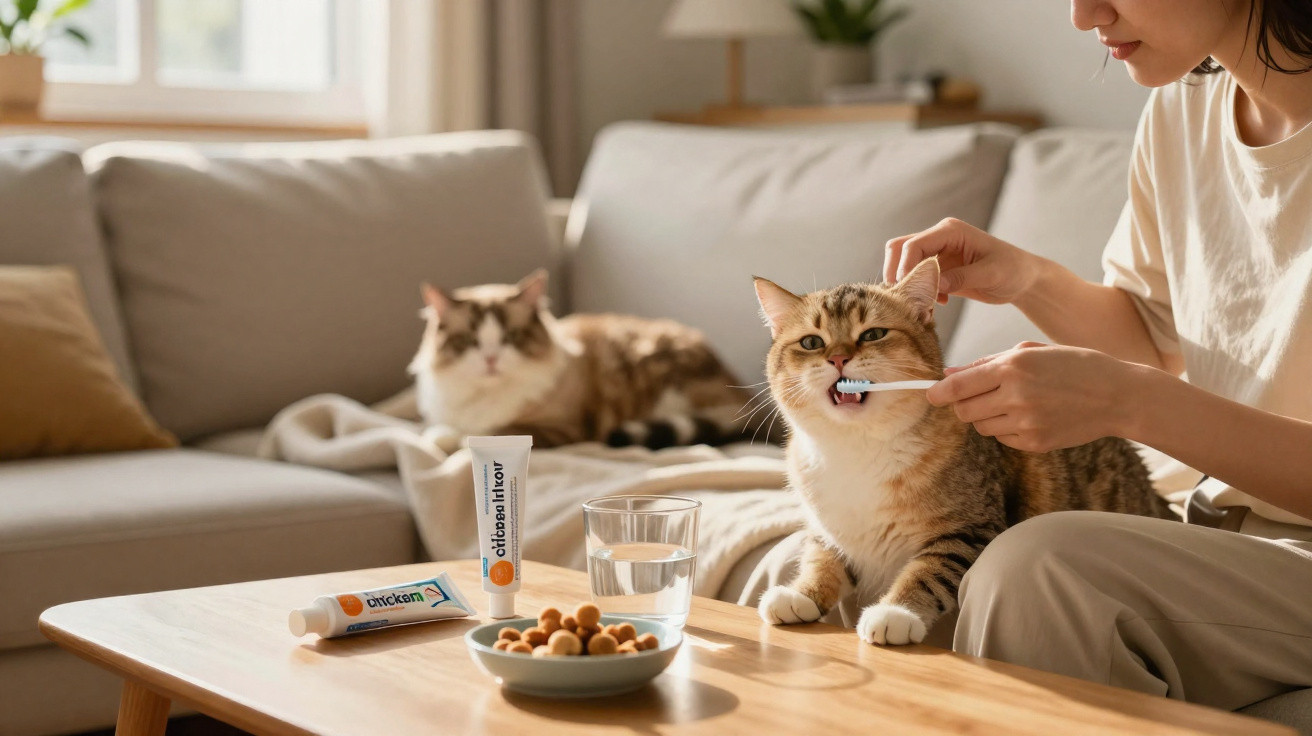
Many cat owners put off brushing their cat’s teeth for months because they fear a fuss, scratches and bad moods. Yet, with a little preparation, oral hygiene can be handled surprisingly calmly. Having the right aids at home and taking a gradual approach protects not only the sofa and your forearms, but above all your pet’s health.
Brushing a cat’s teeth without drama: start with the right tools
Turning up with an old human toothbrush and mint toothpaste means the battle is effectively lost before it begins. Cats’ mouths are sensitive, and they make it clear when something hurts or tastes strange. The aim is therefore maximum comfort with minimum threat.
A suitable toothbrush for small cat mouths
Rather than firm bristles, choose a gentle option that is easy to control. Soft silicone finger brushes are especially practical. Worn over the index finger like a thimble, they feel more like careful rubbing than an unfamiliar object to the cat.
- Soft material causes very little irritation to the gums.
- You can feel precisely how much pressure you are applying.
- Movements can remain brief, precise and easy to control.
For particularly small or anxious cats, gauze swabs moistened with toothpaste and wrapped around a finger can be enough at first. The essential thing is that contact with the mouth is remembered as at least reasonably pleasant.
The less of a “tool-like feeling” reaches the cat’s mouth, the more likely it is to accept the routine.
Cat toothpaste in a favourite flavour instead of a mint shock
Ordinary toothpaste from the bathroom cabinet is off limits: it may contain fluoride and foaming agents that cats must not swallow. Specialist pet toothpastes instead use enzymes to break down deposits and curb bacteria - and they taste of meat.
Typical flavours include:
- Chicken
- Liver
- Salmon
The trick is to introduce the paste without a brush at all. Put a small dab on your finger and allow the cat to lick it off. This creates a positive association with the taste before any brushing starts. Only once this works well should the brush be introduced carefully.
When direct contact is difficult: passive support through food
Some cats barely tolerate being touched around the mouth. In these cases, it is worth using their natural chewing instinct. Certain food products are designed to act like a miniature brush while the cat chews.
Special dry food and dental snacks for cats’ teeth
These products differ substantially from ordinary treats. They are larger, firmer and have a special internal structure. Instead of crumbling with the first bite, they move a little more slowly across the tooth surface, rubbing against deposits as they do so.
Key selection criteria for dental-care kibble and snacks include:
- Size: too large to swallow whole, so the cat has to chew.
- Texture: a fibrous or porous structure that provides mechanical cleaning.
- Calorie content: as light as possible, so weight stays within a healthy range.
They cannot replace brushing completely, but they can lengthen the interval between individual brushing sessions. This is especially valuable for cats that are older or particularly distrustful.
Antibacterial additives in drinking water
Another option is liquids added in small quantities to the daily drinking water. These solutions contain germ-inhibiting substances that reduce deposits and unpleasant odours.
For this to work, owners should make sure to:
- Follow the dosage stated on the packaging exactly.
- Prepare fresh water every day.
- Watch whether the cat still drinks as readily as before.
Such additives are not a free pass to stop brushing permanently, but they can take a little of the strain off the tooth surface every day.
A smart combination: what a sensible routine looks like
The best results come from combining active and passive methods. A practical weekly plan could look like this:
| Day | Measure |
|---|---|
| Monday | Brush teeth with a finger brush and toothpaste |
| Tuesday | Dry food with a dental-care effect, water additive |
| Wednesday | Brief brushing of the back teeth only, water additive |
| Thursday | Dental-care snacks, water additive |
| Friday | More thorough brushing, depending on the cat’s mood |
| Weekend | Brush at least once; otherwise use passive methods |
Consistency matters more than a perfect plan. Three short, reasonably relaxed brushing attempts each week are better than one long battle every two months.
How to get your cat used to the routine step by step
Many cats accept brushing much more readily when it is broken down into small stages. One possible approach is:
- For several days, practise touching the muzzle only, then offer a treat.
- Next, gently lift the lips without putting anything into the mouth.
- In the following stage, briefly run a finger over the outer surfaces of the teeth.
- Only then introduce toothpaste, without a brush.
- Finally, bring in the brush or finger brush - initially for just a few seconds.
Always end the session with something positive: food, play or strokes. This means fewer negative memories linger.
Why this is about more than just bad breath
Uncleaned cat teeth do not merely look unattractive. Deposits harden into tartar, while bacteria travel along the gum line into deeper tissue, creating a risk of inflammation. Many cats continue eating despite being in pain - they simply show it very little.
Possible consequences of persistently neglected oral hygiene include:
- Bleeding gums and bad breath
- Loose or falling-out teeth
- Pain when chewing and refusal of food
- Strain on the heart, kidneys and liver caused by bacteria
Anyone who looks after their cat’s teeth early not only spares it pain, but often costly treatments under anaesthetic as well.
When a vet should examine the teeth
Even with good care at home, a professional check remains important. If any of the following signs appear, a visit to the veterinary practice is essential:
- A strong, sickly-sweet rotten smell from the mouth
- Yellow to brown deposits along the tooth line
- Increased drooling or lip-smacking
- Holding the head at an angle while eating, or food falling back out of the mouth
- Suddenly avoiding dry food
In many cases, a professional dental cleaning under anaesthetic can save a great deal if the damage has not progressed too far. Afterwards, it is much easier to maintain good oral health with a brush, snacks and a water additive.
A further look at practical everyday questions
Many owners wonder whether an indoor-only cat really needs such thorough dental care. The clear answer is yes. Tinned food, treats and limited hunting mean that the natural abrasion from bones and tendons is missing. Teeth wear down less, giving deposits an easy time.
It helps to choose fixed points in the day - after the evening meal, for example, when the cat is already making its round through the kitchen. Anyone with several cats should care for each one separately to avoid stress and food rivalry.
Ultimately, none of these measures is about perfection; it is about habit. A few minutes each week are often enough to improve the condition considerably. Keeping the brush, toothpaste and snacks in the same cupboard as the normal food also makes the routine less likely to be forgotten during a hectic day-to-day life.














Comments
No comments yet. Be the first to comment!
Leave a Comment