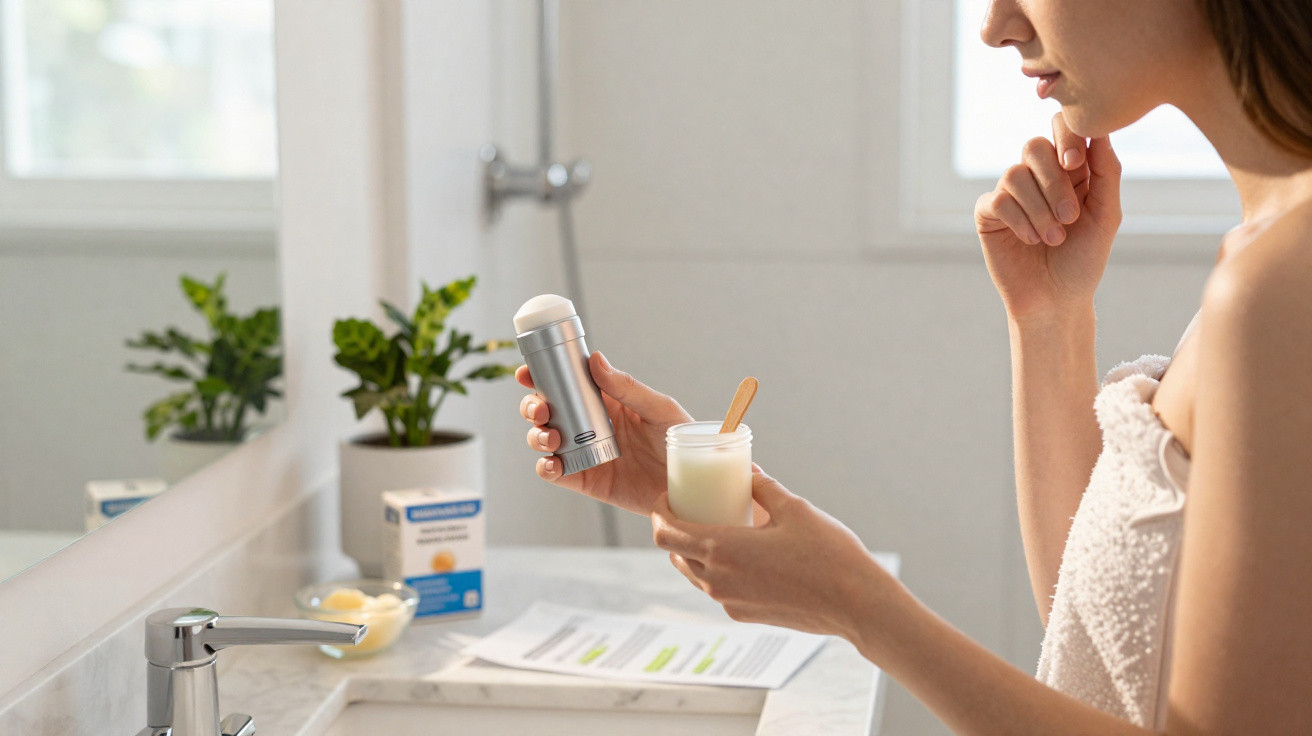
Aluminium in deodorant has made headlines for years. At times, the metal is portrayed as a hidden trigger for serious illnesses; at others, authorities consider it harmless. Anyone who uses a spray or roll-on every day therefore faces a straightforward yet frustrating choice: carry on with reassurance, or switch completely? A level-headed look at the evidence, figures and alternatives can make that decision feel less stressful.
How aluminium enters the body in the first place
Aluminium is far from an unusual substance; it is widespread. After oxygen and silicon, it is the third most abundant element in the Earth’s crust. As a result, we encounter it frequently in everyday life, usually without noticing.
- Food: Cereal products, baked goods, tea, cocoa and certain convenience foods contain measurable amounts.
- Packaging: Aluminium foil, ready-meal trays, coffee capsules and drinks cans can transfer metal to food when used unfavourably.
- Cookware: Uncoated aluminium pots and pans release more aluminium, particularly when acidic foods are prepared in them.
- Cosmetics: Antiperspirant deodorants, some lipsticks, sunscreen and whitening toothpastes use aluminium salts as active ingredients or additives.
A healthy body generally copes well with small quantities. Most of the metal is eliminated through the kidneys. A small proportion is retained, including in the skeleton, where it can remain stored for a long time. It is this gradual accumulation that concerns specialists when total intake stays high over the long term.
When aluminium can become a genuine concern
Aluminium is not a poison in the traditional sense, causing severe harm at the very lowest doses. Risks emerge only at higher levels of exposure. According to experts, three areas may be particularly affected: the kidneys, bones and nervous system.
The European Food Safety Authority recommends consuming no more than around one milligram of aluminium per kilogram of body weight per week.
For someone weighing 70 kilograms, that amounts to 70 milligrams per week. This quantity mainly comes from food and drink rather than deodorant. People who already have kidney disease are considerably more vulnerable because their bodies cannot eliminate the metal as effectively. They should discuss their individual aluminium sources with medical professionals.
What aluminium does in antiperspirant deodorants
Conventional deodorants mainly address odour: fragrances and antibacterial ingredients are intended to reduce smells, while the amount of sweat produced remains largely unchanged. Antiperspirants work differently, as they reduce sweat production itself.
The process is straightforward: aluminium salts react with proteins in the sweat gland ducts and form tiny plugs. These narrow the ducts, meaning less sweat reaches the surface of the skin. Underarms stay drier and clothes remain free from marks for longer.
It is precisely this ongoing contact between aluminium and sensitive underarm skin that caused concern in the past. The fear was that the metal could enter the body more readily through tiny skin injuries and, over time, increase the risk of breast cancer or Alzheimer’s disease.
What studies actually say about aluminium in deodorant
Health authorities have monitored the debate closely in recent years. A central question has been how much aluminium from deodorants can actually pass through the skin and enter the body.
Recent assessments, including those from Germany’s Federal Institute for Risk Assessment (BfR), have reached a broadly reassuring conclusion. They indicate that the amount absorbed from antiperspirants is far lower than earlier estimates suggested. So far, there is no robust evidence that typical use increases the risk of breast cancer or dementia.
The BfR considers health effects from aluminium-containing antiperspirant deodorants unlikely when they are used normally.
Even so, specialists advise against carelessly increasing overall aluminium exposure. What matters is the combined contribution from every source: food, drinking water, packaging, medicines and cosmetics. Deodorant is only one part of this picture, but for some people it is a part they can easily control themselves.
When avoiding aluminium deodorant makes sense
Anyone who is generally wary of aluminium does not need to throw away every spray immediately. A few simple approaches can reduce exposure without giving up sweat protection entirely.
Practical everyday tips
- Introduce variety: Use an aluminium-free deodorant on quiet days at home or in the office, and reserve an antiperspirant for hot days or sport.
- Apply it correctly: Avoid applying it immediately after shaving, as tiny injuries may increase absorption.
- Read the label: Terms such as “without aluminium salts” or “0% aluminium” identify alternatives.
- Consider body weight and kidney function: People with kidney disease should discuss with a healthcare professional whether avoiding it is sensible.
After changing products, many people find that they need a strong antiperspirant less often than expected. Often, it is enough to use an aluminium-containing product only in particular circumstances, such as job interviews, weddings or long summer working days.
Alternative ingredients and natural options
People who deliberately avoid aluminium now have a wide selection of alternatives in chemists and pharmacies. Although these products usually do not stop sweat itself, they can reduce odour.
| Option | How it works | Who is it suitable for? |
|---|---|---|
| Aluminium-free deodorant | Fragrances and antibacterial additives limit odour | People with normal sweat production |
| Deodorant crystal (alum) | A mineral salt has a mildly astringent and antibacterial effect | People with a mild to moderate tendency to sweat |
| Natural deodorant creams | Starch, bicarbonate of soda and oils absorb moisture and odour | Fans of natural cosmetics and people with sensitive skin |
| Medical treatments | Botulinum toxin or surgery to suppress sweat glands | Severe hyperhidrosis diagnosed by a doctor |
Importantly, “natural” does not automatically mean risk-free. Bicarbonate of soda can irritate the skin, while essential oils may trigger allergies. Anyone trying a new type should keep an eye on their underarm skin during the first few days.
The impact of aluminium from other sources
Deodorants often receive the most attention, but in many cases the larger share of exposure comes from food and the kitchen. Several everyday pitfalls can be reduced easily:
- Do not bake or store strongly acidic or salty foods in aluminium foil.
- Avoid uncoated aluminium cookware, or use it only rarely for these foods.
- Check the ingredients list of baking mixes and convenience foods from time to time.
People who consume a lot of tea, cocoa or baked goods already have a certain baseline exposure. In that situation, using antiperspirant deodorants more consciously can noticeably improve an individual’s overall balance without making daily life complicated.
How to interpret warning terms in studies correctly
When studies mention aluminium alongside terms such as breast cancer, dementia or “neurotoxic”, it can quickly sound alarming. In many instances, however, these are observations from laboratory experiments or animal studies using doses far higher than those encountered in everyday life.
Experts distinguish between a risk that is theoretically possible and one that plays a major role in real life. At present, the evidence is insufficient to classify antiperspirant deodorants used normally as a key source of danger. Anyone who still feels uneasy about the thought can adjust their habits-not out of panic, but on the basis of an informed instinct.
Ultimately, aluminium in deodorant comes down to a personal assessment: How much do I actually sweat? How much does the idea of the metal concern me? And where in everyday life would it be easiest for me to reduce my overall intake a little? Those who answer these questions honestly will usually find a routine that suits both their health and their personal wellbeing.












Comments
No comments yet. Be the first to comment!
Leave a Comment