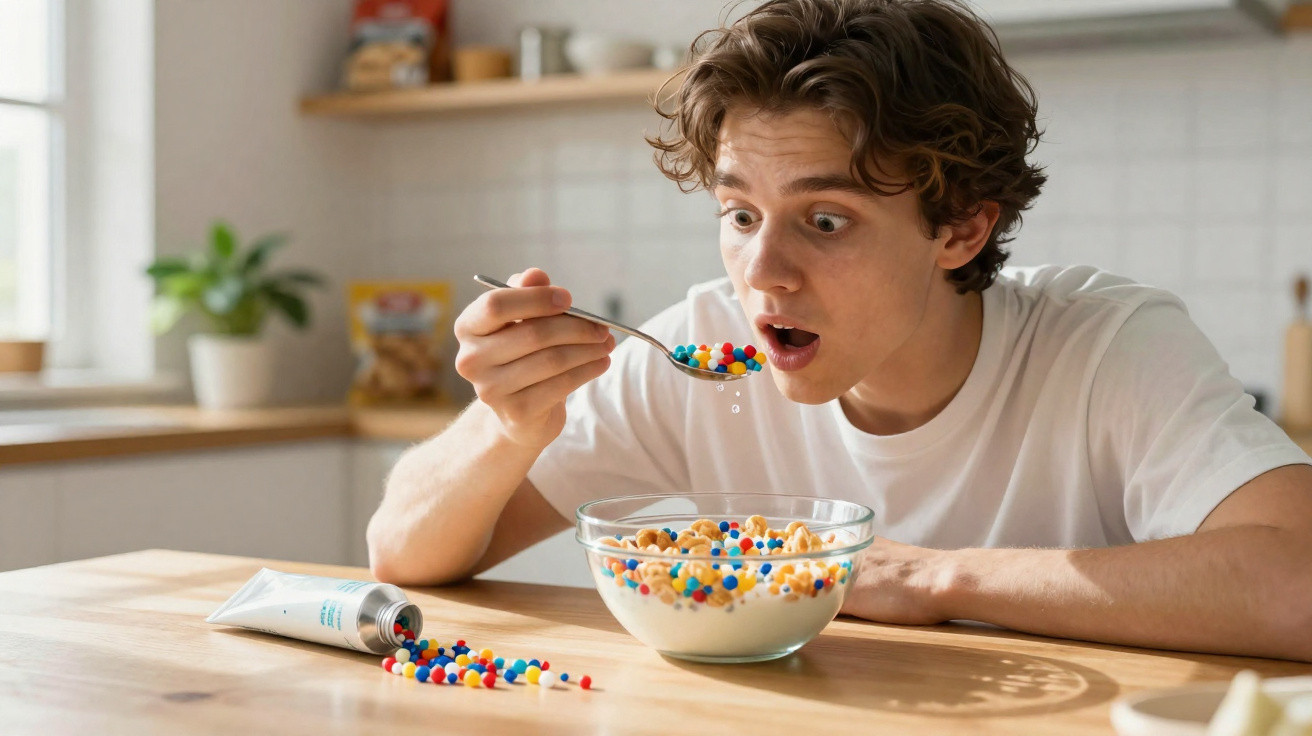
France banned plastic microbeads in cosmetics in 2018. Almost a decade later, it is time to take stock: they are still with us, and you consume them every day without realising it.
You may remember the moment around 2015 when exfoliating scrubs became public enemy number one for the environment. The culprit was the polyethylene microbeads they contained: industrially manufactured spheres measuring less than one millimetre, which thousands of rinse-off cosmetic products used as abrasive ingredients. Some products contained them in extraordinarily high quantities. Environmental policy analyst Anish Moonka explained this in a post on X on 20 May: “a single bottle of exfoliating gel could contain as many as 330,000 plastic microbeads”.
Following fierce exchanges between French regulators and manufacturers, the beads were removed from sale in France in 2018. A victory? Not really. As with microplastics, banning them does not stop them polluting the environment, and they can now be found everywhere. Because they are so persistent, the ban mainly eased consciences without breaking the contamination chain that carried them from your bathroom… to your plate.
The microbeads scandal: banned from cosmetics, now edible
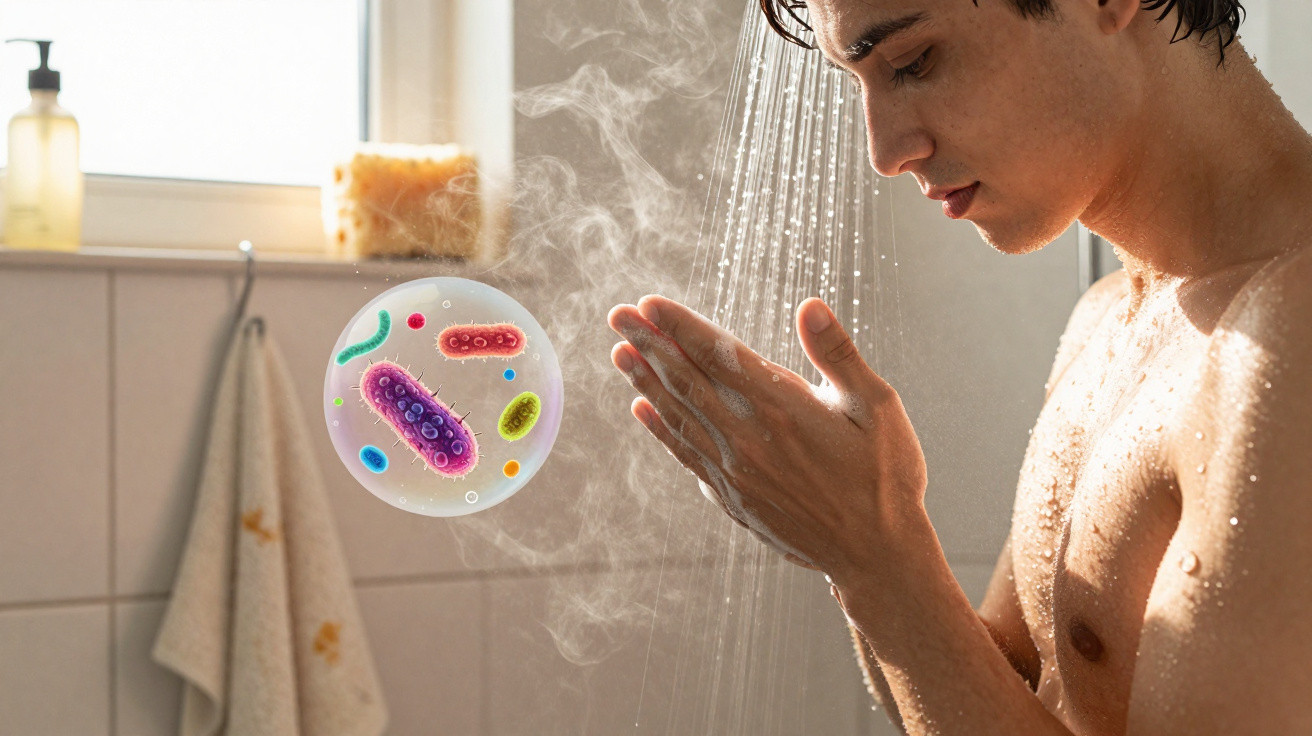
At the time, these products enjoyed enormous popularity, fuelled by aggressive marketing that persuaded consumers microbeads improved exfoliation. That claim was already medically debatable; environmentally, however, they represented a genuine ticking bomb for natural ecosystems. According to a report by the UK Parliament’s Environmental Audit Committee, a single shower could send up to 100,000 microbeads into the drainage system, amounting to 86 tonnes a year in the UK alone.
In the same post, Anish Moonka quantified the scale of this movement at the height of their use: “around 8 trillion of these beads went into US sewers every day, enough to cover more than 300 tennis courts”.
When these particles pass through the sewer network, wastewater treatment works are not designed to trap them. Some sites could therefore process several hundred million a day; the particles were separated from treated clean water and diverted into sewage sludge. That sludge is then spread on farmland as crop fertiliser and, as Anish Moonka notes, it “reaches rivers when it rains”.
Researchers at Cardiff University estimate that between 86 and 710 trillion microplastic particles are applied to European soils each year, making the continent’s farmland the world’s largest reservoir of microplastics.
How microbeads enter farmland and the food chain
One might have expected those figures to hasten regulatory action. But that would overlook Cosmetics Europe, which sends armies of lobbyists to Brussels whenever a proposal threatens to reduce its margins. This sustained pressure helps explain why REACH (Registration, Evaluation, Authorisation and Restriction of Chemicals) - the legal framework governing the placing on the European market of every chemical substance sold there since 2007 - only restricted microplastics in cosmetics in September 2023, and solely in rinse-off products.
Moisturisers, foundations, deodorants and detergents: all remain legal in 2026. Even where microbeads are no longer used, other forms of microplastics that are just as damaging to the environment remain present - film-forming polymers, polyethylene particles and microcapsules. This is a boon for an industry that has mastered the art of exploiting definitions. Some manufacturers bypassed bans by replacing microbeads with chemically near-identical synthetic waxes, reclassified as “semi-liquid” and therefore outside the scope of the law.
In his post, Anish Moonka shared a 2025 study published in the journal Environmental Science and Pollution Research. Researchers tested 28 facial scrubs sold in countries with a total ban; six out of eight still contained microbeads, in some cases as many as 6,298 microbeads per gramme, hidden behind the “semi-liquid” classification that exempted them from the prohibition. The 2018 ban therefore delivered exactly what lobbying had sought: a cosmetic victory robust enough to calm public opinion, yet lax enough for business to carry on.
Microbeads, major damage: a heavy health cost
As we have seen, some of these microbeads ended up in agricultural soil, while others continued along the route: through our food chain and, logically, into our organs. In 2025, a University of New Mexico team led by toxicologist Matthew Campen published a study with utterly alarming conclusions in the journal Nature Medicine.
The researchers analysed brain tissue samples taken from people who died in 2016 and then in 2024. Their finding was that the brains of people who died in 2024 contained roughly 50% more plastic than those from 2016. Brains from people who died with a dementia diagnosis contained three to five times more than the others. The total amount measured was seven grammes per brain - the weight of a small disposable teaspoon. The finding echoed the study we reported on last year, published in Brain Medicine, which focused on diet.
Another, slightly earlier study, published in Frontiers in Public Health in June 2024, documented the presence of microplastics in blood, the placenta, breast milk and lungs. While there is not yet a scientific consensus on their effects, they are strongly suspected of causing respiratory disease, chronic inflammation and oxidative stress, as well as being toxic to reproduction.
Cosmetics giants and the limits of the ban
In many ways, the story of microbeads perfectly encapsulates how Western democracies handle environmental scandals. Manufacturers, alerted as early as the beginning of the 2000s to the toxicity of their products, continued selling them until media pressure became too intense to avoid a legislative response. Far too weak to restrain an industry fiercely determined not to yield, that response symbolically satisfied public opinion, which then had no further reason to check whether the ban produced any real effect. Procter & Gamble, L’Oréal, Unilever and Johnson & Johnson: cosmetics giants that have never been punished for knowingly poisoning us with their microbeads. They were never, at any point, breaking the law, because the regulatory framework readily bends to those who understand that, in a market democracy, whatever is not expressly forbidden is implicitly allowed - and who have done everything possible to keep the list of prohibitions as short as possible. If you feel you have been taken for fools, that is an entirely fair reading of the situation: welcome to the club.











Comments
No comments yet. Be the first to comment!
Leave a Comment