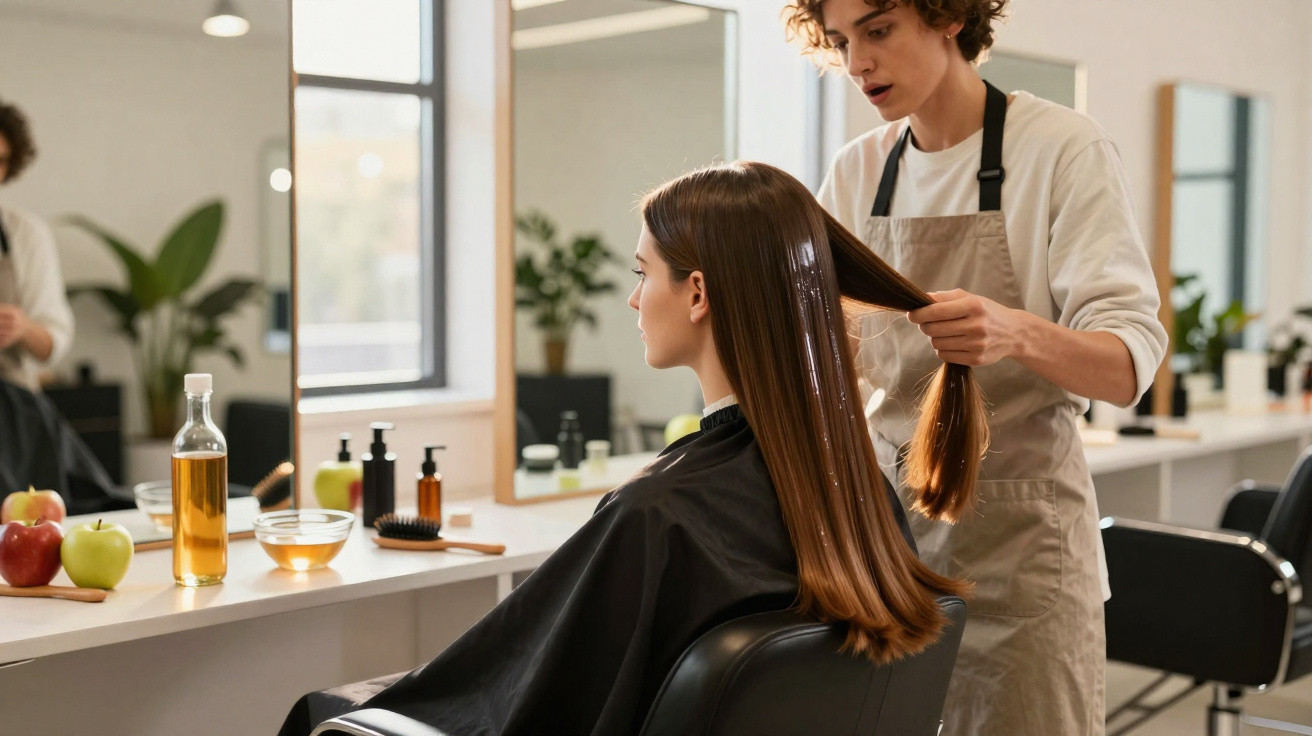
The supposed luxury trick does not come from the perfume counter, but from the kitchen.
Anyone who has their hair cut regularly will know the usual comments: damaged ends, dull lengths, “We really ought to do an intensive treatment.” This time, things were different. The hair’s texture looked as though it had received an expensive professional treatment, despite no mask or conventional conditioner being used at home. The game-changing product comes from an unassuming supermarket shelf – and it has a genuinely long history.
When the hairdresser suddenly asks about the luxury brand
Leaning back with your head in the basin, you would normally expect the verdict: winter, central-heating air and thick scarves often leave hair looking tired and depleted. Here, the opposite happened. The hairdresser felt the lengths, ran a comb through them – and paused briefly. No tugging, no knots and barely any frizz. The surface felt noticeably smooth, while light reflected from the hair as it would after an expensive salon gloss treatment.
The professional’s immediate question was: which high-end treatment was responsible? An exclusive brand, a new salon range or a costly leave-in product? The answer was none of these. Rather than a designer bottle, an old-fashioned home remedy was used – one that grandmothers already knew, but which has now been almost forgotten.
“The crucial difference was not the price of the product, but how well it suits the biology of hair.”
Many people still assume that shiny hair can only be achieved with high-tech formulas from the beauty aisle. In fact, hair fibres respond remarkably well to simple, understandable ingredients – provided they respect hair’s natural structure.
Why conventional conditioners can often weigh hair down
Before switching to the new routine, there was a familiar issue: straight after washing, the hair felt soft, but it soon became flat and dull again. Traditional conditioners and masks can conceal dryness, but do not always resolve it. Many formulas contain silicones or other film-forming ingredients, which coat every strand in an ultra-thin plastic-like layer.
In the short term, this looks excellent: the surface becomes smooth, the hair shines and a brush glides through easily. Over time, however, a coating can develop that is difficult to wash away completely. This so-called build-up accumulates further with every use.
- The hair fibre absorbs less moisture.
- Genuine conditioning ingredients penetrate less effectively.
- Hair can feel heavy, greasy at the roots and dry at the ends.
- It is washed more often – drying it out even further.
This creates a cycle: more products, more promises and more residue. Those with fine hair or hair that becomes greasy quickly tend to notice the effect particularly strongly.
The forgotten kitchen classic: apple cider vinegar
The trick that puzzled the hairdresser relies on one everyday item: apple cider vinegar. It may sound unremarkable, but it works with surprising consistency. This fermented apple product usually ends up in salad dressing, yet it was once also used as a home remedy for skin, digestion – and hair.
Unlike many modern haircare products, apple cider vinegar does not contain a complicated list of added ingredients. Its effect is mainly based on one natural component: acetic acid. Combined with minerals and trace elements, it creates a mild yet effective “rinse” for the scalp and lengths.
“Apple cider vinegar works like a gentle reset for hair and scalp – without a silicone film and without heavy residue.”
For anyone looking to streamline their routine, this offers a minimalist approach: shampoo, diluted apple cider vinegar and clean water – that is all. The result resembles an expensive shine treatment, but costs only a fraction as much.
The invisible enemy: limescale in tap water
One important factor that many people overlook does not come from a bottle, but from the tap. Tap water is very hard in many areas. When you wash your hair, tiny limescale particles settle on its surface. The consequences include:
- The surface appears rough and dull.
- Colours, including tints, look faded more quickly.
- Shine products can barely disguise the greyish film.
This is exactly where apple cider vinegar comes in. Its mild acidity loosens limescale residue from the hair’s surface. Some of these tiny particles are simply rinsed away during the final rinse. The fibre feels smoother, light can reflect more evenly again and the hair appears noticeably shinier.
pH: why slightly acidic is ideal for shiny hair
Another key lies in pH. A healthy scalp and healthy hair sit within a slightly acidic range. Many shampoos and alkaline tap water shift this balance upwards. As a result, the hair cuticle opens. Hair becomes more porous, tangles more easily and loses its shine.
An acidic rinse brings the pH level back towards its natural range. The scales lie closer together, the surface feels smoother and the lengths reflect more light. This is precisely the effect created by diluted apple cider vinegar – gently, without harsh surfactants.
How the apple cider vinegar rinse works, step by step
Getting the dilution right is essential. Pouring it directly onto the scalp neat would be too strong and could cause irritation. When the mixture is prepared properly, however, you can benefit from its effects without an odour problem or discomfort.
The simple basic recipe
- 1 part apple cider vinegar (preferably cloudy and unfiltered)
- 4 parts cool water
For example, mix 50 millilitres of apple cider vinegar with 200 millilitres of water in a bottle, then keep it ready in the bathroom.
Application after washing
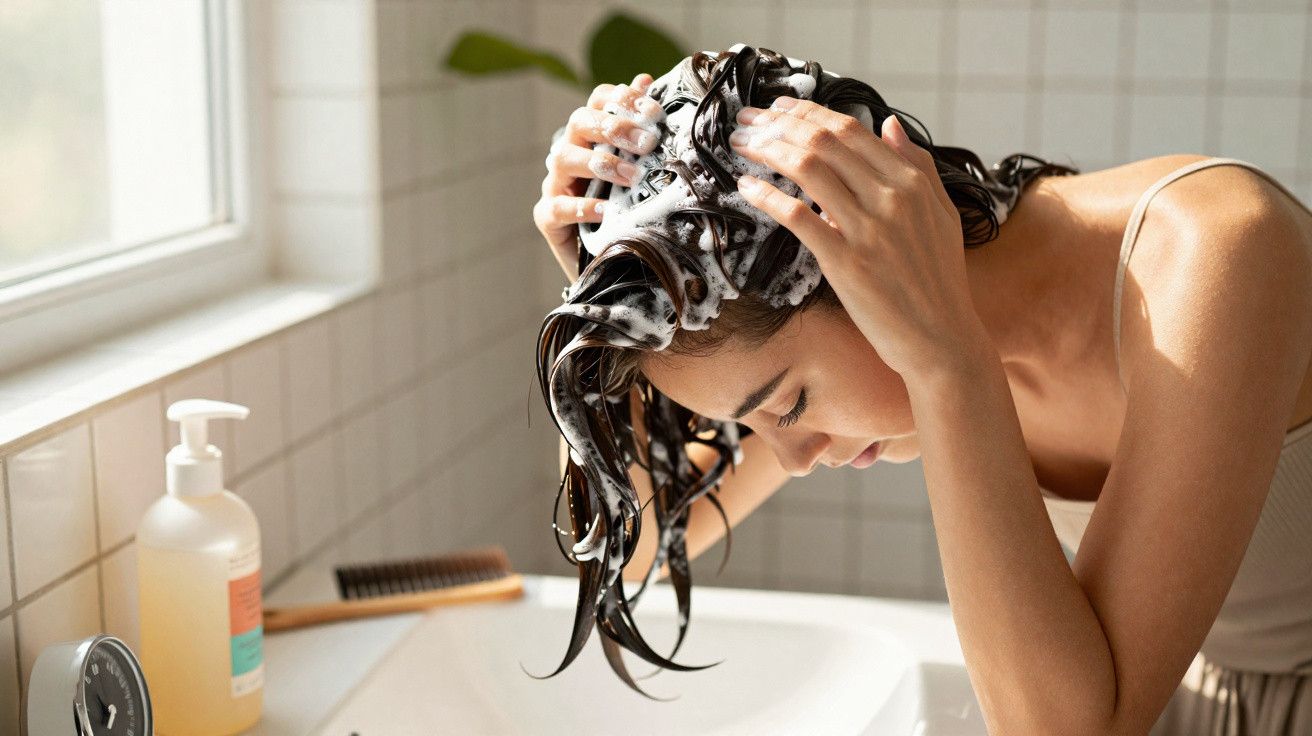
- Shampoo your hair as usual and rinse thoroughly.
- Slowly pour the diluted apple cider vinegar over the scalp and lengths.
- Gently massage it in with your fingertips, especially around the roots.
- Leave it on for around two minutes.
- Finish by rinsing thoroughly with clean, fairly cool water.
The colder final rinse – the famous “cold finish” – intensifies the result: the hair surface contracts and the fibre appears even smoother. The smell disappears entirely as the hair dries, especially if the mixture is not overly concentrated.
How often should you use it – and who is it suitable for?
For most people, one apple cider vinegar treatment per week is enough. If hair is very fine and becomes greasy quickly, the rinse can also be included after every second wash. Anyone prone to dry, frizzy lengths should ideally pair the vinegar with a light, silicone-free oil on the ends.
The method is suitable, among others, for:
- People with dull, lacklustre hair
- Scalps that become greasy quickly
- Slightly flaky or irritated scalps, provided there are no open areas
- Anyone wanting to reduce silicones and overloaded formulas
Take care if your scalp is highly sensitive or damaged, or if you have fresh wounds. In these cases, ask a dermatologist first, or dilute the vinegar even further and initially apply it only to the lengths.
Less plastic, lower costs and fewer bathroom products
Those who consistently use apple cider vinegar as a replacement for conditioner can save several bottles of conditioner a year in many cases. One litre of quality apple cider vinegar often costs less than a single salon conditioner. Since it is heavily diluted, one bottle lasts surprisingly long.
“Fewer tubes in the bathroom, less plastic waste, less money spent on marketing promises – and still shiny hair.”
Many manufacturers sell haircare in plastic bottles, whereas apple cider vinegar is often available in glass or from refill shops. Shopping consciously can reduce the volume of waste even further. This becomes noticeable quickly, particularly in households with several people.
What terms such as build-up and cuticle mean
Beauty articles regularly use specialist terms that are rarely explained. Two are especially relevant here:
- Build-up: Residue from silicones, styling products or limescale builds up layer by layer on the hair and scalp. The result is weighed-down, dull hair.
- Cuticle: The hair’s outer scale layer. When the scales lie flat, hair looks shiny and healthy. When they lift, it appears rough and frizzy.
Diluted apple cider vinegar helps to loosen build-up and close the cuticle. This is exactly why hair often looks as though it has had a professional shine treatment afterwards.
Practical tips for everyday use
Anyone wanting to try the method should ideally begin when they would otherwise need a new bottle of conditioner. Rather than immediately buying another one, place a small bottle of apple cider vinegar in the shower and use it consistently for two or three washes. If silicones have been used for a long time, some patience may be needed – it can take several washes before old residue is truly loosened.
A transition period may also help: use the vinegar rinse every other wash, with a light silicone-free treatment on the ends in between. This makes it easy to see how your own hair texture responds. Some report more volume at the roots, while others notice less frizz through the lengths.
The result is often the same scene at the salon: the hairdresser runs their hand through the lengths, is surprised by the shine and asks about the expensive professional range. The answer remains surprisingly simple: reach for the kitchen shelf rather than the designer shelf in the bathroom.














Comments
No comments yet. Be the first to comment!
Leave a Comment