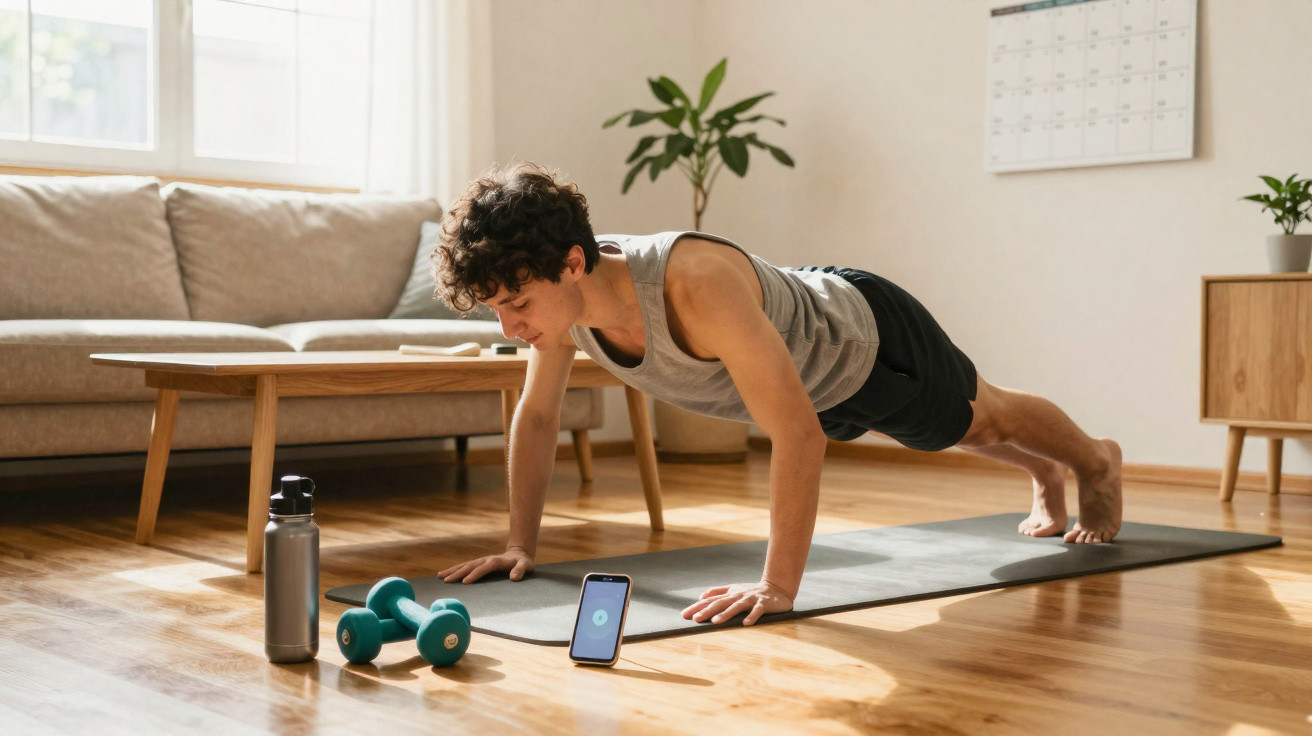
For years, the prevailing view in gyms was that strength training achieved very little without a sophisticated plan, an expensive trainer and exhausting sessions. A major review of 137 studies involving more than 30,000 participants now overturns that assumption. Its reassuring message is that straightforward exercises, repeated consistently, are often enough to make people noticeably stronger, more mobile and healthier.
Why simple strength exercises work so well
The latest recommendations come from the American College of Sports Medicine and bring together evidence from the past 15 years. Previously, much advice centred on precise programming: the number of sets, repetitions, equipment choices and rest periods.
The evidence now makes one point clearer: what matters most is not the perfect training plan, but whether a person can keep doing it over time.
Anyone who trains all major muscle groups at least twice a week – whatever method they use – lays the most important foundation for greater strength and health.
There is plenty of choice: traditional dumbbells, gym machines, bodyweight exercises or basic resistance bands. The studies show good results with every option, provided the effort and regularity are appropriate.
What happens in your body when you start
Even a few weeks of basic strength exercises produce measurable changes:
- muscles incorporate more protein and become stronger
- muscle cross-sectional area increases, making arms and legs appear “firmer”
- everyday movements, such as climbing stairs, become easier
- joints feel more stable and the risk of falls is reduced
This does not require elite-level training. Many studies use moderate effort – enough that you notice you need to focus, but not so much that you are working completely at your limit.
Small steps, major benefits
One of the clearest findings from the new review is that moving from “doing nothing” to “doing a little” delivers the greatest health benefit. People who were previously completely inactive benefit particularly strongly from just two short sessions each week.
The greatest opportunity is not among perfectionists in the gym, but among people who are only just beginning to move.
Researchers observed improvements in:
- strength and muscle mass
- blood sugar levels and insulin sensitivity
- blood pressure and cardiovascular risk
- walking speed, balance and reaction ability
Interestingly, for beginners it matters less than once thought whether they lift extremely heavy weights or use lighter resistance. Consistently repeated effort is more effective than minute adjustments to a training plan.
More than muscles: what strength training adds to daily life
Many people associate strength training with bodybuilders in mirrored gyms. The studies present a different picture. For most participants, the benefits show up in very ordinary situations.
Typical improvements reported by participants include:
- carrying crates of drinks or shopping bags more easily
- getting up from the floor or sofa with less effort
- finding long periods of standing at work less tiring
- no longer seeing stairs as an automatic mini-boss battle
Strength training supports more than muscles; it also supports independence: people who remain strong can manage without help for longer in later life.
There are also benefits that may not immediately appear in the mirror but do show up in blood tests. People who include even simple strength exercises over many years have fewer problems with cardiovascular health, type 2 diabetes and functional limitations in older age.
No gym required: strength training at home
A key message in the latest recommendation is that people who dislike gyms, or simply want to avoid the membership cost, do not need one. Strength can be developed using the simplest equipment.
Common exercises you can do almost anywhere
- Squats – using bodyweight; at first, hold on to the back of a chair or a door frame
- Press-ups – against a wall, a kitchen worktop or from the knees
- Lunges – take small steps forwards or backwards, with something secure to hold nearby
- Resistance-band rows – loop a band around a door handle and actively draw the shoulder blades back
- Hip raises – lie on your back, plant your feet and push your hips upwards
If you wish, you can also use:
- water bottles instead of dumbbells
- backpacks weighted with books
- stair steps for calf raises or step-ups
The essential point is that your muscles should be working noticeably by the end of a set, without you collapsing completely. A slight burning sensation, or the feeling that “I could only manage two or three more repetitions now”, is a useful guide.
How often and for how long is really enough?
For healthy adults, the new guidelines broadly recommend:
| Element | Recommendation |
|---|---|
| Frequency | 2–3 strength-training sessions per week |
| Muscle groups | Legs, glutes, back, chest, shoulders, arms, core |
| Duration per session | approximately 20–40 minutes |
| Effort | the final repetitions should feel noticeably demanding |
Those starting from scratch can begin with even less, such as ten to fifteen minutes on two days each week. The important thing is to increase the workload gradually rather than overdoing it in the first week.
A straightforward sample plan for beginners
Here is an example for two days a week, requiring no equipment:
- Day A: squats, wall press-ups, hip raises, plank
- Day B: lunges, towel rowing movement (around a secure door handle), shoulder press with water bottles, an abdominal exercise of your choice
Perform 2 sets of 8–12 repetitions for each exercise (hold the plank for 20–30 seconds). Once the repetitions become too easy, make the exercise harder: use a deeper range of movement, slow down the movement or add another set.
Consistency beats perfection – every time
Many people struggle with strength training because they get lost in details: “Exactly how many sets? Do I need to do split training? Which app is best?” The new large-scale review offers a clear alternative message.
The best routine is not the one that is theoretically most effective, but the one that fits your real life – including work, family and tiredness.
Someone who plans a five-day-a-week gym programme and gives up in frustration after three weeks will do worse in the long term than someone who maintains two brief home workouts for years. Small, realistic steps win the race over time.
What simple strength-training routines mean for different age groups
Younger adults
For people aged between 20 and 40, a simple strength programme can help prevent back pain, maintain muscle mass and keep metabolism stable. People with desk-based jobs especially benefit when they challenge their major muscle groups at least twice a week.
People aged 50 and over, and older adults
From around the age of 50, the body naturally loses muscle mass. Relying only on endurance exercise and walks may keep the heart and circulation active, but strength will still decline. Studies show that even very basic exercises – for example, standing up from a chair, sitting down again and then standing up once more – can bring clear progress.
In this age group, strength training reduces:
- the risk of falls and bone fractures
- difficulties with walking and climbing stairs
- dependence on support with daily activities
Risks, limits – and how to avoid them
No physical activity is entirely without risk. Anyone with existing heart, joint or spinal conditions should speak to a doctor before starting. Many limitations do not rule out strength training; they simply require adjustments.
Common mistakes that are easy to avoid include:
- increasing the weight too quickly: progress gradually instead
- ignoring pain signals completely: pulling sensations are acceptable, while sharp pain is a warning sign
- skipping rest: muscles grow during recovery
- training only favourite muscles: full-body exercises offer the greatest benefit
How strength training can be combined with other activities
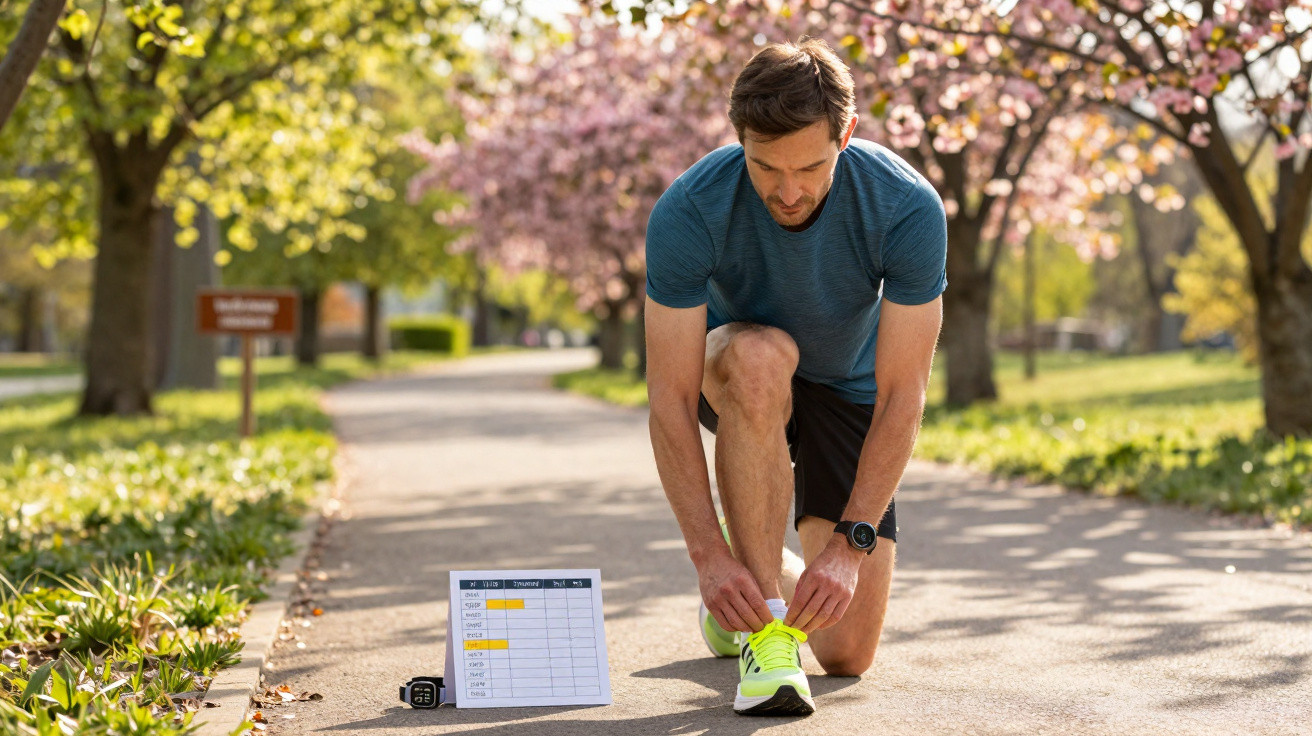
Basic strength routines work well alongside everyday movement and endurance training. People who enjoy running, cycling or swimming can add a short strength session on two days a week, or do it on rest days. This reduces pressure on the joints, improves posture and enhances performance in other sports.
Even people who already exercise regularly but have done little targeted muscle training often get noticeably more from their other activity by adding two structured strength sessions.
Why now is a good time to make a fresh start
The new, simpler recommendation removes the pressure many people feel to get everything “right” immediately. Instead, it brings a far more practical question to the fore: which two or three short sessions a week are manageable enough to continue even during stressful periods?
Anyone who answers that question honestly and commits to an unremarkable but realistic mini-plan is highly likely to lay the foundation for greater strength, better stability and a noticeably easier feeling in their body – without a high-tech gym, extreme workouts or a perfect training plan.















Comments
No comments yet. Be the first to comment!
Leave a Comment