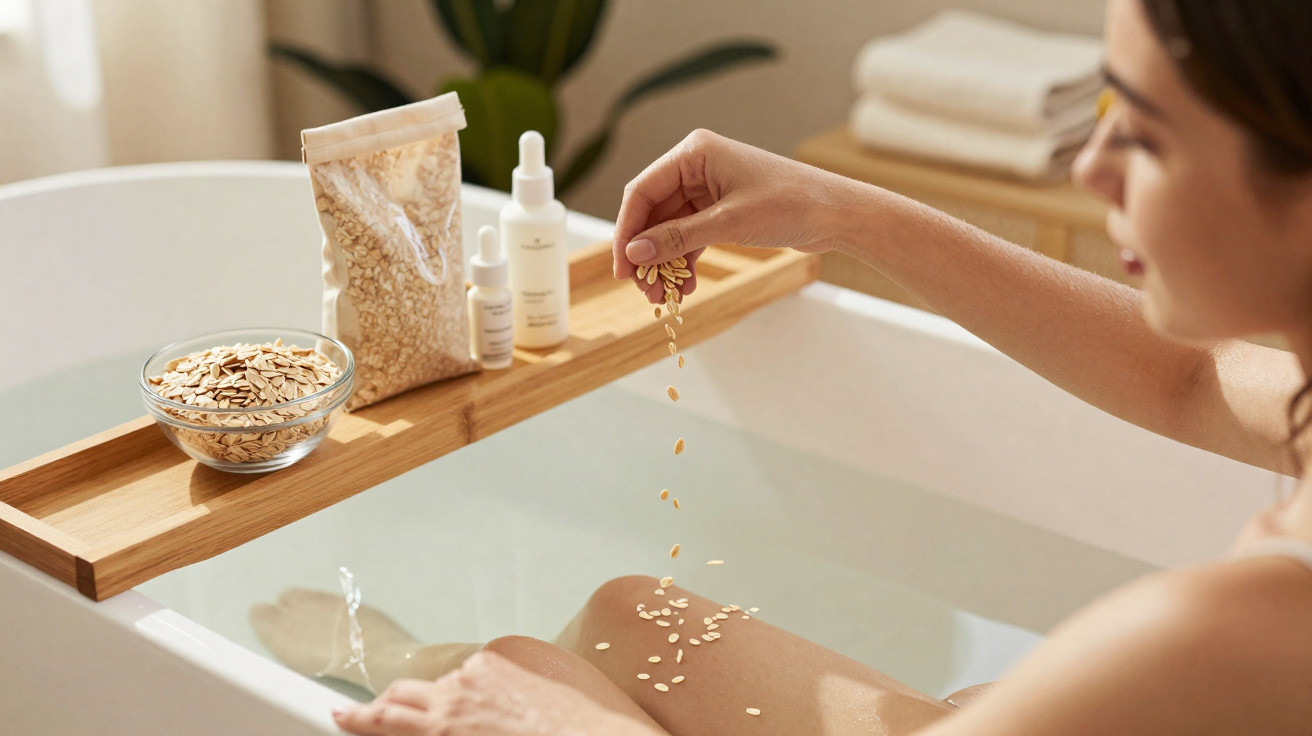
My hands were snagging on jumpers, my shins burned after every shower, and the expensive creams lined up by the sink had begun to seem like hollow promises. Winter had beaten me. Then, one evening, driven by equal measures of curiosity and defiance, I poured a scoop of oats into the bath and watched the water turn into a gentle, cloudy whirl. That was when something changed.
I blended a cup of oats from the cupboard into a fine flour, scattered the powder beneath warm running water, and climbed in while replying to a message with a wet thumb. The bathwater became milky and carried the faint scent of breakfast and fresh linen.
After 15 minutes, my skin had the weighted, moisturised calm promised by beauty adverts. There was no tight feeling and no burning. I dried myself with a towel without the usual scratchy friction, and the softness lasted through the following day’s commute and centrally heated air. I kept stroking my arms on the train like a complete oddball.
So I repeated it. The same subtle difference appeared, but this time I realised that the itch on my calves was not worsening at bedtime. It was a small ritual with a noticeable result: low-tech, yet strangely indulgent.
What other helpful things had been sitting in plain sight?
The oat bath that made my serums jealous
The water is the first thing that stands out. Rather than bubbling, it turns cloudy, like silk falling into the tub. There is the faintest slippery feel on the surface, and your skin glides instead of squeaking. It is not dramatic in a spa-like way. It is simply different, gentler and better.
One Tuesday evening, I tipped the remainder of a nearly empty bag of oats into the blender, whizzed it into a soft beige powder, and knotted it inside a washcloth like a teabag. I ran the tap through it. We have all experienced that moment when an easy solution works so brilliantly that we feel mildly irritated with ourselves for not testing it sooner.
There is a reason behind the effect. Oats contain beta-glucans, which help retain water on the skin; starches that soften roughness; saponins that cleanse lightly without stripping; and small plant antioxidants called avenanthramides, which appear to soothe the visible signs of redness. Imagine a soft blanket rather than an abrasive towel: gentle, consistent and unexpectedly effective.
How to make an oat bath your tub - and skin - will love
Choose plain rolled or steel-cut oats, rather than flavoured sachets. Blend them while dry until they form a flour fine enough to vanish when rubbed between your fingers. Add 1/2 to 1 cup to warm, rather than hot, running bathwater, then stir it with your hand until it dissolves. Soak for 10 to 15 minutes, pat yourself dry, and finish with a simple moisturiser to lock in the softness.
To avoid using a blender, put the oats into a clean sock, nut-milk bag or thin washcloth and tie it securely. Allow the water to flow through the pouch, then press it like a sponge over your arms and legs. Honestly, nobody does this every day. Once or twice weekly is a realistic target; then let your skin quietly tell you whether it wants more or less.
Avoid scalding water, as it can undo the very benefit you are looking for. Rinse the bath afterwards so a light film does not build up, and test a small area first if grains have caused you reactions before. I didn’t expect a pantry staple to outshine my fancy serums.
“It’s the gentleness that gets you,” my friend Maya said after trying it. “My skin felt quiet. Like it finally stopped arguing with the weather.”
- Blend the oats extremely finely for milkier water and easier cleaning.
- Keep the bath brief so your skin does not wrinkle and object.
- Leave a jar of oat flour beside the bath for low-effort evenings.
- Add a few drops of plain oil if your skin is especially dry.
- Clean the tub while it remains damp. Your future self will be grateful.
The small oat bath ritual that shifts your whole routine
An oat bath will not solve every problem, and that is partly what makes it appealing. It requires very little and gives comfort back. Its effect can spread through the rest of your routine: you begin to want gentler water, simpler products and more considerate habits.
After a month of oat-filled evenings, I reached for body scrub less often and stopped pursuing that tingle after a hot shower. Everything became less dramatic. My creams applied more smoothly, and I abandoned a complicated six-step body routine that had never truly felt like mine.
There is something reassuring about caring for your skin in a way your grandmother would recognise. It is familiar and uncomplicated. It makes you want to tell a neighbour in the lift, sharing advice as though you were trading recipes. It is a tiny, welcoming disruption that leaves you a little softer than before - in your skin and perhaps in your mood.
Putting oats in the bath is the sort of low-pressure experiment that reminds you how much skin responds to kindness. The ritual costs pennies, uses ingredients already at home, and does not require a flawless routine to be worthwhile. During busy weeks, you will miss it. Then a dry patch will quietly ask to be noticed, and you will recall the jar beside the bath. You turn on the tap, add the powder and watch it open into cloudy silk. The room falls silent. Outside, the world continues to turn, while you sit in this small space of calm that remains even after you have dried off. Different, gentler and better.
| Key point | Detail | Benefit for the reader |
|---|---|---|
| Why oats help | Beta-glucans, starches and avenanthramides soothe and cushion the skin | Understand the reason behind the softness |
| How to prepare | Blend into fine flour or use a pouch; use warm water for 10–15 minutes | A straightforward, repeatable method that genuinely fits into daily life |
| Common pitfalls | Water that is too hot, oats that are too coarse, or missing moisturiser after the bath | Fewer disappointments and better results from the first evening |








Comments
No comments yet. Be the first to comment!
Leave a Comment