
Many people want to get fitter but lack the time for lengthy workouts or access to equipment. This is exactly where a short, intense cardio mini-circuit comes in: it uses only your body weight and challenges your entire cardiovascular system in just a few minutes.
How the 6-minute cardio mix works
The workout plan follows a straightforward interval format. You complete five different full-body exercises in sequence, performing each one for a set period. A short recovery break follows every exercise, allowing your heart rate and breathing to settle slightly.
Basic principle: brief, demanding effort, brief recovery – repeated several times. This can help you burn a surprisingly high number of calories in very little time.
The basic version is structured as follows:
- 5 exercises
- each exercise: 30 seconds of work
- followed by: 30 seconds of rest
- total: around 6 minutes of training time
More advanced exercisers can tighten the intervals and sustain the effort for longer. One popular format is:
- 45 seconds of work
- 15 seconds of rest
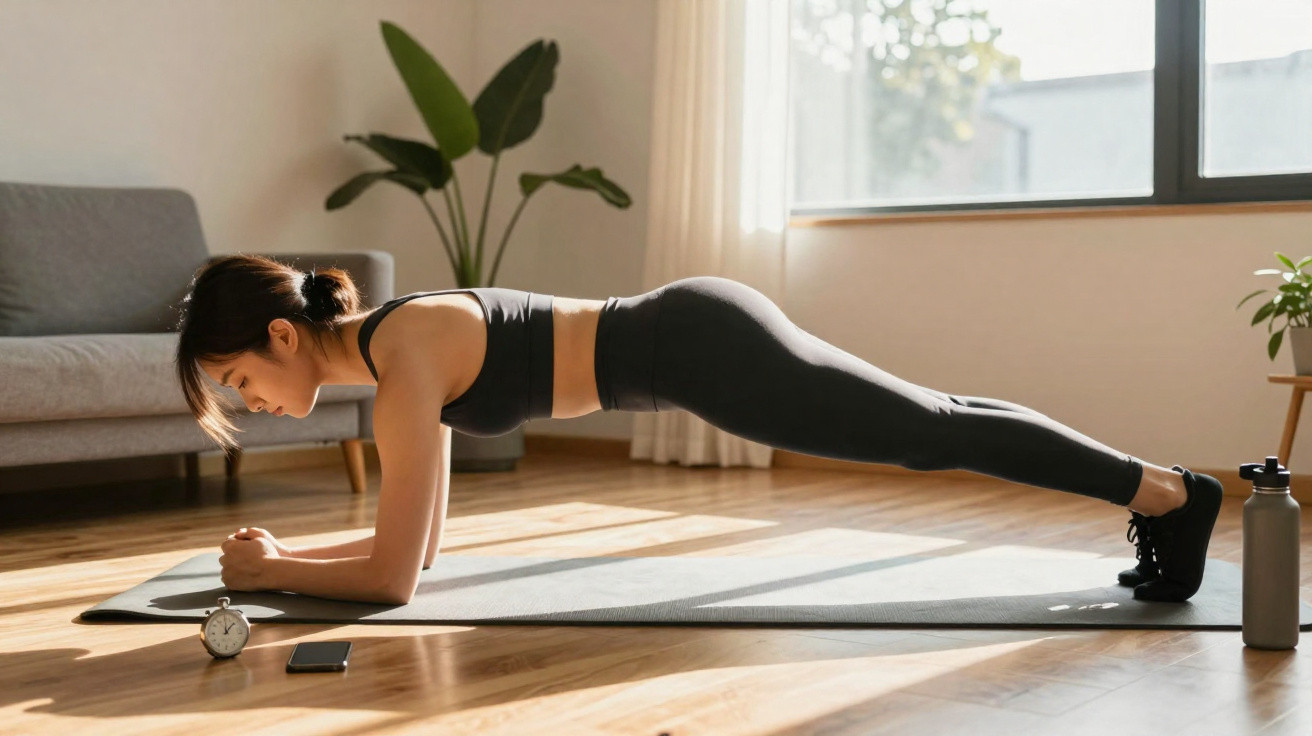
If you are completely new to exercise, begin more gently, for instance with 20 seconds of activity and 40 seconds of rest, or by doing fewer rounds. A timer on your phone is more than enough to keep track of the intervals.
The five core exercises in detail
1. Side lunge with knee lift
Stand with your feet slightly wider than hip-width apart. Take a large step sideways, bend the knee and shift your weight onto that leg. Push firmly back towards the centre while dynamically driving the opposite knee towards your chest. Then repeat on the other side.
- Keep your back upright and engage your core.
- Your weight should sit over the working hip, rather than the knee.
To increase the difficulty, add a small jump as you bring the knee up. For an even greater challenge, briefly touch the floor with your hand during the side lunge. This takes you lower and increases activation in the glutes and thighs.
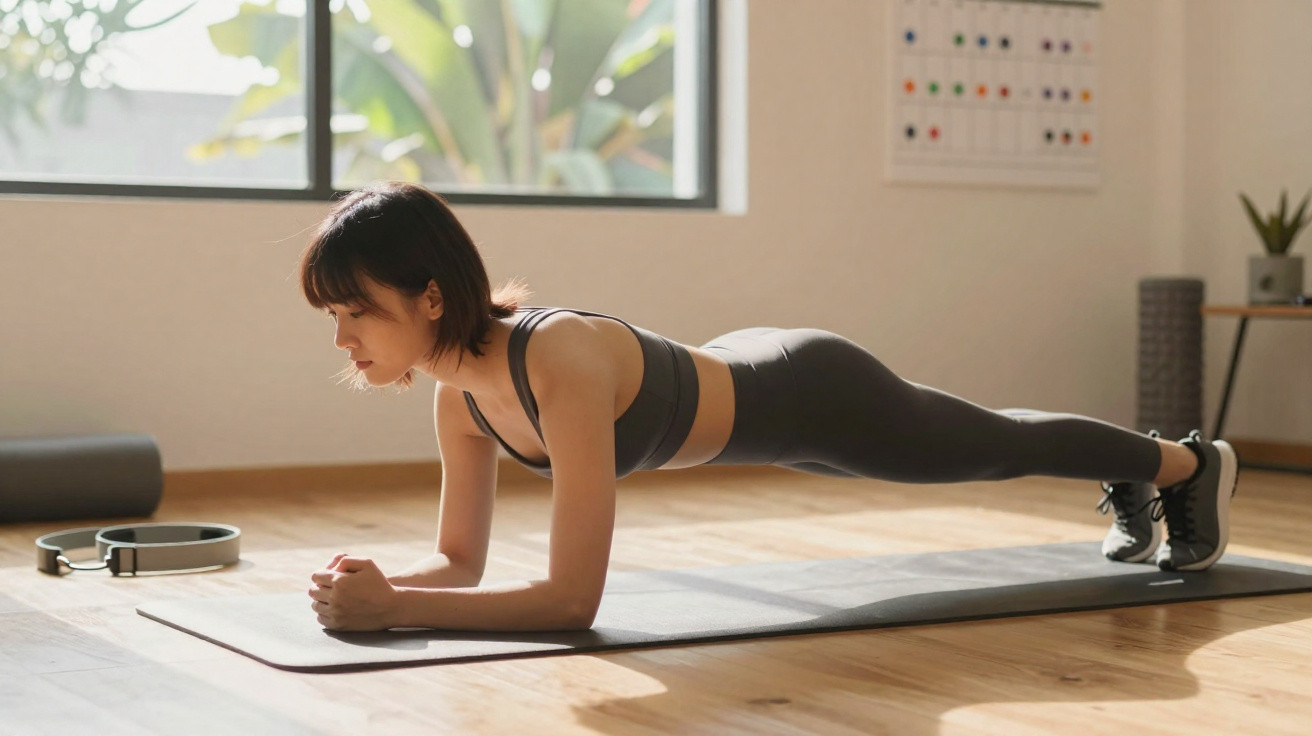
2. Hand walk to plank with press-up and jump
Begin standing upright. Fold forwards, place your hands on the floor and “walk” them forwards until you reach a stable plank position. Perform a press-up there, then bring your feet towards your hands with one or several small jumps. Finish by jumping explosively upwards – adding a 180-degree turn if you feel confident doing so.
- Easier option: leave out the press-up.
- Harder option: move into the plank with an explosive jump, similar to a half burpee.
This movement works the shoulders, chest, core and legs at the same time, raising your heart rate very quickly.
3. Side jumps “over the tyres”
Stand side-on to your mat and repeatedly jump left and right, as though you were clearing a tall, invisible car tyre barrier. Lift your knees noticeably while keeping your upper body steady.
- Variation: rather than one large jump, do two smaller hops on each side – a gentler choice for your joints and cardiovascular system.
The exercise is somewhat reminiscent of agility-ladder drills in professional sport. Alongside endurance, it also develops mobility and explosive power.
4. Commando burpees
Start standing, move briskly into a plank and then lower your whole body onto the mat. From there, press yourself back up. Next, drive your right and left knees powerfully towards your chest in turn. Then place your feet close to your hands – either by stepping them forwards or using a small jump – stand up and jump upwards, optionally adding another turn.
This exercise is a genuine full-body package: your chest, shoulders, abs, legs, glutes and cardiovascular system all work hard simultaneously.
5. Dynamic option for your fitness level
Many plans use a combination of jumps, core movements and supporting positions for the fifth exercise, such as fast mountain climbers or jump squats. The key is to choose an exercise you can perform safely and that recruits large muscle groups.
- Beginners: slow high knees on the spot
- Intermediate: jump squats with a low jump height
- Advanced: fast mountain climbers in a support position
How often should you train – and when does it really work?
The biggest factor is not selecting the perfect exercise, but training consistently. Setting aside six minutes several times a week can noticeably improve your basic fitness.
Just three short sessions per week can significantly improve fitness, strength and calorie expenditure – without a gym membership or treadmill.
If you want to increase the cardio effect, switch to several rounds after a few weeks. Three to four consecutive rounds add up to 18 to 24 minutes of intense interval work. It feels comparable to a brisk interval run, but takes place within your own home.
Technique, breathing and safety
Speed is of no benefit if your form suffers. Focus on controlled technique in every movement, particularly knee alignment and a stable core. Breathe steadily rather than holding or forcefully pressing out your breath.
- before the workout: 3–5 minutes of gentle warm-up activity, such as jumping jacks, arm circles and light hopping
- during breaks: do not sit down; walk gently or shake out your limbs instead
- afterwards: cool down slowly with easy walking and relaxed stretches
Anyone who has not exercised for a long time should start cautiously, pay attention to how their body feels and, if unsure, seek medical advice beforehand on whether intense intervals are suitable.
What effects this mini workout can deliver
The concept is based on HIIT, or high-intensity interval training. It alternates between short, highly demanding periods and rest breaks. Your heart rate rises sharply as a result, drops only to a limited extent during recovery and remains elevated throughout the session overall.
The effects on the body include:
- the heart and lungs work more efficiently, improving endurance
- calorie expenditure per minute is significantly higher than during gentle walking
- metabolism remains at an elevated level for several hours after the session
- full-body exercises help tone the stomach, legs, bottom and arms
Many people who do not enjoy jogging cope better with short intervals like these. They can stay at home, change movements regularly and quickly feel that progress is being made.
Who is the 6-minute cardio block suitable for?
This programme is particularly well suited to people with packed schedules, parents with little free time and people working from home who want to push themselves between tasks. The block also works well alongside other sports: runners can use it to build leg and core strength, while strength trainers can use it for the cardiovascular element.
Beginners should lower the intensity, avoid jumps and choose the easier variations where necessary. Joint problems, cardiovascular conditions or acute complaints should be discussed with a doctor before using intervals to raise your heart rate.
Tips to help you stick with it
Many fitness plans fail not because of the training method, but because of everyday life. A fixed routine can help: train at the same time, decide on a clear number of rounds, set the timer and begin. A handwritten plan on the fridge or a simple checklist on your phone can provide extra motivation.
| Day of the week | Number of rounds | How you felt afterwards (brief note) |
|---|---|---|
| Monday | 1–2 | e.g. “out of breath, but proud” |
| Wednesday | 1–3 | e.g. “it already felt smoother” |
| Friday | 2–3 | e.g. “clearer head, better sleep” |
After a few weeks, you will be able to spot small improvements clearly: less gasping for breath, faster recovery and more confident movements. If you enjoy variety, swap one exercise from time to time, while keeping the interval principle unchanged.
Why such short workouts can be so effective
Many people underestimate how powerful short sessions can be when the intensity is right. The body responds to unfamiliar exertion with adaptations: the heart and lungs become more resilient, muscles grow or at least become more stable, and metabolism becomes more responsive to sugar and fats in the blood.
Everyday benefits can appear sooner than expected: climbing stairs becomes easier, you need fewer breaks while shopping and even longer walks feel less strenuous. Making those six minutes a fixed appointment in your diary creates a surprisingly solid foundation for better health – without an expensive membership or complicated equipment.















Comments
No comments yet. Be the first to comment!
Leave a Comment