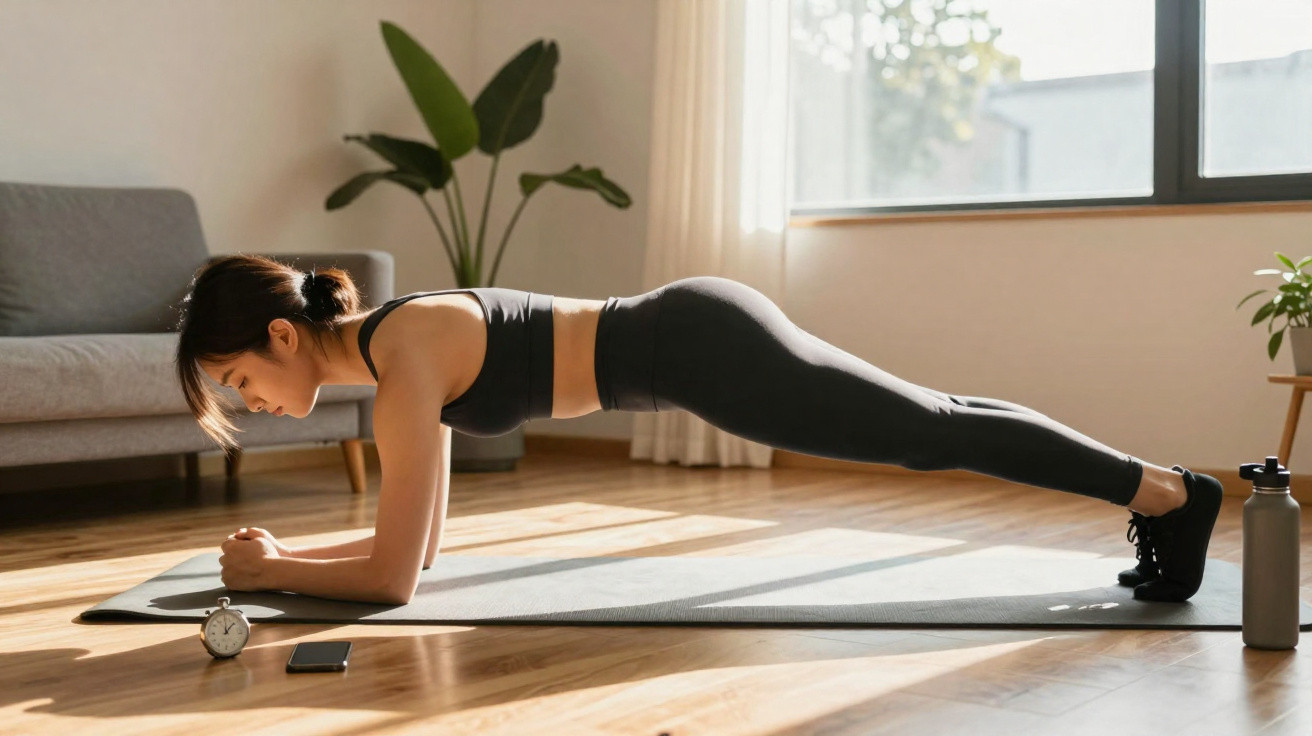
The side plank strengthens the lower back by demanding trunk stability without abrupt movement. Performed 3 to 4 times a week, it helps develop control and endurance without turning training into unnecessary overload.
Why does the side plank strengthen the lower back?
The quadratus lumborum is a muscle at the back of the abdomen, close to the lower back, and it contributes to sideways bending of the spine. This role is why lateral stability exercises effectively activate this area.
During a side plank, the body must prevent the hips from dropping while preserving a straight line from the shoulder through the torso to the legs. This demand recruits the quadratus lumborum, obliques and other deep muscles, producing a strength stimulus with control.
The key benefits come from performing the movement correctly:
- Alignment: the shoulder, hips and legs should remain in one stable line.
- Core: deep muscles work to support the torso.
- Breathing: keeping the breath flowing prevents excessive tension.
- ⏱ Time: a short hold performed properly is more valuable than a forced long-duration hold.
- Progression: gradual increases reduce the likelihood of compensations.
How should you perform a side plank correctly?
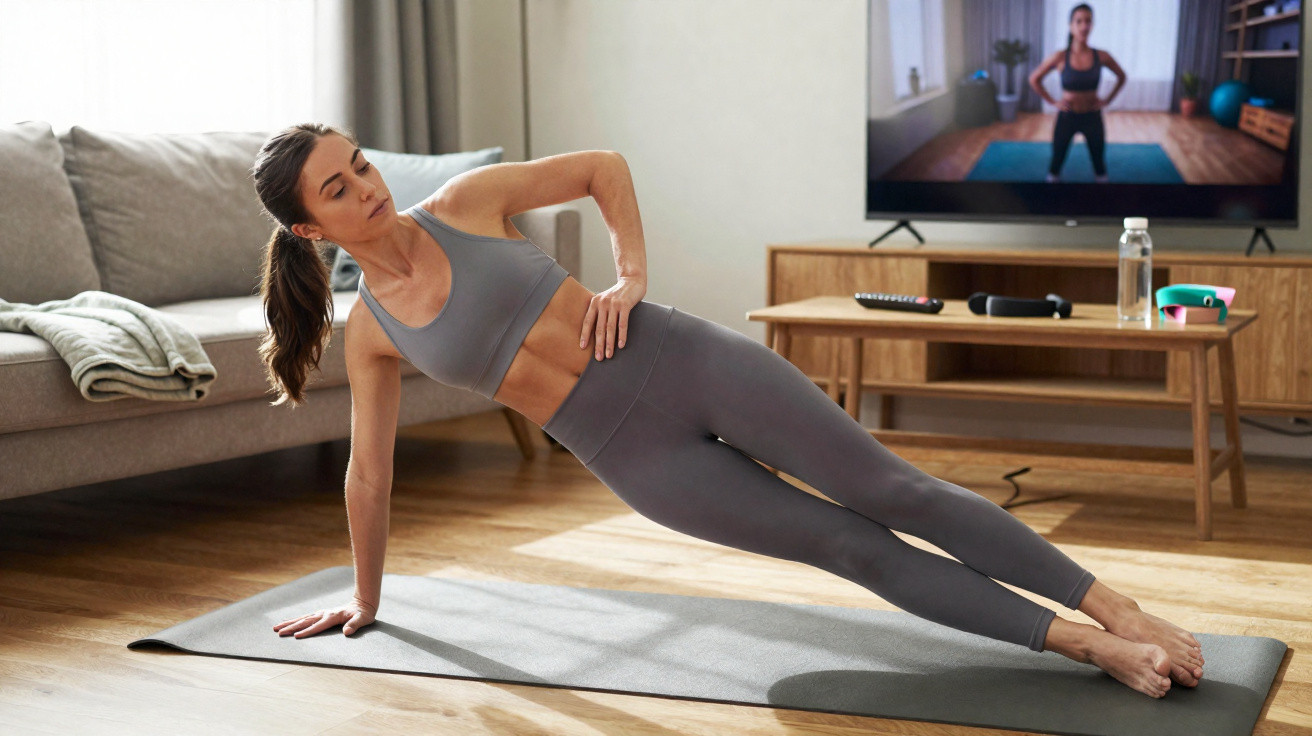
To begin, lie on your side, place your forearm on the floor and position your elbow directly beneath your shoulder. Next, lift your hips, keep your neck neutral and brace your abdomen, paying attention to your posture.
You can stack your feet or rest one knee on the floor if the full variation is too challenging. Your hips should not drop or rotate forwards, as this reduces the work done by the lower back and the obliques.
How long should beginners hold the position?
For beginners, sets of 10 to 20 seconds on each side are usually safer than attempting to hold the position for a long time. At first, the aim is to maintain clean form, steady breathing and control throughout the exercise.
Safe side plank
Quality comes before duration
If your hips begin to sag or your shoulder loses stability, the set has already gone beyond its ideal point.
Progress can come from adding just a few seconds each week, without holding your breath or straining the lower back.
A sensible routine may include 2 or 3 sets per side, with a short rest between them. Once you can complete every set without losing alignment, gradually extend the time while maintaining safety and consistency.
In practice, follow this starting approach:
- Hold for 10 to 20 seconds on each side during the first sessions.
- Choose the knee-supported version if you feel unstable.
- Rest for 30 to 60 seconds between sets.
- Stop if you experience sharp pain, tingling or persistent discomfort.
Why is training 3 to 4 times a week enough?
A frequency of 3 to 4 times per week lets you repeat the stimulus without demanding work from the same area every day. This spacing allows the stabilising muscles to adapt while supporting recovery and training consistency.
Because many people spend hours sitting down, strengthening the side of the torso may improve bodily support in everyday life. Even so, training too frequently can lead to compensations, especially when fatigue, rushing or poor technique are involved.
To organise the week in a balanced way:
- Alternate side-plank days with rest days.
- Pair the exercise with walks and gentle mobility work.
- Avoid repeating long sets when your lower back is tired.
- Seek guidance if you already experience frequent lower-back pain.
How can you include this exercise in a simple routine?
The side plank can form part of brief core workouts alongside abdominal-control movements and breathing work. In routines such as quick abdominal exercises, it is useful when function and stability take priority.
Most importantly, do not turn the hold into a competition for time. To strengthen the lower back, the side plank requires alignment, a realistic frequency, gradual progression and attention to bodily signals, with respect for your limits.












Comments
No comments yet. Be the first to comment!
Leave a Comment