A headline about inspections at the warehouses of major retailers can make every item in the cupboard, toy box or online delivery suddenly feel suspect. The useful trick is to ignore the drama and look for one thing: a clear official notice naming a particular product, batch, date code or action for customers to take.
An inspection is not, by itself, proof that unsafe goods have reached shops or homes. Warehouses are checked for many reasons, including routine compliance work, a complaint, food storage, labelling, traceability or workplace safety. Until an authority or retailer identifies an affected item, there is no good reason to assume that everything sold by a chain is a problem.
The important question is not whether inspectors have visited a warehouse, but whether customers have been told to check, stop using or return a specific product.
What an inspection may involve
Retail warehouses receive, store and distribute huge volumes of goods. A single site may handle food, toiletries, clothing, electrical items and household products before they reach branches or online customers.
Depending on the products and the location, inspectors may consider:
- food hygiene, chilled storage and temperature records;
- allergen controls and correct packing;
- product labels, weights, measures and origin information;
- stock rotation and date coding;
- pest control, cleaning and separation of different goods;
- records showing where a product came from and where it was sent;
- fire precautions, vehicle routes, manual handling and other workplace safety issues;
- waste storage and environmental requirements.
The authority involved depends on the concern. Local authority food safety and environmental health teams may inspect food premises, while Trading Standards can deal with consumer product information and certain safety issues. Workplace safety may involve the Health and Safety Executive or local enforcement officers. Arrangements and terminology can differ across England, Scotland, Wales and Northern Ireland.
Inspection, enforcement and recall are different things
These terms are often blurred together in social media posts, but they do not mean the same thing.
An inspection is a check of premises, processes, stock or paperwork. It may be routine, prompted by intelligence, or follow a complaint.
An enforcement action can happen if an inspector finds that requirements have not been met. The response may range from advice and a timescale for improvements to formal action or restrictions. It does not automatically mean that customers need to return a product.
A product recall is a customer-facing notice. It asks people to stop using, return or, in some cases, safely dispose of a clearly identified item because of a possible safety or quality concern.
A proper recall notice should give enough detail to check an item at home. That usually means the product name, size or variation, relevant batch or date codes, and instructions on what to do next.
Why warehouse problems can matter to shoppers
Warehouses influence how goods are stored and moved before they reach the customer. That is why traceability and stock controls matter even when the issue is not visible in a shop.
For food, chilled and frozen products need appropriate temperature management. Products containing allergens also require careful handling and labelling procedures. Stock rotation helps prevent items remaining on sale beyond the dates shown on the packaging.
For electrical goods, toys and cosmetics, a retailer should be able to identify affected stock and take it out of sale if a problem is found. Records can help establish which branches or online orders received a particular batch.
That said, a damaged cardboard box, a short remaining shelf life or a delayed delivery does not automatically point to a serious safety failure. Focus on the condition of the item, its packaging and any official instructions.
How to check a purchase properly
If you are concerned about an item from a large retailer, start with product-specific information rather than a vague online post.
1. Gather the identifying details
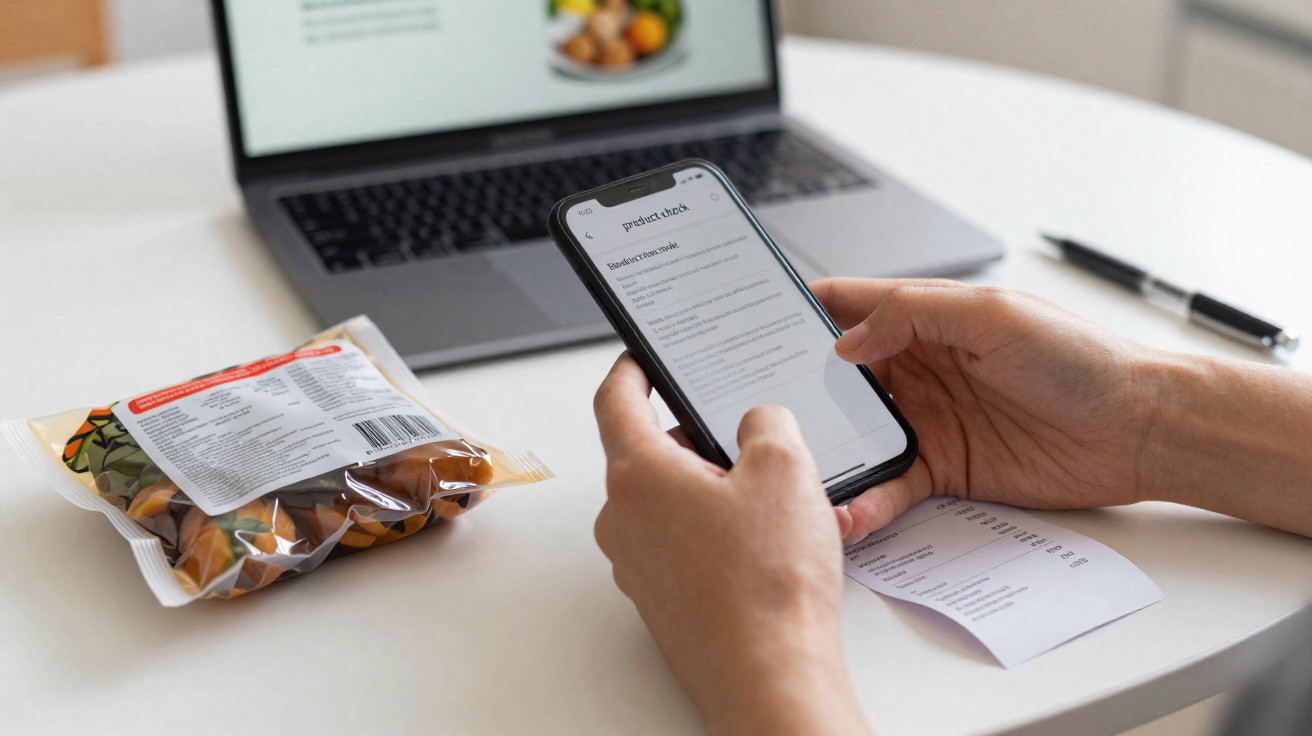
Before contacting the retailer, note or photograph:
- the full product name and size;
- the flavour, colour, model or version;
- the barcode, batch, lot, serial or date code;
- where and when you bought it;
- the online order number, if applicable;
- the receipt, email confirmation or bank transaction.
Many products look nearly identical but belong to different batches. A batch code or best-before date can be the key detail in a recall.
2. Read official notices carefully
For food, check alerts published by the Food Standards Agency or Food Standards Scotland, as appropriate, as well as the retailer’s own recall page. For non-food products, check the retailer’s product recall information and official product-safety notices where available.
Look for the exact action advised. A notice may tell you to return an item for a refund, stop using it, keep it for collection or dispose of it safely. Do not assume that every recall is handled in the same way.
3. Ask the retailer when the information is unclear
Customer services can usually confirm whether your product details match a notice. Keep the message short and factual: explain what you bought, where and when you bought it, and provide photographs of the label or code where possible.
A photograph of the barcode, batch code and date mark is usually more useful than a lengthy description of the packaging.
If you think an item could be unsafe, do not give it to another person or donate it. Keep it away from children and pets while you check the advice, unless the official notice says it should be disposed of immediately.
Your consumer rights do not disappear
An inspection does not alter the usual protections that apply when goods are faulty, unsafe, not as described or not of satisfactory quality. What you can reasonably ask for may depend on the product, how long ago you bought it and the circumstances.
In most cases, contact the seller first, rather than the warehouse operator or manufacturer. Explain the problem and provide the evidence you have kept. A retailer may offer a refund, replacement or repair, depending on the item and the situation.
Keep copies of receipts, emails, photographs and any recall notice. If you cannot resolve a consumer problem, Citizens Advice can explain the options available and may pass relevant reports to local Trading Standards.
For food that you believe may be unsafe, report the concern to the retailer. Your local authority’s food safety or environmental health team may also be relevant where there is a serious concern. Do not treat a social media post as proof that food is contaminated.
Common mistakes when inspection news spreads
Avoid making a worrying situation more confusing with these common errors:
- Throwing the product away before recording its code. You may lose the information needed to establish whether it is affected.
- Confusing a best-before date with a use-by date. A use-by date relates to food safety; best-before is mainly about quality. Follow the label and any recall advice.
- Assuming every branch has identical stock. Distribution can vary by region, shop and online fulfilment centre.
- Sharing claims without a product identifier. “Everything from this retailer is unsafe” is not useful or reliable information.
- Returning an item before reading the notice. Some recalls give specific instructions, particularly for large electrical goods or products collected from homes.
- Testing a damaged electrical item. If it sparks, overheats, has exposed wiring or smells of burning, stop using it.
Take extra care with food, electricals and children’s products
Do not taste food to decide whether it is safe if it has a damaged seal, swollen packaging, an unusual smell or signs that it may not have been stored correctly. Follow the storage instructions and use-by date. If in doubt, ask the retailer for advice.
For electrical items, switch off and unplug the product only if it is safe to do so. Do not use an item with exposed wiring, serious cracking, overheating or burning smells. Avoid attempting a repair unless you are competent and it is appropriate for the product.
Remove a suspected unsafe toy, nursery product or children’s garment from a child’s reach while you check official information. Loose fastenings, accessible button batteries, damaged battery compartments and detachable small parts need prompt attention.
Never try to clean up a damaged package by mixing household chemicals. In particular, never mix bleach with acids, vinegar or ammonia-containing products, as dangerous fumes can result.
A calm way to stay informed
You do not need to follow every report of an inspection at a retailer you use. A more practical habit is to keep digital receipts for larger purchases, register products when that option is offered, and check official recall information when a specific concern arises.
When a headline mentions warehouse inspections, look for the missing details: which authority is involved, what type of goods are concerned, whether any enforcement action has been confirmed, and whether customers have been asked to do anything.
Until a notice identifies a product, batch or clear safety action, check the facts rather than assuming the worst. That protects your household more effectively than rumours and leaves genuine safety alerts easier to spot.












Comments
No comments yet. Be the first to comment!
Leave a Comment