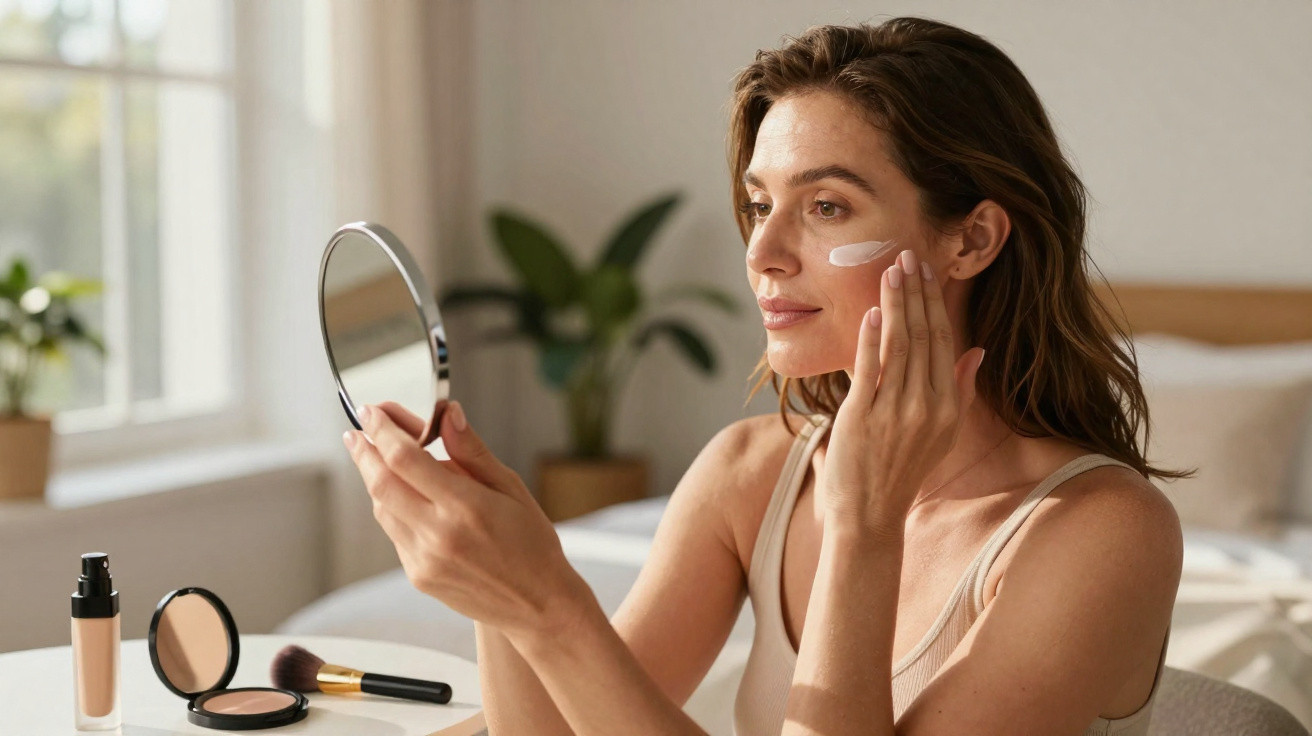
Make-up after 40 can enhance the face without relying on multiple layers or complicated techniques. One detail that can make a real difference is the placement of products such as concealer, blusher and highlighter, creating areas of light and colour that follow the face’s natural contours without overloading the skin.
Why can a make-up finish change the appearance of the face?
As the years pass, the skin’s texture may change, with fine lines and areas that are less even becoming more noticeable. Thick layers of product can settle into these areas and draw further attention to them, particularly if the finish is very dry or heavy.
For this reason, a lighter make-up look may help create a more rested appearance. The aim is not to completely conceal the skin’s natural texture, but to apply products strategically while keeping the finish as even as possible.
Which placement detail can make a difference?
One key point is to avoid applying too much product where expression lines are present. Concealer, for instance, can be used sparingly and focused mainly on areas that need evening out, rather than covering the entire under-eye area with a thick layer.
Blusher can also be placed slightly higher on the cheekbones, following the face’s natural shape. Highlighter, meanwhile, should be applied sparingly to strategic points, as highly reflective particles may emphasise texture and lines.
How can you create lighter make-up after 40?
Start by preparing the skin with moisturiser suited to your skin type, allowing it to settle before applying make-up. Next, use a moderate amount of foundation or another complexion product, blending it thoroughly and preventing it from gathering in lines.
Then apply concealer only where it is needed, and select a blusher that adds colour without leaving an overly defined mark. If you use powder, apply small amounts only to the areas that genuinely need shine control. The result is likely to look more natural when the skin still looks like skin.
Who should adapt this technique, and in which situations?
Mature skin does not share the same characteristics in every case. Some skin types may be drier, whereas others may still experience oiliness in certain areas. Product texture, finish and quantity should therefore be adjusted to individual needs.
It is also worth taking the lighting in the setting into account. Make-up that appears balanced in natural light may look more intense under artificial lighting. For anyone seeking a more rested appearance, the best result usually comes from thin layers, soft transitions and products positioned in line with their own features.















Comments
No comments yet. Be the first to comment!
Leave a Comment