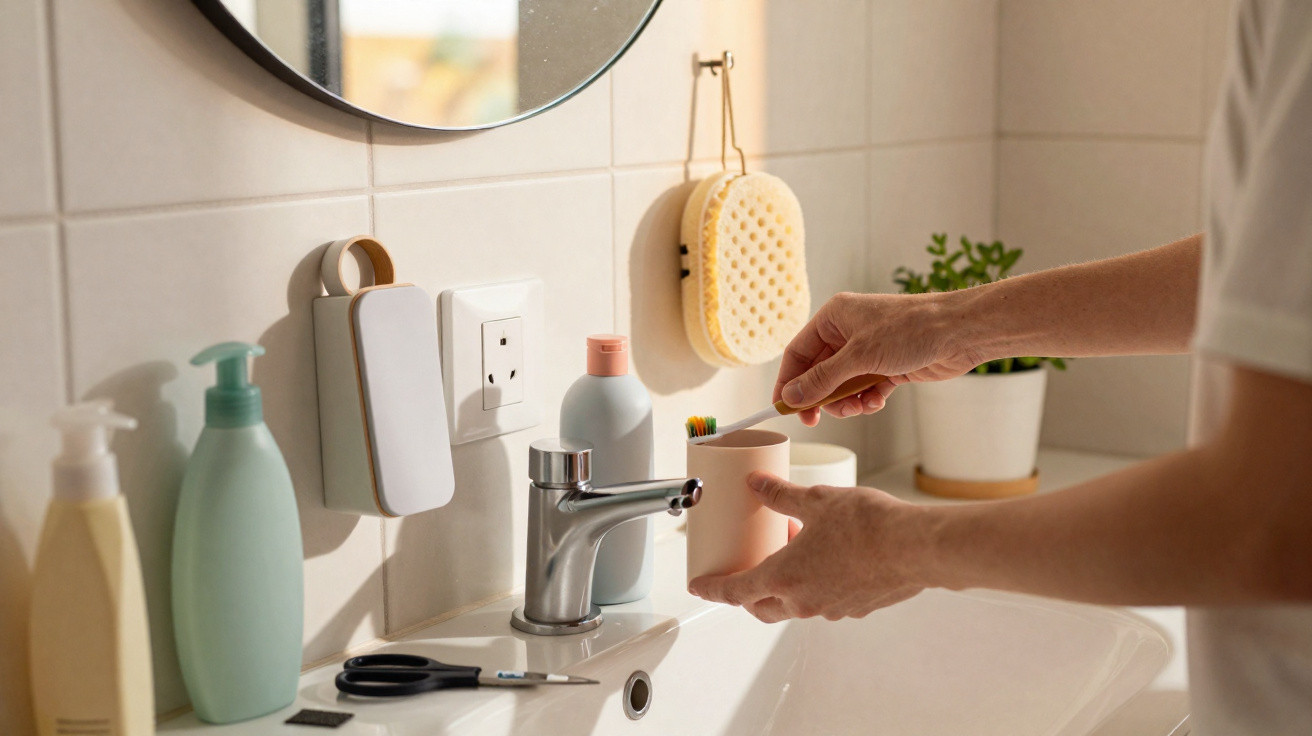
An empty shampoo bottle usually goes straight into the bin once the product is finished. Yet its rigid plastic is water-resistant, naturally waterproof and sturdy enough to become practical bathroom organisers with only a pair of scissors. The Japanese mottainai philosophy - which encourages making the fullest possible use of every resource before throwing it away - inspires three practical uses that solve real bathroom storage problems without spending anything.
Why a shampoo bottle is more useful in the bathroom than it seems
Shampoo bottles are made to withstand constant moisture, contact with chemical products and knocks without cracking. While these properties protect the contents in the shower, they are equally useful when the bottle is repurposed as an organiser in that same setting. Unlike cardboard or wooden storage containers, shampoo-bottle plastic does not absorb water, develop mould or require anything more than the soap already used in the bathroom to clean it.
Their shape is another benefit. Most bottles have fairly flat sides, so they remain stable once cut and placed on a smooth surface. Bottles with pumps or dispensing nozzles tend to use thicker, more rigid plastic, producing longer-lasting organisers. Small, medium and large bottles create organisers in different sizes for particular uses around the bathroom.
- Mobile phone holder for the charger: keeps a phone off the floor and away from damp surfaces while charging by creating a hanging tray attached directly to the socket.
- Draining sponge holder: small holes in the base let water run away, keeping the sponge elevated and dry between showers, improving hygiene and reducing mould growth.
- Toothbrush holder and accessory organiser: cut to a suitable height, it keeps toothbrushes, combs, make-up brushes and razors together while leaving the basin completely clear.
- Customisable with spray paint or adhesive paper: once cut, the bottle can be painted or covered to resemble an accessory bought from an organisation shop.
- Zero cost and the mottainai philosophy: using the material before disposing of it reflects the Japanese principle of valuing every resource fully - the bottle remains useful long before it becomes rubbish.
Idea 1: a mobile phone holder attached to the socket
A phone charging on the bathroom floor or balanced on a damp surface is a common issue in many homes. The shampoo-bottle solution is straightforward and effective: take a rigid plastic bottle and cut the base to roughly 18 centimetres high. In the remaining upper section, cut a central tab-shaped opening - a rectangle about 4 centimetres wide - that will fit around the wall charger adaptor.
This creates a suspended tray held in place by fitting the tab over the charger at the socket, with no glue or tape required. The phone sits inside the cut bottle while it charges, away from damp surfaces and out of the reach of young children. The bottle's waterproof plastic creates no additional electrical risk, and the holder comfortably supports the weight of any smartphone.
Idea 2: a sponge holder with drainage holes
A bath sponge left on a wet surface builds up bacteria much faster than one kept somewhere airy with effective drainage. That is the issue addressed directly by the second project. Cut the bottle lengthways, leaving one side taller than the other to form a sloping shape that encourages water to drain away. Use a nail heated over the cooker flame or a fine drill bit to make small holes in the base of the cut bottle.
Cutting and finishing tips for all three projects
Four measures make the difference between a rough result and a professional-looking finish.
Use sharp, straight-cut scissors so the plastic edge is clean and free from burrs. Before cutting, mark the line with a permanent pen and masking tape - the tape acts as a guide and stops the scissors from slipping. Once cut, lightly sand the edge with fine finishing sandpaper to remove any points that could hurt hands during use. To make drainage holes in the sponge holder, heat a thick nail over a cooker flame for 10 seconds and press it against the plastic - the heat melts the material rather than cracking it, creating neat, cleanly finished holes.
For decoration, apply spray paint with a plastic primer before adding the final colour - without primer, the paint peels away within a few days of water exposure. Self-adhesive covering paper also works very well on the outside of the bottle and needs no surface preparation. Spending one afternoon sorting the bottles that have accumulated and customising them all in the same colour scheme changes the look of the bathroom without any expense beyond the finishing materials.
The holes allow water to drain freely, leaving the sponge raised and dry between showers. A sponge that stays damp against an enclosed surface develops odours and bacterial growth much sooner than one stored in a holder with proper drainage. This simple hygiene measure makes a genuine difference to the sponge's cleanliness and lifespan over the weeks.
Idea 3: a toothbrush holder and basin accessory organiser
Travel-size or small shampoo bottles, cut to around 10 centimetres high, make ideal toothbrush holders. Create drainage holes in the base using the same method as in the previous project, so water running from the brushes does not collect inside. Once cleaned, cut and perforated, the bottle becomes a robust, waterproof and washable toothbrush holder.
Larger bottles, cut slightly taller, can hold combs, make-up brushes, disposable razors and eyeliner pencils in an orderly group. Set on the basin, these organisers replace the build-up of scattered products that makes a bathroom look cluttered. The Japanese principle behind all three projects is the same: every item has a designated place, the basin stays clear, and bathroom cleaning becomes quicker because there are no loose objects to move before wiping the surface. Share this with anyone who has a small bathroom and does not know how to organise the basin without buying new accessories.
















Comments
No comments yet. Be the first to comment!
Leave a Comment