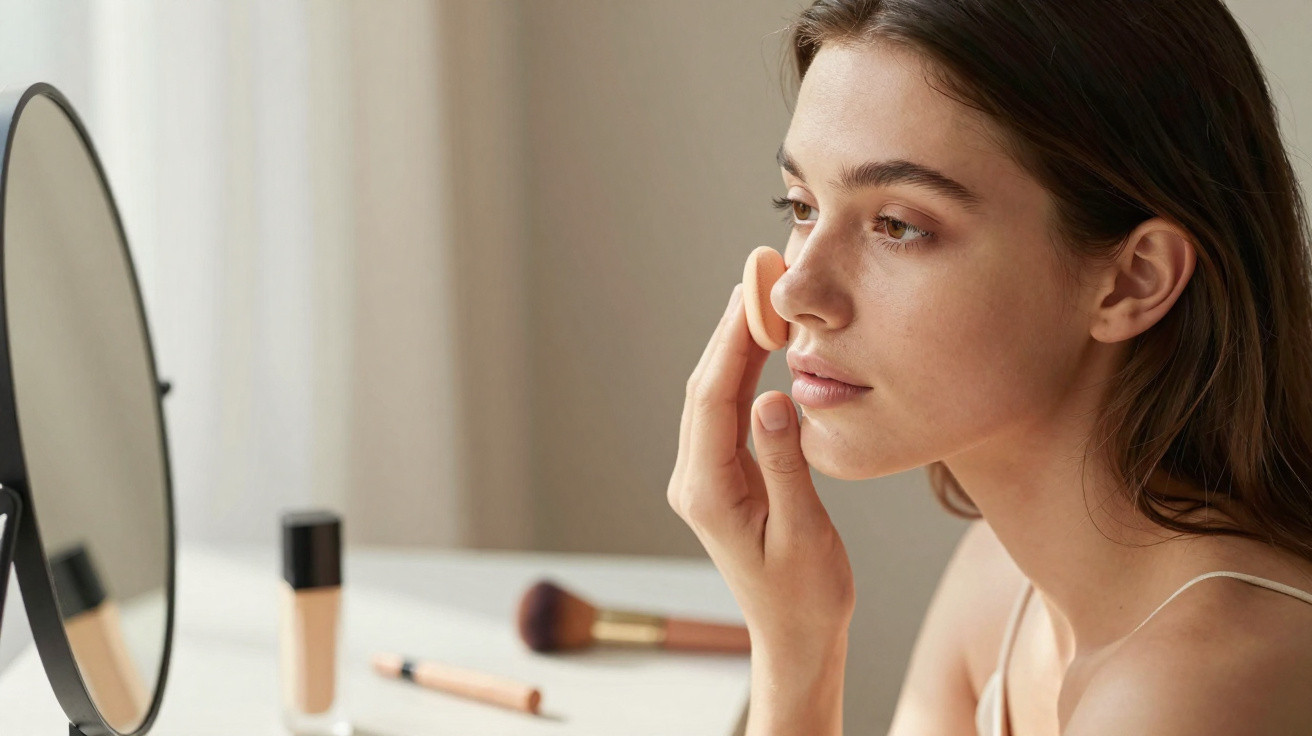
A make-up professional is now advising a radical redistribution of product.
Foundation is often seen as a lifesaver when spots, dark circles or a dull-looking complexion become bothersome. Applied once, it makes everything appear more even, fresher and better cared for. A few hours later, however, the mirror often reveals a different picture: a shiny forehead, make-up settling into fine lines, and skin that looks more ‘painted on’ than natural. An experienced make-up artist explains that two facial areas need far less product than most people realise.
Why foundation so often ‘turns’ during the day
Anyone who applies their make-up carefully in the morning naturally expects the finish to last into the evening. Yet people are constantly reaching for powder again at the office, on the train or at a party. The reason is rarely the foundation brand alone; it is usually the amount used and how it is distributed.
Most people automatically apply foundation in the same thickness across the entire face: forehead, nose, cheeks and chin - one surface, one product. While that sounds sensible, it creates an issue because skin behaves very differently from one area to another. The classic T-zone in particular often causes problems.
The make-up artist advises changing the strategy rather than the product: use less foundation exactly where it is quickest to ‘turn’.
The T-zone problem area: forehead and nose overload foundation
The notorious T-zone includes the forehead, nose and, in many cases, the chin as well. Sebaceous glands in this area generally produce more oil than those on the cheeks. People with combination or oily skin will know the situation well: the cheeks look normal, while the forehead and nose become shiny after only a short time.
When these already oil-prone areas receive as much foundation as the rest of the face, the following happens:
- Skin oil mixes with the foundation.
- The texture becomes slippery and starts to move.
- Product collects in pores and fine lines.
- The surface looks uneven, patchy and greasy-shiny.
This is precisely why many people reach for powder again after just an hour. The professional repeatedly notices the same thing in everyday life: the more product sits in the T-zone, the faster the complexion looks uneven - and the more the make-up feels like a mask.
The key rule: foundation on the cheeks, just a touch on the forehead and nose
The make-up artist’s technique is straightforward, but it turns the traditional routine upside down: full coverage does not belong across the whole face. Instead, it should mainly go where skin is calmest and driest - usually the cheek area.
How the professional applies foundation
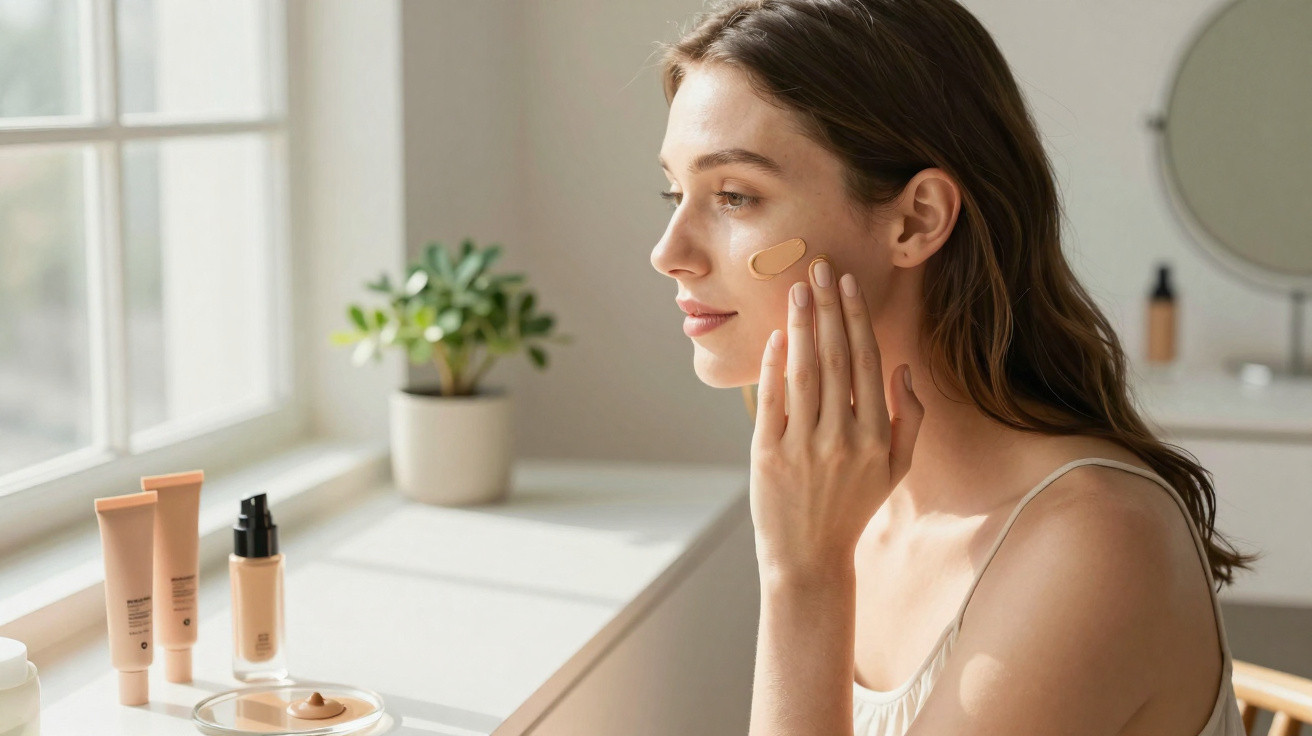
- Apply foundation strategically: Start by applying foundation to the cheeks, chin and a little onto the neck to even out the skin tone.
- Use the remaining product: Only after these areas are covered should you sweep the residue left on the brush, sponge or fingers very lightly over the forehead and nose.
- Keep it to a veil: This leaves only an extremely fine film on the T-zone - more of a veil than an actual layer.
Rather than loading up the T-zone, the professional uses only the small amount of product left over - that is entirely enough for an even overall finish.
The visible result is skin that appears fresher, smoother and less ‘made up’. Shine develops later, make-up settles less into fine lines, and the complexion still looks noticeably more polished by the end of the day.
Targeted coverage instead of hiding everything beneath one layer
Of course, even a minimal layer of foundation has its limits. Redness around the sides of the nose, individual spots on the forehead or small areas of pigmentation may still show through. In that case, the make-up artist does not recommend adding more foundation, but correcting those areas precisely.
Concealer instead of a thick foundation layer
Anyone wanting stronger coverage in individual areas should work accurately:
- Dab a little concealer or colour corrector directly onto the spot or redness.
- Gently press it in using a small brush or your finger; do not rub it over a large area.
- Softly blend the edges so that no harsh lines remain.
This keeps the forehead light and flexible overall, without leaving noticeable areas bare. The professional prefers to warm up the area with a little bronzer around the edge of the forehead afterwards, rather than applying opaque make-up across the whole area. This adds definition without completely sealing the pores.
How to adapt the tip to your skin type
The ‘less is more’ approach in the T-zone works in principle for every skin type; it simply needs small adjustments.
For oily or very shiny skin
Those prone to oily skin benefit particularly from using less foundation on the forehead and nose. The make-up artist also recommends:
- Apply only a thin layer of translucent powder to the T-zone.
- Press the powder in rather than rubbing it, so the foundation stays in place.
- During the day, first remove excess oil with a tissue or blotting paper.
- Only then apply a very light touch of powder, rather than building up new make-up layers.
Anyone who adds another layer at every sign of shine can quickly create a thick crust. The skin then appears blemished, even though it has really just been overworked.
For dry skin or forehead lines
Dry or mature skin also benefits from avoiding thick layers of foundation in the T-zone. Expression lines on the forehead in particular tend to ‘take in’ product:
- Too much foundation settles into lines and unnecessarily emphasises fine wrinkles.
- Over the course of the day, the surface can begin to crumble or crack.
- The forehead quickly looks harsher and more stressed than it would without make-up.
A minimal amount, worked in well, makes the face look softer. Skin appears alive rather than like a rigid mask. To help prevent dehydration lines, apply a light moisturiser that absorbs well to the forehead before doing your make-up, wait briefly, and only then use the thin layer of foundation.
Useful additions for a long-lasting, fresh complexion
Foundation is only one part of the routine. To get the most from the make-up artist’s tip, it also helps to pay attention to a few finer details.
| Step | What works well |
|---|---|
| Skincare | Use a light, suitable day cream that is neither greasy nor tightening. |
| Primer (optional) | For enlarged pores in the T-zone, use a mattifying primer only in that area. |
| Foundation | Choose medium coverage and build it up in thin layers rather than applying a lot of product immediately. |
| Setting | Use translucent powder sparingly on the T-zone; apply little or no powder to the cheeks. |
| Touch-ups | Remove oil first, then correct only where needed instead of covering the whole face again. |
Why less foundation often looks younger
Many people use too much product out of insecurity, hoping to conceal every uneven area. Ironically, this is exactly what can make the face look older very quickly: the denser the layer, the more expression lines, pores and fine wrinkles become defined once the skin moves, sweats or produces oil.
Working only where the complexion genuinely looks uneven usually creates a much fresher effect instead. Facial expressions remain visible, skin texture still looks like skin - and small imperfections make the face seem more alive, not neglected.
For everyday wear, it is often enough to make the cheeks look more even, lightly conceal shadows around the nose and smooth the forehead very gently. The ‘perfect Instagram skin’ associated with filter mode quickly looks artificial in real life. A subtly visible skin tone, a hint of natural shine and noticeable pores are not flaws; they are normal.
Anyone who tries the make-up professional’s tip will usually notice it after just one day: powder is needed less often, the face feels freer, and foundation works more with the skin than against it. The forehead and nose in particular benefit from less shine, less emphasis on fine lines and a noticeably more natural finish.















Comments
No comments yet. Be the first to comment!
Leave a Comment