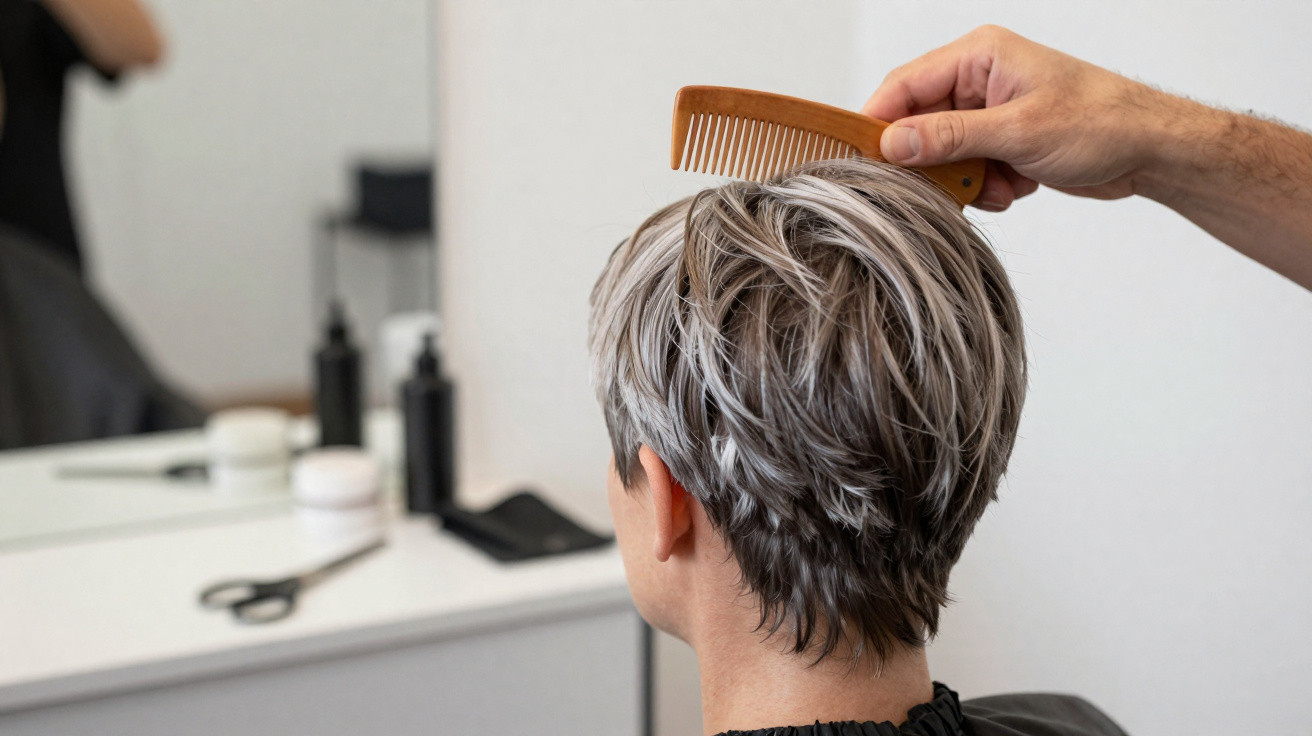
Going grey can bring an unexpected styling problem: hair that once behaved predictably may start to feel drier, coarser, flatter at the roots or more prone to fluffing up. A shorter cut can be a useful reset, but the trick is not simply to cut it all off. Choose a shape that works with the texture you have now, using thoughtful layers, a strong outline or a flattering fringe.
Grey, white and salt-and-pepper hair often has naturally varied tones, which can look especially effective in a well-shaped short cut. Whether you are growing out colour or have worn your silver hair for years, these nine styles offer practical options with enough character to make the colour feel intentional.
A good short cut works with your growth patterns and texture rather than asking you to fight them every morning.
Why shape matters with grey hair
Grey hair is not one texture. Some people notice that it feels coarser or more resistant; others find it becomes finer, drier or wavier. Changes in density can also affect how a familiar haircut sits.
A considered short cut can remove worn ends and give the hair a cleaner silhouette. Blunt ends may make fine hair appear fuller, while gentle layers can reduce bulk in thick hair and create movement in hair that lies flat.
The aim is balance, not maximum volume. A little lift at the crown, softness around the face and ends that look deliberate can make a significant difference to how easy the cut is to wear.
Pixies with softness and texture
1. The airy textured pixie
This cut keeps the sides and back short, with longer, softly textured pieces through the top. It suits hair with a natural bend, a cowlick or texture that does not want to sit pin-straight.
Ask for soft layers rather than aggressively chopped ones. The result should look light and moveable, not spiky. A longer front section can be worn swept to one side, lifted upwards or slightly undone.
2. The close, confident pixie
A close pixie is cropped neatly around the ears and nape, with a little length left on top. It is a lower-maintenance choice, although it will usually need regular trims if you want to preserve its shape.
It does not have to mean one uniform length. A short fringe, side-swept section or softly tousled crown can make the style feel more personal. Take reference photographs to your appointment, but discuss how much styling you realistically want to do.
3. The side-swept long pixie
A long pixie offers more coverage through the fringe and around the forehead, while keeping the nape and ears neat. It is a good middle ground if you are unsure about going very short.
The longer section can be swept diagonally, tucked behind an ear or styled into a gentle quiff. Ask your stylist to work with your natural parting: a cut that respects a strong growth pattern is usually easier to manage at home.
Crops that create lift and definition
4. The swept-back crop
A swept-back crop has tidy sides and back, with enough length through the top to direct away from the face. It can work well where the front naturally grows forwards or where you have a pronounced side parting.
For a softer finish, blow-dry the front backwards with a small round brush and loosen it with your fingers. If your hair is thick, subtle internal layers can prevent the top from becoming too solid or helmet-like.
5. The salt-and-pepper crown crop
If your grey comes through as streaks or mixed tones, this shape can show off the contrast. The sides are relatively close, with a little extra length and texture at the upper head and crown.
It may be useful if the temples feel less dense than the crown. Directing the top upwards and slightly to one side creates movement without trying to build volume everywhere.
6. The lifted crown crop
This crop has closely shaped sides with longer layers through the top, directed upwards and back. It is particularly useful for hair that tends to look flat at the roots.
Keep the lift focused at the crown and leave the fringe softer. Too much height around the entire head can make the shape feel stiff rather than modern.
Short hair still needs structure: a clean neckline, an intentional crown shape and a fringe that suits your natural movement.
Short styles for curls, coils and fuller hair
7. The rounded curly crop
Silver curls and coils can look striking in a rounded crop that preserves the natural pattern. The cut should be shaped to your own curl formation, rather than cut very short all over without considering how it springs up.
Shrinkage can be considerable, so consider having your consultation with your hair in its normal natural state. A stylist experienced with your texture can help create a balanced outline without making the sides overly wide or the crown too flat.
Refresh curls with water and a small amount of suitable leave-in product rather than repeatedly brushing them out. Gentle conditioning is often more helpful than loading curls with heavy styling products.
8. The tapered white crop
A tapered crop creates a neat framework for predominantly white or very pale grey hair. The nape and sides are gently graduated, while the top remains rounded and touchable.
A soft taper generally grows out more easily than sharply clipped or strongly defined lines. If you do choose a more dramatic barbered finish, be prepared for more frequent appointments to keep it looking precise.
Quick styling routine for cropped hair
- Apply a small amount of lightweight mousse or styling cream to towel-dried hair.
- Dry with your fingers, lifting the roots rather than pressing the hair flat with a brush.
- Use a tiny amount of matte paste or flexible styling cream to define a few sections around the crown or fringe.
Use product sparingly. Too much can leave pale hair looking dull, separated or greasy.
The sharp chin-length bob
9. The chin-length blunt bob
Not every short style needs layers. A bob sitting around the chin can make fine hair look denser because the ends are kept in one strong line. It works with either a centre or side parting and still allows the hair to be tucked behind the ears.
A deep side part can add softness and root lift, while a centre part creates a cleaner, more graphic finish. If your hair tends to expand or puff out, discreet internal layers may help while preserving the blunt outer edge.
This is also a practical option when growing out a pixie or gradually cutting away old colour from the ends.
Common mistakes when choosing a short grey haircut
- Cutting all hair to one very short length: coarse hair may stick out, while fine hair can look sparse. Tailored variation often helps.
- Over-layering fine hair: excessive layers can remove the weight that gives the ends fullness.
- Ignoring cowlicks and partings: these should influence the design of the fringe and crown.
- Using purple shampoo too often: some formulas can leave a temporary violet or dull cast. Follow the instructions and alternate with your usual gentle shampoo if needed.
- Choosing a high-maintenance cut unintentionally: ask how often it is likely to need reshaping before committing.
- Trying to remove every bit of texture: a little wave, bend or softness can make short grey hair look fuller and less rigid.
Looking after silver hair between appointments
Keep your routine straightforward. Use a conditioner that leaves your hair comfortable rather than coated, use heat protection before blow-drying or straightening, and avoid very hot tools where possible. Central heating can be drying in winter, while a hat can offer welcome protection on bright summer days.
If you swim, rinse your hair with fresh water afterwards. Pool chemicals and minerals may affect the appearance or feel of very light hair. Patch-test a new toning product according to its directions, and stop using it if it causes scalp irritation.
Never use household bleach, cleaning products or homemade chemical mixtures on hair. They can damage the hair and cause serious scalp irritation or burns.
The best short grey haircut is one that suits your texture, face-framing preferences and weekday routine. At your consultation, explain whether you normally air-dry or blow-dry your hair, show photographs of shapes you like and be honest about how much effort you want to spend each morning. The right crop, pixie or bob can make your natural silver tones the most distinctive part of your look.













Comments
No comments yet. Be the first to comment!
Leave a Comment