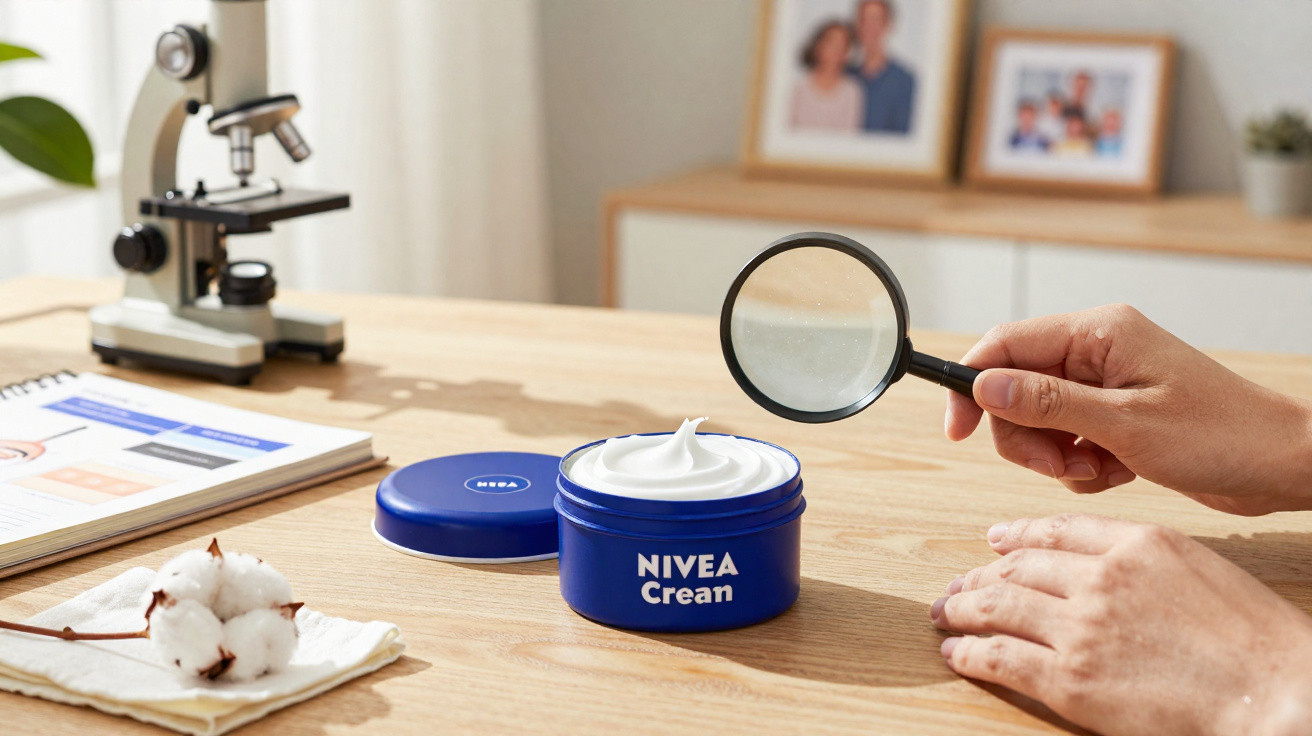
On bathroom shelves across the world, the same little blue tin can be found, often handed down through generations with scarcely a question about it.
A new set of laboratory tests has brought this nostalgic staple back into focus, prompting many to ask what they have actually been applying to their skin for all these years.
The new tests that put a century-old cream back in the news
Spain’s foremost consumer organisation, OCU, recently carried out a detailed technical assessment of the classic Nivea Creme. It measured the product’s moisturising performance, examined its formulation and assessed whether its claims matched its effects on real skin. For a cream often displayed alongside premium serums and fashionable Korean gel moisturisers, the findings offer a notably down-to-earth view.
Simple protocol, measurable hydration boost
In OCU’s trial, volunteers used Nivea Creme on their forearms twice daily for a fortnight. Instrument readings taken after 15 days showed a noticeable increase in skin hydration. Participants also said their skin felt less tight and rough, and more comfortable overall. In other words, the cream continues to deliver the central benefit it has long promised: reducing moisture loss and softening dry areas.
Nivea’s iconic blue tin behaves less like a miracle lotion and more like a sturdy moisture shield for thirsty skin.
This may seem unremarkable at a time of sweeping anti-ageing promises, yet dermatologists commonly appreciate precisely this type of result. Better water retention helps the skin barrier function more effectively. In practice, this generally leads to less flaking, fewer minor cracks and reduced irritation caused by cold weather, soap and friction.
The surprising power of a familiar smell
One point that stood out to testers had nothing to do with scientific instruments: the fragrance. Numerous participants immediately connected the scent with childhood, grandparents or family bathrooms. Such “olfactory memory” helps explain why some consumers return to the product even after experimenting with more sophisticated creams.
Companies invest heavily in forging these associations. Here, Nivea’s almost unchanged scent has become part of the application ritual, offering a sense of reassurance and continuity that clinical, fragrance-free formulations do not provide.
A thick texture that works best when used strategically
Nivea Creme makes no attempt to disguise its rich, dense consistency. It takes time to spread, leaves a noticeable layer and feels substantial on the skin. On particularly dry or coarse areas - including hands, elbows, shins and heels - that texture can lock in moisture and provide protection from wind, frequent washing and central heating.
Applied all over the body, however, it may feel overly rich. Many users consider it too greasy for daytime facial use, particularly when they have normal, combination or oily skin. Dermatologists commonly recommend a more selective approach:
- Use a pea-sized amount rather than taking large scoops.
- Put it on chiefly at night, when shine is less of a concern.
- Target areas that are tight, flaky or exposed to friction instead of covering whole limbs.
This form of “spot treatment” allows users to make use of its powerful occlusive properties without leaving the skin feeling excessively oily.
What is really inside the blue tin?
A short, conservative formula that favours barrier repair
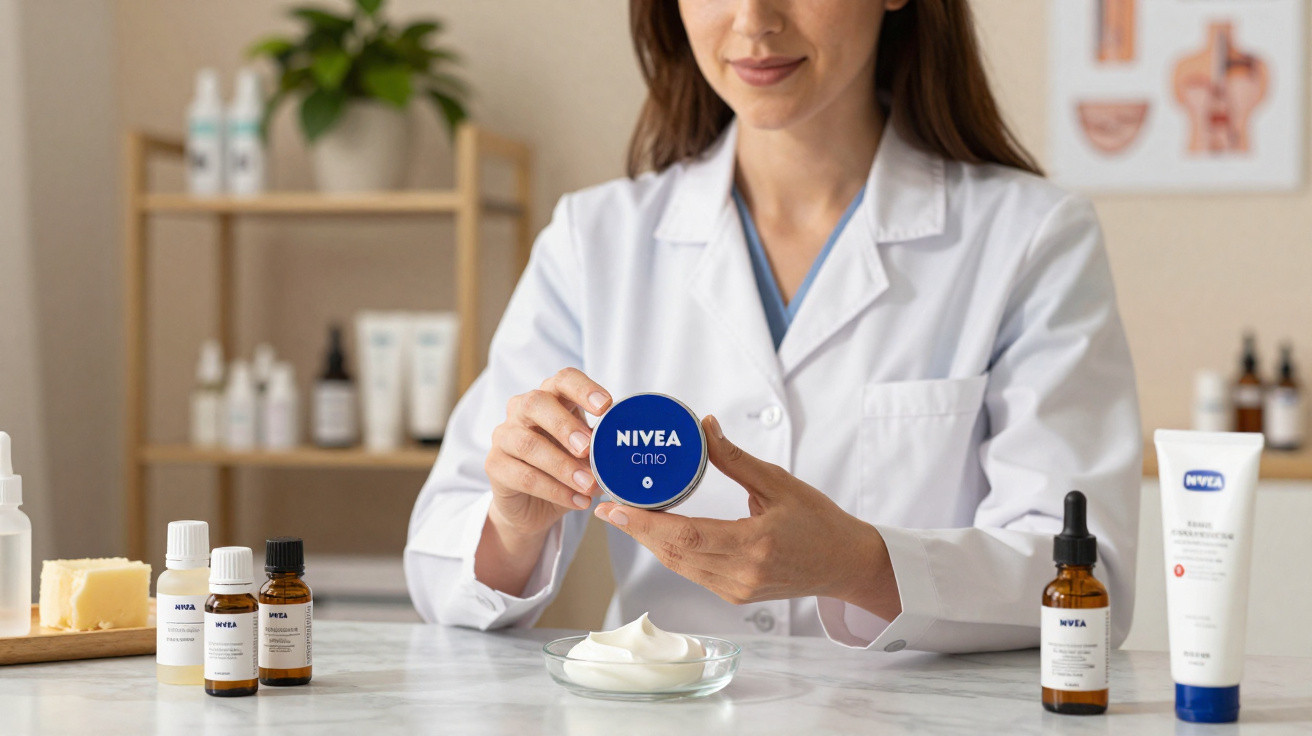
OCU’s chemists noted that the ingredient list is relatively streamlined compared with that of many current moisturisers. Its foundation consists mainly of mineral oils and waxes: established occlusive ingredients that form a layer over the skin to limit water loss. Emulsifiers are included to maintain a stable texture, alongside a modest fragrance blend.
The cream skips several controversial preservatives such as parabens, EDTA and BHT, which often spark hot debates in beauty forums.
That does not make the product “natural” in a strict sense. Its petroleum-derived ingredients have been used in dermatology for decades because they are inexpensive, stable and unlikely to oxidise. For most users, this means dependable moisturising performance with a low likelihood of irritation.
Fragrance allergens: a quiet red flag for reactive skin
The much-loved scent also has a technical downside. The fragrance mixture includes regulated perfume allergens such as limonene, geraniol and citronellol. These compounds feature in a vast number of scented cosmetics and household goods. Most people experience no issue with them, but a small group with highly sensitive or allergy-prone skin may develop redness, itching or tiny bumps.
| Component | Role in the cream | Potential issue |
|---|---|---|
| Mineral oils & waxes | Create a protective layer and limit water loss | Can feel heavy on oily or acne-prone skin |
| Emulsifiers | Combine water and oil while keeping the texture stable | May occasionally sting severely damaged skin |
| Fragrance allergens | Produce the recognisable Nivea scent | May cause reactions in people with perfume allergies |
Anyone who knows they have a fragrance allergy should patch-test a small amount on the inner arm for several days before using it over wider areas. Those receiving treatment for conditions such as eczema or rosacea often fare better with fragrance-free products that have been prescribed or approved by their dermatologist.
A “multi-tool” cream that fits many everyday roles
Nivea Creme continues to sell tens of millions of pots annually partly because it is so adaptable. In many homes, it serves as a kind of skincare Swiss Army knife:
- An emergency hand cream after exposure to strong detergents or hot water.
- A softening balm for cracked heels and coarse elbows.
- A soothing layer after shaving the legs or underarms.
- A protective wind barrier for the cheeks and nose before a winter walk.
For facial skin, its strongly occlusive character can be useful in freezing conditions or during brief night-time “slugging-style” routines, in which moisture is sealed over a lighter hydrating serum. For acne-prone skin, though, this same protective layer can block pores, so dermatologists often guide these patients towards lighter, non-comedogenic lotions.
How a 1911 cream became a cross-generational myth
Consistency over a century of marketing noise
Since Nivea Creme launched in 1911, its essential proposition has changed very little: moisturise dry skin, defend it against the elements and remain accessible to ordinary households. The packaging has been adjusted and the formula updated to meet modern rules, but the cream’s fundamental identity remains clear.
In a market where products are repeatedly relaunched with fresh buzzwords, this understated consistency is distinctive. The blue tin is immediately recognisable whether it appears in Europe, Latin America or Asia. The company reportedly sells more than 100 million units a year, a scale achieved by very few moisturisers.
Price, perception and the “good enough” factor
Cost is also central to the cream’s popularity. Across many European markets, a medium-sized tin costs only a few euros. Even bigger family-sized formats rarely pass the psychological price point that makes shoppers regard a product as a luxury purchase. This makes Nivea a “good enough” everyday essential: neither glamorous nor technologically advanced, but affordable and dependable.
Where boutique brands chase prestige, Nivea wins by feeling ordinary, functional and always around.
That balance is significant when many people are reducing discretionary spending while still seeking some degree of self-care. A low-cost pot that lasts for months and eases dry hands after doing the washing-up can offer a small but manageable comfort.
The blue tin as cultural object
The tin’s design is also worth considering. With its flat, dark-blue form and white lettering, it has become an icon in its own right. It fits equally naturally into vintage advertisements, family bathrooms and social-media “shelfies”. For marketers, that is highly valuable: the pack functions almost as a three-dimensional logo.
Together, this visual signature, the recognisable scent and the tactile experience make the cream more than a simple formula. It becomes an understated emblem of care at home. When deciding what to purchase again, many people give this emotional quality as much weight as an ingredient list.
Who should actually use classic Nivea cream in 2025?
Skin types that benefit most - and those that should rethink
Based on independent testing and established dermatological understanding, classic blue-tin Nivea Creme is most suitable for:
- Dry to very dry body skin that needs a physical protective barrier.
- People who spend substantial time outdoors in cold, windy or dry weather.
- Homes looking for one shared product for hands and rough areas.
It is less appropriate for:
- Oily or acne-prone facial skin, especially in warm climates.
- People with confirmed fragrance allergies or a strong intolerance to perfume.
- Anyone wanting advanced anti-ageing ingredients, such as retinoids or peptides, within the same product.
For many people, the most effective arrangement is to use a lighter, fragrance-free moisturiser on the face and larger body areas, while keeping a pot of Nivea Creme available for rough patches and winter emergencies.
What this case says about skincare myths in general
The revived interest in Nivea says something wider about cosmetic buying habits. Skincare marketing is frequently presented as a pursuit of innovation, with new active ingredients, futuristic textures and clinical claims. Yet one of the world’s most enduring products earned its position through consistency rather than reinvention.
This is not to suggest that older is invariably better. Certain older formulas depend heavily on fragrance or occlusive ingredients that may not align with current preferences or particular skin conditions. Nonetheless, the Nivea story demonstrates that a straightforward, well-tolerated formula can outlast fashion trends and still perform well in modern hydration tests.
For anyone daunted by packed skincare aisles, it provides a helpful way to assess products: first, determine whether the skin primarily requires water, oil or both. Next, consider how much fragrance you can personally tolerate. Finally, ask which texture you will genuinely apply every day. Comparing a heritage product such as Nivea with those answers can make its place clearer - whether as a regular essential, a reserve product or one to avoid.












Comments
No comments yet. Be the first to comment!
Leave a Comment