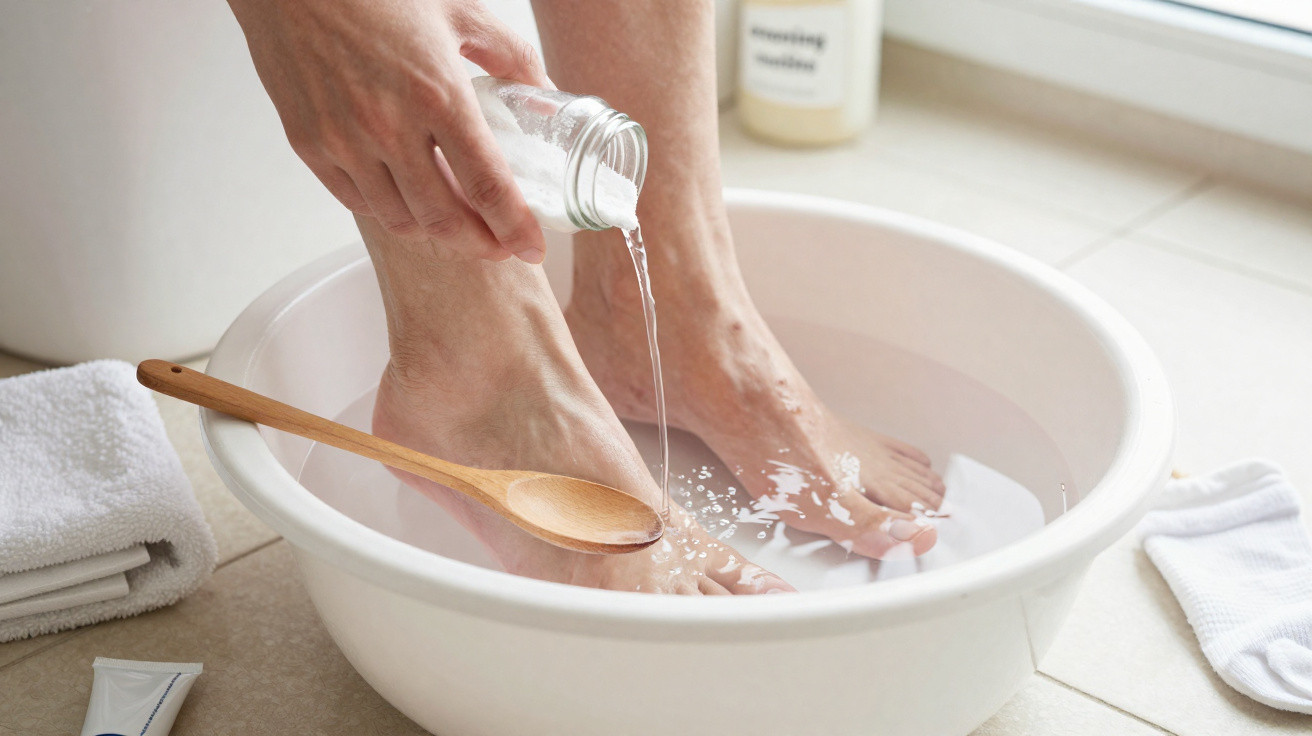
Closed shoes, wet commutes and long days on your feet can leave skin feeling rough and feet less than fresh. A short warm foot soak can be a comforting reset: the water temporarily softens the outer layer of dry skin, while a small amount of bicarbonate of soda may help freshen feet.
The key is to keep it gentle. A 10- to 15-minute soak, followed by careful drying and moisturiser on the heels and soles, is enough. Bicarbonate of soda is not a treatment for an infection, excessive sweating or damaged skin, but an occasional soak can fit into a simple foot-care routine.
Why feet become rough and smelly
Feet contain many sweat glands. Sweat itself does not necessarily smell, but odour can develop when moisture is trapped in socks and footwear and mixes with bacteria on the skin and inside shoes.
Wearing the same shoes on consecutive days, putting shoes on when feet are still damp, and leaving wet trainers in a poorly ventilated place can all make odour more noticeable. This is particularly common in autumn and winter, when boots and heavier socks stay on for longer.
Dry, hard skin is usually caused by pressure and friction. Heels, the balls of the feet and the sides of the big toes are common areas. Long periods standing, walking, wearing open-backed sandals or simply having naturally dry skin can all contribute.
A soak will not remove a thick callus or heal deep heel cracks. Its useful role is to soften surface skin briefly, so that moisturising and gentle care are easier afterwards.
The helpful part of a foot soak is usually the routine around it: dry thoroughly, moisturise dry areas and allow footwear to air between wears.
What bicarbonate of soda can - and cannot - do
Bicarbonate of soda, also called baking soda or sodium bicarbonate, is mildly alkaline. Used in a small amount in water, it may leave feet feeling fresher and can be a low-cost addition to an occasional soak.
It is important not to expect too much from it. Foot odour often comes from a combination of sweat, bacteria and damp footwear. One soak cannot clean the inside of shoes, stop sweating or deal with an underlying skin condition.
Bicarbonate of soda is not a reliable treatment for athlete’s foot, fungal nail infection, eczema or other rashes. If there is persistent itching, peeling, soreness or changes to the nails, speak to a pharmacist, podiatrist or GP rather than repeatedly trying home remedies.
It can also be drying or irritating, especially if used too often or in a strong mixture. Treat it as an occasional freshening soak, not a daily treatment.
Why warm water can soften dry-looking skin
Warm water temporarily hydrates and softens the outermost layer of skin. This may make rough areas feel less stiff and reduce the temptation to scrub or file them aggressively.
Keep the water comfortably warm rather than hot. Hot water can worsen dryness and may burn skin. This matters particularly for anyone with reduced sensation in their feet, who may not notice that the water is too hot.
Ten to 15 minutes is plenty. Prolonged soaking can leave skin waterlogged and may make dry skin feel more uncomfortable once it dries.
How to make a gentle foot soak
Use a clean, dedicated foot basin if possible. If you use a washing-up bowl, clean it thoroughly before and after, and do not use it for food preparation afterwards.
1. Fill the basin
Add enough comfortably warm water to cover the feet to around ankle level. Test the temperature with your hand or wrist before putting your feet in.
2. Add a modest amount of bicarbonate of soda
Stir in one or two tablespoons of bicarbonate of soda. It does not need to dissolve completely. A stronger mixture is more likely to leave skin feeling tight or irritated.
3. Soak for up to 15 minutes
Sit comfortably and avoid picking at skin, cutting cuticles or scraping heels while they are softened. If the water starts to feel cool, finish the soak rather than topping it up with hot water.
4. Dry every part of the feet
Pat feet dry using a clean towel. Pay particular attention between the toes, where trapped moisture can contribute to skin problems.
5. Moisturise the dry areas
Apply a plain moisturiser or foot cream to the soles, heels and other dry patches. Avoid rich cream between the toes, as it can leave the area unnecessarily damp.
Softened skin is not a signal to scrub harder. If you use a foot file, use it lightly on intact skin only and stop if the skin becomes pink, tender or sore.
Everyday habits that help with foot odour
A foot soak is most useful alongside habits that limit sweat and dampness. Small changes can make more difference than adding extra ingredients to the water.
- Wash feet daily with lukewarm water and a mild cleanser, then dry them carefully.
- Wear clean socks every day, changing them after exercise, a wet journey or a particularly active day.
- Choose socks that suit the activity: breathable cotton blends can be comfortable for everyday wear, while moisture-wicking sports socks may be useful for exercise.
- Rotate shoes where possible, giving each pair time to dry fully before wearing them again.
- Remove washable or removable insoles occasionally and allow them to air out.
- Dry trainers at room temperature, away from direct heat such as a radiator, which can affect glues and materials.
- Consider a footwear deodoriser if the smell is mainly coming from the shoes rather than the skin.
For people who sweat heavily, carrying a spare pair of socks can be more practical than frequent soaking.
Common mistakes to avoid
Home treatments are often less helpful when they become too harsh. Keep the routine simple.
- Using hot water: this can burn skin and aggravate dryness.
- Adding too much bicarbonate of soda: concentrated mixtures can sting or irritate.
- Soaking every day: frequent soaking may dry the skin; occasional use is enough.
- Scrubbing hard afterwards: blades, metal graters and vigorous pumice use can damage healthy skin.
- Skipping the drying stage: dampness between the toes can encourage irritation and fungal problems.
- Using the soak on broken skin: avoid it if you have cuts, blisters, bleeding cracks or an inflamed rash.
- Masking persistent symptoms: strong odour, itching, scaling or pain needs proper attention, not simply more deodorising products.
Do not add bleach or household cleaning products to a foot bath. Never mix bleach with acids such as vinegar or lemon juice, as dangerous fumes can be produced. Essential oils can also irritate skin, particularly if they are not properly diluted, so they are best left out of this simple routine.
When to skip the soak and seek advice
Do not use a bicarbonate of soda soak on open cuts, painful blisters, bleeding cracks, a spreading rash or skin that is red, hot or swollen. Stop immediately if you notice stinging, burning, itching or increased redness.
Anyone with diabetes, reduced circulation, reduced sensation in the feet or a condition that affects skin healing should ask a GP, podiatrist, diabetes foot-care team or pharmacist before trying home foot treatments. Small injuries can be easier to miss and may need prompt care.
Seek advice if you have persistent odour despite washing and shoe care, itchy or peeling skin between the toes, painful cracks, spreading redness, changes in nail colour or thickness, or pain that does not settle. These symptoms can have several causes that a foot soak cannot address.
Keep the routine realistic
For most people, a warm bicarbonate of soda foot soak is best viewed as an occasional 15-minute comfort ritual after a long walk, a shift spent standing or a week in boots. It is not the strength of the mixture that matters.
Dry feet well, moisturise heels regularly, put on fresh socks and let shoes air out. Those everyday steps are kinder to the skin barrier than harsh scrubbing, and they are more likely to keep feet comfortable and fresh between soaks.









Comments
No comments yet. Be the first to comment!
Leave a Comment