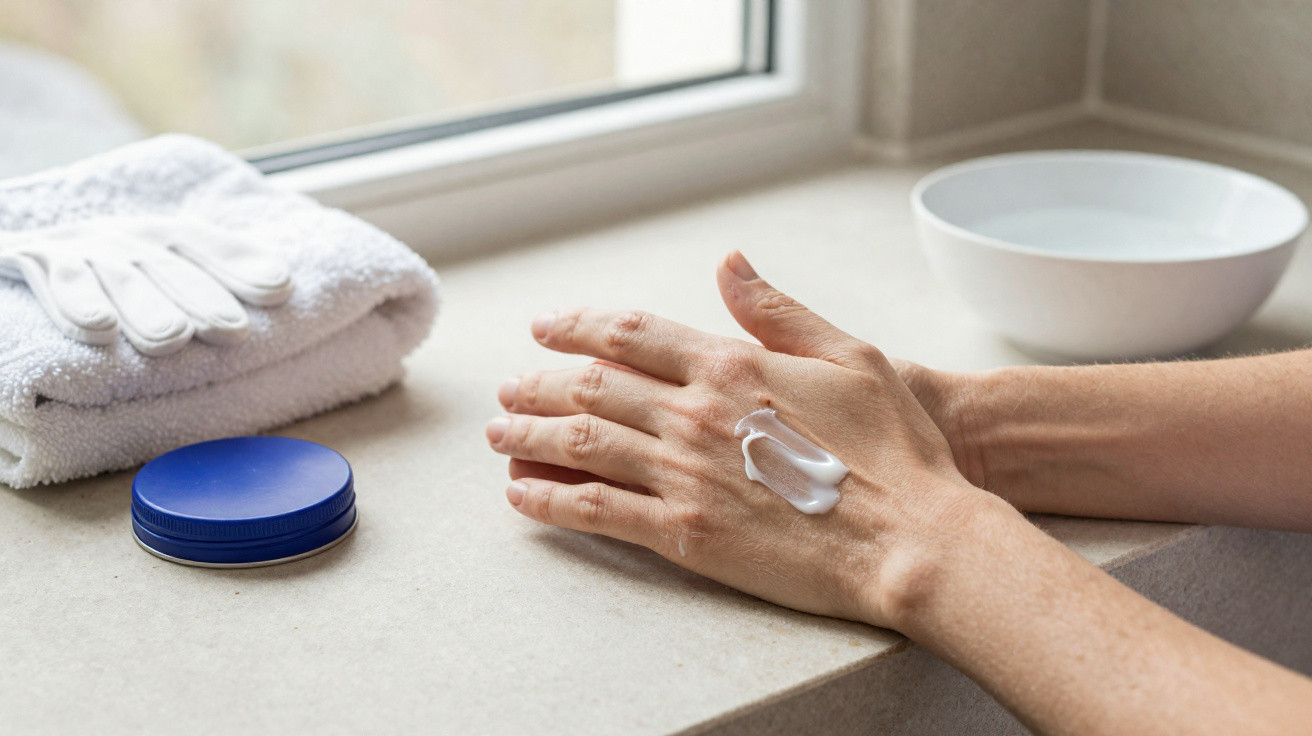
Cold, windy days can leave hands rough, shins flaky and cheeks uncomfortably tight by evening. Central heating, hot showers, washing-up and frequent handwashing can all add to the problem by removing some of the oils that help the skin feel comfortable.
The useful part of this winter-skincare tip is timing, not simply using more product. A rich cream such as Nivea Creme in the blue tin can help reduce moisture loss when applied sparingly to slightly damp skin, particularly on hands, feet, elbows and knees. It is not the right choice for every face or every skin type, however.
Why rich creams can be useful in cold weather
Water naturally evaporates from the skin’s surface throughout the day. Dry indoor air, wind and low temperatures can make this more noticeable, especially in autumn and winter.
Rich moisturisers generally combine ingredients that soften skin with ingredients that form a protective layer over it. In simple terms, they can:
- help soften rough, dry-feeling skin;
- reduce the amount of water escaping from the outer layer of skin;
- make exposed areas such as knuckles and heels feel more comfortable.
That is why a cream that feels far too heavy in summer can be welcome on dry elbows or cracked-looking hands in January.
A rich cream works best as a seal: apply it after washing, while there is still a little moisture on the skin.
There is no universal “best” moisturiser. The right texture depends on where you are using it, how dry your skin is and whether you react to fragrance or particular ingredients.
Think of the blue tin as a targeted sealing cream
The classic blue tin has a dense texture, which makes it especially practical for small areas that need more protection. Rather than applying a thick layer from head to toe, use it where skin regularly feels dry or exposed.
It may be useful on:
- hands after washing or washing-up;
- knuckles, cuticles and skin around the nails;
- knees and elbows;
- dry patches on the body;
- feet and heels before bed;
- hands exposed to cold weather, gardening or household cleaning.
It is widely available in supermarkets, Boots, Superdrug and pharmacies, but availability is not a reason to ignore the label. Check the ingredients on the specific product you buy, as formulations and packaging can change.
If the cream feels sticky, transfers to clothing or leaves you too warm, use less. A small amount is usually enough for the backs of both hands or one localised dry patch.
Apply it at the right time
Moisturiser can be helpful at any point in the day, but applying it after washing is particularly useful. Avoid rubbing the skin completely dry first. Instead, pat gently and apply the cream while the skin still feels faintly damp.
A simple post-shower routine
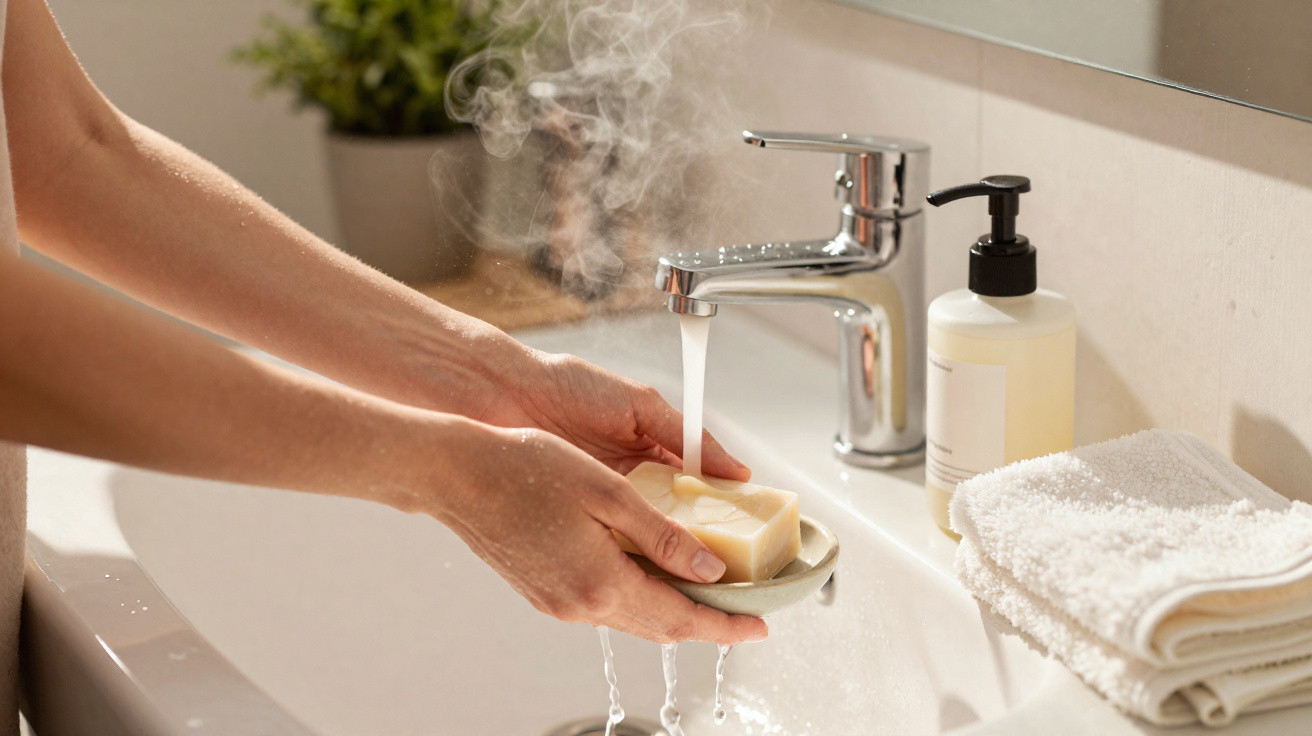
- Use comfortably warm water. Very hot, lengthy showers can leave dry skin feeling tighter afterwards.
- Pat, rather than scrub, with a towel. Leave a trace of water on the skin.
- Warm a small amount between clean fingertips. A dense cream will spread more easily once softened.
- Massage it into the driest areas first. Focus on shins, hands, elbows, knees and feet rather than coating everything heavily.
- Allow it to settle before dressing. Clean cotton socks can be useful after moisturising feet at night.
For hands, reapply after washing when they begin to feel tight. Keeping a small hand cream by the sink may be more convenient during the day, while the richer cream can be reserved for bedtime or particularly dry areas.
Face use needs more caution
The skin on heels, hands and elbows often tolerates a heavier finish well. Facial skin is more variable. Someone with dry, non-reactive skin may be happy using a tiny amount on dry areas during cold weather, but a dense cream can feel uncomfortable on oilier or spot-prone skin.
It may also be too rich beneath make-up. If you would like to try it on your face:
- start with a very small amount at night;
- use it on one small, unbroken area first;
- avoid the eye area unless the product is specifically intended for it;
- stop using it if it stings, itches, causes redness or seems to worsen breakouts.
A lighter, fragrance-free moisturiser is often a more straightforward everyday option for sensitive, oily or acne-prone facial skin. That does not make a rich cream ineffective; it may simply be better suited to hands and body.
Fragrance, allergies and irritated skin
Classic creams often have a recognisable scent. Fragrance can be perfectly acceptable for many people, but it can irritate some people, particularly if their skin is already sore, inflamed or prone to contact allergy.
Choose a fragrance-free moisturiser if you know perfume causes reactions. If you have eczema, recurrent rashes or a diagnosed contact allergy, a pharmacist, GP or dermatologist can help you choose a suitable product.
Try a cautious test first
When using a new moisturiser on sensitive skin:
- Apply a small amount to a patch of unbroken skin, such as the inner forearm.
- Leave it in place and watch for itching, burning, swelling, redness or a rash over the following day or two.
- Do not continue using it if a reaction develops.
This kind of check cannot rule out every reaction, nor does it replace formal allergy testing. It is simply a sensible precaution before using a new product widely.
Common mistakes that keep skin dry
Using far too much
A thicker layer is not always more effective. It can leave skin greasy, rub off on clothes and make you less likely to moisturise regularly. Start with a small amount and add more only where needed.
Waiting until skin is completely dry
Cream can still soften skin at any time, but applying it soon after washing gives it moisture to help hold in.
Taking long, hot showers
A steaming shower is tempting on a cold UK morning, but repeated exposure to very hot water can make dry skin feel stripped. Keep showers shorter and comfortably warm where possible.
Over-cleansing and scrubbing
Strong soaps, heavily fragranced shower products and vigorous exfoliation can worsen tight, flaky skin. Use a gentle cleanser where needed and avoid scrubbing sore or irritated patches.
Expecting moisturiser to do another job
The blue tin is a moisturiser, not a sunscreen or a treatment for acne, infection, pigmentation or inflammatory skin conditions. Use appropriate sun protection when needed, including on bright winter days when skin is exposed.
Think of a rich cream as a protective coat for the skin’s surface, not a cure-all for every skin concern.
Practical winter safety notes
Wear gloves for washing-up and cleaning, as detergents and repeated wetting can be hard on hands. On cold, windy days, gloves can also reduce exposure that leaves knuckles dry and sore.
For feet, apply a modest amount before bed and wear clean cotton socks if comfortable. Take care when walking afterwards: moisturised soles can be slippery on hard floors.
Do not apply moisturiser to a fresh burn, a weeping rash, an infected-looking wound or deep bleeding cracks without getting appropriate advice. Seek help from a pharmacist, GP or dermatologist if dryness is painful, widespread, very itchy, cracked or not improving with gentle skincare.
A sensible way to use it
Nivea Creme in the blue tin can be a practical option when colder weather leaves selected areas of skin dry and uncomfortable. Its dense finish is likely to be most useful on hands, feet, knees and elbows, where a lighter lotion may not feel sufficient.
Use a small amount on slightly damp skin, allow it to settle and adapt the routine to your own skin. If it feels too rich for your face, reserve it for hands, body or an overnight heel treatment instead.
















Comments
No comments yet. Be the first to comment!
Leave a Comment