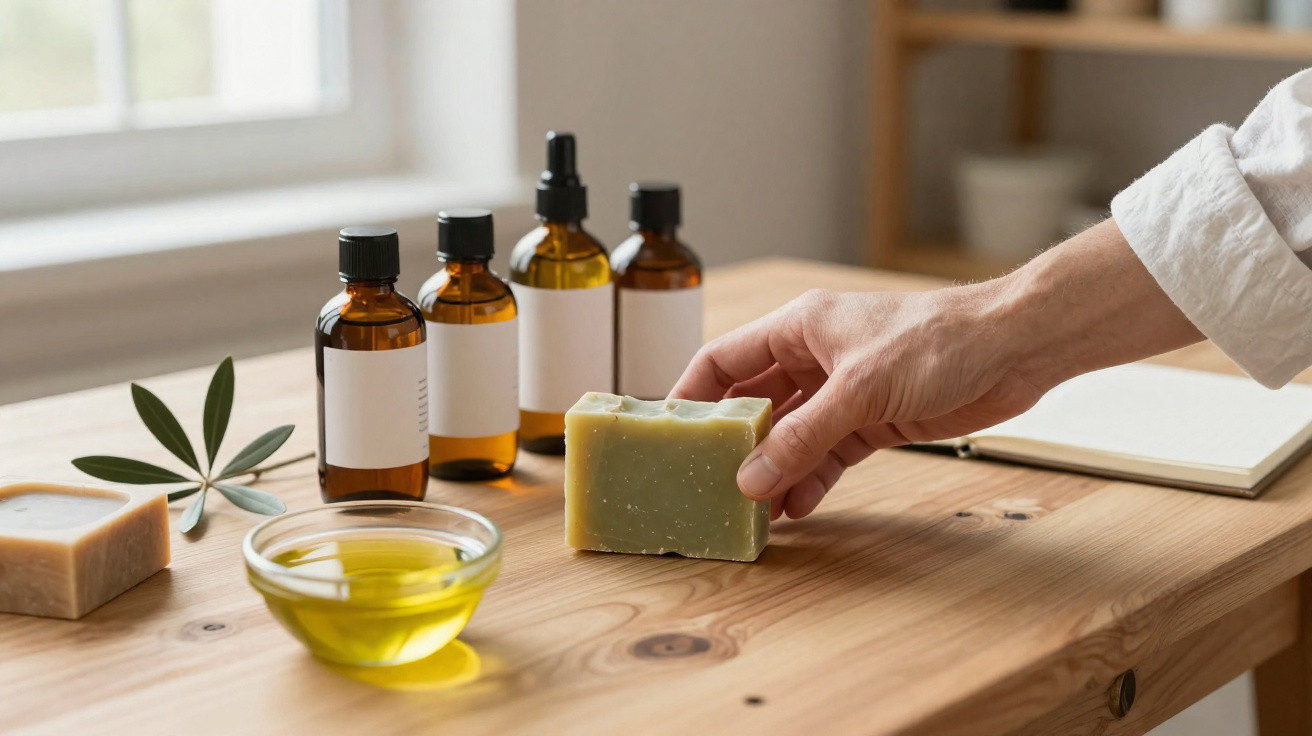
A bar of olive-oil soap may look like one of the simplest products in the bathroom. But turning a recipe made at home into something sold regularly and safely takes far more than attractive packaging or a natural-sounding ingredient list.
That is the useful point behind Aziza Al-Shammari’s story, shared at the Saudi Agricultural Exhibition: a single product can grow into a range only when consistency, safety and traceability grow with it. For shoppers, the key lesson is equally simple: “natural” is a description, not a guarantee that a product will suit everyone.
From olive oil to a wider body-care range
Al-Shammari’s account centres on an olive-oil soap first made in 2013. Drawing on olive oil associated with Al-Jouf in northern Saudi Arabia, she developed the idea into a wider collection of body-care products.
She said the original soap eventually led to more than 27 licensed products, including soaps, creams, scrubs, oils, lotions and shower gels. Production moved from a small home-based start towards approved manufacturing facilities.
It is an increasingly familiar path. Small-batch soaps, body oils and botanical products are widely sold online, at markets and in independent shops. Their appeal is understandable: many people want recognisable ingredients, less fussy packaging and a product that feels thoughtfully made.
But a good-looking bar or jar is only part of the job. A reliable product also needs suitable ingredients, clean production, clear instructions and the right safety checks.
A homemade idea can start a business, but repeatable quality is what makes a product dependable.
Why olive oil appears in soap and skincare
Olive oil has a long history in soap-making and is commonly used in body-care products. In a well-formulated soap, it can contribute to a mild, conditioning feel. In a leave-on oil or cream, it works as an emollient, helping the skin feel softer and less dry.
That does not mean it is automatically ideal for every skin type or every use. A rich oil can feel particularly comforting on hands, elbows and shins during a cold British winter, when wind and central heating often leave skin feeling tight. On the face, though, some people may find it too heavy or simply dislike the finish.
The same ingredient can behave very differently depending on the formula:
- Bar soap: oils react with an alkali to create soap; the finished bar is not simply solid olive oil.
- Body oil: a leave-on product, often blended with other oils and sometimes fragrance.
- Cream or lotion: a mixture of water and oils that needs an appropriate preservative system.
- Scrub: often combines oil with sugar, salt or other exfoliating particles.
- Shower gel: usually a surfactant-based cleanser rather than traditional soap.
This distinction matters. A water-free balm and a water-based lotion may both look simple, but they present very different formulation and storage challenges.
What changes when a hobby becomes a cosmetic business
Making soap for personal use can be an enjoyable craft. Selling cosmetics is another matter. A professional product needs controls that help ensure each batch is as safe and consistent as the last.
Useful basics include:
- ingredients bought from reliable suppliers and used to known specifications;
- batch records, including dates, quantities and ingredient lot numbers;
- clean, suitable equipment and work areas;
- packaging that protects the product during normal use;
- accurate ingredient lists, instructions and warnings;
- checks for stability and, where relevant, microbiological safety;
- a process for handling complaints and withdrawing a product if needed.
In Great Britain, cosmetics placed on the market must meet specific requirements. These include a safety assessment, a product information file, a named responsible person, compliant labelling and notification through the UK Submit Cosmetic Product Notifications service. Northern Ireland follows separate arrangements linked to EU rules, while export markets have their own requirements.
Anyone planning to sell should seek competent regulatory advice rather than assuming that a label suitable for one country will be acceptable everywhere.
What “natural” does - and does not - tell you
Terms such as “natural”, “botanical”, “organic” and “handmade” can describe a product’s ingredients or how it was made. On their own, however, they do not tell you whether it will suit your skin or whether it has been properly assessed for sale.
Plant-derived ingredients can still cause irritation or allergic reactions. Fragrance, essential oils and botanical extracts may be troublesome for sensitive skin. Conversely, a conventional preservative can be essential in a water-based cream or lotion, helping to prevent microbial growth during normal use.
When comparing products, look beyond the front label. Check for:
- the full INCI ingredient list;
- fragrance and essential oils, if you know you react to them;
- instructions, warnings and intended use;
- the responsible company’s name and contact details;
- a batch code and period-after-opening symbol where applicable;
- clean, sealed packaging with no signs of leaking or damage.
A shorter ingredient list is not automatically better. Clear information is more useful than vague claims.
Introducing a new body product carefully
Trying a new soap, oil or cream need not be complicated, but it is sensible to make one change at a time.
1. Read the label first
Check where and how the product is intended to be used. A body oil may not be designed for the face, while a scrub should not be used on broken, freshly shaved or irritated skin.
2. Test a small area
For a leave-on product, apply a small amount to intact skin, such as the inner forearm, following the maker’s directions. Stop if you notice irritation. This cannot guarantee that you will not react elsewhere, but it can help avoid applying a new product all over at once.
3. Keep the rest of your routine steady
Do not introduce a new soap, scented lotion and body oil in the same week. If your skin becomes uncomfortable, it is much easier to identify a likely cause when only one product has changed.
4. Use a modest amount
A few drops of body oil on slightly damp skin may be enough. With a rich cream, start on dry areas such as hands, knees and shins.
5. Stop if irritation develops
Stop using the product if you experience burning, persistent itching, rash, swelling or worsening irritation. Seek advice from a pharmacist, GP or another qualified healthcare professional if symptoms are severe, persistent or worrying.
Skincare should make a routine more comfortable, not become a test of endurance.
Common mistakes with handmade and “clean” beauty
Assuming kitchen methods are enough for creams
Oil-only balms are not the same as lotions containing water, hydrosols or aloe-based ingredients. Once water is included, preservation and microbiological safety become crucial. Vitamin E, essential oils and refrigeration are not substitutes for a properly designed preservation system.
Treating soap as gentle by default
Traditional soap is alkaline and can leave some people’s skin feeling dry, especially on the face. If this happens, reserve it for hands or body, or choose a gentler cleanser designed for your needs.
Adding extra essential oils
More fragrance does not make a product more effective. Concentrated essential oils can irritate skin and increase the risk of sensitivity. Use products as supplied unless the maker gives clear, safe instructions for mixing.
Ignoring storage advice
Keep lids closed, avoid dipping wet fingers into jars and store products away from radiators, sunny windowsills and steamy shower ledges. Heat, moisture and contamination can affect a product’s condition and usable life.
Believing “chemical-free” claims
Everything, including water and olive oil, consists of chemicals. The more useful question is whether a formula is suitable, clearly labelled and made with appropriate controls.
A safety note for home soap-makers
Soap-making commonly uses sodium hydroxide, also known as caustic soda or lye. Before it has reacted fully, it can cause serious chemical burns.
Wear suitable gloves and eye protection, work in good ventilation, keep children and pets away, and use a tested recipe from a reliable soap-making source. Add sodium hydroxide to water slowly - never pour water onto sodium hydroxide - and use equipment suitable for the task.
Keep cleaning products separate from cosmetic ingredients and equipment. Never mix household bleach with acids, ammonia or other cleaners, as dangerous gases can form.
Start small and shop thoughtfully
The value in Al-Shammari’s progression from one olive-oil soap to a larger range is not simply expansion. It is the idea of refining a product, documenting the process and making it consistently before adding more.
Shoppers can apply the same principle. Choose one product that meets an everyday need, such as an unscented body moisturiser after bathing or a hand product for winter dryness. Read the label, introduce it carefully, store it properly and give your skin time to respond.
The best body-care routine is rarely the biggest one. It is the one that is safe, manageable and pleasant to use.












Comments
No comments yet. Be the first to comment!
Leave a Comment