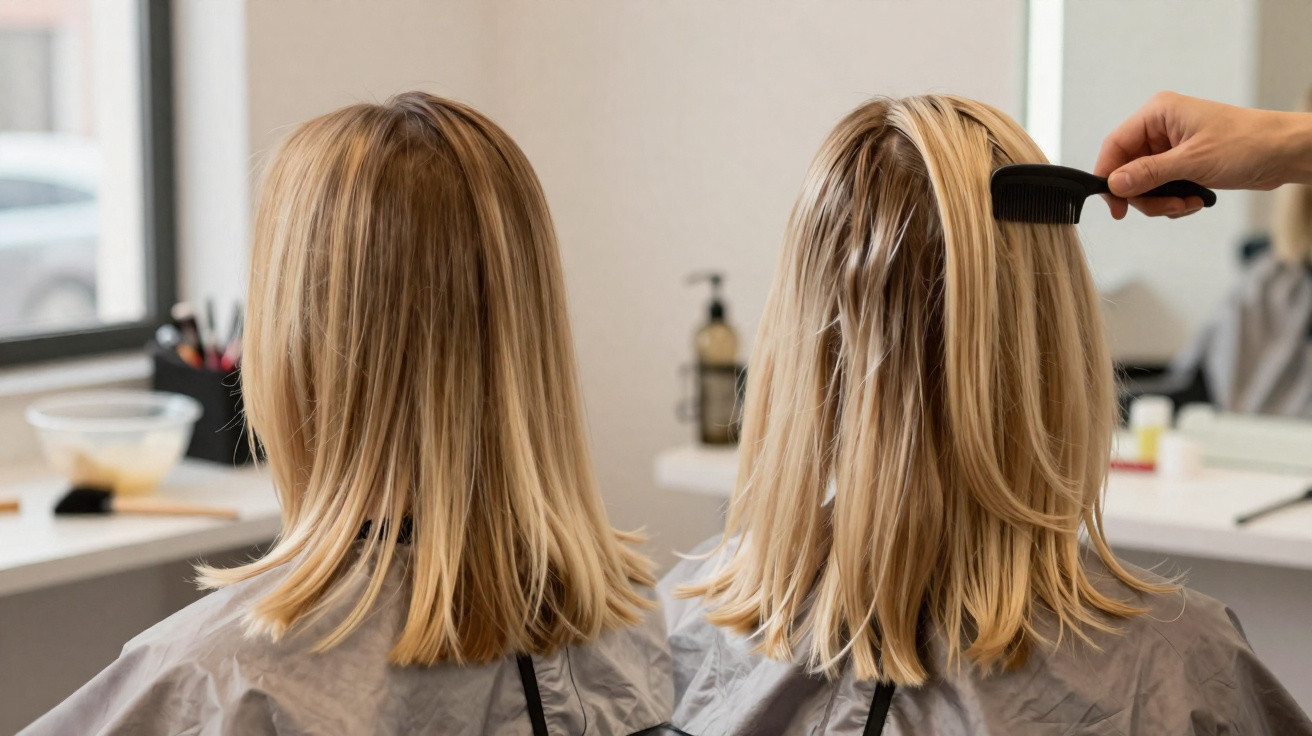
Fresh highlights, precise fringe trims and full-colour appointments can look brilliant, but they can also become an expensive cycle. The most useful way to spend less is not to chase a particular cut or shade: it is to choose colour and shape that still look deliberate as your hair grows.
A softly blended root, a flexible cut and a routine that works in real life can stretch the time between larger appointments. That does not mean neglecting your hair or attempting risky colour jobs at home. It means choosing a lower-maintenance version of the look you genuinely like.
The most economical hairstyle is usually the one that grows out gracefully, rather than the one that needs constant correcting.
What makes a hairstyle budget-friendly?
A budget-friendly hairstyle is not necessarily the cheapest service on the salon menu. It is a cut and colour plan that needs fewer major appointments, less daily heat styling and fewer emergency fixes.
The most manageable looks often share three features:
- A soft grow-out, without a stark line between natural roots and coloured hair
- A flexible shape, which still sits well after it has grown a few centimetres
- An achievable routine, allowing you to wear it down, tucked back or tied up without it looking unfinished
This can be particularly helpful during a British autumn and winter. Damp weather, hats, central heating and busy commuting days can make a carefully styled finish difficult to maintain. A cut that works with your own texture and natural movement is often easier to live with.
Choose colour that works with your roots
The clearest route to lower-maintenance colour is to work with, rather than fight, your natural regrowth. Very light blonde from the scalp, intense all-over shades and sharply contrasting highlights can all require more frequent upkeep if you want the root area to stay consistent.
Instead, consider a colour with some depth near the roots and softer brightness through the mid-lengths and ends. Depending on your natural shade and existing colour, this might mean subtle brunette dimension, dark blonde, caramel-toned pieces, lowlights or a gentle copper-brown gloss.
The goal is not to disguise every bit of regrowth. It is to make new growth look like part of the overall colour placement.
Ask your colourist whether one of these options suits your hair history and maintenance budget:
- a root shadow or root melt
- fine, scattered highlights rather than bold stripes
- balayage placed away from the scalp
- lowlights to soften hair that has become too bright or blocky
- a gloss or toner to adjust tone between larger colour appointments
Be open about how often you can realistically return. A colourist can make more sensible placement choices when they know whether you want a refresh after eight weeks or hope to leave several months between bigger services.
Cuts that can hold their shape longer
Very precise styles can be striking, but they may need regular trims to keep their outline looking intentional. This does not mean a blunt bob, cropped cut or full fringe is a bad choice; it simply may not suit someone looking to reduce salon visits.
Shoulder-length and longer cuts generally give more room for natural growth. A long bob, a softly shaped mid-length cut, gentle layers or long face-framing pieces can all remain wearable as they grow, provided the style suits your hair density, texture and usual routine.
Three practical cut options
The shoulder-skimming long bob
Long enough to tie back but short enough to feel like a proper change, this shape can grow out neatly when the perimeter is not cut too sharply.Long hair with minimal, strategic layers
A few long layers can take out heaviness and add movement without creating a style that depends on daily heat styling. If you often wear your hair in a ponytail or bun, ask for layers that will still gather easily.Soft face-framing pieces and a flexible parting
Gentle pieces around the face can update longer hair without committing to a fringe. A fringe can look great, but it often needs more frequent trimming than the rest of the cut.
Before your appointment, think about an ordinary weekday rather than a special occasion. If you air-dry your hair, cycle to work, wear a hard hat or regularly put it up, tell your stylist.
How to explain what you want at the salon
Photos are useful, but a picture alone rarely explains the upkeep behind a finished look. It may have been styled with extensions, heated tools, products or a professional blow-dry.
Try a clear brief such as: “I want my natural root to look intentional, I do not want a harsh regrowth line, and I need a cut I can leave for longer.” Mention whether you need to tie your hair up, whether it frizzes in damp air and how often you use heat tools.
Useful questions include:
- How will this colour look after 10 to 12 weeks?
- Is there a lower-maintenance version of this shade?
- Can the lightest pieces be kept away from my scalp?
- Will these layers work if I do not blow-dry with a round brush?
- Would a gloss, partial highlights or a trim be enough for my next refresh?
A lower-maintenance colour should soften over time, not look like an overdue appointment.
Keep colour looking fresher at home
Extending the appearance of salon colour is often about gentle habits rather than buying lots of treatments. Washing less frequently may help some people preserve colour, but your scalp comfort, exercise routine and hair type matter too. Wash whenever you need to, using water that is warm rather than very hot.
A simple routine can include:
- shampoo suited to your scalp and hair needs
- conditioner on mid-lengths and ends at each wash
- heat protectant before blow-drying, straightening or curling
- a conditioning mask when dry or lightened hair needs extra softness
- a hat or hair UV product during sunny holidays and long days outdoors
Purple shampoo can help some blonde, grey or lightened hair look less yellow, but it is not essential for everyone. Overuse can leave certain hair types looking dull, dry or faintly violet. Follow the directions and alternate it with your usual shampoo.
Strong clarifying shampoos and frequent at-home colour changes can alter the tone and make a later salon service more complicated. If you are unsure how a product will affect coloured hair, ask your stylist before using it.
Make easy styling part of the plan
A lower-maintenance haircut should not demand a full blow-dry every morning. That does not mean giving up on styling; it means having a few quick options that work for your texture.
For an easy finish, try:
- a small amount of leave-in cream on damp lengths before air-drying
- mousse or curl cream for naturally wavy or curly hair
- a low bun or claw-clip twist on second-day hair
- blow-drying only the front sections when time is short
- switching your parting for a little lift at the roots
On wet days, a sleek low ponytail, braid or twist can look purposeful while reducing repeated brushing and heat styling. Use smooth, snag-free bands, and avoid pulling the same section tightly every day.
Common mistakes that make a cheaper plan costly
Saving money can backfire when an impulsive change leads to a more expensive corrective appointment.
Common pitfalls include:
- bleaching or lightening previously coloured hair at home
- choosing a shade far lighter than your natural root without planning for upkeep
- cutting a fringe when you do not want regular trims
- requesting heavy layers when you mostly wear your hair tied back
- overusing purple shampoo or protein-heavy treatments
- leaving split ends untrimmed for so long that the damage worsens
Do not use household cleaning bleach on hair, and never mix bleach with acids, ammonia or other household cleaning products. Hair lightener and dye should only be used exactly as directed on the packaging. Carry out a patch test where instructed, wear gloves, ventilate the room and stop immediately if you experience burning, swelling, breathing difficulty or a rash. Seek professional help for a major colour correction.
A realistic way to spend less on hair
Start with the hair you have. If your colour has a strong regrowth line, you may not need a full head of highlights: a root blend, lowlights or gloss may create a softer result. If long hair feels flat, a careful trim and restrained layers may be more useful than a dramatic restyle.
Book a consultation, decide what you are comfortable spending across the year and ask your stylist to work backwards from that plan. The aim is not to follow every hair trend. It is to find a cut and colour that suit your natural hair, diary and budget.
The best value hairstyle is one that feels healthy, wearable and recognisably yours - including several weeks after you have left the salon.















Comments
No comments yet. Be the first to comment!
Leave a Comment