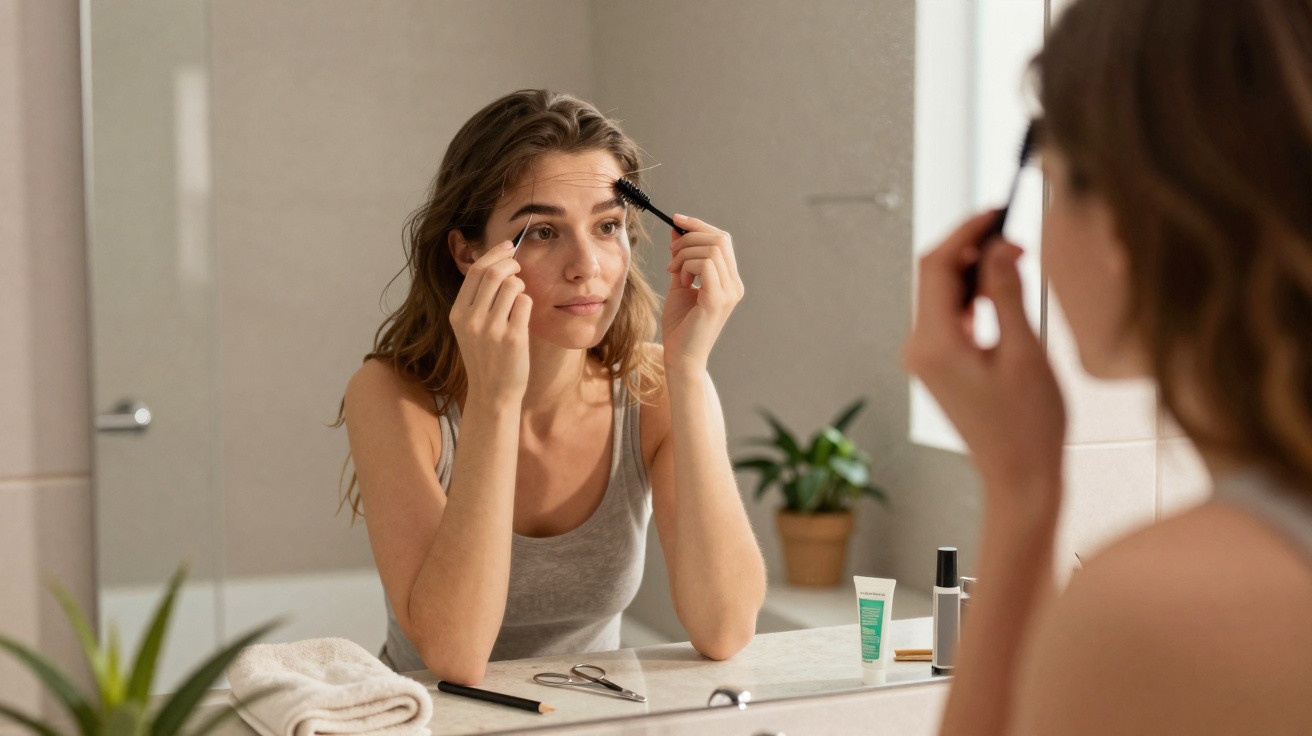
Sarah examined herself in the bathroom mirror for the fifth time that morning, tweezers poised nervously over her left eyebrow. She had watched three YouTube tutorials, bookmarked endless Pinterest boards and even sought her sister’s advice. Still, she was frozen with worry that she would end up with two entirely mismatched brows or, worse, pluck away too much hair and look permanently startled for weeks. Online, it appeared effortless, but doing it herself felt very different. Her brows were not wildly overgrown; they were simply slightly untidy at the edges, with a handful of stray hairs that appeared to multiply overnight. She wanted the naturally polished finish she saw on everyone else, without paying salon prices or having to admit her total lack of experience to a professional. Even the most basic beauty jobs can sometimes seem overwhelming.
Understanding Your Natural Brow Shape
Your eyebrows already come with a natural guide – you only need to know how to interpret it. Rather than concentrating on the hairs you want to remove, begin by recognising the shape nature has already provided. In natural daylight, face the mirror directly and ensure your forehead is fully relaxed.
Hold a straight item, such as a pencil, upright alongside your nose. The point at which it meets your brow marks where the eyebrow should start – rather than where you assume it ought to start. Next, angle the pencil towards the outer corner of your eye to locate where your brow should finish. When looking straight ahead, the peak of your arch should sit in line with the outer edge of your iris.
This mapping method is not merely Instagram jargon – it is rooted in facial proportions that complement your bone structure. Your face already has an idea of what suits it. Instead of working against your natural shape, aim to neaten and gently define it.
The Gentle Approach to First-Time Eyebrow Shaping
Begin with proper lighting and, if available, a magnifying mirror, but avoid leaning in too closely because you can lose sight of the overall picture. Use a clean mascara wand or eyebrow brush to brush the hairs upwards. Pluck only clearly obvious stray hairs that sit well beyond your natural brow line, concentrating on the space between your brows and below the arch.
In truth, no one achieves perfection at their first attempt, and that is entirely normal. Beginners most often go wrong by over-plucking from above the brow or attempting a bold arch that does not complement their face. Aim for a result that looks “cleaned up”, rather than “completely transformed”. Work under good light, pause regularly and step back often to evaluate both brows at once.
“The best eyebrows look like you were born with them that way – just better,” says celebrity makeup artist Lisa Potter-Dixon. “It’s about enhancement, not reconstruction.”
Key tools you genuinely need:
- Sharp, slanted tweezers
- Good lighting (natural is best)
- A spoolie brush or clean mascara wand
- A white eyeliner pencil for marking
Building Confidence Through Small Changes
The advantage of shaping your eyebrows yourself is that you can go slowly. There is no need to create Instagram-worthy arches in a single session. Begin by tidying the unmistakable strays, then leave them alone for a few days. Pay attention to how these subtle adjustments change your whole face – those few removed hairs may make more of an impact than expected. Taking this measured approach also helps you avoid the shock of over-plucking.
| Key point | Detail | Value for the reader |
|---|---|---|
| Natural shape mapping | Use the pencil alignment method to identify the start, end and arch points | Avoids over-plucking and preserves facial balance |
| Gradual approach | Tidy stray hairs first and leave major reshaping until later | Develops confidence and reduces mistakes |
| Work with your features | Improve your existing shape instead of creating a new one | Creates natural, flattering results without professional assistance |










Comments
No comments yet. Be the first to comment!
Leave a Comment