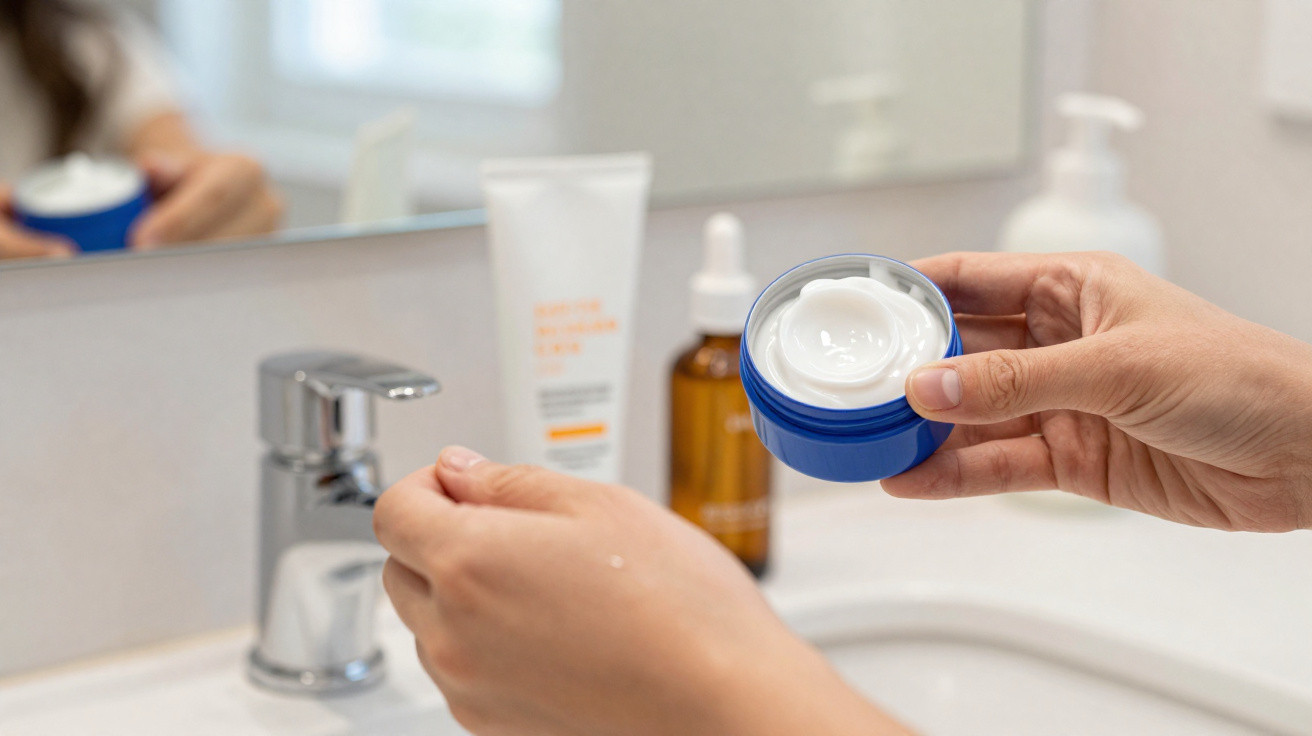
Fine lines can look more noticeable when skin is dry, tight or rough. A rich moisturiser can make the surface of the skin feel softer and look temporarily smoother, which is why it can seem as though wrinkles have vanished overnight.
The key point is simpler than the marketing around skincare: the classic blue tin is a rich moisturiser, not a targeted anti-wrinkle treatment. It may be useful for dry skin and moisture retention, but a routine for visible signs of sun ageing needs daily sun protection and carefully chosen active ingredients.
Skin can look plumper after moisturising because it is better hydrated. That does not mean an established wrinkle has been removed.
What a rich moisturiser can do
When the outer layer of the skin lacks water, fine dehydration lines and flaky patches can become more obvious. Moisturisers help by drawing water into the outer skin layer, softening roughness and reducing moisture loss.
That can give the face a fresher, smoother-looking finish. Rich creams can be particularly useful for:
- dry hands, elbows, knees and feet;
- skin exposed to cold wind, rain and central heating;
- occasional dry patches on the body;
- sealing in moisture after a lighter hydrating product;
- easing the uncomfortable tight feeling that comes with dry skin.
This is a worthwhile benefit, but it is different from treating established expression lines, uneven texture caused by sun exposure or changes in firmness. A moisturiser on its own is unlikely to produce a lasting change to those concerns.
Why the blue tin is not a wrinkle treatment
A traditional all-purpose cream is designed principally to moisturise and reduce water loss from the skin. Its rich, protective texture can be useful, especially on dry areas, but that does not make it a treatment specifically formulated for wrinkles.
Products aimed at the appearance of fine lines often contain ingredients such as retinoids, vitamin C, niacinamide, peptides or exfoliating acids. Whether one is suitable depends on the formula, how often it is used and, crucially, how your own skin tolerates it.
It is sensible to look beyond terms such as “anti-ageing”, which are marketing descriptions rather than a guarantee of a particular result. Consider the ingredient list, the product’s intended use and whether it works comfortably alongside the rest of your routine.
Sun protection matters more than a single cream
Ultraviolet radiation is a major external contributor to visible premature skin ageing. In the UK, UVA is present throughout the year, including on bright overcast days, and it can pass through ordinary window glass.
For anyone concerned about future fine lines or uneven skin tone, sunscreen is usually the most useful place to start. Choose a broad-spectrum product with at least SPF 30 that you will be happy to use regularly.
A practical daytime routine
- Cleanse gently if you need to. Many people find lukewarm water or a mild cleanser is enough in the morning.
- Apply moisturiser if your skin feels dry. A lotion, cream or gel-cream can be chosen according to your skin’s needs.
- Use SPF 30 or higher. Apply it as the final skincare step before make-up, covering the face, neck and ears.
- Reapply during significant exposure. This matters when spending extended time outdoors, sweating, swimming or travelling in strong sun.
Sunscreen cannot erase existing lines, but consistent use can help limit further sun-related skin changes.
The best sunscreen is usually the one that feels comfortable enough for you to use every day.
Where a rich cream may fit into your routine
There is no reason to dismiss a classic rich cream because it is not an anti-wrinkle product. It can still be a useful comfort product in a simple routine.
If your facial skin is dry, a small amount may suit you as a final evening layer, particularly during a cold British winter or when indoor heating leaves your skin feeling parched. It may also work well on the neck, chest, hands and other dry areas of the body.
Those prone to shine, clogged pores or breakouts may find a heavy cream uncomfortable across the whole face. In that case, apply it only to dry areas, such as the cheeks or around the nostrils, rather than using it as a universal face cream.
Patch test a new product on a small area first, especially if your skin is reactive. Stop using it if it causes persistent stinging, a rash, swelling or repeated breakouts.
Ingredients to consider for fine lines
You do not need a shelf full of products. Introduce one new active at a time, start slowly and give your skin time to settle before deciding whether it suits you.
Retinoids
Retinoids, including retinol in cosmetic products, are often used for fine lines and uneven texture. They can cause dryness, peeling and irritation, particularly when first introduced.
Use them at night, begin with infrequent application and follow with moisturiser if needed. Avoid retinoids during pregnancy or when trying to conceive unless a qualified healthcare professional has advised you otherwise. If you have eczema, rosacea or persistently sensitive skin, ask a pharmacist, GP or dermatologist before starting.
Vitamin C, niacinamide and peptides
Vitamin C is commonly used in morning routines as an antioxidant. Formulas vary, and sensitive skin may prefer a gentler product or less frequent use. Store it as directed, as some formulations become less stable after opening.
Niacinamide can be a useful, generally well-tolerated option for supporting the skin barrier and improving the appearance of uneven tone. Peptides are also common in serums and moisturisers, although expectations should stay realistic: topical skincare has limited effects on deeper wrinkles and skin laxity.
Exfoliating acids
AHAs and BHAs may improve the look of dull or uneven skin for some people. However, overuse can irritate the skin barrier. Do not introduce acids, retinoids and a new vitamin C product in the same week, and never use an acid product on skin that is sore, cracked or already irritated.
Common mistakes when chasing smoother-looking skin
A costly routine is not necessarily a better one. These mistakes often leave skin irritated rather than comfortable:
- expecting one rich cream to moisturise, protect from the sun and treat wrinkles;
- skipping SPF because it is cloudy, rainy or winter;
- using too much retinol or exfoliating acid too soon;
- layering several new active products without knowing how your skin reacts;
- scrubbing flaky skin with harsh physical exfoliants;
- applying a thick occlusive cream over skin that is already congested;
- changing products every few days before you can assess them.
More active ingredients do not automatically mean better results. A calm, consistent routine is usually easier to maintain and less likely to trigger avoidable irritation.
A simple routine for dry or mature-looking skin
Morning: cleanse gently if needed, apply an optional hydrating or antioxidant serum, moisturise if your skin needs it, then finish with broad-spectrum SPF 30 or higher.
Evening: cleanse, use one targeted active on nights when your skin tolerates it, then moisturise. If your skin is very dry, a richer cream can be used as the final step to reduce tightness and moisture loss.
Hydration can make skin look and feel better quickly, but visible changes in texture and fine lines tend to be gradual. If you want to track progress, take occasional photographs in the same natural light rather than judging your skin hour by hour in a magnifying mirror.
When to seek advice
A pharmacist can help with choosing over-the-counter skincare that fits your skin type and existing routine. Speak to a GP or dermatologist if you have a persistent rash, painful spots, sudden changes in pigmentation, severe irritation or a skin concern that does not settle.
The blue tin can still have a useful place in the cupboard as a dependable rich moisturiser for dry skin. Use it for what it does best: comfort and reducing moisture loss. For a wrinkle-conscious routine, prioritise daily sun protection, suitable hydration and a careful approach to active ingredients.
















Comments
No comments yet. Be the first to comment!
Leave a Comment