
For anyone who has chosen to embrace their grey hair, keeping that silvery sheen looking attractive is an ongoing challenge. And when two kitchen staples start being touted as a home remedy for yellowing and dull-looking hair, it is only natural to be curious. But do vinegar and bicarbonate of soda really work on grey hair?
How this kitchen-to-bathroom pairing works
White hair has a feature that many people do not realise: it contains no melanin, the pigment that gives strands their natural colour. Without this protection, the hair fibre can become drier, more porous and more susceptible to yellowing caused by sunlight, limescale in water and product build-up. This is where vinegar and bicarbonate of soda come in.
The reasoning behind this combination is straightforward. As an alkaline substance, bicarbonate of soda acts as a deep-cleansing agent, lifting the hair cuticle to remove impurities, styling-product residue and everyday dirt. Apple cider vinegar, meanwhile, is acidic, so it helps close the cuticles again, sealing the strand and restoring shine.
- Deep cleansing: bicarbonate of soda clears away product residue, pollution and impurities that can leave hair feeling weighed down and lifeless.
- Renewed shine: vinegar smooths the lifted cuticles, giving grey hair a neater, more luminous appearance.
- pH balance: together, they may help restore scalp balance, reducing oiliness and mild flaking.
- Less yellowing: vinegar helps remove residue that can intensify yellow tones, leaving white hair cleaner and more even in appearance.
- Affordable option: these are inexpensive, simple ingredients commonly found in the kitchen cupboard.
How to use vinegar and bicarbonate of soda correctly
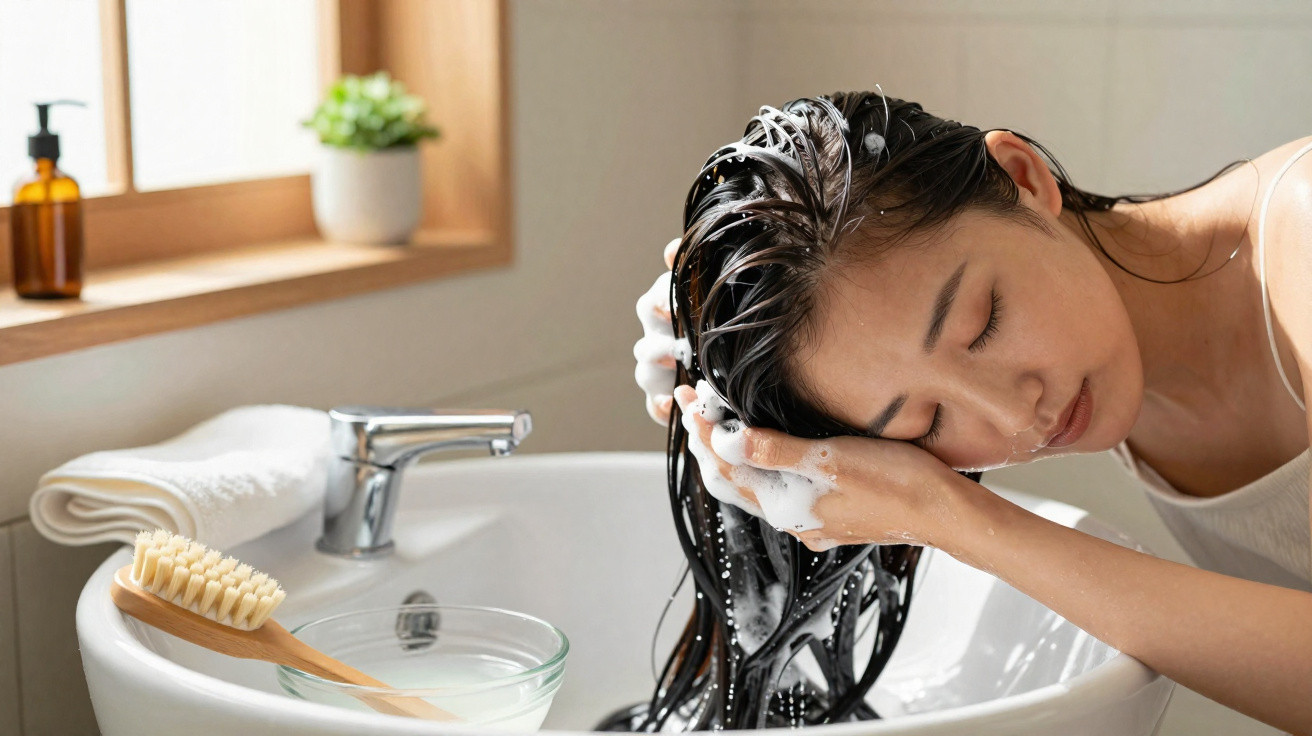
The application order makes a real difference to the result. First, wash your hair as usual with your regular shampoo. Next, combine 15 ml of bicarbonate of soda with a small amount of water or with the shampoo itself. Apply it to damp hair, massage the scalp for around two minutes, then rinse thoroughly. This is the deep-cleansing stage.
Follow with apple cider vinegar, which is generally preferred because it is less harsh than distilled white vinegar. Dilute 30 ml in 250 ml of water and use it as a final rinse, leaving it on for a few minutes before rinsing it out. This routine closes the cuticles opened by the bicarbonate of soda and brings back the shine that grey hair can lose over time.
The warning dermatologists repeatedly give
Before mixing the ingredients and applying them every day, it is important to understand the experts’ warning. In 2026, dermatologists and trichologists reiterated that, despite the reported benefits, there is a lack of robust research into using this combination regularly on hair. There is also a genuine risk of scalp irritation and excessive dryness.
Take care: overuse comes at a high cost
How often can you use it without damaging your hair?
Bicarbonate of soda should be used no more than once a month, while apple cider vinegar may be used more often, on average once a week. Using them more frequently than this strips away the natural oils that protect the hair fibre, making strands dry and prone to breakage.
The American Academy of Dermatology has already clarified that bicarbonate of soda cannot restore melanin lost from the hair follicles. In other words, it does not reverse white hair or darken the strands. Anyone expecting that outcome will be disappointed. What it actually does is cleanse. Used in moderation, that can still be very useful.
If you experience burning, itching, or notice that your hair has become duller and frizzier after use, the message is clear: stop the treatment and focus on intensive nourishment with plant oils. Every scalp responds differently, and respecting those limits is part of genuine self-care.
Myth or fact: does bicarbonate of soda remove white hair?
The idea that bicarbonate of soda can darken or even eliminate white hairs is widely shared on social media. It is a myth. Hair turns white because melanin production naturally declines with age, as well as due to factors such as genetics, accumulated stress, smoking, and excessive use of hair straighteners and dyes. No homemade ingredient can reverse this process.
What treatment with vinegar and bicarbonate of soda can genuinely offer is an improvement in appearance: cleaner hair with less residue, reduced yellowing and more noticeable shine. For those wanting more reliable neutralisation of yellow tones, purple or blue toning shampoos are an alternative formulated specifically for grey hair.
Embracing white hair is a trend that is here to stay
Interest in natural, homemade care for white hair has grown significantly in recent years, particularly among people transitioning away from colouring who want to avoid frequent chemical treatments. Vinegar and bicarbonate of soda fit this movement because they are inexpensive, accessible and easy to prepare at home. However, specialists point out that the combination works best as an addition to a haircare routine, not as a complete replacement for formulated shampoos and conditioners.
Looking after white hair with care and balance is the key to maintaining the bright, silvery appearance that so many people admire. Straightforward kitchen ingredients can be valuable allies when used sparingly and for the right purpose.
If you found this tip helpful, share it with someone else who also cares for white hair and is looking for simple, natural everyday solutions.











Comments
No comments yet. Be the first to comment!
Leave a Comment