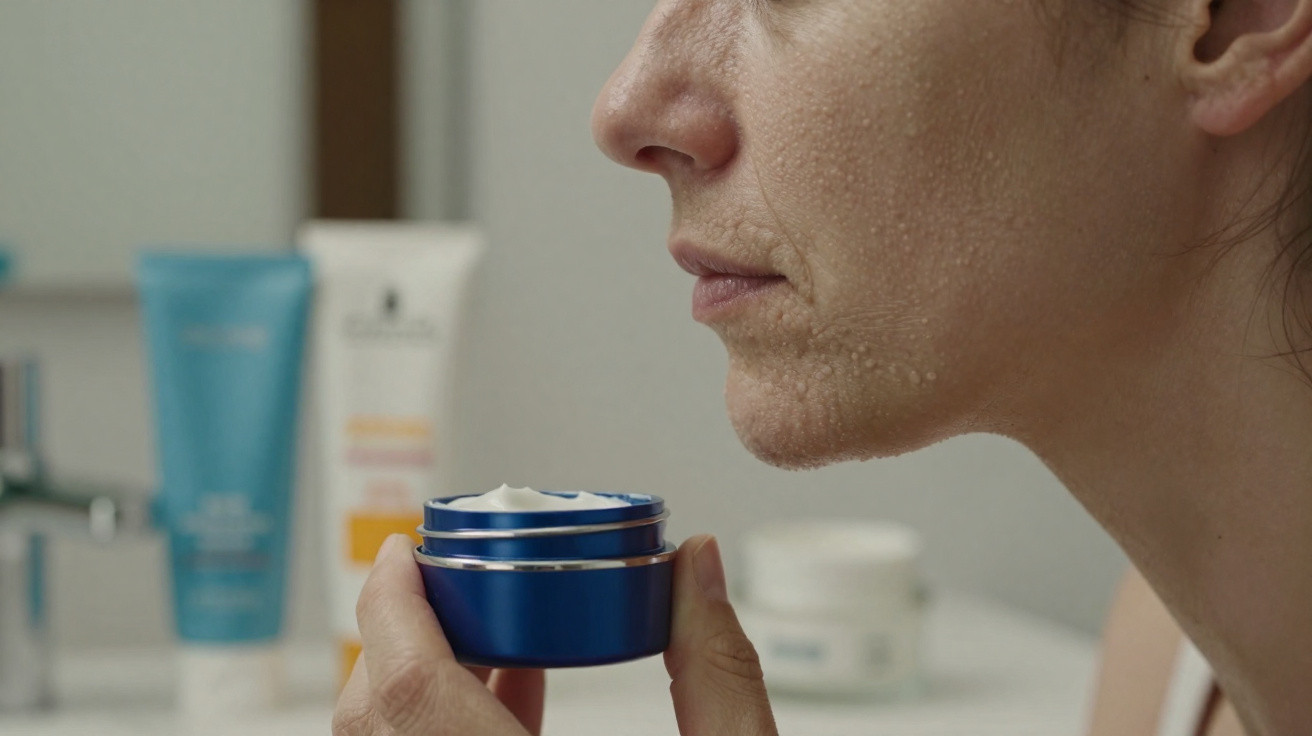
A familiar blue tin can be a comforting answer to dry hands, elbows and winter-tight skin. But a rich all-purpose moisturiser is not the same thing as an anti-wrinkle treatment, even if it makes fine lines look softer for a few hours.
The useful distinction is simple: moisturiser helps the skin feel comfortable and reduces the appearance of dryness-related creasing. A routine aimed at visible signs of ageing focuses first on preventing further sun damage, then on using skincare that suits your skin without causing irritation.
A cream can be very good at relieving dryness without being designed to treat wrinkles.
Why dry skin can make lines stand out
When the skin’s outer barrier is dry or irritated, its surface can look rougher, duller and more creased. Fine dehydration lines are often most noticeable around the eyes, mouth and forehead, particularly after cold wind, central heating or frequent cleansing.
A rich moisturiser can improve that appearance by smoothing the surface and slowing water loss. Skin may look temporarily plumper and feel more comfortable as a result.
That is different from changing established lines. Expression lines, changes in firmness and visible sun damage are affected by age, genetics, UV exposure, smoking, skin type and other factors. No ordinary moisturiser can erase wrinkles.
What a classic rich moisturiser does
The classic cream in Nivea’s blue tin is best understood as a rich moisturiser. Products of this kind usually contain ingredients that soften the skin and form a protective layer to reduce moisture loss.
That can make them useful for:
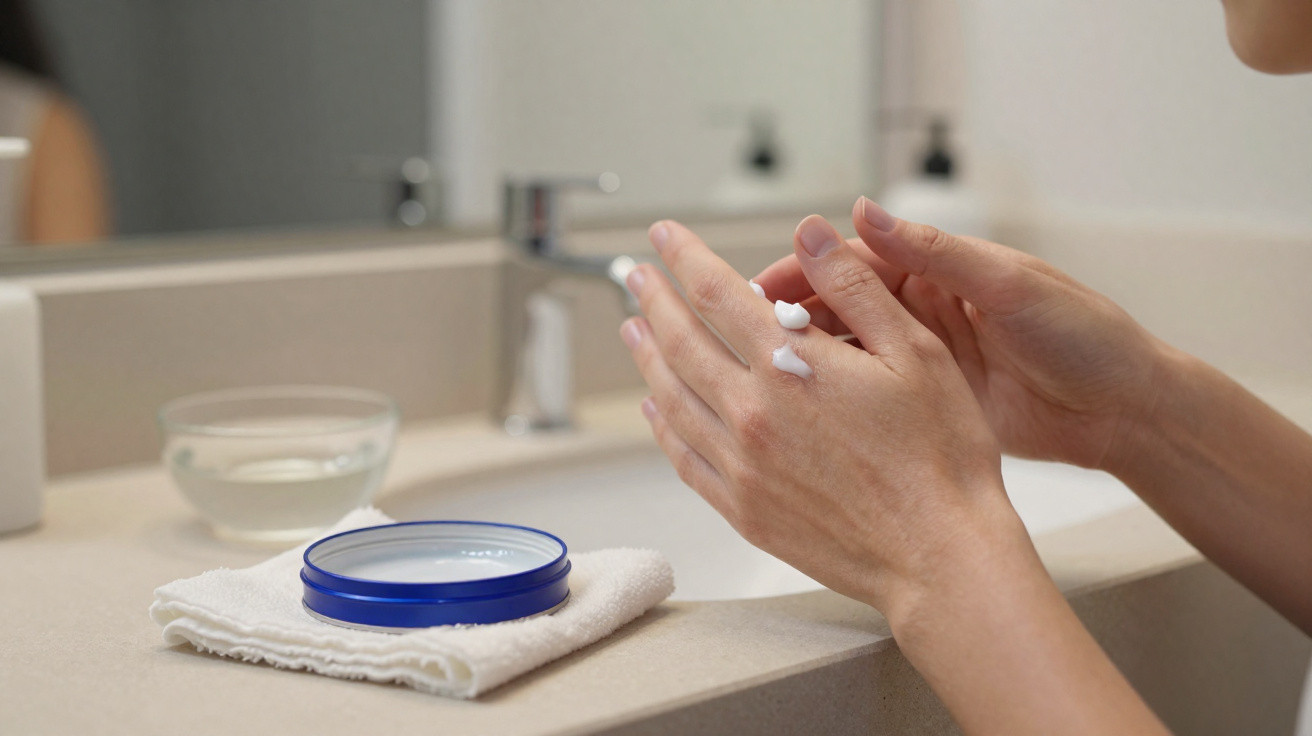
- dry hands after washing up, gardening or cold weather;
- elbows, knees, shins and cuticles;
- dry patches on the body;
- sealing in moisture on especially dry areas;
- occasional use on dry parts of the face, if your skin tolerates it.
A dense, fragranced cream can feel too heavy on some faces, particularly if your skin is oily, acne-prone or easily irritated. It may leave a film, pill beneath make-up or sunscreen, or simply feel uncomfortable. Other people get on with it perfectly well.
The important point is that richness alone does not make a product a wrinkle treatment.
Moisturising versus an anti-ageing routine
Skincare labels can blur the difference. Words such as “repairing”, “nourishing” and “radiance-boosting” may describe how skin feels or looks, but they do not guarantee a reduction in wrinkles.
A straightforward routine for visible skin ageing has three parts:
- Protect skin from UV exposure. Sunscreen is the most important daily skincare step for regularly exposed areas.
- Keep the skin barrier comfortable. A suitable moisturiser can reduce dryness and make fine lines look less noticeable.
- Consider one targeted ingredient. Retinoids, vitamin C, niacinamide and exfoliating acids are common options, but they are not suitable for everyone.
Think of a heavy moisturiser as a coat for the skin: useful in the right conditions, but not a replacement for sunscreen or a targeted treatment.
Build a simple routine for fine lines
You do not need a crowded bathroom shelf. Keeping the routine simple makes it easier to use consistently and easier to spot what has caused irritation.
1. Use sunscreen in the morning
Apply broad-spectrum SPF 30 or higher to the face, neck and other areas regularly exposed to daylight. This matters in the UK throughout the year: UVA is present on overcast days and can pass through ordinary window glass.
Use enough to cover the skin evenly. Reapply when spending prolonged periods outdoors, after sweating, swimming or towelling your face. In stronger sunshine, seek shade where possible and wear a hat and sunglasses as well.
2. Choose moisturiser by comfort, not hype
Dry skin may prefer a cream with humectants and emollients. Combination or oily skin may be happier with a lighter lotion or gel-cream. If your skin is reactive, a fragrance-free product is often a sensible starting point.
A rich cream can still have a place in the routine. You might apply a small amount to dry cheeks at night in winter, rather than using a thick layer over your entire face every evening.
3. Introduce one active ingredient slowly
If you want to add a treatment product, use one new active at a time. Retinoid products are commonly used in an evening routine, while vitamin C is often used in the morning. Niacinamide can fit into either routine.
Follow the product instructions. Start gradually, perhaps two nights a week if appropriate, and increase only if your skin stays comfortable. Use a plain moisturiser alongside it rather than adding several new products at once.
4. Assess changes realistically
Take a bare-faced photograph in similar natural daylight before starting, if you want to track changes. Look for improvements in comfort, smoothness and dryness over several weeks or months. Do not expect lines to disappear overnight.
Common mistakes that can make skin look worse
Trying to get rapid results often leads to an irritated skin barrier, which can leave the face looking redder, flakier and more lined.
- Using a thick layer of rich cream every night as a treatment mask. More product is not necessarily more effective.
- Buying serums while skipping SPF. Sun protection is the foundation of any routine concerned with visible sun ageing.
- Starting retinoids, acids and scrubs at the same time. This makes irritation much more likely.
- Scrubbing peeling or dry skin. Physical exfoliation can worsen sensitivity.
- Applying strong products close to the eyelids. Products can migrate and the eye area is easily irritated.
- Assuming familiar products are risk-free. Any cosmetic product can trigger a reaction in an individual.
When the blue tin may be a good choice
There is no need to treat a classic moisturiser as either miraculous or useless. It can be a practical option for dry, non-reactive body skin, especially in colder months when central heating and low humidity leave skin feeling tight.
Applying moisturiser after washing, while the skin is still slightly damp, often helps more than repeatedly switching products. For hands, body and rough areas, a rich cream may be exactly what is needed.
If you want to use it on your face, start with a small amount on one dry area. If it feels heavy, causes spots or irritation, or does not sit well beneath sunscreen, reserve it for the body instead.
Safety notes before trying new skincare
Patch test a new product on a small area of skin, following the manufacturer’s directions, before applying it widely. Stop using it if you develop swelling, a rash, persistent stinging or significant peeling.
Retinoids and exfoliating acids can irritate the skin, especially when first introduced. Do not layer several strong active products without a clear reason, and use sunscreen carefully during the day.
Avoid topical retinoids during pregnancy unless a clinician has specifically advised otherwise. If you are pregnant, breastfeeding, have eczema, rosacea, persistent acne or a history of severe skin reactions, ask a pharmacist, GP or dermatologist for individual advice.
Do not apply cosmetic products to broken, infected or severely inflamed skin. A changing mole, a sore that will not heal or an unexplained skin change needs medical assessment, not a new skincare product.
The practical takeaway
Nivea’s blue tin can be a useful moisturising staple, particularly for dry body skin and occasional dry facial areas. Its main role is to soften the skin and help reduce moisture loss, which can make fine dryness lines look less noticeable for a while.
For a more purposeful routine, make daily sunscreen the priority, find a moisturiser you enjoy using and introduce one suitable active slowly if you wish. Steady, gentle care is usually more useful than expecting one rich cream to do every job.














Comments
No comments yet. Be the first to comment!
Leave a Comment