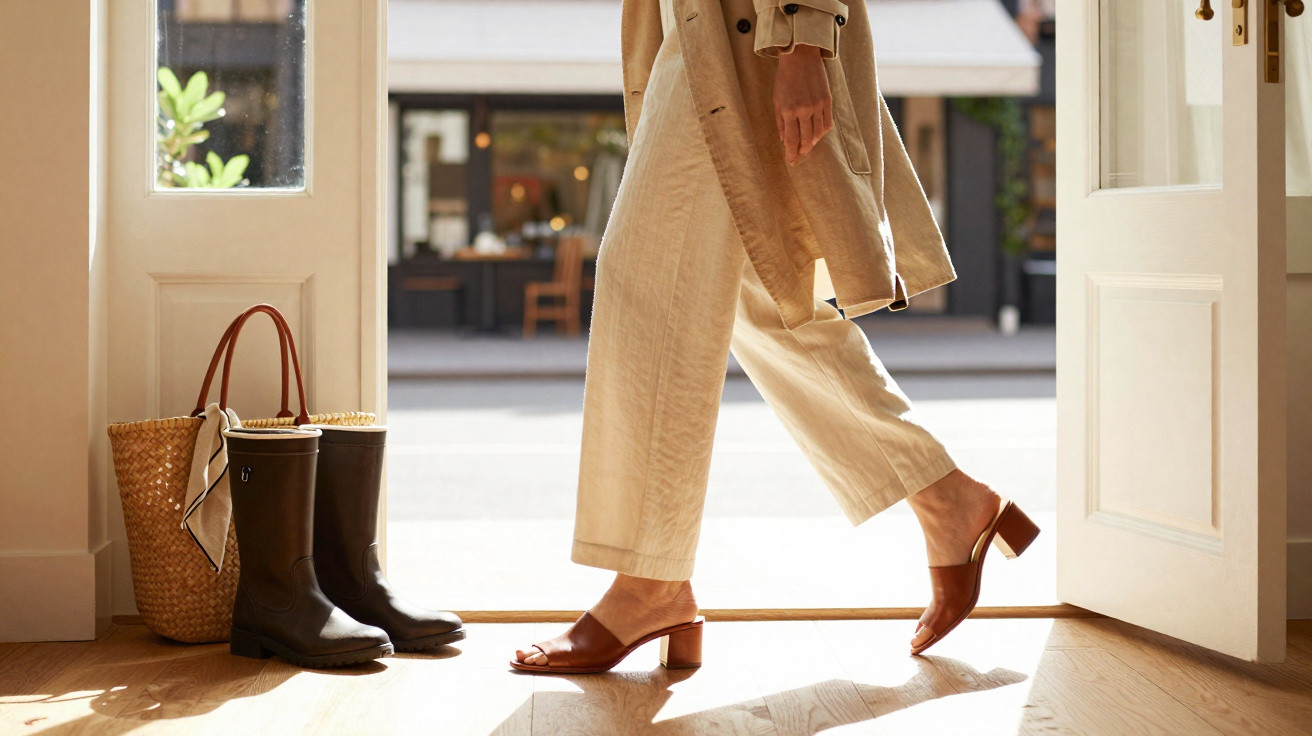
Between chunky winter boots and open summer sandals, many wardrobes have an awkward gap. As soon as the first milder days arrive, closed leather boots can suddenly feel too heavy, while bare toes still seem overly optimistic. This is where a shoe that is quietly becoming the transition-season favourite comes in: the closed mule with a block heel.
Why the closed mule is the ideal shoe for the transitional season
This style is appealing because it achieves a combination few other shoes can offer: it looks polished, protects the foot and still feels remarkably light.
The front of the foot sits securely in leather while the heel remains uncovered. This creates a feeling of protection without overheating.
The entire front of the foot is covered, which is particularly pleasant on cool spring mornings or windy days. The upper provides protection without feeling restrictive. At the same time, the back remains open. There is no zip and no boot shaft rubbing against the ankle – simply slip them on and go.
That open heel makes a noticeable difference to how the shoe feels. Air can circulate, feet are less likely to overheat and there is less perspiration than in traditional transitional boots. Even so, the overall outfit still looks “put together” rather than like purely summery styling.
The block heel: comfort without high-heel stress
Another reason so many women are currently drawn to these styles is the heel. Most closed mules feature a block heel measuring around four to five centimetres.
This height visibly lengthens the leg, shapes the silhouette and improves posture, without making the walk unsteady or causing back pain after two hours. Women who have long since moved on from towering stilettos will find this moderate height especially manageable.
- Approx. 4–5 cm block heel
- Stable, wide contact surface
- Hardly any pressure on the ball of the foot
- Practical for the office, shopping in town and restaurants
Compared with slim-heeled court shoes, a closed mule feels considerably more secure. Cobbles, kerbs and rushing for the train are all easier to deal with, as the foot has a more stable base.
Colour choice: warm brown beats cool black
Many brands offer these mules in brown and natural shades, and for good reason. A warm medium or dark brown works exceptionally well with the cream, beige and sand-coloured palettes found in current spring collections.
A brown leather style blends seamlessly into outfits in camel, ecru, sand, beige or off-white.
Anyone who prefers a classic option can of course choose black. Black closed mules work particularly well with dark denim, navy shades or crisp business outfits. Those looking for more fashion contrast may also consider:
- Dark blue with white jeans
- Cognac with a trench coat and denim
- Greige (a blend of grey and beige) with minimalist outfits
The key is choosing a shade that works with the typical transitional pieces already in your wardrobe: a trench coat, lightweight wool coat, denim jacket, knitted dress or wide-leg tailored trousers.
How to wear closed mules every day
The main strength of this shoe is its versatility. It can work with almost anything from relaxed to smart, provided the rest of the outfit does not feel too heavy.
With wide-leg trousers and linen looks
Closed mules look especially effective beneath wide-leg styles, such as palazzo trousers or relaxed linen trousers. The block heel gives the drape of the fabric more definition, while the open heel adds a modern, light detail that flashes into view as you walk.
An ankle-grazing or slightly cropped trouser length is ideal. It leaves enough of the shoe visible while ensuring the hem does not trail on the ground.
With midi dresses and skirts
For anyone ready to swap boots for knitted dresses, the closed mule is an elegant alternative. Worn with flowing midi dresses or slim skirts, it looks refined and grown-up without appearing severe. The outfit remains feminine without looking overdressed.
Many women particularly appreciate this balance after their 50th birthday: the shoe looks polished and has presence, but lacks the bulky volume of some ankle boots. The full silhouette appears lighter as a result.
Closed mules for the office and shopping in town
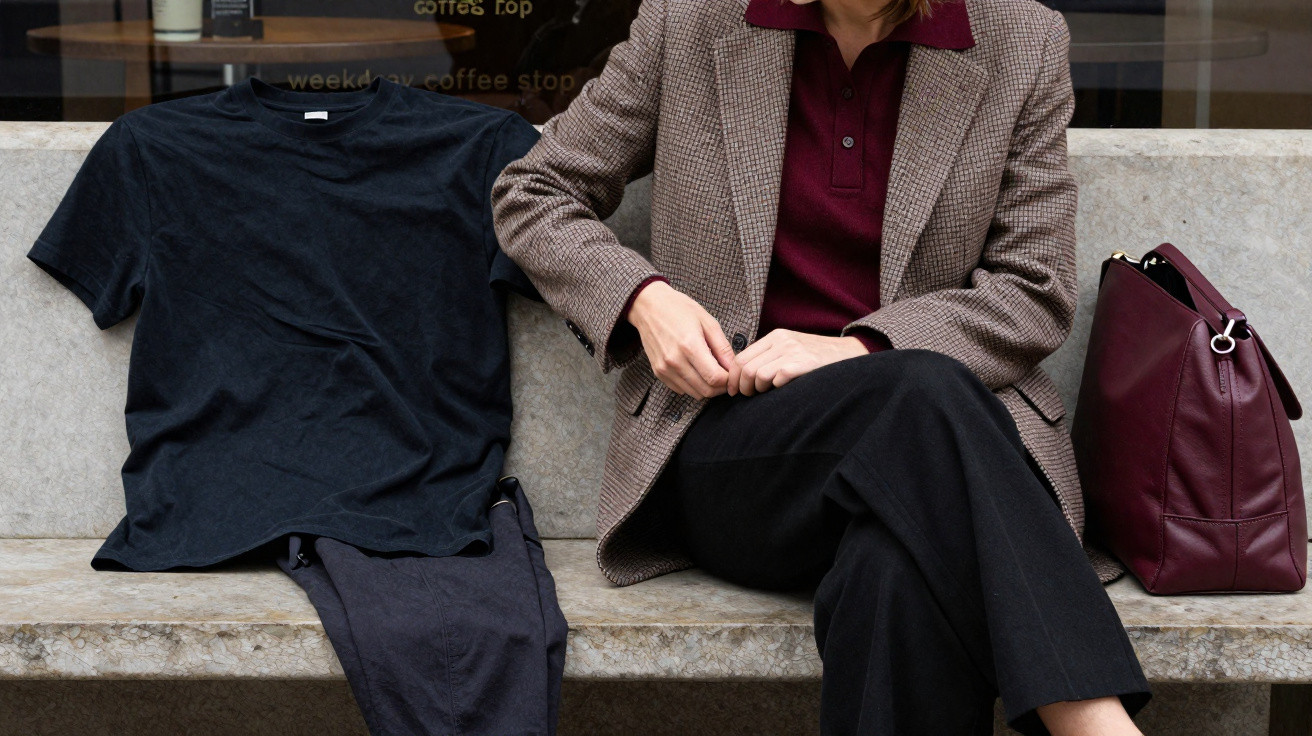
For office outfits, mules pair beautifully with a blazer, straight-leg trousers and fine knitwear. They are less formal than classic court shoes, yet look far more polished than trainers.
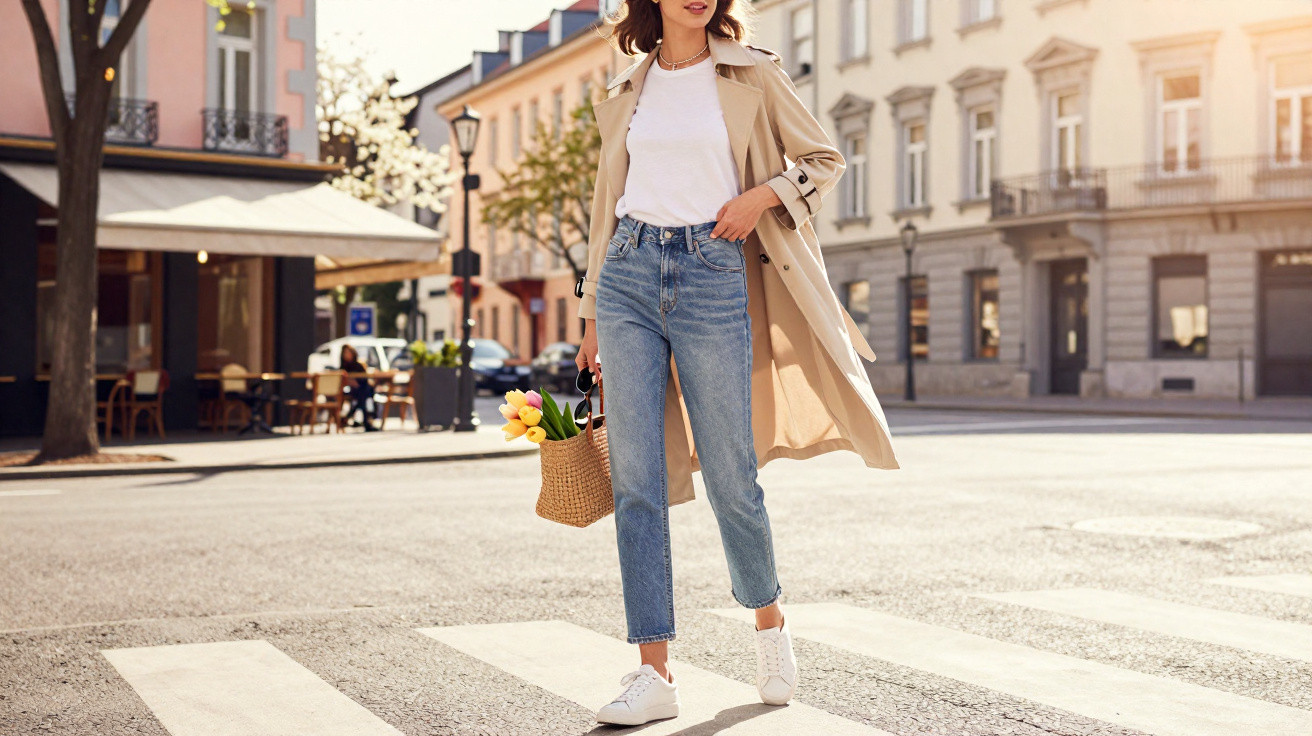
In leisure time, they suit jeans, a trench coat and a simple T-shirt. Anyone who feels uncomfortable wearing open sandals at work will find a compromise here: a closed front, a freer heel and a smart overall appearance.
What to look for when buying this shoe style
Not every style will automatically feel comfortable. It is worth checking the fit carefully, particularly if the shoes are intended for daily wear.
| Criterion | What to look for |
|---|---|
| Heel | Wide block, 3–5 cm, with no overly narrow contact surface |
| Upper material | Soft leather or high-quality faux leather, with no hard edges |
| Fit | The foot should be held securely enough not to slide forwards |
| Footbed | Light cushioning rather than a completely flat insole |
| Sole | Sufficient thickness for cushioning, not rigid as a board |
Ideally, the shoe should hold the foot sufficiently over the instep without pinching. If the foot slips forwards with every step, the day will quickly become tiring. Those prone to sensitive balls of the feet should look for a softly padded sock liner.
Who are closed mules particularly suitable for?
Women who no longer feel comfortable in highly cut sandals will find a very contemporary solution in this style. The foot looks visually “dressed”, even when no socks are worn.
The transitional mule brings lightness to spring outfits without showing bare toes – ideal for anyone who likes a subtle yet modern look.
Anyone who spends a lot of time on the move each day benefits from the stable heel. At the same time, fashion-conscious women who want to update their look without following every trend will also be drawn to them.
There is one small caveat: anyone especially prone to heel spurs or Achilles tendon problems should test open-heel designs carefully to ensure they offer enough support. In some cases, a style with a slightly higher heel cup may feel more comfortable.
How to keep the shoes comfortable for longer
A few straightforward measures will help ensure your new transitional-season favourite not only looks good, but remains wearable too:
- Try them on in the afternoon, when feet are slightly swollen
- Walk briefly over a hard floor in the shop, rather than only on carpet
- Test thin gel pads beneath the forefoot if your feet tend to slide forwards
- Break in leather styles at home with socks before wearing them barefoot
Leather, in particular, gives slightly over time. A style that feels just a touch snug when bought may fit perfectly after a few days. However, if the shoe is painful from the outset, it is unlikely ever to become a favourite pair.
Why this trend will last beyond a single season
The closed mule meets a real need: it suits the desire for effortless yet stylish outfits that work without much thought. A shoe that can be slipped on quickly in the morning and works equally well for the journey to the office and an evening meal with friends has every chance of becoming an everyday staple.
Unlike more extreme trend pieces, this shape feels fairly timeless. Block heels, a closed toe and an open heel have all existed before; they are simply being styled in a more modern way now. Anyone investing in a high-quality pair should be able to wear it throughout the transitional season for several years.
Those who already own favourite jeans, midi dresses and a classic trench coat do not need to rethink their entire wardrobe. One new pair of shoes is enough to make the whole look feel fresher and lighter – precisely at the point when winter boots are too much and summer sandals are still too early.










Comments
No comments yet. Be the first to comment!
Leave a Comment