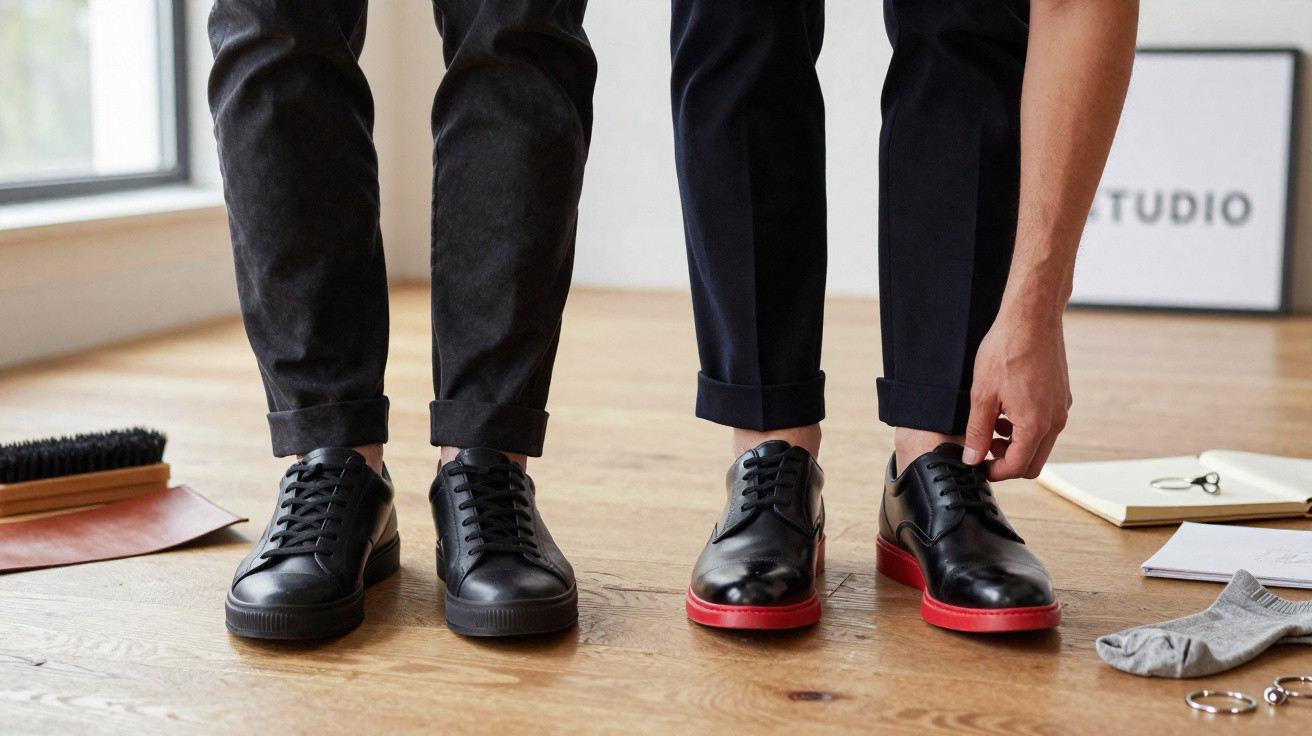
A men’s wardrobe can settle into safe habits very quickly: the same trainers, the same dark jacket and the same plain knitwear. Jaden Smith’s approach to leading Christian Louboutin Men’s offers a useful alternative. The practical idea is simple: use one expressive detail to alter an otherwise familiar outfit, rather than trying to look different from head to toe.
That matters because personal style is easiest to sustain when it still works for the commute, the pub, dinner plans and Britain’s unpredictable weather. A distinctive shoe, interesting texture or well-chosen accessory can bring personality without making getting dressed feel like a performance.
A new point of view in menswear
Christian Louboutin is known for footwear, including its recognisable red-soled designs, while its menswear offer spans formal shoes, trainers, leather goods and accessories. Smith’s creative leadership of the men’s division puts him at the centre of its design direction and visual identity.
A creative director’s role extends beyond choosing colours or approving a shoe shape. It can influence the way collections are styled, the mood of campaigns, the events around a launch and the kind of customer the brand hopes to reach.
Smith has long treated clothes as a means of self-expression rather than a set of fixed rules. His public style has often played with proportion, formality and traditionally masculine codes. That makes an emphasis on individuality and experimentation feel consistent with his wider fashion perspective.
The most useful kind of statement dressing does not require a new identity. It gives familiar clothes a different energy.
Make contrast do the hard work
“Surprise” in fashion does not have to mean impracticality. It can be a polished shoe with relaxed trousers, an unexpected material in an otherwise neutral outfit, or an accessory that becomes the focal point.
The easiest way to try this at home is to keep most of an outfit straightforward, then introduce one deliberate contrast. Think in terms of three elements:
- one familiar base, such as jeans, navy trousers or a plain knit;
- one refined element, such as a leather shoe, tailored coat or structured bag;
- one point of personality, perhaps texture, colour or an unusual silhouette.
For example:
- A washed denim shirt with tailored black trousers and sleek leather trainers.
- A navy suit with a fine-gauge knit instead of a formal shirt.
- Straight-leg jeans, a white T-shirt and a substantial loafer or boot.
- An all-black outfit with a textured belt, silver jewellery or an interesting bag.
The aim is balance. One unexpected element usually reads as intentional; several competing statements can make an outfit feel less wearable.
Find the piece that gives you confidence
The language around luxury footwear often focuses on how a great pair of shoes can change the way someone carries themselves. That feeling is not limited to expensive clothes. It may be the overcoat that makes a wet January morning feel more manageable, a well-cut shirt for a presentation, or trainers that make a simple weekend outfit feel complete.
The useful question is not, “What should make me look confident?” It is, “What do I already wear when I want to feel most like myself?”
Three steps to identify your confidence piece
Notice what you repeat
Look for the item you reach for when you want to feel sharper. You may find that you prefer clean lines, colour, structure, soft fabric or a particular fit.Work out why it earns its place
Is it comfortable? Does it fit properly? Does it make basic clothes look more considered? The answer is more useful than the label.Build around it, rather than copying an entire look
If your strongest piece is a shoe, let the trouser length work with it. If it is a jacket, keep footwear and accessories quieter. Give the key item space.
Let shoes shape the outfit
Footwear is often treated as a finishing touch, particularly when shopping online, but it can determine the balance of the whole outfit. Shoes affect how trousers sit, how formal you appear and whether the proportions feel intentional.
Start with the trouser shape before choosing the shoe. Fuller trousers can carry chunkier loafers, derbies and substantial trainers. Slimmer or tapered trousers often work best with cleaner, sleeker footwear. Cropped hems draw attention to shoes, so check the look from the side as well as the front.
A practical shoe rotation could include:
- clean everyday trainers for casual wear;
- leather derbies or loafers for smarter workdays and dinners;
- weather-ready boots with a grippy sole for wet pavements;
- one more distinctive pair for events or evenings out.
If you are spending a significant amount on footwear, try it on properly where possible. Walk in both shoes, check the heel and toe box for rubbing, and wear the type of socks you would normally use. A striking pair that hurts after ten minutes is unlikely to become a favourite.
Playfulness does not have to be precious
Luxury fashion can sometimes seem guarded, as if people need specialist knowledge before they are allowed to enjoy it. A more welcoming approach leaves room to try things, get them wrong occasionally and adapt ideas to real life.
You do not need to understand every runway reference to know that a colour combination or shoe shape appeals to you. Start with low-risk experiments before buying something expensive or difficult to wear.
- Try a bolder sock with trousers that show the ankle.
- Wear a smarter shoe with relaxed denim for an evening out.
- Swap a standard black belt for dark brown, oxblood or textured leather.
- Add a scarf, ring, watch or bag charm to a plain outfit.
- Test a new silhouette in a high-street shop or through second-hand shopping before committing.
Accessories are especially helpful in the UK, where outerwear does much of the visual work for much of the year. A useful umbrella, gloves, scarf or wool hat can be practical while making an outfit feel more deliberate.
Style becomes easier to wear when it leaves room for individuality, rather than asking everyone to follow the same formula.
Common mistakes when trying a more expressive look
Being more adventurous need not mean buying lots of statement pieces. These are the traps most likely to leave clothes unworn.
- Buying for an imaginary life. If an item only works for one imagined occasion, pause before purchasing.
- Mistaking discomfort for confidence. Pinching shoes, restrictive jackets and trousers that need constant adjustment rarely help anyone feel at ease.
- Ignoring weather and care needs. Pale leather, suede and embellished finishes can be impractical in heavy rain, mud and salted winter streets.
- Copying runway styling exactly. Runway looks tell a visual story; everyday outfits need to work on public transport, at work and in changing temperatures.
- Forgetting proportions. An oversized shoe, cropped trouser and bulky coat can work together, but test the complete outfit rather than judging each item alone.
- Taking risks with second-hand purchases. Use established resale platforms, ask for clear photographs and check return policies. Be cautious of prices that appear implausibly low.
Care, comfort and safer buying
A shoe remains a good investment only if you can wear and maintain it. After wet weather, allow leather footwear to dry naturally at room temperature, away from radiators or direct heat. Brush off surface dirt once dry, and use shoe trees in smooth leather pairs if you have them.
Test any cleaner, conditioner or protector on a discreet area first, and follow the care guidance provided for that particular material. Suede, nubuck, patent leather and coloured finishes all need different treatment.
Avoid household bleach, strong solvents and multipurpose cleaning sprays on shoes, leather goods or fabric accessories. They can strip colour, damage coatings and leave permanent marks. Never mix cleaning products, particularly bleach with acidic products or ammonia-based cleaners, as dangerous fumes can result.
For costly footwear, a reputable cobbler can advise on protective soles, heel repairs and appropriate cleaning. Ask before authorising work, particularly on coloured or painted soles, as some alterations may change the original finish.
The practical takeaway
Jaden Smith’s leadership of Christian Louboutin Men’s puts the focus on confidence, character and a more playful approach to menswear. For most people, applying that idea does not mean rebuilding a wardrobe or buying luxury labels.
Choose one item that changes how you feel: a better-fitting shoe, a textured accessory, a more interesting coat or a silhouette you have not yet tried. Pair it with clothes you already trust, wear it somewhere ordinary, and decide whether it genuinely earns a place in your routine. The strongest style choices are not necessarily the loudest; they are the ones you can comfortably live in.







Comments
No comments yet. Be the first to comment!
Leave a Comment