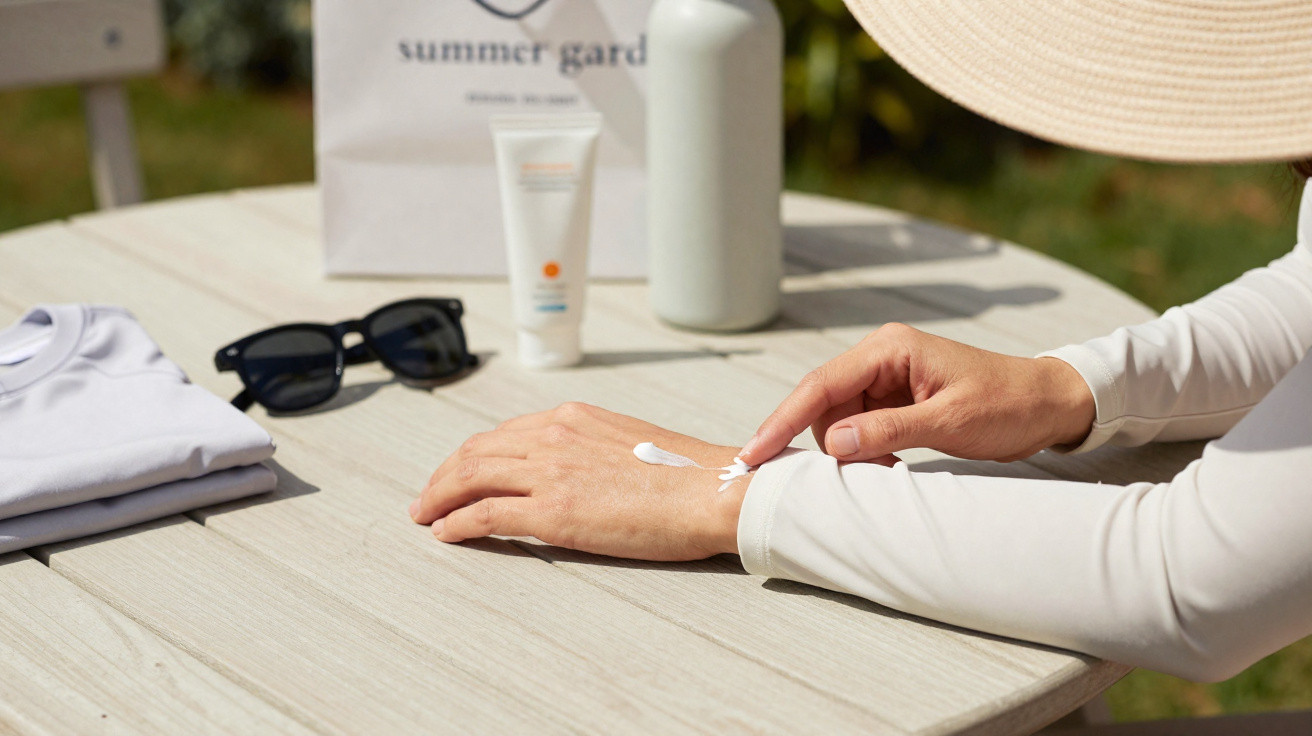
A high-factor sunscreen can feel like permission to stay outdoors all day, while tanning gummies are sometimes presented online as a shortcut to a safer glow. Neither replaces the basics. The most dependable way to reduce UV exposure is to cover skin, spend time in shade and avoid prolonged direct sun when it is strongest.
Sunscreen remains useful for skin that cannot be covered, but it works best as one part of a wider plan. This matters in the UK as much as abroad: UV levels can be high on cool or cloudy days, and exposure soon adds up during gardening, school sports, walks, festivals and time near water.
Clothing and shade reduce the amount of UV reaching your skin. Sunscreen helps protect the areas that remain exposed.
Why sunscreen is not the whole answer
Sun protection factor, or SPF, mainly indicates protection against UVB radiation, which causes sunburn. A higher SPF is useful, but it cannot make up for using too little product, missing areas or failing to reapply after swimming, sweating or towel-drying.
For everyday outdoor use, choose a sunscreen with both UVA and UVB protection. In the UK, NHS advice is to use at least SPF 30 with high UVA protection. This may be shown by a UVA star rating or a UVA symbol in a circle on the packaging.
SPF 50 can be a sensible option, especially in summer, on holiday, at altitude, near water or sand, or if you burn easily. It is not, however, an invisible suit of armour. Sunscreen can rub off on clothes and towels, and it is easily missed around the hairline, ears, neck, eyelids, hands and tops of the feet.
The difference between SPF 30 and SPF 50 matters less if SPF 30 is applied generously and reapplied, while SPF 50 is used sparingly once in the morning.
Tanning gummies do not provide sun protection
Tanning supplements and gummies may contain ingredients intended to change the appearance of skin colour or support tanning. A bronzed appearance is not the same as protection from UV radiation.
Do not assume that looking tanned means you can stay outside longer without burning. Supplements do not replace shade, protective clothing or sunscreen, and they should not be treated as a way to make sun exposure safe.
Be cautious about social-media posts that suggest a supplement can prevent sunburn. Check the full ingredient list and follow the stated dose. Speak to a pharmacist before taking supplements if you are pregnant or breastfeeding, take regular medicines, have a long-term health condition, or are considering a product for a child.
A gradual self-tanner can create colour without UV exposure, but it does not provide reliable sun protection unless the product specifically says it does. Even then, any stated SPF should be used as directed, with separate sunscreen applied for time outdoors.
Put clothing and shade first
Physical barriers are especially useful because they do not rely on a perfectly even application or a reminder to reapply. They are a practical choice for long days outdoors, when it can be difficult to judge how much sun you have had.
Choose what works for the activity:
- A wide-brimmed hat that shades the face, ears and back of the neck. A baseball cap leaves the ears and neck exposed.
- Sunglasses marked as providing UV protection, ideally with a close-fitting shape that reduces light entering at the sides.
- Loose, longer-sleeved clothing where comfortable, particularly for gardening, walking, festivals and beach days.
- Tightly woven fabrics or purpose-made UPF clothing for extended outdoor activity.
- Shade from trees, awnings, parasols or buildings.
Shade is valuable, but it is not complete protection. UV can reflect from water, sand, pale paving and snow, so use clothing and sunscreen as well when needed.
Check the UV index in a reliable weather forecast or app during spring and summer, and before travelling. UV can be strong even when the air feels cool, the sky is hazy or there is a breeze.
If you can move lunch, reading time or a children’s game into shade, that is a useful protective step rather than an afterthought.
A straightforward routine for days outside
1. Cover up before leaving
Start with clothing and a hat. This reduces the amount of skin needing sunscreen and makes the routine easier to keep up. A light overshirt, long-sleeved linen layer or UV top can be useful for the school run, allotment, dog walk or pub garden.
2. Apply sunscreen to exposed skin
Apply sunscreen before going outdoors, following the product instructions. Use enough to cover exposed areas evenly. Remember ears, neck, scalp or parting, backs of hands, legs and feet. An SPF lip balm may be useful for exposed lips.
3. Reapply when it counts
Reapply regularly, and after swimming, heavy sweating or towel-drying. Water-resistant sunscreen can be helpful for swimming and sport, but it is not permanent. Keeping a bottle in your bag or by the back door makes this more realistic.
4. Alter the plan when the sun is intense
Take breaks indoors or in deep shade, and schedule exercise, walks or gardening for earlier or later in the day where practical. It is easier to reduce exposure in the first place than to try to compensate afterwards.
Take extra care with children
Children can burn and overheat quickly when they are absorbed in play. Make shade, clothing and a hat the default rather than depending on sunscreen alone.
Babies and young children should be kept out of strong direct sunshine as far as possible. If using a pram sunshade, make sure air can circulate and check your child regularly. Do not cover a pram completely with a blanket or cloth, as this can trap heat.
For nursery, school trips and family days out, pack:
- A named, broad-brimmed hat
- A refillable water bottle
- A light cover-up
- Sunscreen for exposed skin, subject to the setting’s policy
- Spare clothing if swimming or water play is planned
Do not let a child “get used to the sun” through burning. Sunburn means the skin has had too much UV exposure.
If you have caught the sun
The priority is to prevent further exposure. Go indoors or into shade, cover the affected area with loose clothing and cool the skin gently with a cool shower, bath or damp cloth. Drink fluids if you can.
A plain, fragrance-free moisturiser may feel soothing. Avoid putting ice directly on the skin, and do not pop blisters or peel flaking skin. A pharmacist can advise on suitable pain relief or products for discomfort.
Seek urgent medical advice for severe sunburn in a child, blistering over a large area, swelling, dizziness, confusion, fainting, signs of dehydration or symptoms of heat illness. Get help promptly if you are worried about someone’s condition.
Keep sore, red or peeling skin out of direct sun until it has recovered. More sun will not turn a burn into a tan.
Common mistakes that undermine protection
- Treating SPF 50 as permission to spend longer in direct sun.
- Applying sunscreen only to the face and shoulders.
- Using a small amount once for a whole day outside.
- Assuming cloudy weather means UV does not matter.
- Waiting until you feel hot before seeking shade.
- Believing a tan, tanning gummy or self-tanner protects against UV.
- Relying on a parasol alone beside reflective water or sand.
- Forgetting the scalp, ears, neck, hands and feet.
Make the safer choice the easy one
Keep a hat by the door, sunscreen in your everyday bag and a light layer in the car or pushchair basket. Choose the shadier side of a café terrace, build breaks into gardening and pack sun protection for any day out, not just holidays.
Sunscreen is useful and worthwhile, particularly on exposed skin. But the most reliable approach is simple: wear protective clothing, use shade generously and apply broad-spectrum sunscreen properly when you cannot cover up.










Comments
No comments yet. Be the first to comment!
Leave a Comment