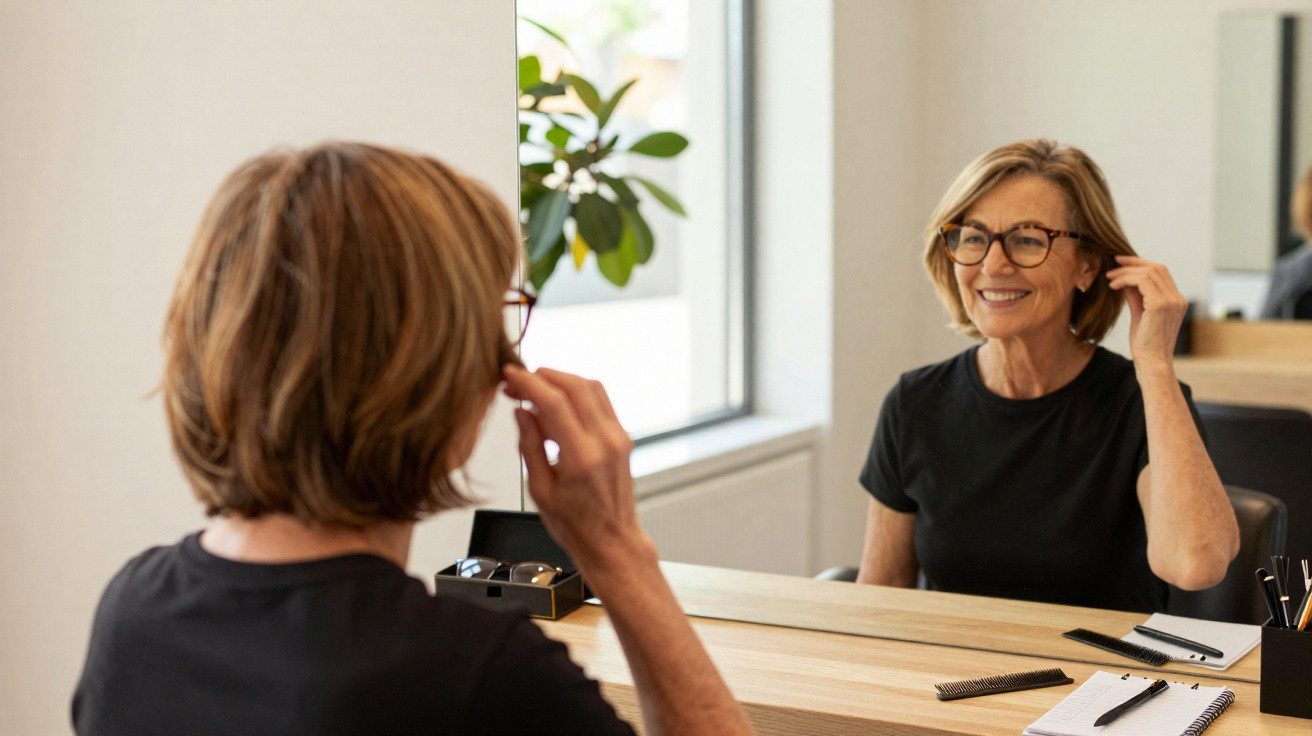
As the years pass, hair often becomes finer, glasses remain a constant, and an old hairstyle may no longer feel right. Anyone looking for an easy-care short haircut can quickly end up with a style that appears harsh rather than lively. A particular graduated short hairstyle can make all the difference, bringing the face and glasses into harmonious balance.
Why so many people feel uncomfortable with their hairstyle after 70
From around the age of 70, it is not only hair colour that changes; its texture changes too. Many women notice that:
- Their hair looks noticeably finer and thinner.
- Some areas become more sparse, particularly on the crown.
- Grey and white hair can feel coarser and become frizzy more quickly.
- Glasses are always on the face and visually divide its contours.
For convenience, or on a hairdresser’s recommendation, the choice often becomes “just cut it short”. It is practical, certainly, but not every short haircut takes wrinkles, face shape and spectacle frames into account. An overly linear pixie cut or sides cut far too short can make the face look sharper, draw attention to cheekbones that were never meant to stand out and make glasses appear even more dominant.
The key is not simply “short”, but a graduated shape that brings glasses, face and hair quality into balance.
The graduated short hairstyle: soft, modern and glasses-friendly
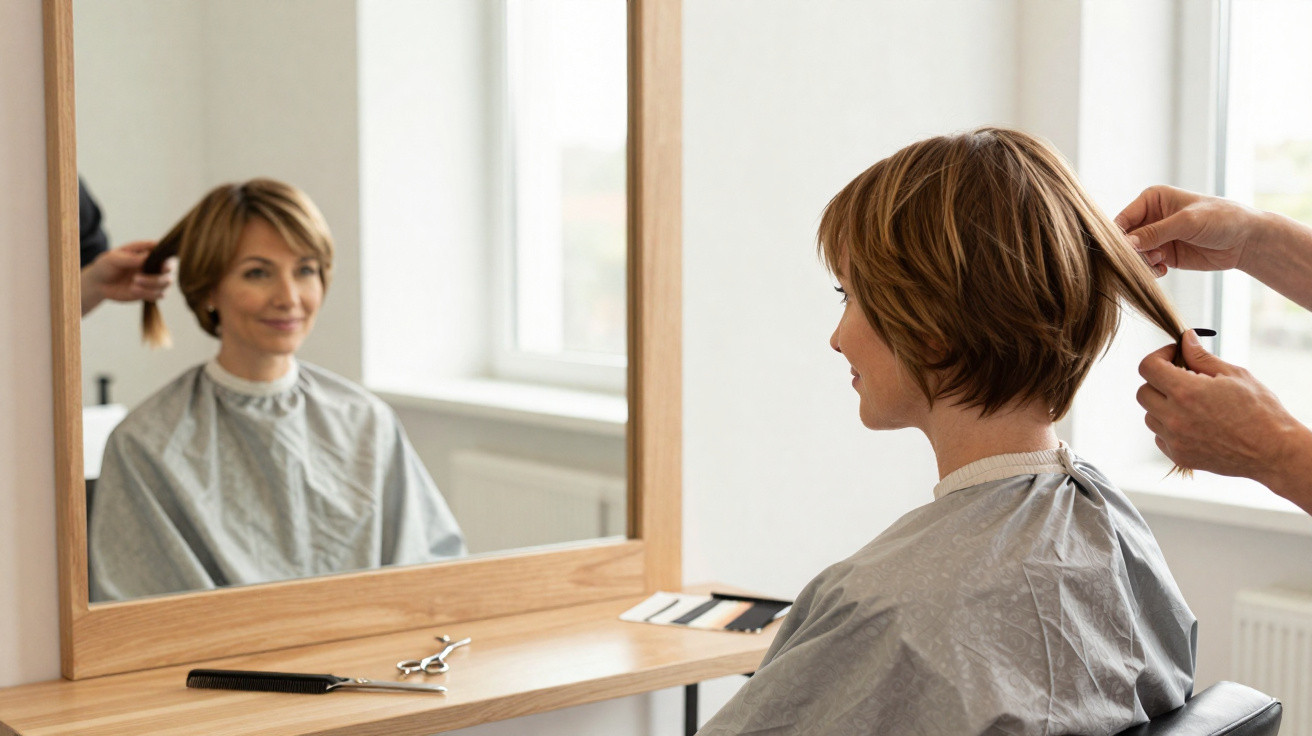
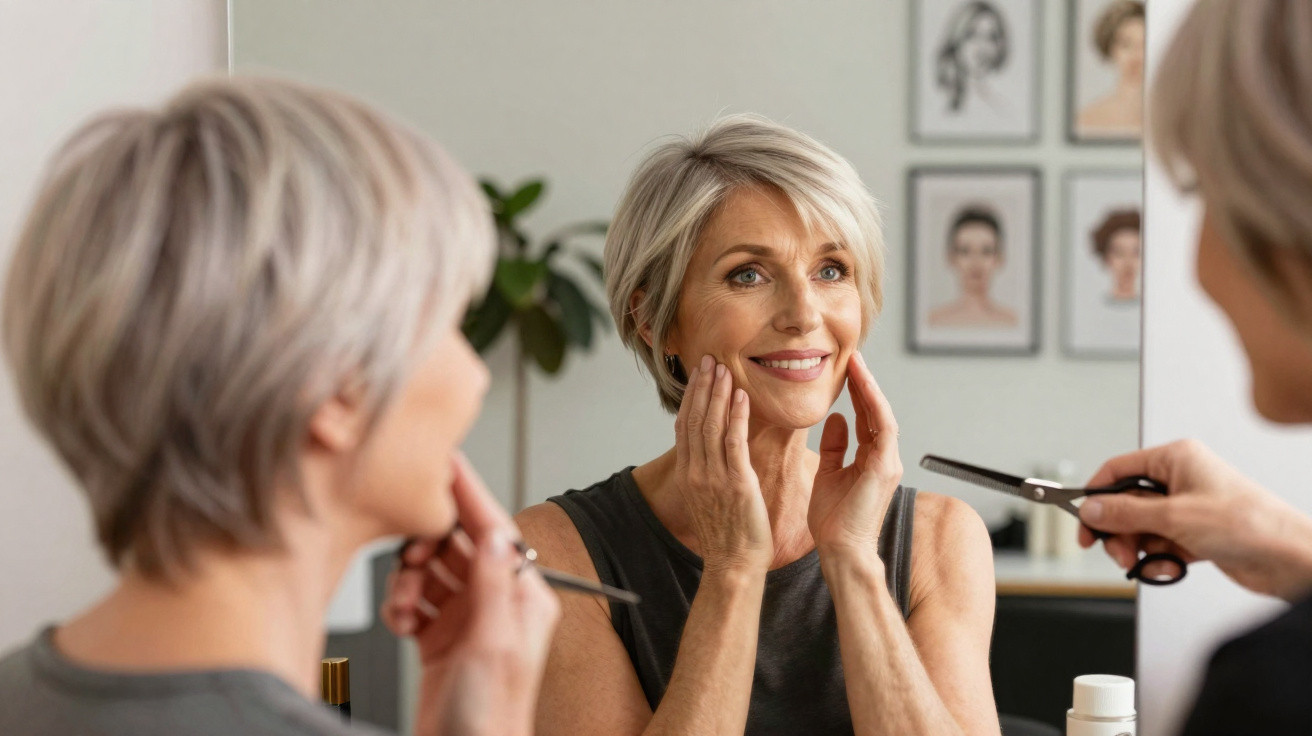
For women over 70 who wear glasses, the most versatile option is often a softly graduated short hairstyle. It is neither a severe pixie nor a traditional helmet-like cut, but something between the two: fresh, light and adaptable.
Key features of this hairstyle
- More fullness on the crown: Layers create volume where hair most commonly becomes thinner.
- Soft length around the face: The front sections are kept slightly longer to soften deep wrinkles and strong lines.
- A shorter nape: Keeping the nape short and neat gives a well-groomed appearance and visually removes heaviness from the silhouette.
- Gentle transitions: Rather than sharp edges, flowing layers frame the face.
These layers create a natural lifting effect: strands on the crown provide support, the sections around the cheekbones are gently raised, and the expression looks more alert. At the same time, there is enough room at the sides so that spectacle arms do not continually flatten individual hairs or cause them to stick out wildly.
How the hairstyle works perfectly with glasses
At a certain age, glasses are no longer simply an accessory but an everyday companion. That is precisely why the cut should work with them rather than compete against them.
How the frame affects the cut
- Bold, wide frames: It is usually more flattering to reveal the temples slightly. The area around the arms stays neat, allowing the glasses to show their shape without making the face appear harsh.
- Fine, delicate frames: The hairdresser can leave more hair at the sides. Textured strands beside the glasses add movement without looking overdone.
- Dark or coloured glasses: Against white, grey or salt-and-pepper hair, they create an interesting contrast. In that case, the hairstyle should remain fairly simple and calm.
- Subtle, transparent frames: Here, the cut can be slightly more fashion-forward, for instance with a light, wispy fringe section.
The more noticeable the glasses, the more understated the hairstyle can be – and vice versa.
Fine hair? This is exactly when a graduated cut works
Many women hesitate because they worry that a short cut will make thinning areas more obvious. When constructed properly, the opposite is true.
How layers help fine and thinning hair
A hairdresser can use different lengths to create the impression of greater fullness:
| Problem area | Solution in the cut |
|---|---|
| Sparse crown | Shorter layers directly on top, with longer strands around them to provide more lift. |
| Thin side sections | Leave a little more length and only thin it out lightly, so the hair does not lie flat. |
| Coarse, grey hair | Add targeted, soft texture with scissors or a razor, so the ends settle rather than stick out. |
The important point is this: truly fine, fragile areas should be kept carefully shorter so that they look denser. At the same time, the volume is moved upwards, visually lengthening the face and adding freshness. A few cleverly positioned strands can even make small gaps at the back of the head almost invisible.
How to talk to your hairdresser so the cut really works
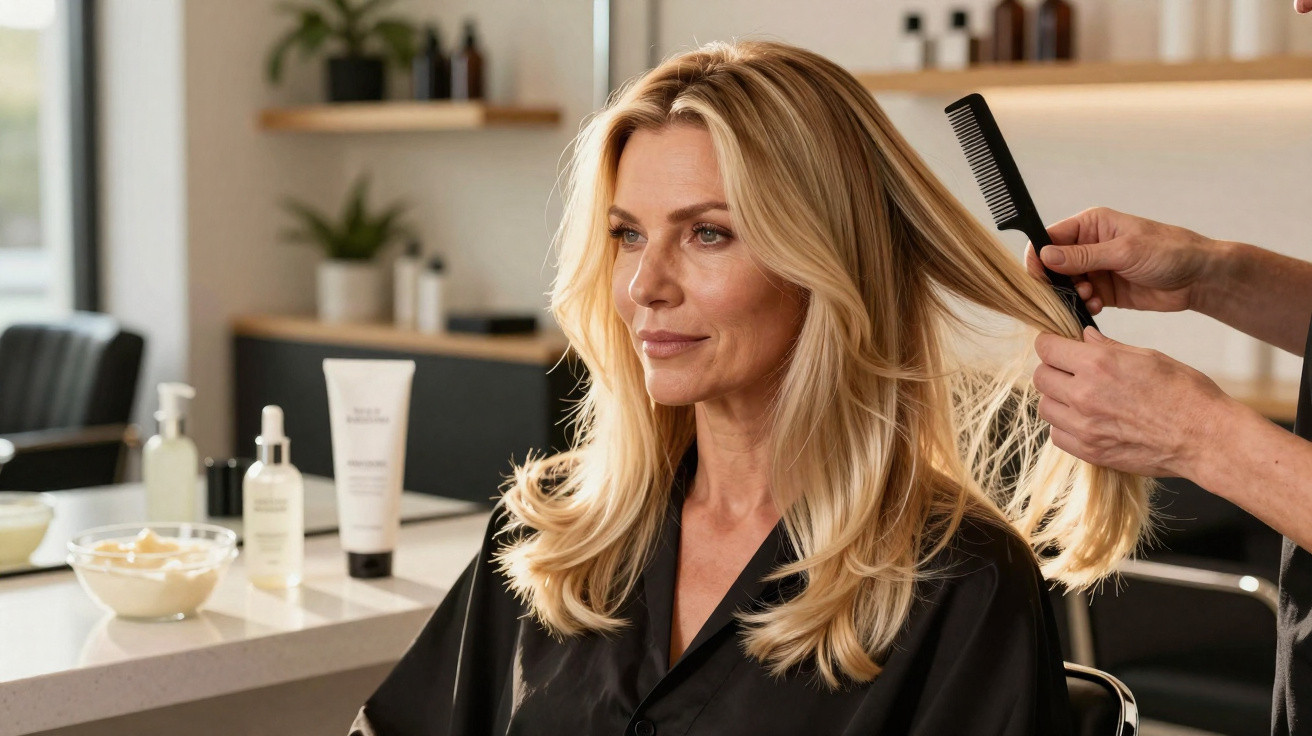
Even the best idea is of little use if it is not understood correctly in the salon. Giving your hairdresser a clear brief makes all the difference.
Checklist for your appointment
- Attend wearing your glasses, not contact lenses.
- Say at the very start that you wear your glasses every day.
- Clearly explain that you want a short, graduated hairstyle with volume on top and softness around the face.
- Point out any areas where your hair is especially thin.
- Ask for the forehead and sides not to be exposed too much, so the face does not look severe.
- Agree a schedule for trims with your hairdresser, around every six to eight weeks.
The more precisely you show how you see yourself in the mirror, the better the cut can suit your individual look.
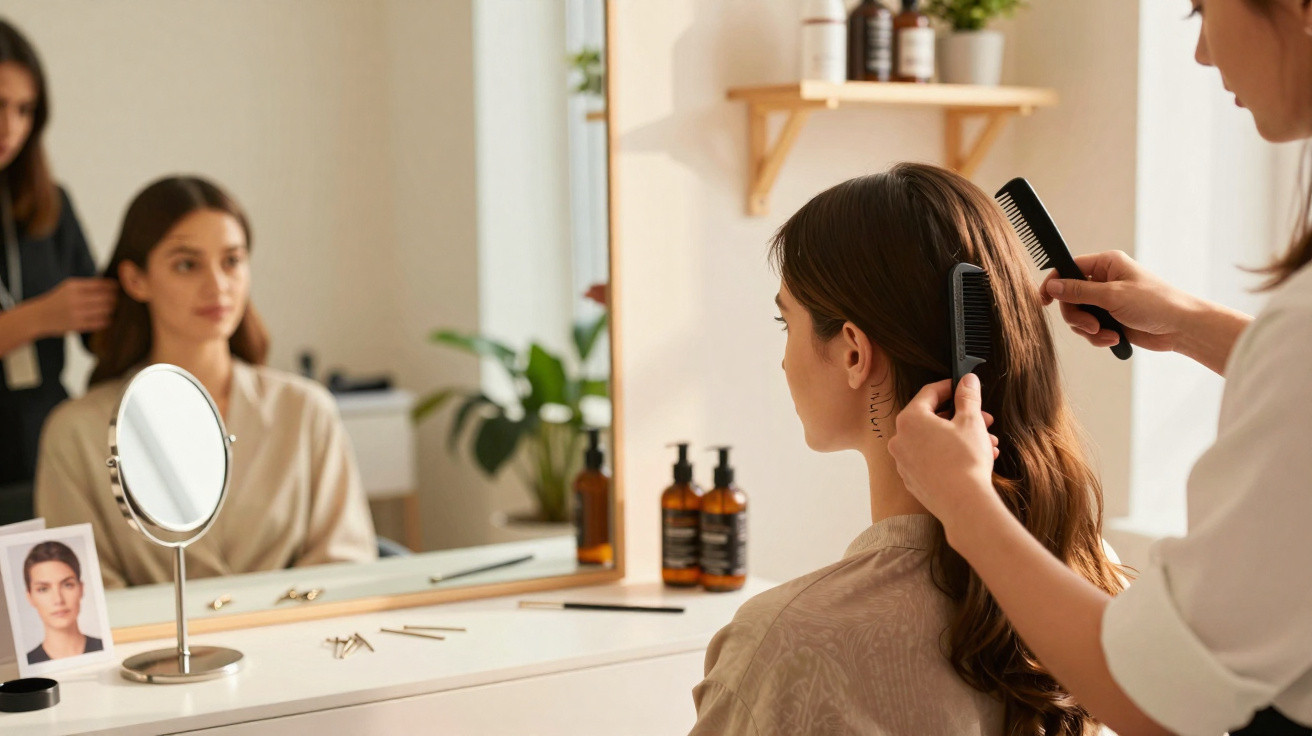
A photograph of a hairstyle you like can be useful, ideally one showing glasses. It is even more helpful to briefly explain what bothers you about your current hairstyle: “Everything hangs flat here”, “this makes me look so severe”, “the glasses disappear into my hair”.
Styling and care: little effort, great effect
A graduated short hairstyle for women over 70 should work in everyday life. Nobody wants to spend a long time in front of the mirror every morning. With a few straightforward steps, the cut will keep its shape:
- Lightweight volumising products: A small amount of mousse or volumising lotion at the roots is enough.
- Drying with your fingers: Tip your head slightly forwards and scrunch the hair in its natural growth direction to lift the crown.
- No heavy wax: Overly rich products weigh fine hair down, so lightweight pastes or sprays are a better choice.
- Regular trims: The layers will then fall nicely on their own, without requiring many styling tricks.
For grey or white hair, a mild shampoo is advisable, along with an occasional purple shampoo to keep the tone clear. A small amount of conditioning product on the ends keeps the texture supple without leaving it limp.
Why the right short hairstyle with glasses creates a more youthful look
This is not about a few centimetres more or less in length, but about the interplay of shape, light and facial lines. A well-graduated short haircut can:
- direct attention towards the eyes rather than wrinkles or thinning areas,
- highlight glasses as a fashionable feature rather than a “medical necessity”,
- give the face softer contours without looking unnatural,
- simplify everyday styling – which automatically creates a more relaxed appearance.
Women who wear this type of hairstyle often notice quickly that their glasses no longer disappear apologetically into the face, but become part of a cohesive look. It is this new balance that creates the effect many want: less tired, less severe, more “this is me”.
Anyone who still feels unsure can begin with a slightly longer version and gradually work towards the shorter, clearly graduated cut. With something as personal as hair and the face, this gradual approach is worthwhile – until the hairstyle, glasses and reflection in the mirror truly work well together again.






Comments
No comments yet. Be the first to comment!
Leave a Comment