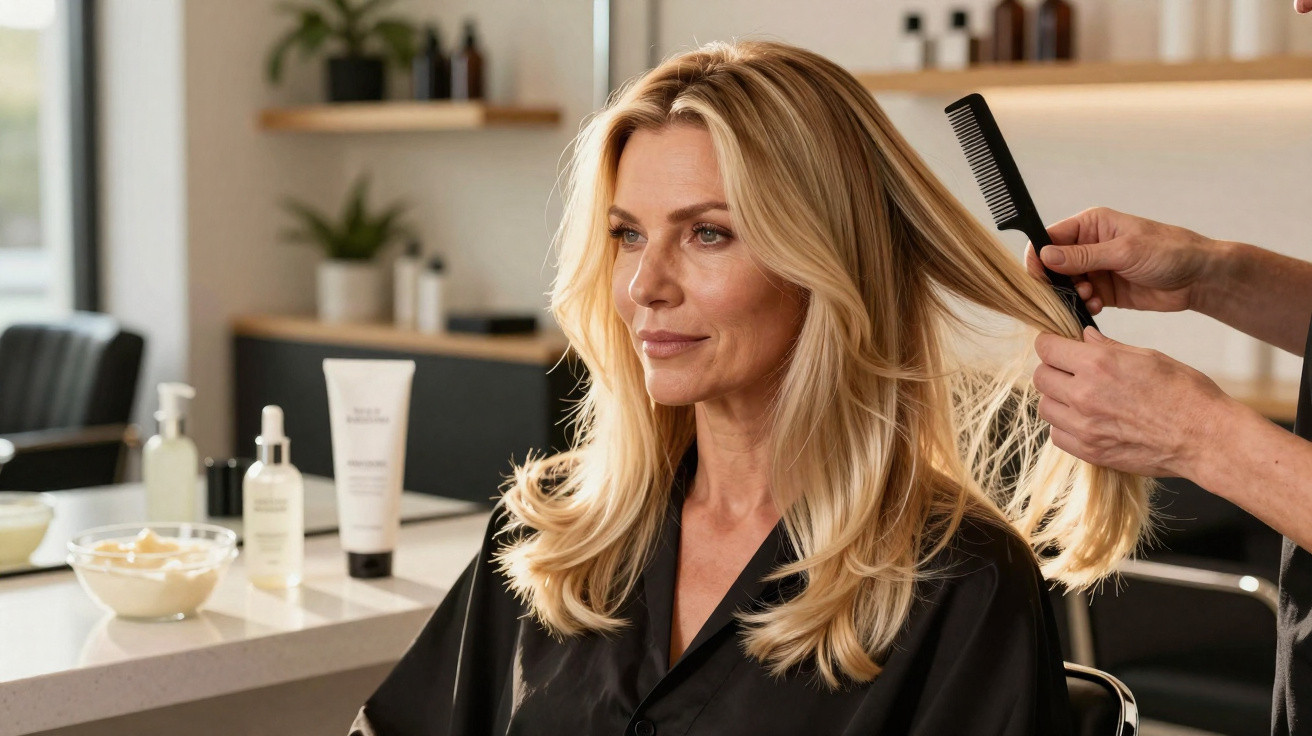
The new salon colour trend, “vanilla fondu blonde”, does exactly that: it softens facial features, reduces the appearance of harsh contours and gives mature skin a subtle glow. Here is why this shade is creating so much buzz in 2026 and what it can genuinely do in everyday life.
The idea behind the vanilla fondu blonde trend
Not all blonde shades are alike. Vanilla fondu blonde is not about glaring platinum or a dramatic transformation; it is a soft, creamy tone that blends seamlessly into the natural hair colour.
“Vanilla fondu blonde is like soft light on the face – not a harsh mask on the hair.”
At the heart of the technique is an exceptionally delicate balayage effect. The colourist applies lighter sections in a way that avoids any defined lines. The roots remain slightly deeper, while the mid-lengths are lightened gradually. This creates a gentle transition reminiscent of naturally sun-kissed hair.
Why vanilla fondu blonde suits women over 50
As we age, the complexion changes. Skin can appear paler, fine lines become more noticeable and grey hairs tend to increase. A shade that is too dark or too cool may accentuate these effects. Vanilla fondu blonde works in the opposite way:
- The warm, yet non-orange vanilla shade brings added freshness to the face.
- Fine, light strands draw attention away from small lines and towards the eyes.
- Soft shading at the roots disguises emerging grey hairs more effectively than a solid block colour.
- The overall look feels lighter and softer, avoiding severe, harsh-looking contours.
Many hairdressers say clients immediately feel that they look several years younger after this colouring service, even though nobody can pinpoint exactly why. It is this understated change that makes the trend so popular.
How the colouring process works in the salon
Vanilla fondu blonde is not a quick five-minute tint. Its natural-looking finish relies on a carefully structured technique.
Delicate balayage instead of a foil-heavy transformation
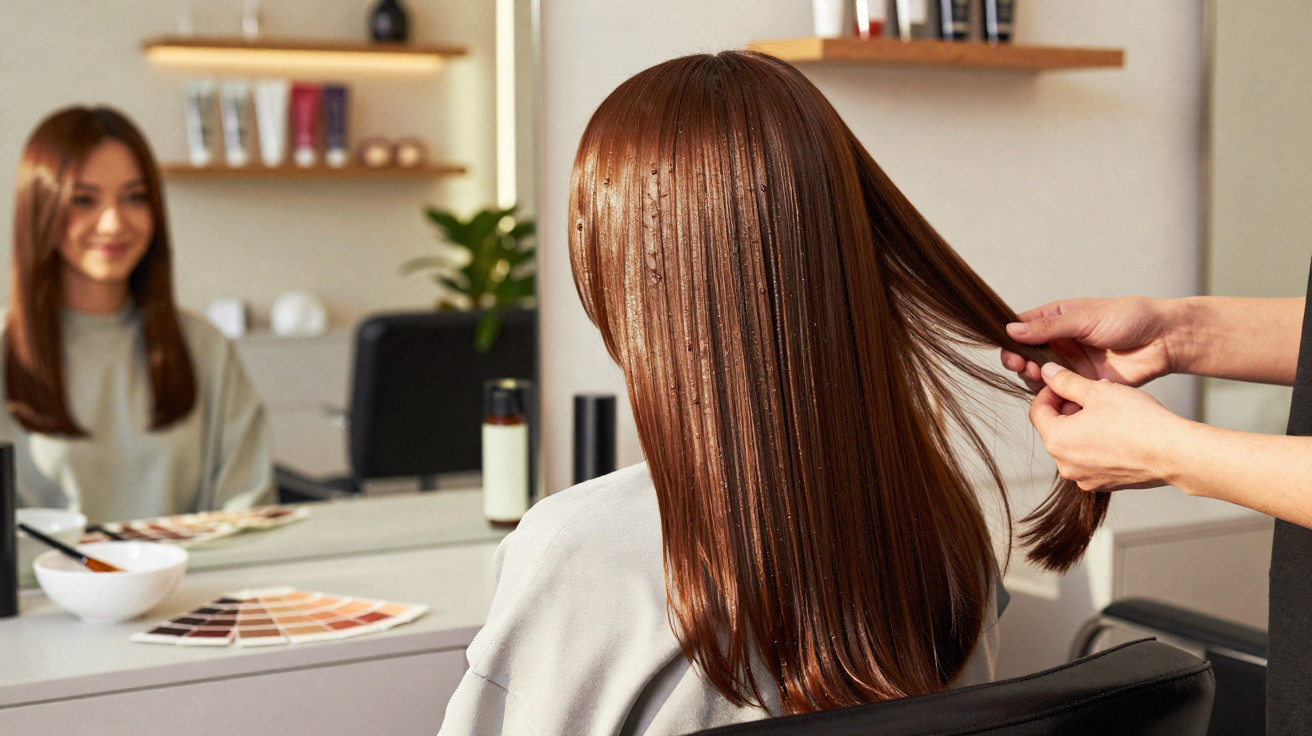
First, the stylist works very fine sections through the mid-lengths and ends. Balayage is often used for this, sometimes alongside hair contouring: pieces around the face are deliberately placed lighter to enhance and visually lift the facial features.
The key is to keep every transition seamless. The roots are intentionally left slightly darker, so there is no obvious line as the hair grows. This means the colour still looks soft even after several weeks.
Double refining process for extra shine
After lightening, it is time for the finishing touches. Many salons use two refining stages, often called a “patina” or “glossing”:
- A first toner balances varying tones and creates a more even overall result.
- A second toner in the vanilla family delivers the creamy, luminous sheen while reducing overly cool or yellow reflections.
This produces a tone that is neither artificially white-blonde nor overly honey or caramel coloured. The result is closer to soft, gently warm light than to conventional blonde shades.
Which skin tones this colour makes shine
Vanilla fondu blonde is particularly effective when it is tailored to the complexion. Hairdressers therefore consider the skin’s undertones very closely.
| Skin type | Recommended vanilla shade |
|---|---|
| Fair, cool complexion | Neutral vanilla, slightly beige, with minimal gold |
| Fair, golden complexion | Warmer vanilla with soft golden reflects |
| Rosy complexion | Subtle, neutral vanilla to avoid emphasising redness |
| Medium complexion with freckles | Soft, sunlit vanilla finely matched to the natural hair colour |
One advantage of this technique is how adaptable it is. Anyone wanting to ease into blonde can begin with just a few subtly positioned strands. Those seeking more light around the face can gradually brighten the colour at their next appointment.
Care: how to keep the colour looking fresh for longer
Care is particularly important if vanilla fondu blonde is to retain its luminosity rather than becoming dull. Mature hair especially needs more support because it can become dry more quickly.
Gentle cleansing and plenty of moisture
A mild shampoo for coloured hair is recommended. It protects the pigments and helps prevent the cuticle from becoming overly roughened. Washing two to three times a week is usually enough; anything more can needlessly dry out the lengths.
A mask containing nourishing oils or proteins can help once or twice a week. It seals in the colour and adds shine. Those with fine hair should apply it only through the lengths, so the roots do not appear flat.
Manage yellow tones, but do not overdo it
Over time, light shades can develop a yellowish cast. This is where violet-toned care products, such as silver shampoo or a specialist mousse, can help:
- Use them only every two to three washes, rather than daily.
- Keep an eye on the processing time to avoid a grey cast.
- Always follow with a nourishing treatment, as many anti-yellow products can be mildly drying.
A few drops of lightweight hair oil or a shine spray on the ends also help the hair reflect more light, making the colour appear livelier and the face look brighter too.
Styling: hairstyles that enhance the rejuvenating effect
The effect of vanilla fondu blonde depends greatly on styling. Rigid, heavily blow-dried hair can quickly look severe, even with a soft colour. More flattering options include:
- Loose waves created with curling tongs or straighteners
- Soft round-brush blow-dries for added movement
- Layered cuts that frame the face
- Longer fringes or curtain bangs that highlight the forehead area and eyes
Hair contouring in particular allows the stylist to place brighter strands strategically at the front. Paired with soft waves, this makes the face look fresher, brings out the eyes and visually pushes nasolabial lines into the background.
Risks, limitations and who the trend may suit less well
As flattering as this trend can be, it does not suit every starting point. Very dark hair requires several lightening sessions, which may put strain on the hair structure. Severely damaged or highly brittle hair should first be strengthened with restorative care.
Anyone with a very olive or ashy complexion should also seek careful advice. An overly warm vanilla shade can look unbalanced against these skin tones. In such cases, professionals often work with cooler beige tones and use warm strands only very sparingly.
Practical advice for your next hair appointment
Good preparation helps ensure the finished colour truly suits the face. Before the appointment, it can be useful to clarify a few points:
- Bring photos showing your current hair colour and usual make-up style.
- Show examples of blonde shades you like, as well as shades you definitely do not want.
- Be honest about how much maintenance you are willing to do: anyone short on time needs a lower-maintenance option.
- Ask the hairdresser specifically for a soft vanilla blonde with shaded roots.
If you are unsure, it is better to begin with a subtle balayage and ask how the colour can be intensified gradually. This keeps the hair healthy and ensures the look remains believable at every stage.
Another benefit is that the technique can be combined beautifully with other feel-good rituals, such as a scalp massage or a restorative treatment. Many women say that after an appointment like this, they not only look younger but feel noticeably younger too – an effect that no app or filter can achieve so naturally.








Comments
No comments yet. Be the first to comment!
Leave a Comment