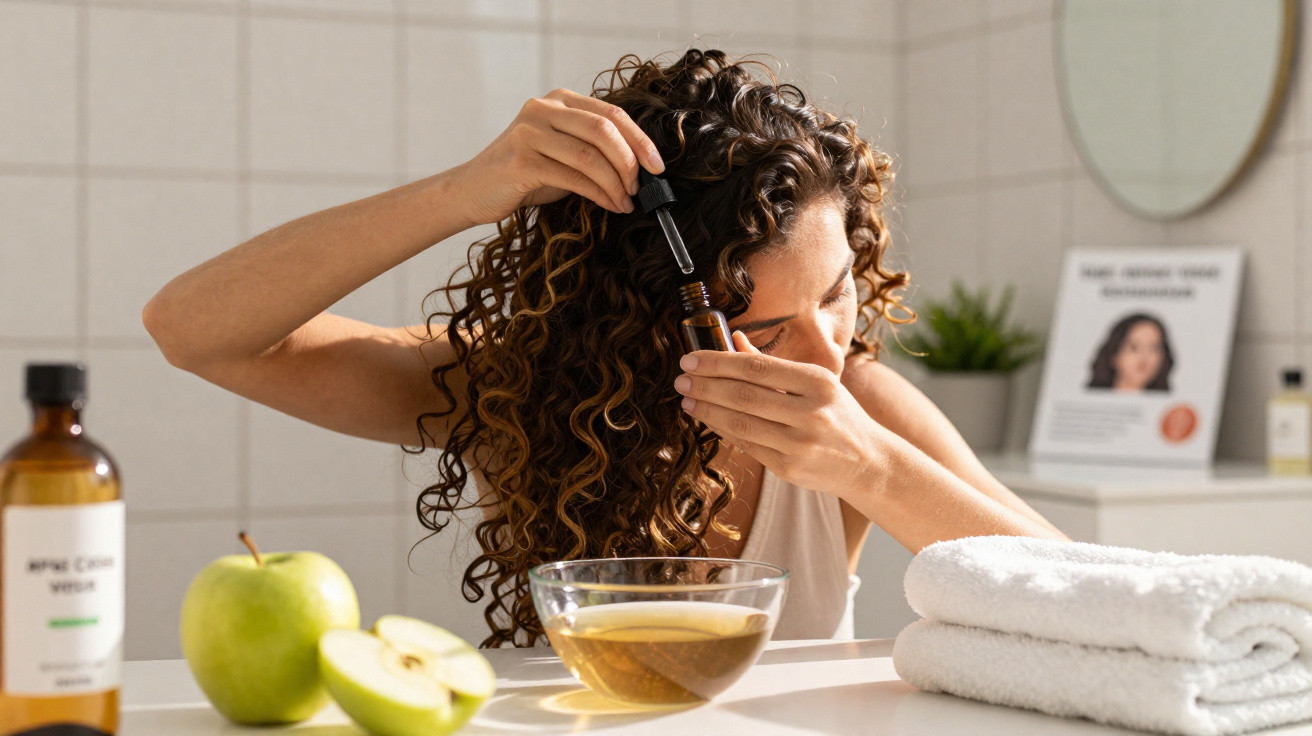
Apple cider vinegar on the scalp has attracted renewed interest after studies and specialists pointed to its potential to balance pH, lessen oiliness and improve the look of hair strands, making it one of the most widely discussed topics on social media.
What makes apple cider vinegar work on the scalp?
The main component of apple cider vinegar is acetic acid, a compound that can help restore the scalp’s pH balance after alkaline products have been used. In turn, this may help the hair cuticles lie flatter, promoting shine and a softer feel.
Dermatologists note that this effect is not a cure for hair concerns. However, when used properly and always diluted, it may complement a haircare routine while lowering the risk of irritation.
What does scientific research say about the ingredient?
While there are few clinical studies specifically examining the direct use of apple cider vinegar on the scalp, research into acetic acid has identified antimicrobial activity against a range of microorganisms. This helps explain the growing interest from specialists.
A scientific review published in MDPI highlighted the relevant antimicrobial properties of acetic acid. Dermatologists stress, however, that it is not a replacement for treatments prescribed for dandruff, seborrhoeic dermatitis or other scalp conditions.
How can apple cider vinegar be used safely on hair?
Experts warn that the product should never be applied neat to the skin. The most common advice is to mix one part vinegar with several parts water before use, helping to prevent irritation and discomfort.
After washing, the diluted mixture can be applied for a few minutes before being rinsed away. Anyone with wounds, allergies, a sensitive scalp or dermatological conditions should seek medical advice before trying this method.
Which benefits are commonly noticed after use?
Many people report an improvement in the appearance of their hair after adding the product to their routine. Results differ according to hair type, how often it is used and whether dermatological issues are present.
The benefits most often mentioned by specialists and users include:
- More intense shine as a result of smoother cuticles.
- Reduced oiliness for some scalp types.
- A longer-lasting clean feeling.
- Less residue build-up left by styling products.
- Healthier-looking hair strands when it is used in moderation.
This home remedy does not replace medical treatment
Despite its popularity on social media and among celebrities, apple cider vinegar does not remove the need for professional assessment where there is severe hair loss, persistent flaking, intense itching or inflammation.
Dermatologists point out that dandruff is often associated with the growth of the Malassezia fungus and may require medicated shampoos. This household ingredient can serve only as complementary care within a suitable routine.








Comments
No comments yet. Be the first to comment!
Leave a Comment