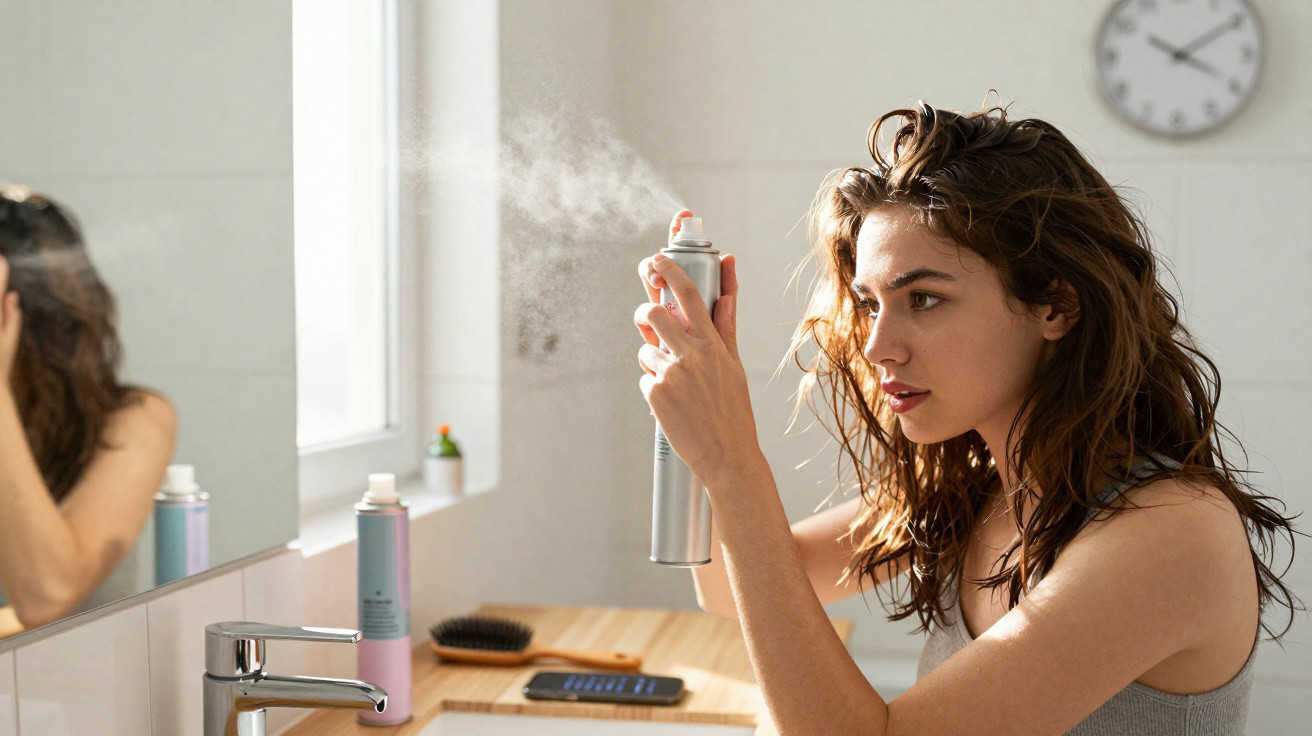
For anyone who gets a headache just looking at their to-do list in the morning, this will sound familiar: somewhere between work, family, exercise and housework, hair care simply slips down the list. Yet nobody wants to sit in the office with greasy roots. Dry shampoo has long been the emergency solution, but the latest generation promises more than simple camouflage – it is designed to be kind even to sensitive scalps and to make a genuinely noticeable difference to everyday life.
When washing your hair becomes a mental burden
Washing your hair may sound trivial, but for many people it involves rather complicated planning. Anyone with long or difficult-to-manage hair knows how much is involved: washing, conditioning, drying and styling – all timed so that the hairstyle works around appointments, exercise classes and weekend plans.
Your mind can be full of questions such as:
- Should I wash it this evening or tomorrow morning?
- Will there be enough time to blow-dry it before the first meeting?
- How will my hairstyle survive a workout or an afternoon at children’s gymnastics?
This seemingly minor matter of “hair” ends up near the top of the internal checklist, adding to the mental load. For people already dealing with stress, pressure at work or family chaos, it can eventually become anything from irritating to overwhelming.
“A cleverly used dry shampoo can significantly reduce precisely this mental load – without making you look as though you haven’t washed.”
Why the scalp plays a leading role
For a long time, the focus was solely on how the hair looked. Now, the scalp is receiving more attention. It can react sensitively to friction, harsh surfactants, heat from a hairdryer and washing too frequently. Anyone already struggling with issues such as dandruff, redness, psoriasis, eczema or itchy patches notices this particularly on wash days.
This is where a well-formulated dry shampoo can help: fewer washes, less rubbing with a towel and less irritation. The key point, however, is that the product should not be overloaded with unnecessary fragrance or harsh ingredients.
Dry shampoo 2.0: more than camouflage, with added care
British manufacturer Batiste – long a familiar name on German chemist shelves – has developed a range specifically for sensitive scalps. Its approach is to combine the speed and convenience of classic sprays with a considerably gentler formula.
Two options for sensitive scalps
- Aloe vera version: lightly fragranced and enriched with aloe vera for a calmer, softer feel on the scalp.
- Fragrance-free version: completely unfragranced, with only a few ingredients, created for people who genuinely want to avoid anything unnecessary.
Both sprays have been dermatologically tested and carry an endorsement from the Skin Health Alliance, an organisation that assesses the skin compatibility of products. For many people with sensitive scalps, this is an important reassurance: hair that looks fresh quickly, without putting the scalp’s balance at risk.
How to achieve a quick fresh-hair boost
Many people know the principle, but mistakes can easily creep in during use. The following routine helps dry shampoo work like a mini wash:
- Brush the hair thoroughly.
- Spray the roots section by section from around 20–30 centimetres away.
- Leave it for one to two minutes so the product can absorb excess sebum.
- Massage it in with your fingertips, then brush thoroughly once more.
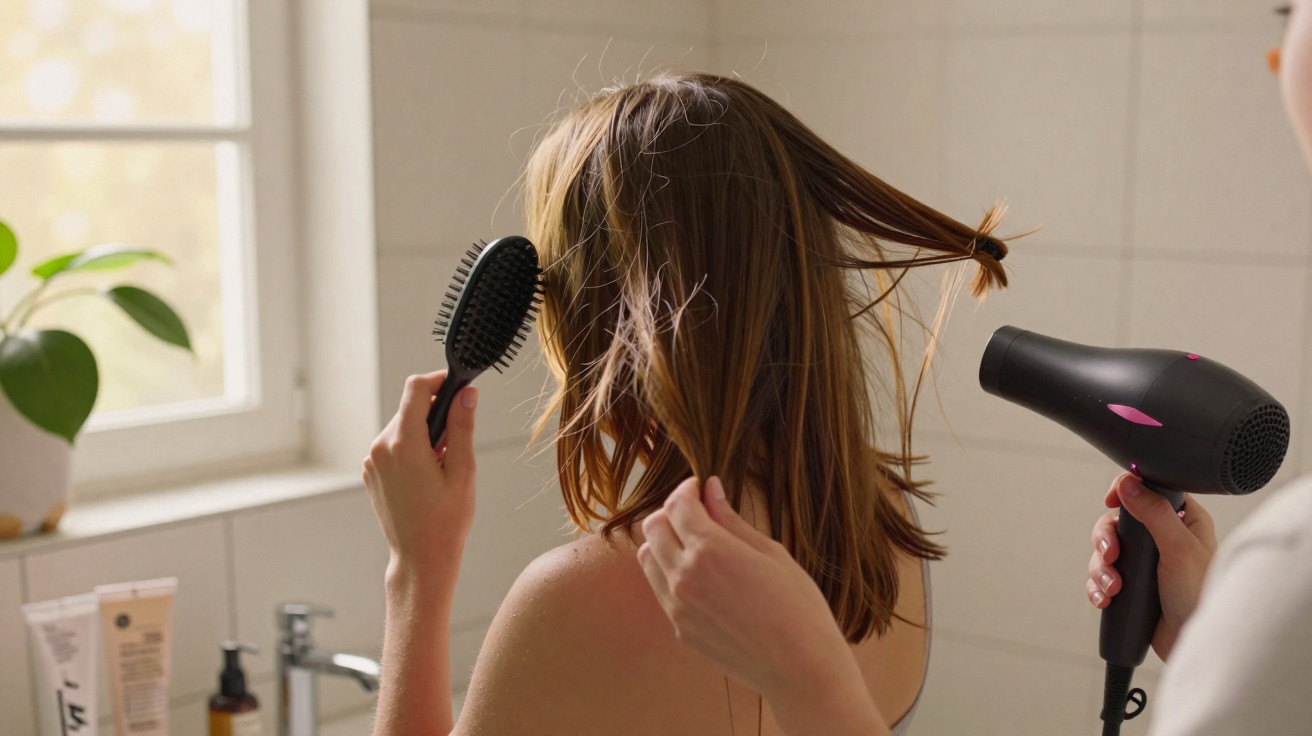
- If desired, briefly blow through with the hairdryer on a cool setting – this also adds volume.
This creates roots that look fresh and clean, without any need for water or a bottle of shampoo. According to a consumer study involving 158 test participants, 94 per cent said Batiste’s sensitive options were suitable for their sensitive scalp. This could offer an option particularly to sceptics who have previously avoided dry shampoo because they feared irritation.
How dry shampoo genuinely saves time
Its biggest benefit lies in its everyday impact. Rather than washing every two days, it is often possible to extend the interval by a day. That may not sound like much, but during a busy week it makes a tangible difference. An evening remains free for the sofa, friends or exercise – without a lengthy bathroom routine of washing and blow-drying.
“Every quarter of an hour gained can make a difference in a packed everyday life – especially when you do not have to fight to get it.”
Parents of young children, shift workers, commuters and anyone who has to get up early in particular report feeling more spontaneous with a dry shampoo that works well. There is no need to plan three days ahead for when hair will be washed.
Who is the sensitive dry shampoo version especially suited to?
| Type | Why a sensitive dry shampoo makes sense |
|---|---|
| People with an itchy or flaky scalp | Less friction and less frequent washing reduce stress on the skin. |
| Allergy sufferers and people sensitive to fragrance | The fragrance-free version lowers the risk of irritation or headaches. |
| Sportswomen with packed schedules | After training, a spray is often enough instead of a complete washing session. |
| Parents under constant pressure | It can lengthen the time between washes and make evenings easier. |
| Fans of long hair | Long hair means long drying times – a freshening spray saves especially valuable time here. |
Common mistakes that irritate the scalp
Even the gentlest product can become unpleasant if it is used incorrectly. Typical pitfalls include:
- Using too much product: Thick layers can block pores and leave hair looking dull.
- Spraying from too close: Applying it too near the scalp can lead to white patches and unnecessarily large amounts of powder on the skin.
- Never brushing it out properly: Residue remains at the roots, leaving the scalp feeling “dusty”.
- Using dry shampoo as a permanent solution: Going several days in a row without a proper wash should remain the exception.
With a sensitive scalp in particular, it is worth finding a routine: for example, two normal washes per week, with one or two dry-shampoo days in between. This keeps the skin’s natural protective barrier largely intact without compromising the look.
How a “hair plan” fits into everyday life
Many people only realise how much hair shapes their week when they begin to consciously reorganise it. One practical approach is:
- Plan one more extensive hair wash for a quiet evening, such as Sunday.
- Freshen up with dry shampoo midweek if necessary – before an appointment, presentation or dinner.
- Arrange exercise days so that they ideally coincide with wash days, or deal with them deliberately using spray.
The result is a clear routine that no longer has to be constantly reconsidered at short notice. Many people say this helps them focus on other things and feel less “driven”.
What dry shampoo can do – and what it cannot
Despite all its benefits, one point remains crucial: dry shampoo is not a replacement for washing your hair properly. Sweat, styling residue, fine dust and products build up on the hair and scalp over time. Anyone who only sprays product in on a permanent basis risks blocked pores and increasing itchiness.
As an everyday addition, however, the spray can relieve a great deal of pressure. Sensitive versions containing soothing ingredients such as aloe vera are specifically designed to be used alternately with mild liquid shampoos. Anyone with serious scalp problems should discuss new products with a dermatologist in any case.
It is interesting that dry shampoo has prompted a broader conversation about mental load, self-care and the pace of everyday life. At first glance, hair care may seem superficial, but for many people it is closely linked to self-image and wellbeing. Finding practical shortcuts in this area takes a small amount of pressure out of the day – and that is exactly where a well-chosen dry shampoo can make its quiet but noticeable contribution.















Comments
No comments yet. Be the first to comment!
Leave a Comment