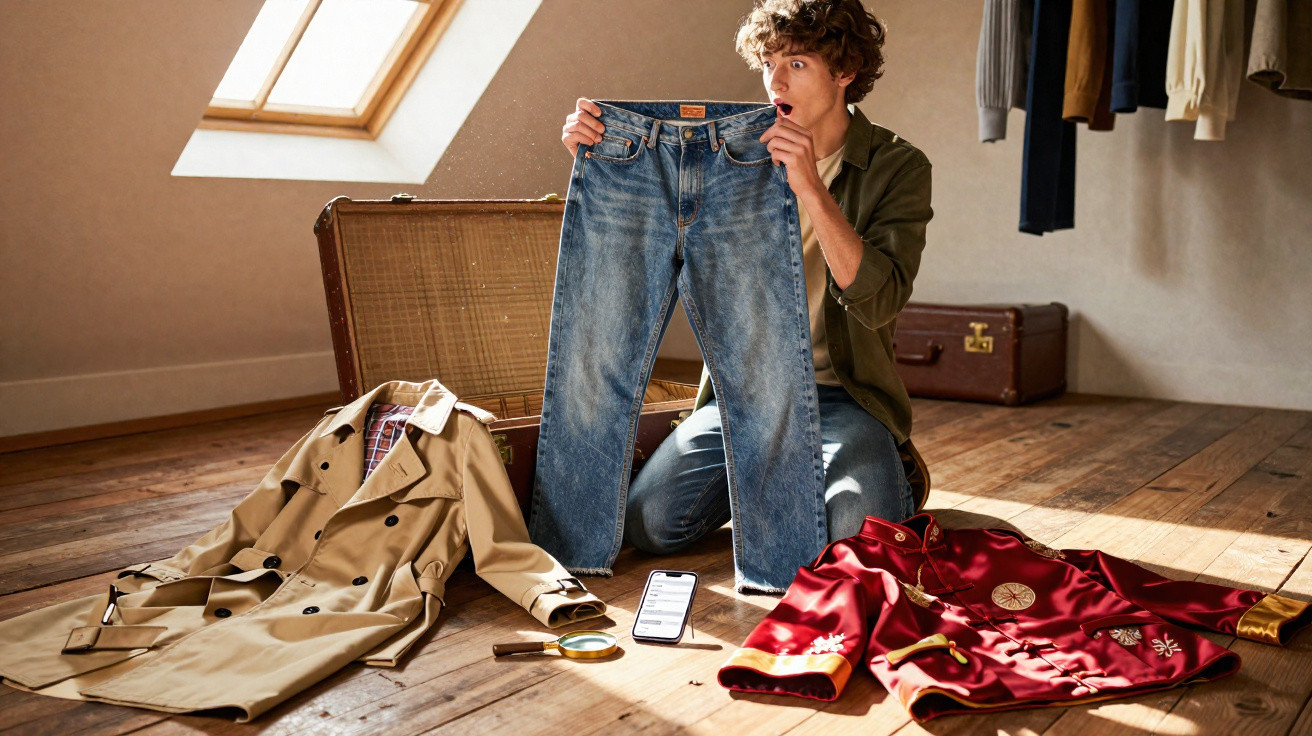
Three undervalued vintage pieces from the 1970s to the 2000s can now command surprisingly high sums.
While clearing boxes or tidying the loft, many people end up taking entire bags straight to the textile recycling bank. That is precisely where money is currently being lost: the global vintage fashion market is booming, and collectors and enthusiasts are paying for certain older items what would once have bought a whole wardrobe. Three types of garment stand out in particular because they are often found in ordinary homes, rather than only in the collections of dedicated enthusiasts.
Vintage boom: why old clothing is suddenly making money
The market for pre-owned quality clothing is expanding quickly. International analyses put the value of the vintage segment at around €40 billion in 2024, with substantial growth expected in the years ahead. The trend is moving away from disposable T-shirts and towards durable pieces with character.
Several factors are driving this change: nostalgia for the 1970s, 1980s and 1990s; the superior materials and construction often found in earlier decades; and the simple fact that much of what was once commonplace is now hard to find. When rarity meets good quality, prices rise.
Old fashion is becoming an asset class: what once gathered dust in a box now ends up as a collector’s item in online bidding wars.
Many sought-after pieces are not hanging in designer archives, but are tucked away in everyday homes: in parents’ wardrobes, boxes left over from moving out, or forgotten travel bags. At present, three types of clothing have emerged as especially profitable.
The 3 loft finds with jackpot potential
1. Old Levi’s 501: a denim classic with collector value
Levi’s 501 jeans from earlier decades have become stars of the vintage market. In particular, pairs made before the mid-1980s sell for roughly €150 to €500, depending on their condition, wash and details. Very early versions from the 1960s and late 1950s can fetch far more than this.
Examples carrying the legendary red tab with a capital “E” in the brand name - the famous “Big E” version - are especially sought after. Produced before the early 1970s, they signal to collectors that the garment comes from the early era of modern denim culture, often made from heavyweight, tightly woven fabric.
2. Trench coats from established heritage brands: a coat rather than a savings account
The classic trench coat, including examples from well-known British or Italian houses, has shifted from an everyday outer layer into an investment piece. Models made before the 1990s regularly achieve €300 or more when in good condition. Rare sizes, unusual colours and nearly unworn examples can command substantially higher prices.
In individual cases, vintage shops have recorded sales where an 1980s trench coat and a plain wool jumper sold together for more than €400. Such combinations illustrate how strongly the market has grown: older coats were once dismissed as “too heavy” or “out of fashion”. Today, buyers pay specifically for that look.
3. Traditional Chinese-style satin jackets: from costume to trend jacket
For a long time, silky, glossy jackets with stand collars and decorative fastenings were consigned to the fancy-dress box. High-quality versions are now considered major trend pieces. Their cut is inspired by traditional styling commonly known as Tangzhuang. Searches for this exact look have been climbing for months on major second-hand platforms.
When a jacket is made from genuine silk, features dense embroidery and appears well preserved, desirable sizes can sell very quickly. Fashion fans style them casually, wearing them open over a T-shirt with denim or cargo trousers, often with trainers. This very contrast is boosting demand - and therefore prices.
How to tell whether your item is genuinely valuable
Signs of a sought-after Levi’s 501
- An origin label stating “Made in USA” or an older manufacturing country.
- A selvedge stripe along the inside leg seam, forming a narrow, firm woven edge.
- Fabric that is noticeably heavier than the denim used for current fast-fashion jeans.
- A red tab at the edge of the back pocket featuring a capital “E” in the wording.
- Metal zips or buttons from older manufacturers such as Talon on certain runs.
Signs of wear also matter. Authentically worn knees, faded areas and repaired patches can add appeal, provided the fabric has not worn through completely.
What distinguishes high-quality trench coats
For coats from major heritage houses, several details are worth checking:
- A label with an older logo and the country of manufacture, such as England or Italy.
- A neatly made lining in sturdy fabric, with precise stitching.
- Heavy, dense cotton or a wool blend that clearly differs from today’s thin coats.
- Buttons made from real horn or high-quality plastic, securely sewn on.
Anyone unsure can compare their piece with photographs of old advertisements or catalogues online. The cut, collar and shoulder construction can often reveal the period surprisingly clearly.
Chinese-style silk jackets: the details that count
Three features are decisive with satin-style jackets:
- A stand collar and distinctive fabric buttons fastened using decorative loops.
- A “100% silk” composition label; the material should feel soft while also being cool and densely woven.
- Elaborate embroidery that does not repeat in perfectly identical form, but varies slightly - an indication of more labour-intensive production.
Basic fancy-dress versions are usually made from polyester, feel markedly smoother and “cheaper”, and feature flat, uniform patterns. These models are worth very little.
Where to sell - and whether waiting is worthwhile
Anyone who has made a find should not immediately post their first listing. It is worth checking already sold items on platforms that allow filtering by completed sales. This gives a more realistic indication of what buyers have actually paid, rather than merely what sellers are asking.
Large peer-to-peer platforms, where many younger buyers are active, suit heavily sought-after everyday pieces such as authentic Levi’s 501 jeans or fashionable silk jackets. Trench coats from renowned houses often achieve stronger prices through specialist luxury second-hand sites or fashion-focused auctions.
The better an item is documented - its label, provenance and close-up photographs of the stitching - the greater the chance of serious bidders and stable prices.
For pieces that appear particularly valuable, a visit to a specialist vintage shop or auction house may be worthwhile. Experts can identify production periods, material quality and rare ranges that non-specialists often miss. It takes some time, but it can make a difference of several hundred euros.
Practical tips for loft treasures
Anyone wishing to sort through their own belongings methodically can use this rough checklist:
- Pull out all jeans from the 1970s to the early 1990s, especially branded pairs.
- Check long coats and trench coats, and ask parents and grandparents about theirs.
- Search the “fancy-dress box” for satin jackets, exotic-looking tops and embroidered garments.
- Photograph labels, take measurements and assess the condition honestly.
One common mistake is washing too aggressively. Many older textiles react badly to modern detergents and high temperatures. It is better to clean them carefully by hand first or, when in doubt, simply air them out and treat any stains locally.
Risks, tricks - and why honesty pays off
Anyone trading in vintage fashion operates in a market where counterfeits and imaginative claims are becoming increasingly common. Some sellers artificially age new goods or boldly give a production year that is earlier than is realistic. Buyers are becoming more alert to these tactics.
Transparency therefore pays: show photographs of flaws, provide accurate fit information and describe the condition honestly. Minor defects are not automatically a problem - many collectors value patina - as long as everything is disclosed. If faults are concealed, returns and complaints may follow, making future sales more difficult.
Those who enjoy it can turn a loft clear-out into a small side activity: sell their own finds first, use the proceeds to buy further vintage pieces selectively, build knowledge and make contacts with dealers. The learning curve is steep, but every sale sharpens the instinct for what is genuinely in demand - and what, despite nostalgic feelings, still belongs in the recycling bank.

















Comments
No comments yet. Be the first to comment!
Leave a Comment