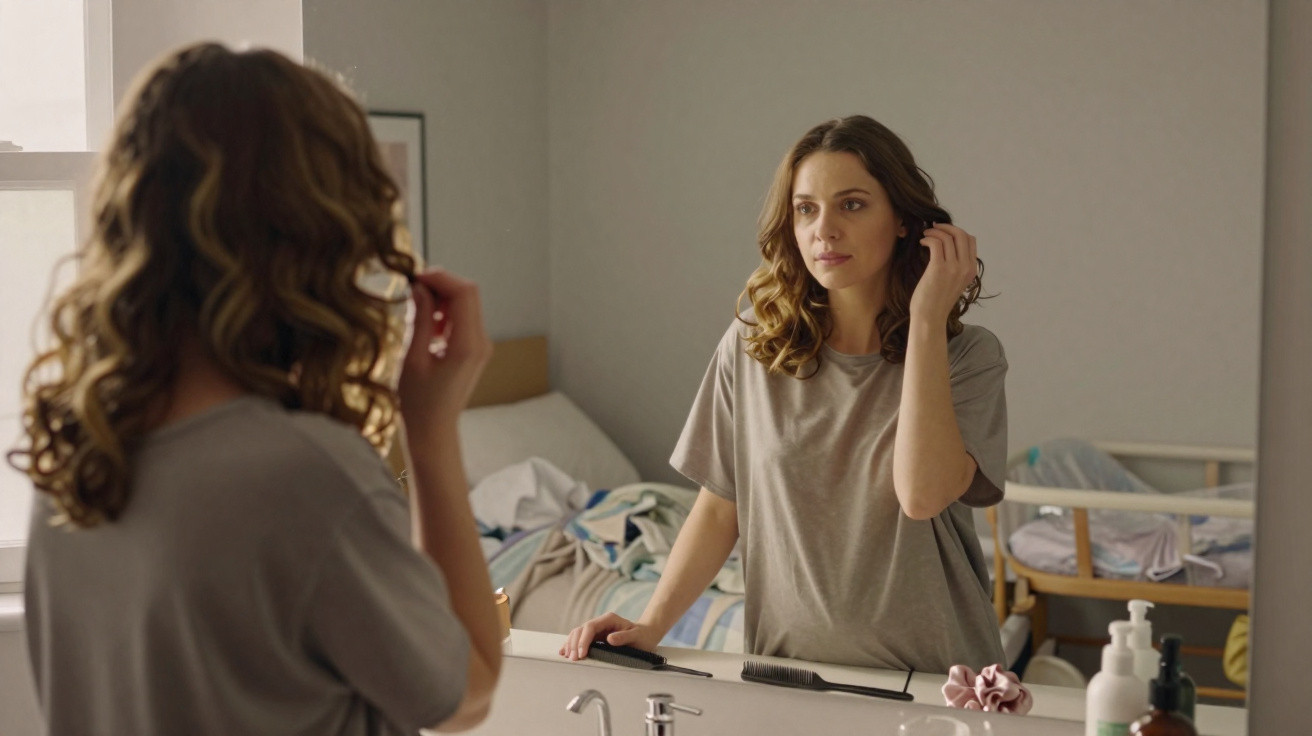
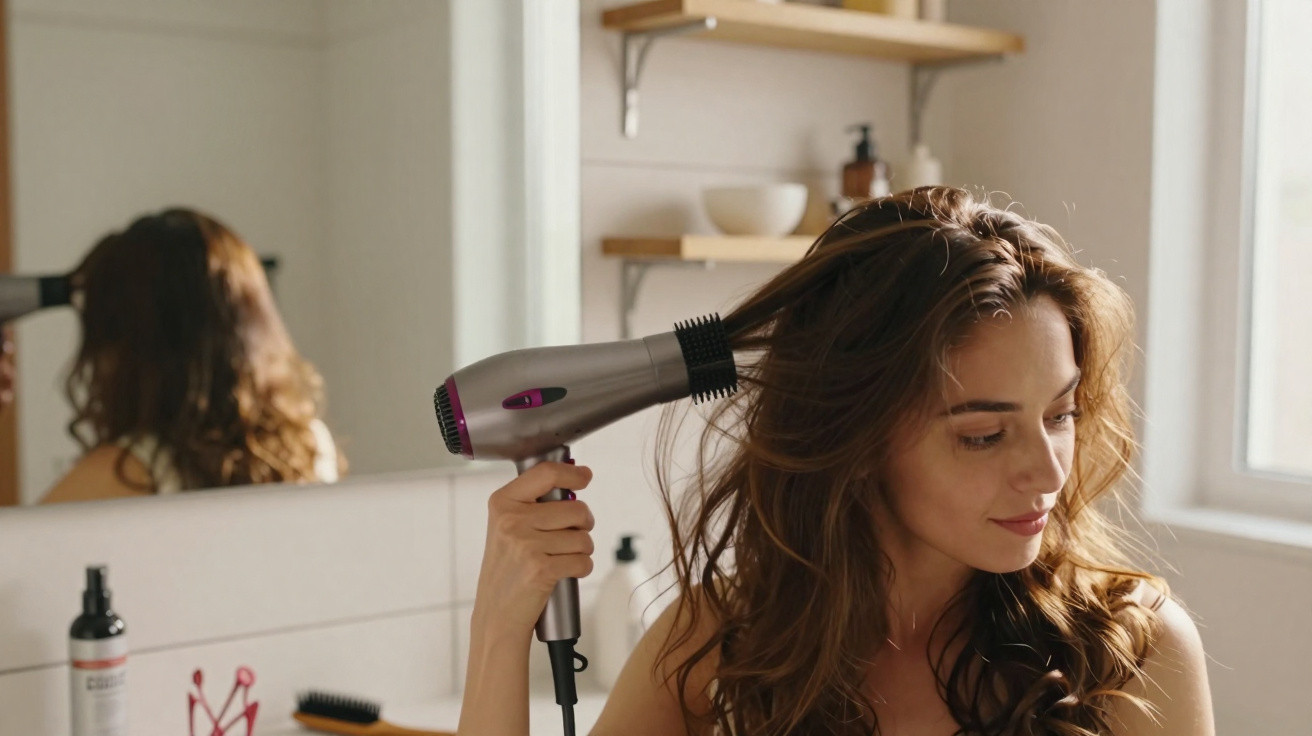
A sleek, bouncy blow-dry, yet still unmistakably “you”. Then, a few months later, the face in the bathroom mirror seems almost unfamiliar: wavy strands lifting around your temples, an odd bulge at the back, and baby hairs performing their own routine.
Turn your head and the texture tells the truth. This is more than an off wash day or an untidy bun. Your hair seems to have picked up an entirely new language while you were learning to care for a tiny human.
Friends may say, “Oh, mine did that too after my son,” as though it were simply another square on the postpartum bingo card. Straight becomes wavy. Fine becomes coarse. Flat becomes frizzy. It is as if your follicles realised that everything else in your life was changing and decided to take part.
Some women smooth the change away with straighteners. Others embrace it and uncover curls they never realised they had.
Still, one question quietly returns: what exactly did pregnancy do to my hair?
When your hair gets a pregnancy glow-up of its own
The first major change begins well before your baby is born. During pregnancy, oestrogen and progesterone surge through your body and pause the usual cycle of hair shedding.
Strands that would ordinarily fall out remain in their growth phase. That is what creates the well-known pregnancy mane: fuller, shinier and heavier hair. You have not suddenly produced magical new strands; you are simply retaining hair that you would normally shed without noticing.
The added weight and reduced shedding can begin to influence texture too. Straight hair may fall in another way. Gentle waves can loosen or, conversely, become more visible. It is a subtle lead-in to the larger twist that often arrives after birth.
Between three and six months after delivery, the hormones that held everything in place drop quickly. All that delayed shedding is then released at once.
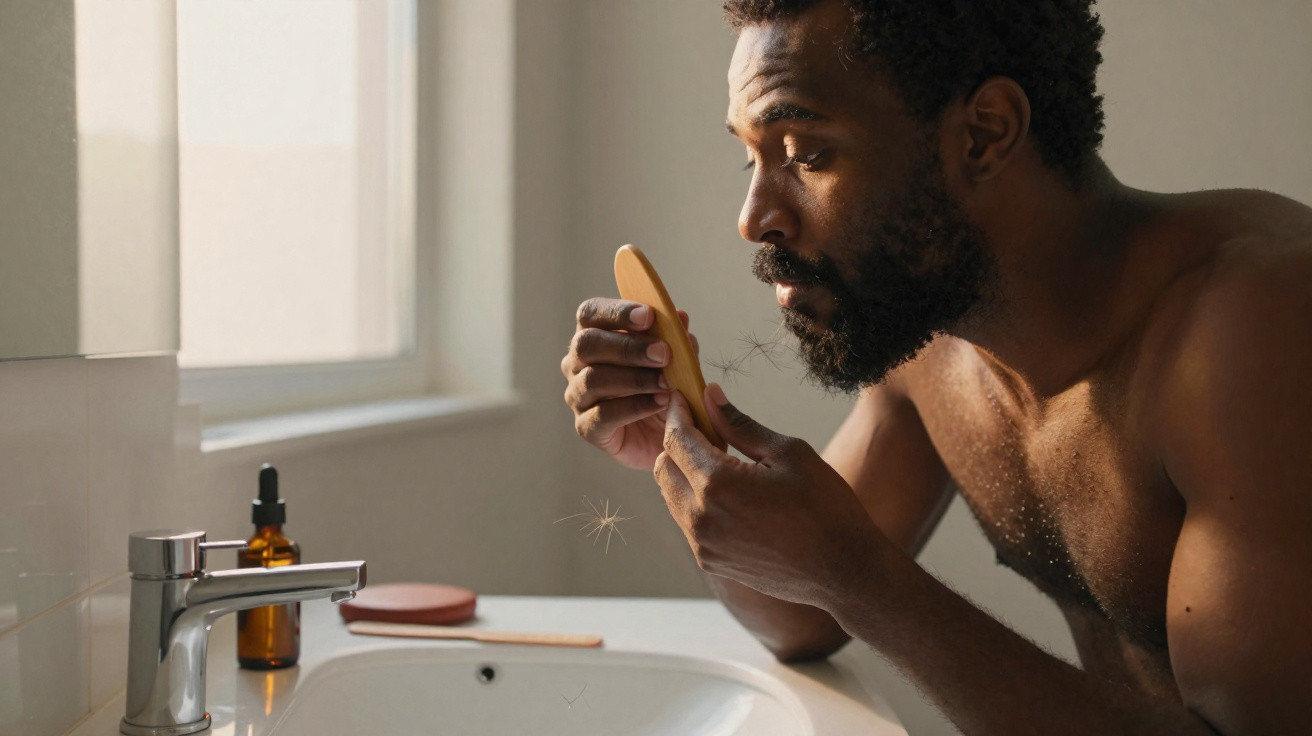
This is when the postpartum shed begins. There may be clumps in the shower, strands on the pillow and a blocked sink plug. It can feel alarming, even dramatic, but biologically your hair is simply “catching up” with where it would otherwise have been.
What surprises many new parents is what appears in the areas left sparse. There may be short, fluffy regrowth, formerly flat sections that dry into loose S-shaped waves, a new cowlick or, in some cases, an entirely different curl pattern.
Beneath the surface, hormonal fluctuations gently alter how every follicle functions. The shape of the hair shaft can change at a microscopic level. A rounder shaft generally produces straighter hair, while a more oval or flattened shaft is more likely to create waves or curls.
Oestrogen, thyroid changes and even changes in androgens around pregnancy can affect the way follicles form keratin. It is not as though you wake up wearing a stranger’s wig, but slight adjustments across thousands of strands become visually noticeable.
Your new waves or frizz are not random, then. They are the visible result of nine months of hormonal negotiation, followed by a steep hormonal decline and a new “normal” taking shape at your roots.
Living with post-baby waves, spirals and persistent frizz
When hair shifts from straight to wavy or more textured, an old routine often no longer delivers. You may use the same hairdryer, brush and shampoo, only to end up with fluff rather than shine.
The first useful step is to approach this “new” hair as though it were a different fabric. Think of switching from silk to linen: heat, water and friction will not affect it in the same way.
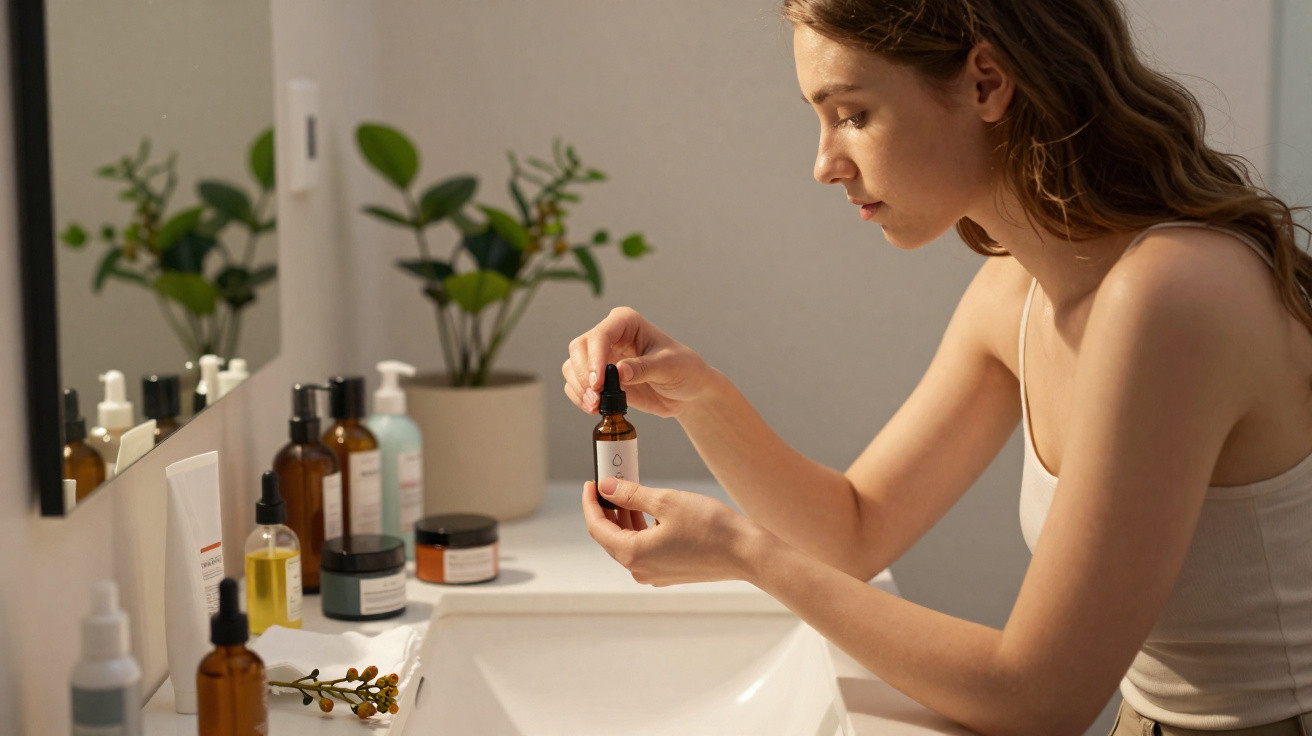
Begin by adding more moisture. A mild sulphate-free shampoo, a richer conditioner and a leave-in product intended for waves or curls can significantly change the appearance of postpartum bends. Occasionally let your hair air-dry, scrunching in product while it is still soaking wet, simply to find out how much natural texture is there.
On a Tuesday morning with a crying baby, that may sound impossible. On a better day, however, it is worth trying at least once a week.
Some of the best “hair transformations after pregnancy” stories happen not in a salon but in poorly lit bathrooms at 10 p.m. Consider Anna, 33, who had always been convinced that her hair was pin-straight.
Following her second baby, the front sections began puffing up and would not stay flat. A friend advised her to stop brushing harshly when it was dry and to apply curl cream to soaking-wet hair. Her first try was a disaster. The second gave her unexpected beach waves.
By six months postpartum, she had developed a fast routine: wash, condition, detangle carefully in the shower, scrunch in product, twist several sections, then leave them to dry. There were no heated tools and no 45-minute blow-dries. On hectic days, she refreshed it with a water spray and a very small amount of cream.
Her hair did not suddenly change from poker-straight to ringlets. Yet the subtle pattern that had always existed finally had room to emerge, altered and intensified by hormonal changes.
Scientifically, the explanation is less romantic but no less interesting. Hair follicles are tiny organs that react to hormones much as skin reacts to sunshine or cold.
Every follicle contains receptors for oestrogen, progesterone and androgens. Higher hormone levels in pregnancy extend the growth stage (anagen) and postpone the resting and shedding stage (telogen). Once those levels fall after birth, the reverse occurs: many follicles enter telogen together and shed at the same time.
Texture is affected by the way the follicle shapes each hair fibre. Minor hormonal or immune shifts can change follicle asymmetry and subtly alter the hair shaft’s cross-section. Across several months, this may mean straight fibres begin to bend, or naturally wavy fibres become more pronounced.
Genetics still establish the starting point. Hormones do not change type 1 straight hair into tight type 4 coils between one pregnancy and the next. Within the range your DNA permits, however, hormones can shift you towards the “wavier” or “straighter” end.
Caring for the postpartum hair texture you have now
The most effective way to work with new postpartum texture is to stop battling it and begin identifying its pattern.
Try this simple exercise on a quiet evening: wash your hair, use a basic conditioner and then avoid doing anything elaborate. Do not brush or blow-dry it. Instead, gently press out excess water with a T-shirt or microfibre towel and leave it to air-dry.
Notice what happens naturally. Do loose S-shapes form at the ends? Are the waves tighter at the nape? Is it flat on top but fluffy underneath? This “bare pattern” is your reference point. Once you can see it, you can select products and methods that support what is already present instead of forcing it flat.
Use a wide-tooth comb while in the shower. Apply a leave-in conditioner or lightweight curl cream to wet hair. Then try gentle scrunching or “plopping” it in a T-shirt for 10–15 minutes. These are small, practical changes that work with the new structure of your strands.
There is an emotional dimension too. When your body already feels unfamiliar, changing hair can feel like one change too many.
We have all had a moment when a bad hair day lands on a bad everything-else day and the mirror suddenly feels hostile. Postpartum exhaustion leaves little headspace for “embracing your waves”.
Be gentle with your future self, therefore. Choose low-effort habits that deliver 80% of the result without making hair care feel like a second job. Have a quick trim to remove split ends, sleep on a satin pillowcase to minimise frizz, and find one reliable bun or clip style that works with your new texture rather than against it.
Let’s be honest: nobody really does all of that every day. The aim is not flawless hair; it is hair that does not make already difficult mornings any harder.
“Postpartum hair changes are a reminder that our bodies don’t snap back to a ‘before’ version,” says a London-based trichologist. “They evolve. Hair is just one of the most visible ways that evolution shows up.”
A few guiding principles can help you stay grounded when your strands seem to have a mind of their own.
- Put scalp health first: cleanse gently and avoid vigorous scratching.
- Prioritise moisture: conditioner, masks and leave-in products matter more with new texture.
- Allow time for regrowth: baby hairs and awkward stages are temporary.
- Seek support: a stylist experienced with curls and waves can spare you months of trial and error.
None of these is a magic solution. Think of them instead as small anchors while your hormones settle and your hair begins its next chapter.
When your reflection reveals a new story
A change in hair texture after pregnancy is seldom only about hair. It can be about identity, memory and the quiet appraisal we make whenever we see ourselves in a bathroom mirror or shop window.
The straight hair you had at 20 may be linked in your mind to a version of yourself who slept through the night and made spontaneous plans. The new waves appearing during 3 a.m. feeds or nursery drop-offs can feel like a visual footnote saying that life has moved forward.
For some people, that feels unexpectedly freeing. A different texture offers a reason to reset: a softer cut, a fringe or a styling approach that better suits who you have become. Others mourn their former hair in small private moments, smoothing down frizz and wondering whether it will ever “go back”.
The reality lies somewhere between those reactions. Hormones generally stabilise around 9–18 months postpartum. For some people, texture gradually moves back towards its baseline; for others, a wavier, thicker or more fragile pattern remains.
Neither result represents failure. It is simply your biology reflecting a transformation already felt throughout your life.
What can be shared is the story: the strange baby hairs, the sudden cowlick and the shock of that first significant shed in the shower. Discussing it with friends, online or even with your hairdresser can turn an isolated worry into a familiar, almost amusing feature of early parenthood.
Hair that changes from straight to wavy after pregnancy is more than a hormonal curiosity. It is a visible sign that nothing in this season of life remains fixed. Bodies change, identities expand and, yes, sometimes your follicles join the revolution.
| Key point | Detail | Why it matters to the reader |
|---|---|---|
| Hormones prolong hair growth during pregnancy | Oestrogen keeps strands in the growth phase, creating fuller-looking hair | Helps explain why hair feels thicker before the baby arrives |
| Postpartum shed is a delayed “catch-up” loss | Hormone levels fall and many hairs enter the shedding phase together | Reassures readers that dramatic shedding is usually temporary and normal |
| Texture shifts reflect subtle follicle changes | Hormonal fluctuations can encourage follicles to grow slightly wavier or curlier hair | Explains why straight hair can become wavy and how to adapt care routines |






Comments
No comments yet. Be the first to comment!
Leave a Comment