
One hand, one bottle, quick movements. The familiar blue 2-in-1. Within thirty seconds, foam has swept across his hair, face and chest. He rinses off, rubs a towel through his hair, puts on a cap and leaves. Efficient. Masculine. No mental effort required.
What remains hidden beneath the steam is the subtle coating gathering on his scalp. It is invisible, silky and almost too smooth: a fine cosmetic layer designed to glide and shine… rather than let the skin breathe.
The label makes a straightforward claim: “shampoo and conditioner in one”. But the reality on your skin is more complicated, and your hair follicles may be the ones that pay for it.
When “one bottle for everything” begins to work against you
People who use a 2-in-1 every day value the routine because it handles two tasks at once. It means less time in the bathroom, fewer bottles on the shelf and fewer decisions to make. It suits the unspoken expectation many men feel to be uncomplicated and low-maintenance. One product and the task is finished.
The drawback lies in everything that one bottle has to achieve. It requires surfactants to remove oil and sweat. To provide “conditioning”, it commonly uses silicone-based ingredients that cover the hair and scalp, creating the appearance of softness and shine. Those two functions are not naturally compatible.
With repeated use, the silicones do not wash away completely. That is particularly true when they are used every day. The outcome is a scalp that appears clean but increasingly acts as though it is covered by a raincoat.
Barbers and trichologists tend to describe the same pattern, even if their examples differ. There is the man in his thirties saying his hair “just stopped growing at the front”. There is the runner whose crown looks greasy by midday despite a morning shower. Then there is the new father who blames stress without ever considering his 2-in-1 routine.
There is a statistical issue, too: men greatly underestimate the amount of build-up on their scalps. In one small UK salon survey, stylists judged that more than 60% of male clients had visible product film on the scalp, whereas almost none of those clients believed they used “heavy products”. Low-cost 2-in-1 formulas and “sport” shampoos marketed for intense freshness were usually the quiet offenders.
One barber I spoke to compared it with washing a frying pan. “You can rinse every day with hot water and soap,” he said, “but if there’s oil and coating baked in, it just gets slicker and duller unless you scrub it off properly.” Your scalp operates in much the same way. The difference is that this residue sits directly where follicles are attempting to grow new hair.
Silicone is not inherently harmful. Used in a focused conditioner once or twice weekly, it can smooth rough cuticles and limit breakage. The concern is ongoing exposure on the skin that supports your hair. Films that do not allow the scalp to breathe can hold sebum, pollution and dead skin cells against it. Follicles have to exist in that mixture.
In time, some men experience micro-inflammation: redness they never notice, slight itching they dismiss, or an oily-yet-dry imbalance that makes them scrub even more aggressively. That rough treatment simply leaves the barrier more reactive. Hair may seem flatter, finer and more prone to breakage. It is not that silicone is “killing” follicles, but that the environment surrounding them is mildly out of balance every day.
How to shower without undermining your scalp
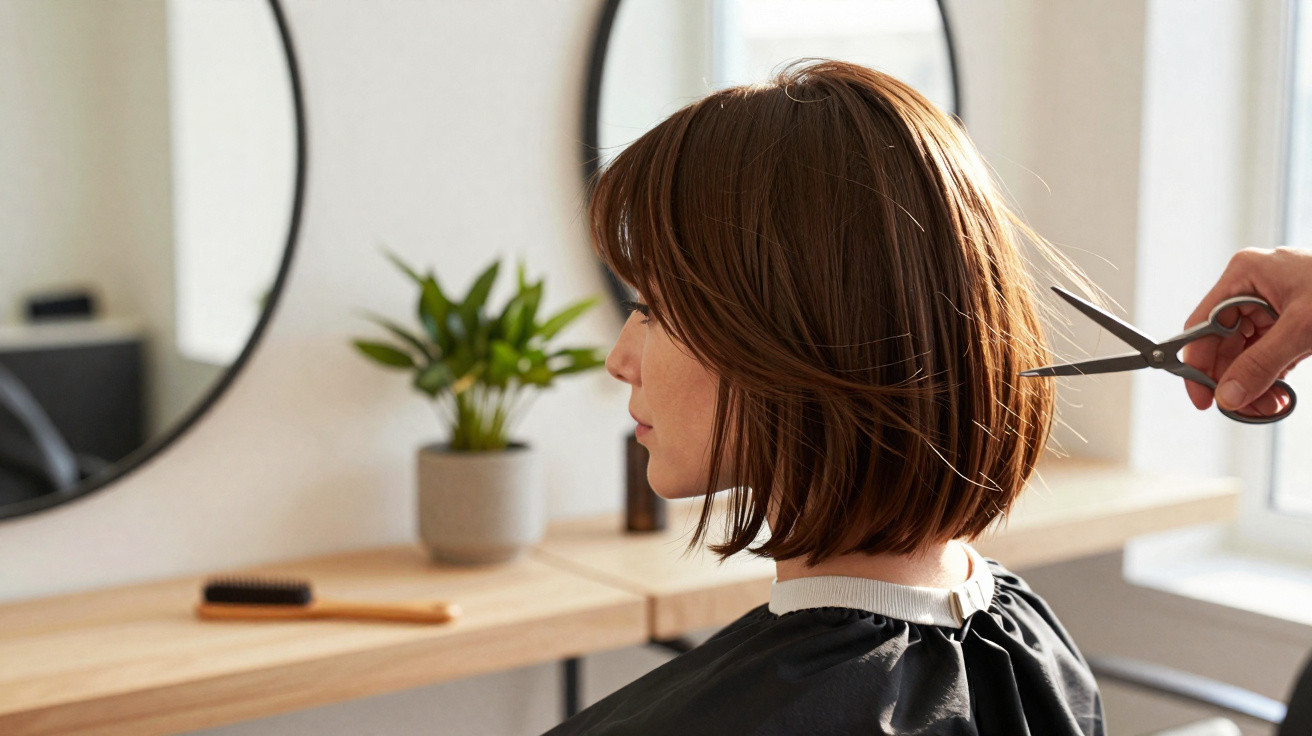
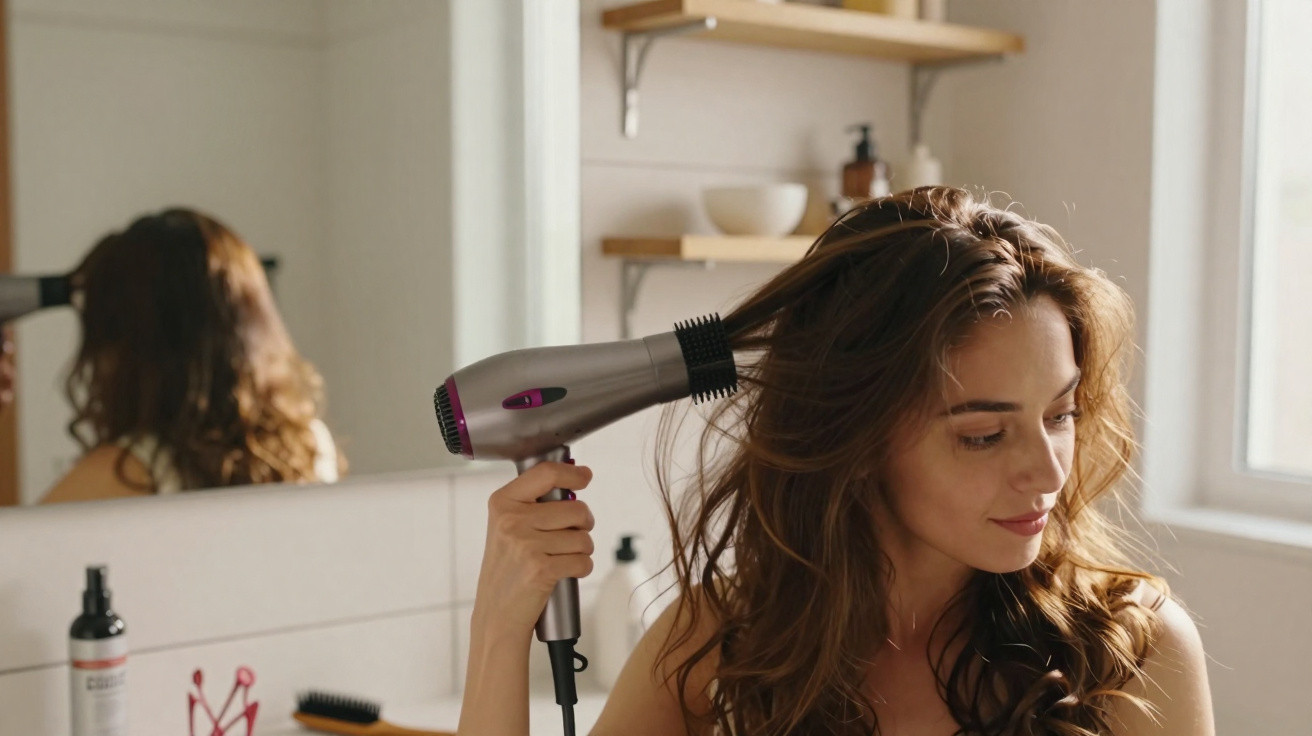
The quickest way to protect it is very simple: keep cleansing and conditioning separate. Use two products for two different purposes. Apply a mild, sulphate-free shampoo to the scalp, concentrating on the roots, then allow the lather to travel through the lengths instead of vigorously scrubbing the hair itself.
Apply conditioner only to the mid-lengths and ends, never straight onto the scalp. Smooth it through with your fingers as you would flatten a piece of fabric, then rinse it out fully. If you have short hair, you may not need conditioner on most days, reserving it for after swimming or heavy styling.
Treat the scalp as you would facial skin. You would not apply a greasy moisturiser to your forehead three times a day and then wonder why your pores were blocked. The principle is identical: leave the skin clean and unobstructed, and save the nourishing treatment for the hair that has already grown out.
For many men, the greatest challenge is abandoning the daily 2-in-1 habit formed during their teenage years. The bottle moves with them from changing rooms to shared flats and then family bathrooms. Questioning it can feel oddly immature, rather like wondering whether a toothbrush does its job. After a tiring weekday, who wants another step in the shower?
At a more personal level, the bottle can represent an identity: the man who does not make a fuss. The person who does not spend fifteen minutes in front of a mirror. Giving up a 2-in-1 may feel like admitting that you “care too much” about appearance. In truth, it means the reverse. You are replacing careless damage with understated maintenance.
Hair care does not need to become another obsession. It simply needs to move from “whatever’s cheapest on the supermarket shelf” towards “what actually respects living skin”. That is a modest adjustment to a habit, not a change in personality.
There is also a knowledge gap that most men never close. Few people read the small ingredients list beneath the prominent promises, and even fewer know what they are seeking. Here is a straightforward way to reduce the burden on your scalp without needing to become a chemist.
Check your current bottle for ingredients ending in “-cone” or “-xane”, including dimethicone, amodimethicone and cyclopentasiloxane. These are common silicones. In a rinse-off product, using them occasionally is not disastrous. Using them daily over years is a different matter. Alternate with a “silicone-free” shampoo a few times each week so that your scalp can breathe.
Add one “reset” wash every 10–14 days with a clarifying shampoo, particularly if you use styling wax or pomade. Let’s be honest: nobody really does that every day. Even so, that occasional deeper cleanse can substantially improve how light and responsive your hair feels. Many men find that their regular hairstyle suddenly requires less product to sit properly.
“Most guys come in thinking they’re losing hair because of age or genetics,” explains London trichologist Sarah J., “but when we clean the scalp properly and strip away years of residue, density and volume often bounce back more than they expected.”
Her recommendation is unexpectedly gentle: do not punish your scalp for the damage caused by product build-up. Replace harsh shampoos with balanced formulas containing mild surfactants and calming ingredients such as aloe or panthenol. Massage using the pads of your fingers, rather than your nails, for 30–60 seconds. This simple action increases blood flow and supports follicle function.
- When selecting a daily shampoo, look for “silicone-free” or “no dimethicone” on the label.
- Keep conditioner away from the scalp and apply it mainly through the mid-lengths and ends.
- Use a clarifying shampoo once every 1–2 weeks if wax, gel or rich styling creams are part of your routine.
- Look out for build-up signals: hair that feels coated, roots that turn greasy quickly, or dullness despite regular washing.
- If itching, flaking or sudden thinning persists, consult a dermatologist or trichologist rather than blindly changing products.
Giving your scalp room to breathe again
The odd thing about scalp health is that it barely enters your thoughts when all is well. Your hair grows, you have it cut and carry on. Problems arrive gradually, almost timidly. A little extra hair in the plughole. A cap that feels looser. A photograph in which your crown seems thinner than you recall. On a difficult day, that alone can send your confidence falling.
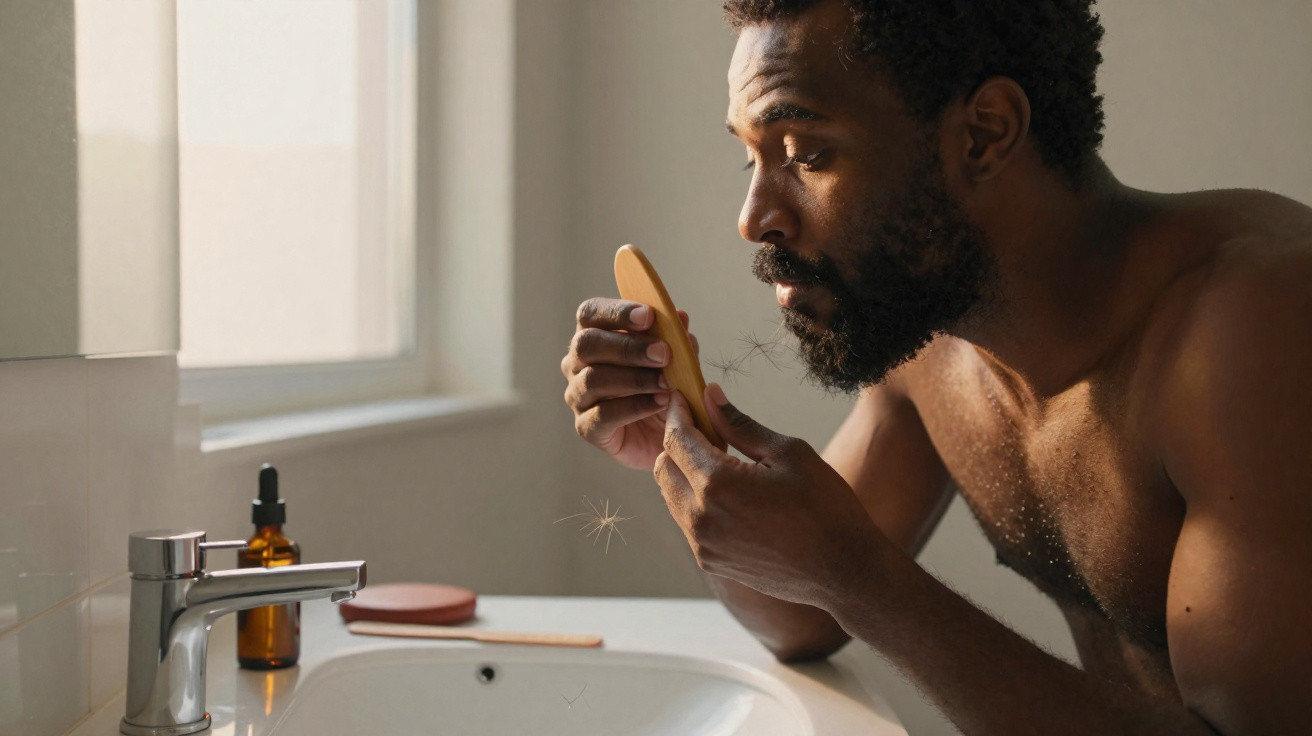
Most of us have experienced a mirror beneath unforgiving lighting that tells rather too much truth. You angle your head, draw back your hairline with your fingers and zoom in on your phone. It is easier to blame genetics than to question the bottle that has sat in your shower for ten years. Genetics are beyond your control. That 2-in-1 is not.
Abandoning it is not about portraying a single product as the villain. It is about developing a less detached relationship with your scalp. You begin to notice its texture, sensations and signals. You understand that “squeaky clean” may mean stripped, while a heavy shine can be residue rather than health. In doing so, you give your follicles a more favourable environment.
Men who exchange daily 2-in-1 use for a gentle routine often describe the results in plain terms. Their hair feels lighter. Their styles stay in place more effectively. Itching settles down. The shine looks more like healthy hair and less like a plastic coating. For some, that is the end of the story: enough improvement to stop thinking about the issue.
Others investigate further. They try scalp tonics, massage brushes and even brief “no-shampoo” periods as a reset. The point is not to turn hair care into another source of anxiety, but to reclaim control over a part of the body that culture has long encouraged men to overlook. Your scalp is not an afterthought; it is living terrain.
Perhaps the quiet revolution happens in small, ordinary moments. You are half asleep in the shower, reach for the familiar 2-in-1 automatically… then stop halfway. You choose the gentle shampoo instead. Thirty seconds later, the mirror shows no visible change. But in a year, your follicles may have a different story to tell.
| Key point | Detail | Why it matters to the reader |
|---|---|---|
| 2-in-1 build-up | Silicone-rich 2-in-1 products used daily can leave a film on the scalp that holds oil and debris. | It can help explain greasy roots, dull hair and subtle thinning that do not seem to fit your age. |
| Separate products | Applying a mild shampoo to the scalp and conditioner only to the lengths helps protect follicles. | It provides a simple, practical routine that fits into ordinary showers without any fuss. |
| Regular “reset” | Periodic clarifying washes and checking labels for silicones limit long-term residue. | It gives you small, specific actions that may improve the appearance and feel of hair within weeks. |











Comments
No comments yet. Be the first to comment!
Leave a Comment