
A psychiatrist explains why our hairstyle reaches far beyond the scalp.
Whether it is a dramatic cut, colourful highlights or the same ponytail year after year, our hair communicates before we say a word. In her analysis, French psychiatrist Marine Colombel explores how closely hairstyles are linked to identity, power, spirituality and unspoken social rules - and why changing your hair can sometimes require more courage than negotiating a pay rise.
More than styling: hair as a tool of self-control
Many people underestimate the effect of a haircut. Colombel describes a colleague, himself a psychiatrist, who one day shaved his head completely. In purely objective terms, he may have lost only half a centimetre of hair length. Subjectively, however, it was a dramatic statement.
At first, everyone was unsettled. Their reactions then shifted: there was less mockery, more curiosity and, in some cases, genuine admiration. He seemed more present, more focused and more determined. With a simple razor, he had consciously altered both his social role and his own perception of his body.
A hairstyle acts as a lever: by changing our hair, we can partly influence how others interpret us - and how we experience ourselves.
Shaved heads, flowing hair, dreadlocks, natural grey hair or vivid colours all say something about our relationship with society and ourselves. Fashion trends are not the only factor; the need for control matters too. Hair grows, changes and ages. Cutting, colouring or straightening it sends the message: “I have a say.”
The quiet uniform: how society dictates your hair length
Hair rules may appear strict only in places with formal regulations, such as the military, police, prisons and boarding schools. Keep it short, tidy and free from fuss. In these settings, it is obvious that the standard is imposed from above.
But Colombel stresses that everyday life follows codes as well, only more quietly. Every profession, scene and friendship group has its own unspoken expectations. Those who want to belong often adapt to them without even realising it.
- In a start-up office: casual waves, an undercut or a slightly untidy look as a sign of “creativity”
- In a law firm: sleek, controlled hairstyles and very little experimentation
- In teaching: a look that is “professional but approachable”, often shoulder-length and tied back
- In certain subcultures: very short cuts, bright colours or deliberately radical styles
What is striking is that many people in civil society believe they chose their hairstyle “freely”. Philosopher Michel Foucault, whom Colombel draws on, might argue that the pressure is simply not issued directly by a manager. Instead, it comes from within: from learned expectations about how one is supposed to present oneself “properly”.
We control ourselves so that we do not step outside the frame. The salon scissors therefore become an instrument of quiet conformity.
Someone attending a job interview will think carefully about whether their blue tips can stay. Someone living in a conservative family may feel just how “unwanted” a sidecut would be. Many people alter their hair without ever hearing an explicit rule - the social gaze is enough.
Spiritual dimension: hair as a bearer of life force
Colombel relies not only on social philosophy but also on religious history. Historian of religions Mircea Eliade describes hair as part of an ancient symbolic language: it represents vitality, strength and a connection to the sacred.
In myths and religious traditions, hair repeatedly appears as a medium between the body and transcendence. The familiar example is Samson from Hebrew tradition, whose superhuman strength was tied to his uncut mane. When his hair was cut, he lost his power - and his entire people fell into misfortune with him.
These stories may seem like fairy tales today, but they reveal how symbolically charged hair can be. In many cultures, it is not seen simply as “keratin material”, but as a store of energy, identity and faith.
| Way of treating hair | Symbolic meaning |
|---|---|
| Completely shaved | Cleansing, a new beginning, separation from a former identity |
| Long, untouched hair | Protection, preservation, connection to tradition or faith |
| Offering hair, or cutting it and keeping it | Consecration, a promise, a rite of passage (for example, pilgrimage, mourning or a vow) |
Whether it is shaved, retained or offered, each of these choices reflects something larger. People quite literally anchor their convictions in their bodies.
When a haircut becomes an inner decision
Returning to the shaved psychiatrist, he told Colombel why he had hesitated for so long: he feared his colleagues’ judgement. “Too radical”, “too conspicuous”, “not suitable for the practice” - all these remarks echoed in his mind before anyone had said them aloud.
When he nevertheless chose the shaved head, the decision had two meanings:
- Social dimension: He deliberately went against the expected norm in his environment.
- Personal dimension: He made a visible statement: “I listen more to my own feelings than to unspoken rules.”
The moment we truly choose our hairstyle according to what we feel inside can become a quiet yet powerful declaration of loyalty - to ourselves.
For many people, such moments are pivotal: allowing the first grey hair to show, no longer straightening curls, putting on or removing a veil, or finally leaving a youthful hairstyle behind. In every case, the mirror marks a transition: a new chapter in one’s own story.
What your choice may reveal about you
Of course, no one can be fully “read” from their hairstyle. Broad interpretations are too simplistic. Yet Colombel’s analysis shows which questions may lie behind many choices:
- Do I want to belong or stand out? Conventional, understated cuts often signal belonging, while extreme colours or shapes are more likely to express distinction.
- Am I comfortable with ageing? Someone who consistently covers grey roots may have a strong desire to maintain a youthful image; someone who leaves them visible is more likely to signal ease with their own stage of life.
- How do I deal with control? Tightly gelled looks or precisely drawn partings often convey order and discipline, whereas wilder styles suggest greater freedom and spontaneity.
- Does spirituality matter? Certain religious communities link rules or recommendations to beards, hair length or head coverings. Following or rejecting these can be a deliberate statement.
These considerations rarely happen consciously. Many people would simply say: “I just like it this way.” Yet that phrase often contains a personal history of experiences, comments, role models and subtle boundaries drawn by others.
Everyday examples of hair and life changes
A few typical situations show how closely hair can be tied to different phases of life:
- After a break-up: A dramatic cut, a new colour or a completely different style creates a visible break with the past.
- Starting a career: The wild festival look gives way to a more “professional” hairstyle to avoid standing out in the office.
- After serious illness: Hair growing back after chemotherapy becomes an emotional symbol of returning to life.
- Parenthood: Some people cut long hair shorter for practicality, while others grow it to avoid seeing themselves as “only a parent”.
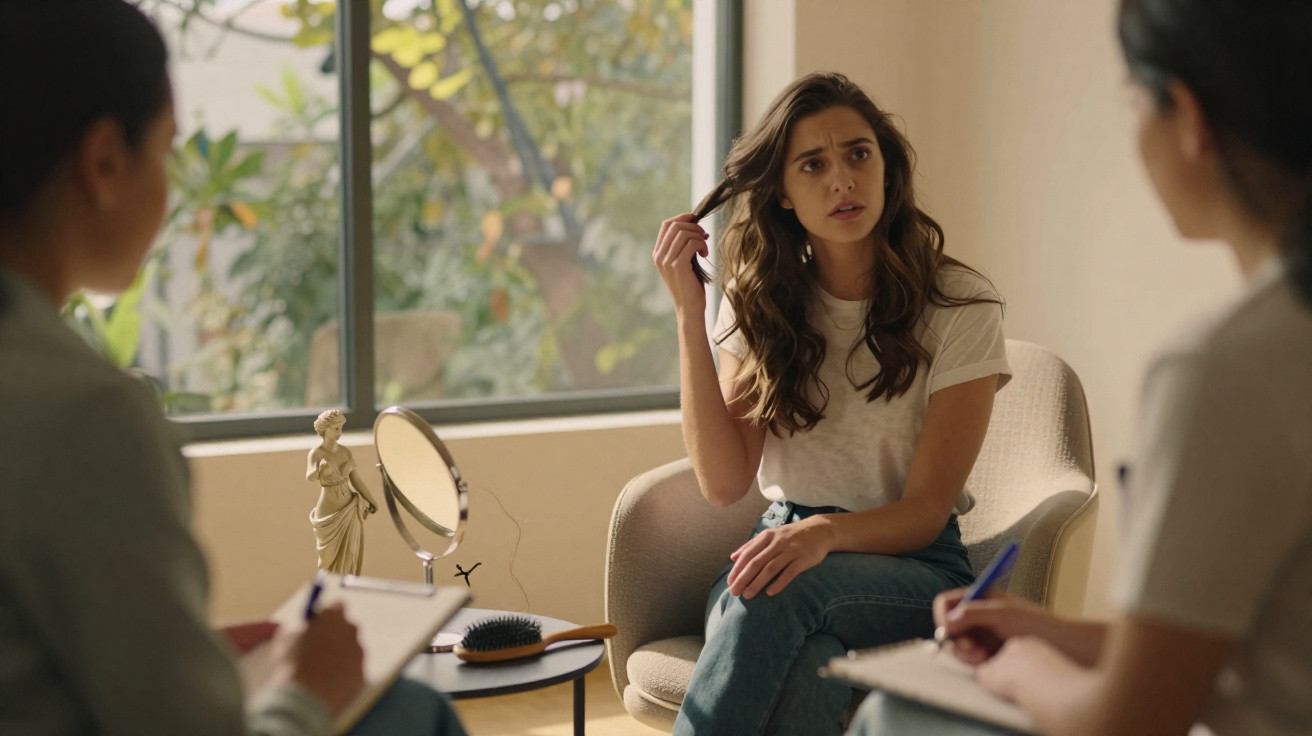
In therapy sessions, such changes often arise as a side issue, yet they can still reveal a great deal: about self-esteem, role models, old wounds or newly found courage.
The opportunities and risks of a “speaking” haircut
Those who use their hairstyle strongly as a form of expression gain creative freedom: they can send clear signals, assert an identity and mark a rupture. This can strengthen the sense of actively shaping one’s own life.
At the same time, there is a risk of identifying too closely with a particular look. If hair becomes the main source of self-worth, every “bad hair day” can immediately affect a person’s mood. Discrimination also plays a part: some hairstyles are still labelled “unprofessional” or “rebellious” in certain industries.
It can help to ask yourself from time to time:
- Am I choosing this hairstyle because it suits me - or because I am otherwise afraid of people’s reactions?
- What is the most radical haircut I would find exciting internally - and what is stopping me?
- Which comments about my appearance have shaped me most in the past?
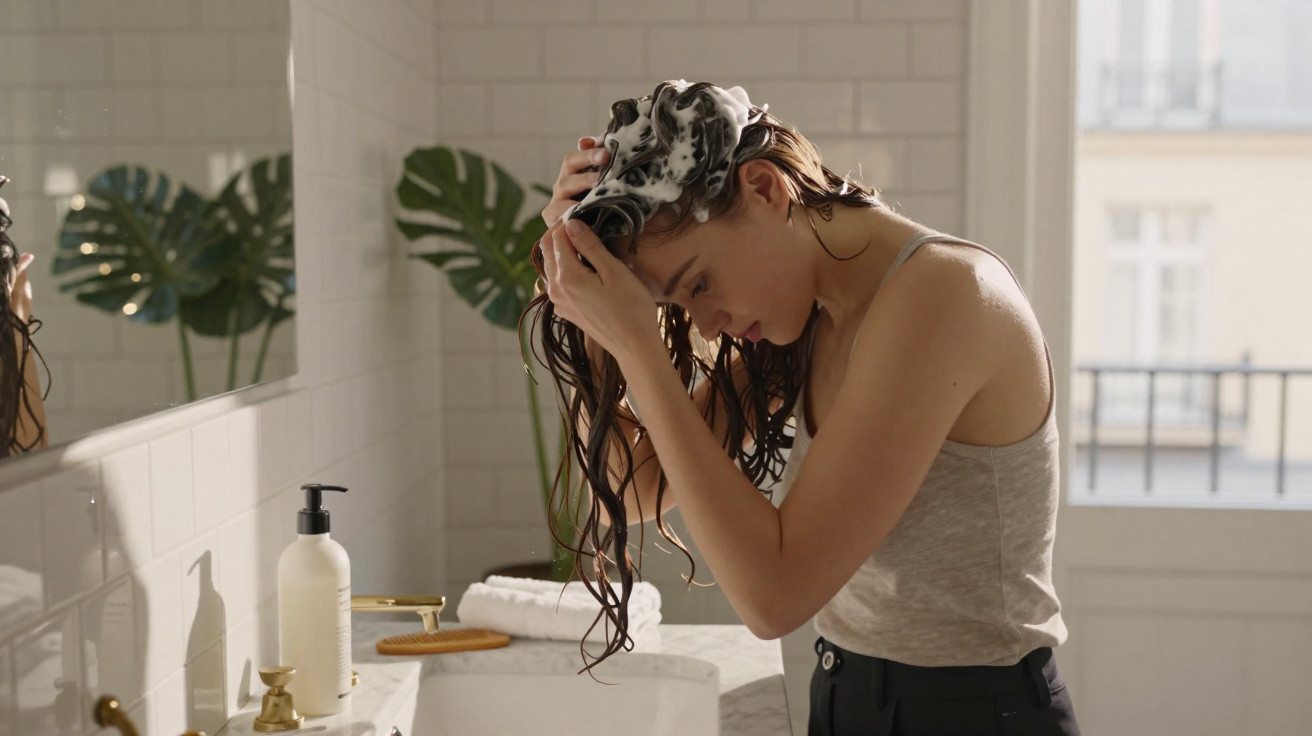
The answers often reveal more about a person’s character than any styling advice. Hair can therefore become a practical starting point for reflecting on autonomy, belonging and inner convictions - not in an abstract space, but directly in front of the bathroom mirror or in the hairdresser’s chair.















Comments
No comments yet. Be the first to comment!
Leave a Comment