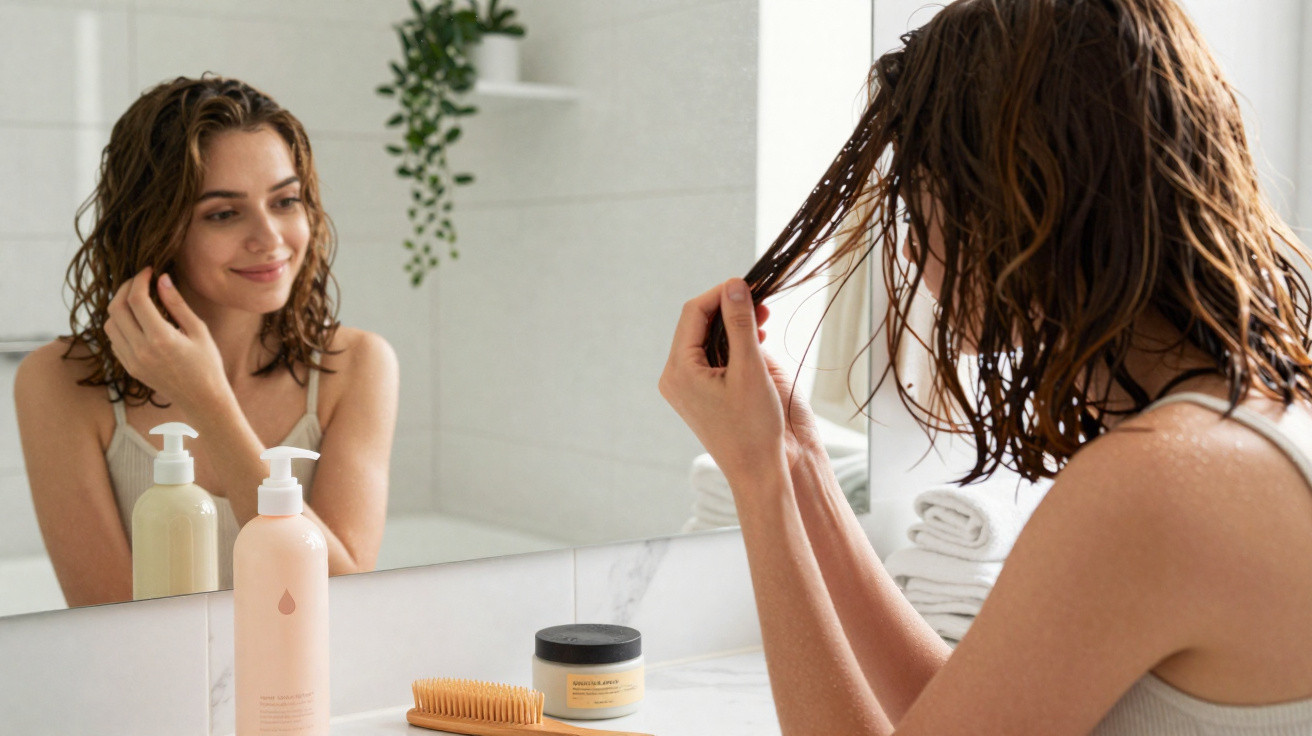
The search for soft, glossy hair at home requires an understanding of the role each product plays in the everyday wash routine. Many people experience dryness after ordinary cleansing, yet applying conditioner correctly provides the immediate hydration hair needs.
How does conditioner work on the hair cuticle?
Washing begins by lifting the hair’s scales so that built-up impurities can be removed. As shampoo cleanses thoroughly, it also raises the natural pH, leaving the hair cuticle fully open and exposed to everyday external damage.
To counteract this rough condition, the daily cream works by closing these protective scales straight away. This effect lessens uncomfortable frizz and locks in beneficial components, restoring ideal softness through the lengths and ends without making the hair feel heavy.
These are the leading benefits that correct use of this product brings to daily hair care:
- Instant sealing: It closes the cuticles opened by shampoo during washing.
- Intense shine: It smooths the hair surface, helping it reflect natural light more effectively.
- Frizz control: It reduces static and keeps strands far more manageable.
- Daily protection: It forms a surface barrier against external aggressors and pollution.
- Long-lasting softness: It leaves a silky feel without building up heavy residue at the roots.
What do specialists advise about using conditioner?
Well-known professionals explain that overlooking this stage can seriously affect overall hair health. Hairdresser Rodrigo points out that conditioner stabilises the fibre’s pH, providing a continual surface treatment that is essential for keeping hair healthy.
Other experts, including the experienced Joaquim, agree that missing this crucial step leads to severe long-term damage. Without this daily protective acidic seal, hair loses moisture easily and develops a dry, noticeably rough appearance.
Below is a video from the RODRIGO CINTRA YouTube channel that explores the points discussed in this topic in greater depth:
What is the real difference between conditioner and a mask?
The key structural difference between these products lies in the amount of water and the concentration of active ingredients in their formulas. Conditioner has a fluid texture, whereas a mask has a richer consistency and provides deep nourishment.
Different formulas
Active ingredient concentration
Conditioner has a more fluid consistency because it contains more water and a lower concentration of active ingredients, making it suitable for quickly stabilising pH during the daily wash routine.
A mask has a firmer texture because it contains less water and a high level of nutrients essential for damaged hair fibres.
Because of this structural distinction, daily conditioner use is intended to seal the cuticles quickly. A mask, in contrast, works intensively by penetrating deep into the structure to provide powerful protection for your hair.
Use this basic guidance to distinguish how each item should fit into your usual routine:
- Conditioner should be used with every regular wash to stabilise the fibre’s pH.
- A reconstructing or nourishing mask should be applied intensively once a week.
- Extremely damaged hair may receive the mask more often until it regains vitality.
How can you combine the products without weighing down the roots?
Correct application means concentrating solely on the lengths and ends while completely avoiding the scalp. When the product reaches the base, it blocks pores and causes the unwanted excess oiliness at the roots.
Combining ranges with complementary functions can also enhance the healthy effects without affecting the hair’s natural lightness. You can easily pair a conditioner designed for hydration with a powerful reconstructing mask for a fully complete hair treatment.
Follow these simple rules in the shower for a light, silky result without excess oiliness:
- Spread the product evenly from the mid-lengths to the ends only.
- Rinse thoroughly with lukewarm or cool water to remove any remaining residue.
- Avoid touching the scalp area with hands that still have traces of cream on them.
What is the correct frequency for each hair type?
The ideal schedule depends entirely on the current level of dryness or damage in your hair fibre. Healthy hair needs only daily conditioning and a fortnightly routine using masks intended to maintain shine.
On the other hand, chemically treated or bleached hair needs deeper care more regularly over the weeks. Alternating applications according to its specific needs rebuilds the structure, ensuring exceptional softness and excellent vitality.
Read also: Trick to make fine hair look fuller after 55








Comments
No comments yet. Be the first to comment!
Leave a Comment