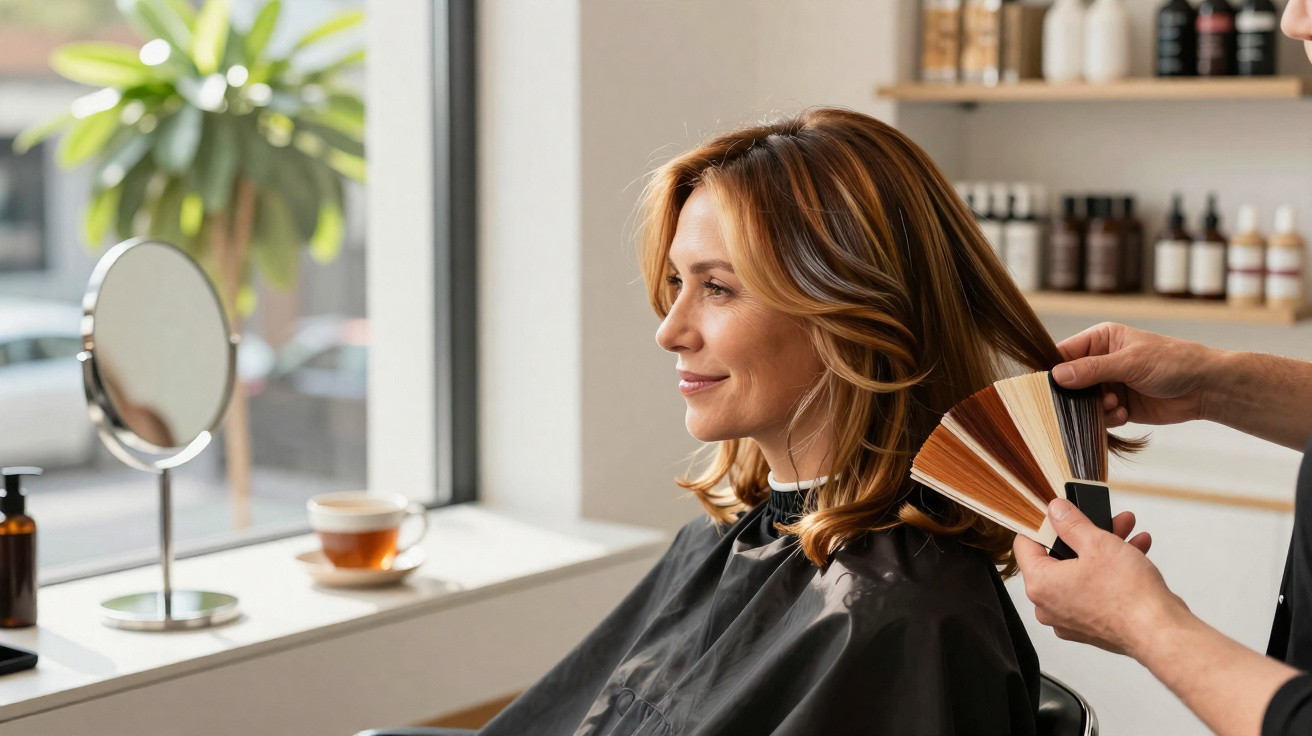
Edviga Bobocea, a hairdresser and colour specialist, advises steering clear of overly intense shades after the age of 50, including deep black and very dark brown. Her reasoning is contrast: dense colours can emphasise shadows, draw attention to expression lines and diminish the face’s natural radiance.
Why can intense black make your appearance look heavier?
Very deep black forms a harsh frame around the face. As skin gradually loses some of its glow and evenness, this contrast may make dark circles, creases and small imperfections more noticeable.
Edviga Bobocea’s advice is not a rule against dark hair. The issue is the intensity and absence of dimension: a flat shade without highlights tends to absorb light, making facial features appear more severe.
Which shades are often more flattering after 50?
Rather than opting for deep black or almost-black brown, hair colour can take a softer direction, using warm highlights, medium browns and lighter pieces around the face. These techniques add movement and reduce the effect of one solid block of colour.
- Chocolate brown: retains depth without feeling as heavy as black.
- Lightened brown: brightens strategic areas close to the face.
- Honey and caramel: warm the overall appearance when they suit the skin tone.
- Dark golden blonde: softens contrast for those with visible grey strands.
How do highlights soften expression lines?
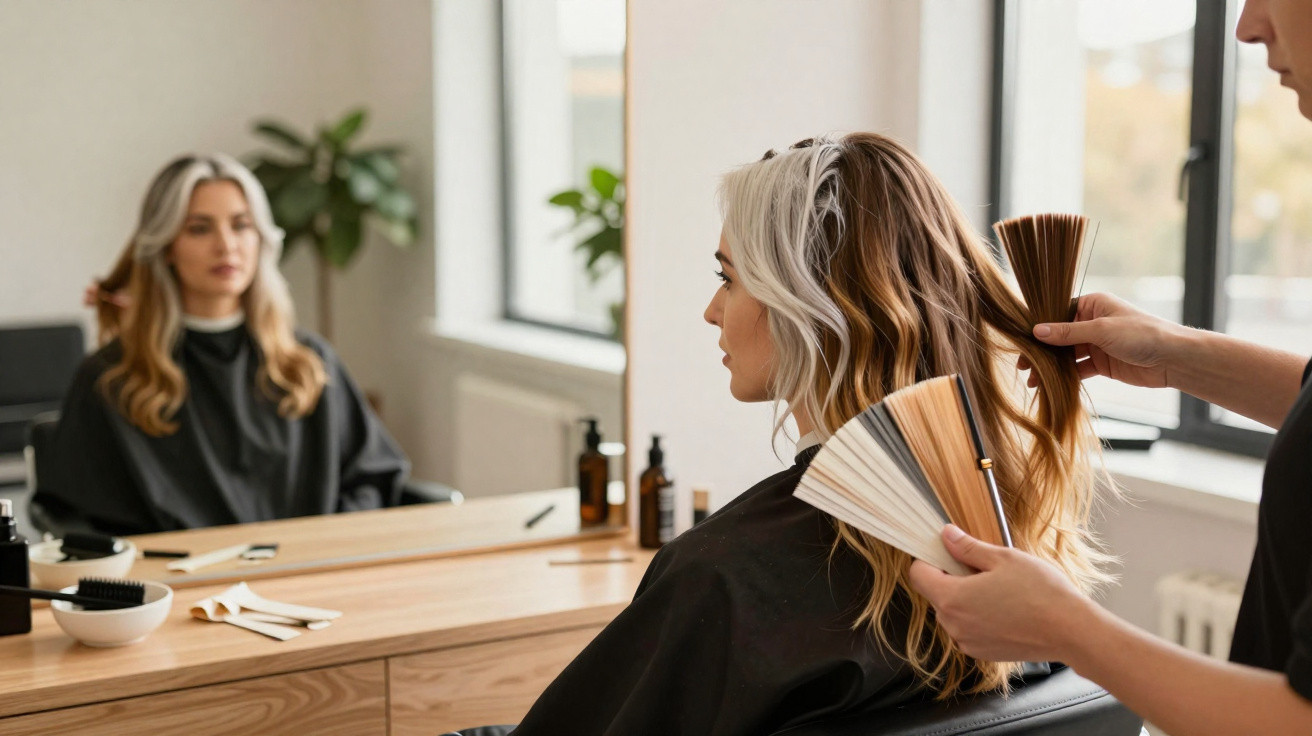
Carefully placed highlights act as points of light. Positioned around the forehead, temples and sides of the face, they break up the severity of dark colour and make the transition to grey hair less pronounced.
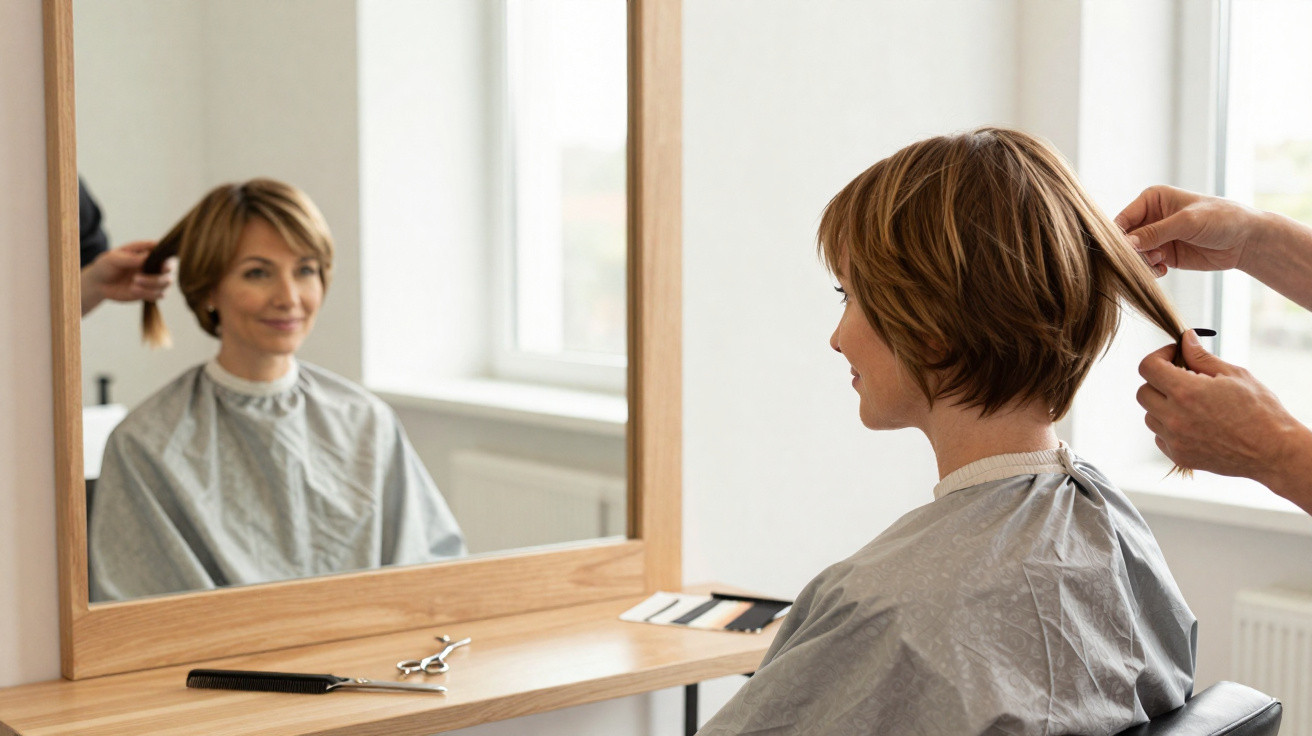
Methods such as hair contouring, fine highlights and tone-on-tone reflections can brighten the hair without completely changing its colour. The finish is generally more natural than lightening the whole head in one go.
What should you consider before changing your hair colour?
The most suitable option depends on your skin, eyebrows, amount of grey hair, maintenance routine and chemical-treatment history. A colour that looks attractive in a photograph may require excessively frequent touch-ups or clash with your true skin tone.
- Check whether your current colour accentuates dark circles or makes your face look more tired.
- Avoid particularly drastic changes if your hair has recently undergone chemical treatments.
- Ask for subtle highlights before giving up a dark shade altogether.
- Use hydrating treatments and heat protection to preserve shine after colouring.
The right hair colour brightens without erasing your identity
Edviga Bobocea’s guidance supports a more strategic choice: there is no need to avoid dark shades, but it is worth steering away from versions that are harsh, dull and lack depth. A skilfully created brown can remain elegant, cover grey hair and soften the expression at the same time.
After 50, hair colouring works best when it complements skin texture, hair shine and the level of maintenance you can realistically manage. The aim is not to look like someone else, but to adjust contrast, light and movement so the hair frames the face without hardening its lines.











Comments
No comments yet. Be the first to comment!
Leave a Comment