
Coffee, cinnamon and black tea: homemade recipes for disguising grey hair are multiplying online, yet most share one drawback - they fade after the first wash. Henna, a plant-based pigment used for thousands of years across cultures worldwide, is the exception: it provides genuine, long-lasting coverage for grey strands without ammonia, peroxide or the cumulative damage caused by chemical dyes over time.
What is henna, and why does it work differently from coffee and cinnamon?
Henna is a pigment obtained from the leaves of the Lawsonia inermis plant, grown chiefly in North Africa, the Middle East and South Asia. Its colouring compound is lawsone, a molecule that bonds securely with the hair’s keratin proteins. Rather than simply sitting on the strand, the colour binds within the fibre from the inside out.
That is precisely what sets henna apart from coffee and cinnamon. These ingredients only darken the outside of the hair temporarily, like a shadow that disappears with the water from the next shower. Because henna attaches to keratin, its effects remain for weeks, even with frequent washing. For anyone with a large number of grey hairs who needs effective coverage, this difference in how it works is crucial.
- Long-lasting grey-hair coverage: the pigment attaches to the hair’s keratin, preserving the result for 4 to 6 weeks, including with frequent washing.
- Intense shine from the first application: the protective layer henna creates around each strand reflects light, leaving hair looking healthy and full of life.
- Softer hair and sealed cuticles: as it settles on the hair structure, henna closes lifted cuticles, reduces frizz and makes hair noticeably softer to the touch.
- Strengthened hair fibre: unlike ammonia- and peroxide-based dyes, which weaken strands, henna improves the resilience of the hair structure with every application.
- Protection from environmental damage: the coating formed by henna on every strand acts as a natural barrier against sun, wind and pollution, all of which can dry out and fade hair.
How to prepare henna paste at home before applying it
Henna should be prepared at least six hours before it is applied. Always choose a non-metal bowl, since contact with metal may change the pigment’s composition. Put pure henna powder in the bowl, then gradually stir in warm water until it becomes a smooth paste with the consistency of thick yoghurt. Cover it with cling film and leave it at room temperature for 6 to 8 hours.
This resting period is vital, as it allows the leaves to release lawsone, the active pigment, fully. Paste used straight after mixing produces a far weaker result than the same paste left to rest for the correct length of time. If you plan to apply it in the afternoon, prepare it that morning. For a morning application, make the paste the night before.
Step-by-step henna application for even grey-hair coverage
Before application, wash your hair using shampoo only and do not use conditioner. Conditioner residue can coat the strands and prevent the pigment from binding properly. Hair should be clean, free from oils and without styling products. Always wear gloves, as henna stains skin easily and the colour can take days to disappear from your hands.
Complete application sequence for a professional result at home
Follow this order to achieve even coverage from start to finish.
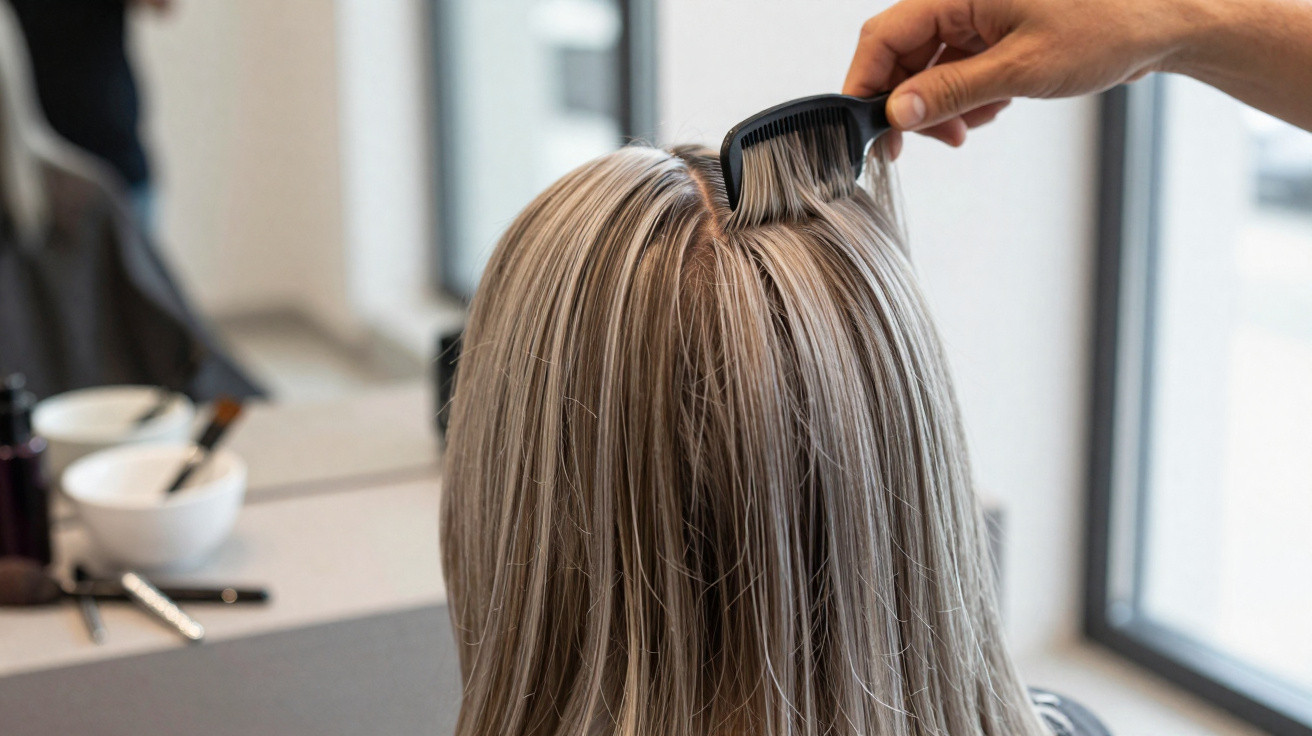
Wash hair with shampoo only, then partially dry it - slightly damp strands absorb the pigment more effectively. Separate the hair into sections using clips. Apply the paste with a tint brush or gloved hands, starting at the roots and working through to the ends. Pay particular attention to areas with a higher concentration of grey hair, massaging the paste in to ensure every strand is coated. Cover the hair with a plastic cap and leave it for 1 to 2 hours, depending on the desired colour intensity.
Rinse thoroughly with plenty of water until all the paste has been removed; because of its dense texture, this can take several minutes. Do not use shampoo during the first 24 hours after application, as this time is essential for the pigment to bind fully with the keratin. After 24 hours, hair can be washed as usual. The shade continues to deepen slightly over the first two days, so the final result develops between 48 and 72 hours.
One important precaution before the first application is to carry out an allergy test 48 hours in advance by applying a small amount of paste to the inside of your forearm. Although pure henna is natural, some people are sensitive to lawsone, particularly when it comes into contact with scalp skin. Reactions are uncommon, but a precautionary test is always advisable.
How often to reapply henna and make the result last longer
On average, the pigment stays vibrant for 4 to 6 weeks, depending on the hair’s porosity and how often it is washed. As grey hair grows through at the roots, you only need to reapply henna to that area rather than covering lengths that are already pigmented. This partial maintenance is quicker, more economical and gentler on the hair than applying it all over again.
To extend the result between applications, avoid shampoos containing harsh sulphates, which make the pigment fade more quickly. Shampoos for coloured hair or gentle formulas help retain the shade for longer. Applying conditioner only to the ends, without letting it touch the scalp, also helps henna at the roots last as long as possible.
What to consider before choosing henna as your permanent hair dye
Pure natural henna always produces shades ranging from orange to reddish brown, depending on the hair’s base colour. On very light or entirely white hair, the effect is usually more copper or red. On naturally brown or black hair, the added tone is subtle and looks very natural. Those seeking darker shades, such as dark brown or black, can combine henna with indigo, another plant pigment which broadens the range of possible colours when mixed with henna.
One key point to consider is that using conventional chemical dye after henna may cause unpredictable reactions in the hair, particularly if the henna product contains heavy metals. Anyone considering a return to chemical dye in future should tell their hair professional that they have previously used henna, so that the appropriate compatibility test can be carried out.
This advice will be useful to many people looking for a healthier alternative to hair colouring. Share it with anyone wanting to cover grey hair without using chemicals.












Comments
No comments yet. Be the first to comment!
Leave a Comment