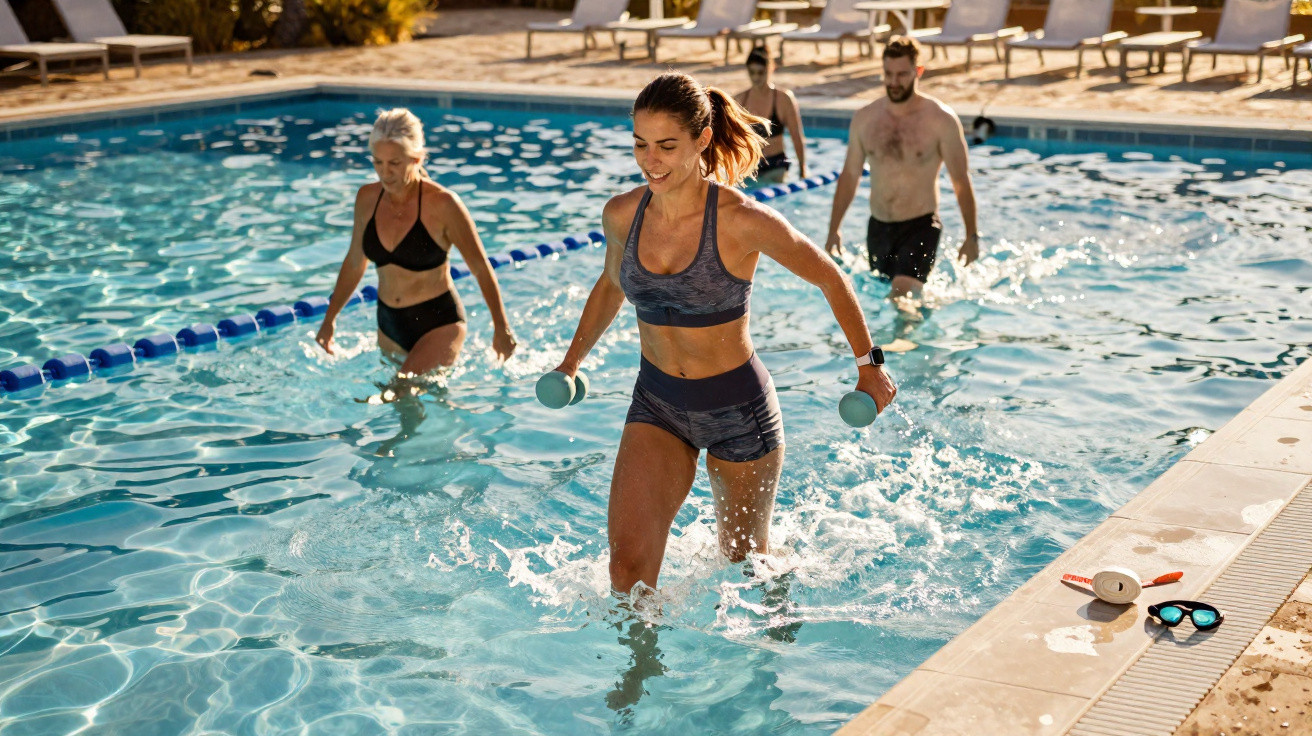
When people think of exercise for weight loss, jogging, the gym or intense interval workouts often come to mind. Yet another discipline has quietly gained ground: it is far kinder to the joints, challenges the cardiovascular system and, according to experts, specifically targets stubborn problem areas such as the stomach, legs, bottom and cellulite.
What the “walking in water” trend is really about
This activity is usually known as “water walking” or “Aquawalking”: participants walk in the sea, a lake or a large pool, with the water reaching somewhere between the navel and armpits. It is generally done in groups, often wearing a wetsuit and sometimes shoes to protect against stones.
This water sport combines endurance training, muscle building and lymphatic massage – while also taking pressure off the joints and back.
As the body is considerably lighter in water, the force placed on the knees and hips is reduced. Sports websites state that, in water, a person carries only around one tenth of their usual body weight. This is precisely why the activity appeals to people living with excess weight, those with knee problems or anyone returning to exercise after an injury.
Why its “granny sport” reputation is completely misleading
At first glance, a group of people in swimming caps walking through the water may not look especially athletic. However, appearances are deceptive. The pace is what matters. Anyone walking briskly in water is constantly working against the resistance of waves, which is far greater than air resistance on land.
A fast pace creates a demanding workout that particularly challenges the following areas:
- Thighs – every step has to be “pulled” through the water
- Glute muscles – these stabilise the body with every forward push
- Stomach and core – these maintain balance against currents and waves
- Back – this keeps the posture upright and supports the movement
The cardiovascular system is also put to work: increasing the effort leaves you breathing heavily, but without the harsh impact associated with running on tarmac.
How Aquawalking supports weight loss
Sports associations and swimming schools report that vigorous water walking can burn around 500 to 550 kilocalories an hour, based on a person weighing about 70 kg. People with a higher body weight generally use slightly more energy.
To encourage the body to draw mainly on fat stores, trainers advise staying within the so-called endurance zone. In practice, this means keeping the heart rate at roughly 60 to 70 per cent of the maximum heart rate.
As a rule of thumb: you are breathing noticeably faster but can still hold a conversation in complete sentences – then you are working in the right range for fat burning.
According to swimming schools, this usually equates to a water-walking speed of about 5 to 8 km/h. It may not sound particularly quick, but the resistance of the water makes it feel much harder than a walk on land.
How long do you need to train before results show?
Anyone aiming to tackle fat deposits should, after a short warm-up, spend at least 45 minutes in the endurance zone. Many trainers suggest the following routine:
- Warm up for 10 to 15 minutes with easy walking and gentle exercises
- Then walk briskly through the water for 45 minutes
- Finish with 5 to 10 minutes of slow walking and stretching
Those who manage this programme once or twice a week, alongside a reasonably balanced diet, may see a noticeable reduction in body measurements. The figure on the scales does not always change dramatically, but many people report firmer legs, a tighter stomach and improved posture.
Massaging waves: what the activity can do for cellulite
One particular benefit lies in its effects on connective tissue. With every movement, the water presses against the skin in a similar way to a gentle, continuous massage. Trainers describe this as a natural “drainage” effect, meaning stimulation of lymph flow and circulation.
The combination of muscle work and water pressure can visibly reduce dimpling on the thighs and bottom and refine the texture of the skin.
This effect has not been firmly proven in large studies, but personal reports point in a similar direction: people who exercise regularly in water for several weeks often describe smoother skin, less heaviness in their legs and a firmer overall silhouette.
Why water training is so gentle on the joints
The main advantage is buoyancy: the joints, ligaments and spine carry far less load. Impact forces like those involved in jogging are eliminated entirely. This makes Aquawalking appealing for:
- People with knee or hip osteoarthritis
- People with excess weight who can quickly overexert themselves on land
- Exercise beginners returning after a long break
- Rehabilitation patients following certain orthopaedic procedures, in consultation with their doctor
Even so, the muscles work intensely because every step has to push against the water. This makes it possible to build strength and endurance without risking the typical “runner’s knee”.
Getting started with water sport
Coastal areas with moderate waves or lakes with a long, gently shelving shore are ideal. In these settings, you can gradually move into deeper water until it reaches roughly chest height. In many holiday areas, and increasingly in Germany, clubs and swimming schools offer group sessions.
Simple equipment is usually enough to begin:
- A swimsuit or wetsuit, depending on the water temperature
- Non-slip water shoes for protection from stones, shells or slippery rocks
- Optional thin neoprene gloves in cold water
- A lightweight hat in windy conditions to protect the ears
Anyone who lacks confidence in the water or struggles to judge currents should begin with a class. Instructors monitor safety, explain the technique and recommend a pace that matches your fitness and health status.
How often should you go into the water?
One or two sessions a week is both realistic and sensible. Anyone able to do more can gradually build up to three, but should always allow at least one rest day between demanding sessions. The body needs recovery time for muscles to grow and connective tissue to adapt.
Risks, limitations and who it may suit less well
Although it appears gentle, water sport is never entirely free of risk. People with cardiovascular conditions, severely high blood pressure or breathing difficulties should seek medical advice before starting. Cold water can challenge the circulation, while waves and currents are often difficult to assess.
Some key considerations are:
| Aspect | What to consider |
|---|---|
| Weather & water | Avoid thunderstorms, strong currents and high waves; take the water temperature into account |
| Health | Consult a doctor first if you have heart problems, asthma or an acute infection |
| Safety | Never go alone in unfamiliar waters; where possible, go as part of a group |
| Equipment | Wear shoes to avoid injuries from the bottom, and warm clothing in cold water |
If you do not tolerate extreme cold well, heated outdoor pools or larger indoor pools can be an alternative. Some now offer designated lanes or classes where walking in water is explicitly permitted.
How to increase the effect further
The activity is particularly effective when combined with other habits. A protein-focused diet that is not overly processed supports muscle growth and makes it easier to maintain a calorie deficit. Walking or gentle cycling on the remaining days keeps the metabolism active.
Many trainers recommend including individual intervals, such as walking very briskly for two minutes followed by one minute at an easy pace. This raises the workload without requiring you to stay at your limit continuously. Those who are already reasonably fit can add arm movements or small jumps in the water to work more muscles at the same time.
For anyone who avoids conventional gyms or quickly develops pain when jogging, this water sport can be a surprisingly enjoyable alternative. At first, it feels more like a holiday activity than exercise – but those who do it regularly soon notice that an efficient programme for excess weight and unwanted dimples lies behind its harmless appearance.







Comments
No comments yet. Be the first to comment!
Leave a Comment