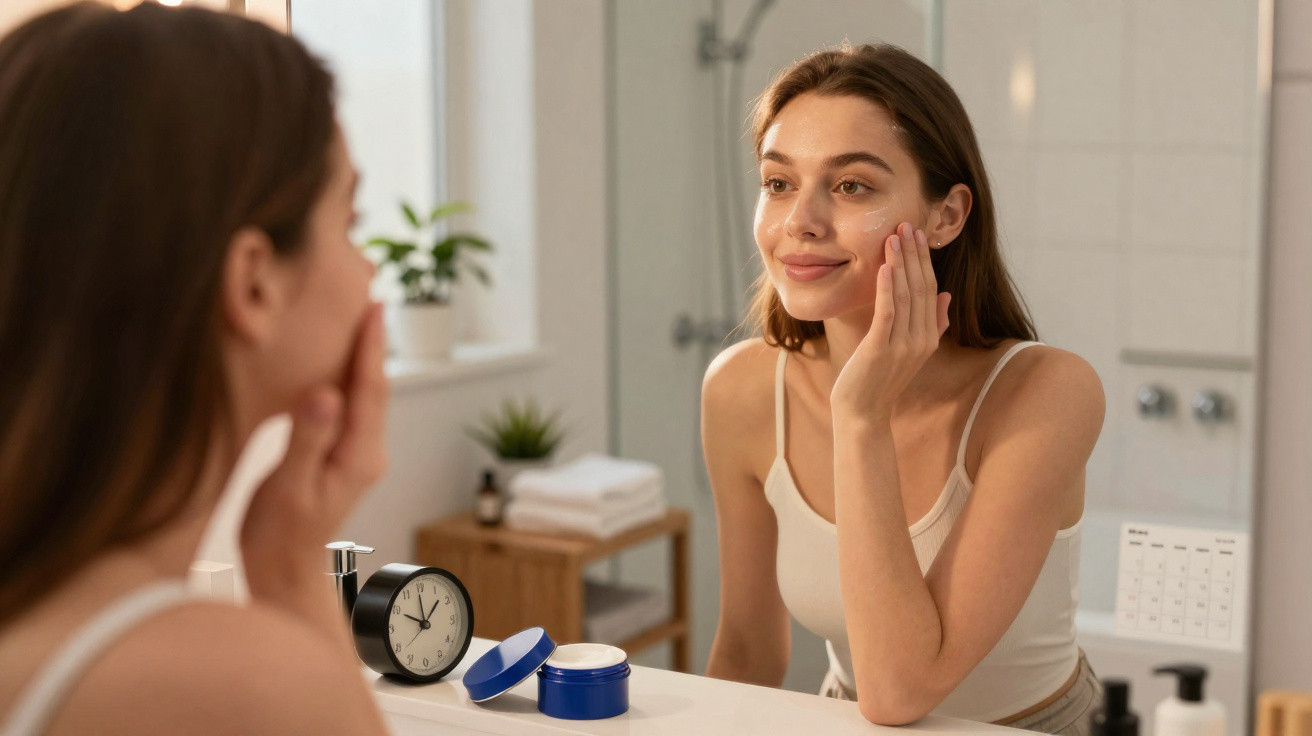
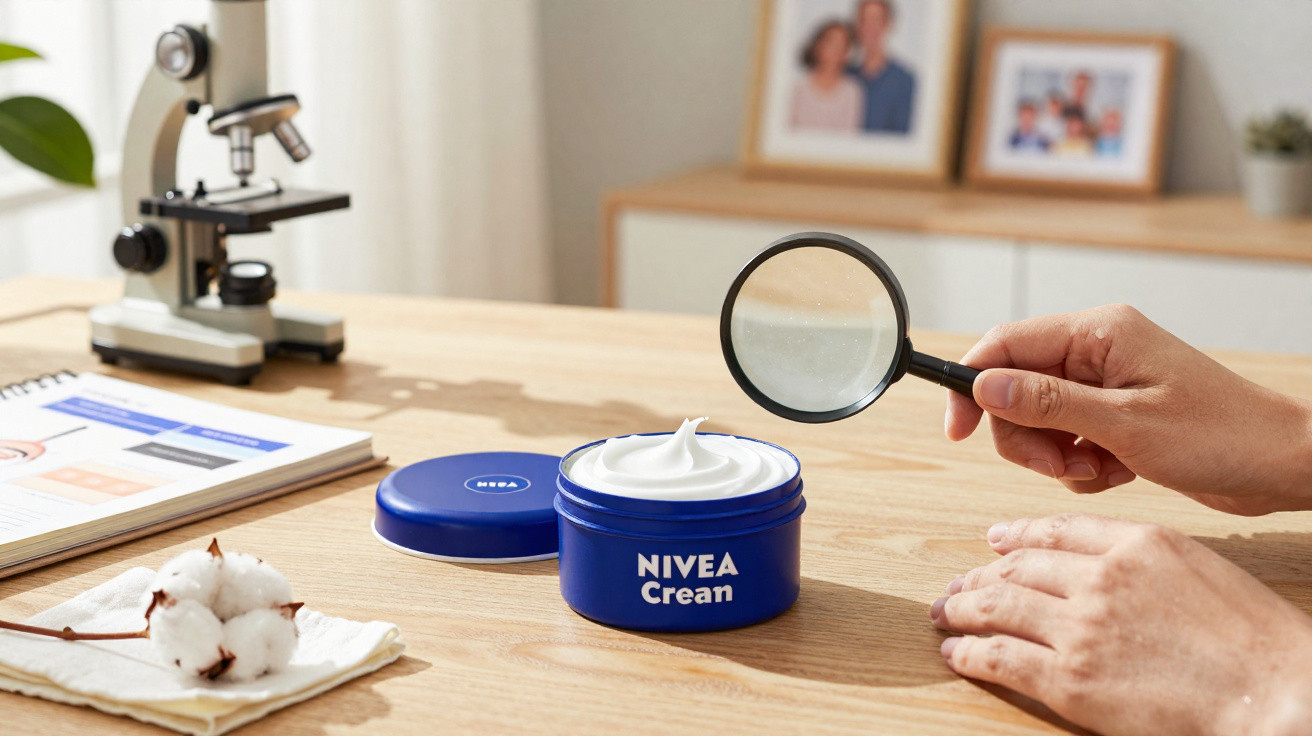
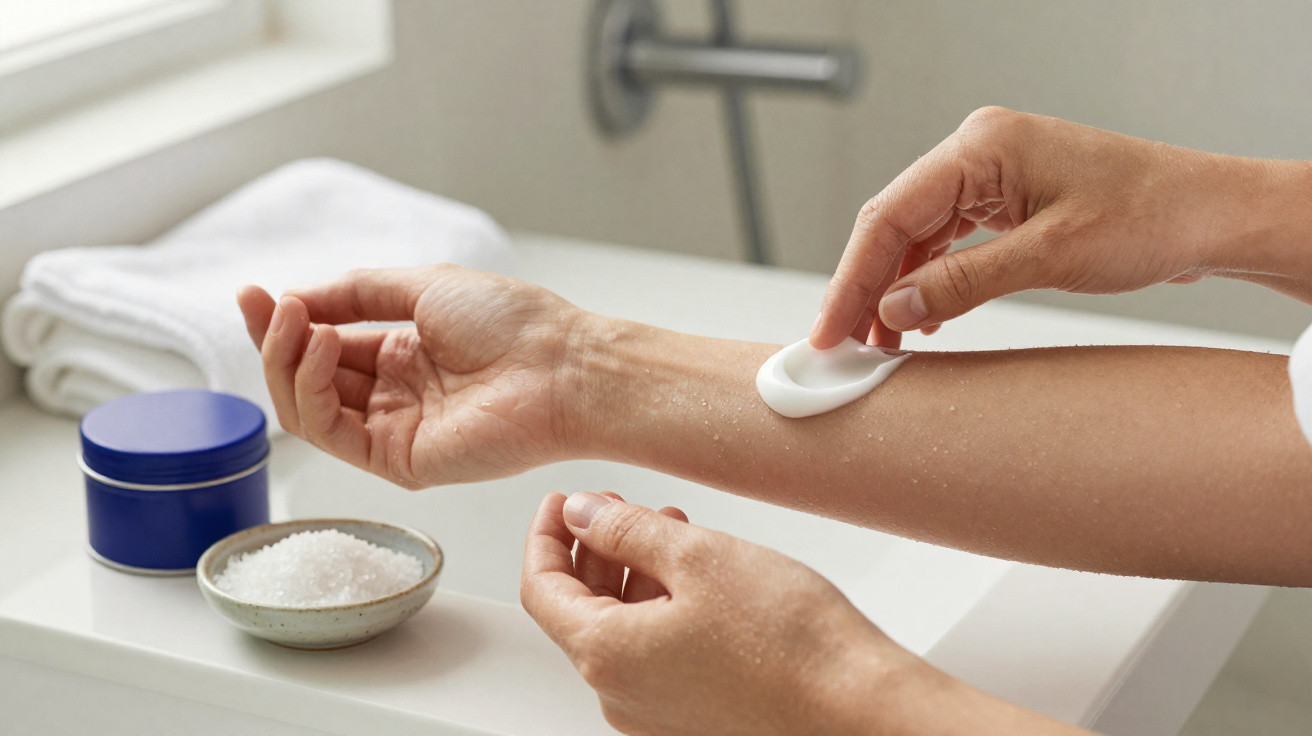
The classic blue tin of Nivea Creme can be found in countless bathroom cabinets. Many people use it on their hands and elbows, or simply as an all-purpose product. But what happens if it is applied directly to the face like a modern luxury skincare treatment – on one side only?
The idea behind the self-test
Nivea Creme has been a mainstay on beauty shelves for decades. The round blue tin is almost a skincare family heirloom. Generations have relied on it, whether as hand cream, an alternative to body lotion or an emergency product while travelling.
In recent years, the cream has enjoyed another surge in popularity as social media has promoted it as an affordable beauty hack. Users report smoother skin, less dryness and a glow that is said to resemble the effect of expensive overnight masks.
The question: is classic Nivea Creme genuinely suitable as modern facial skincare – or is it simply benefiting from nostalgia?
To find out, the tester chooses a simple but revealing method: for one week, she applies Nivea to just one half of her face every evening, while the other side follows her normal routine.
How the Nivea test worked in everyday life
The tester does not alter her basic routine. She thoroughly cleanses her face, then applies serum, eye cream and her usual moisturiser. Only afterwards does the Nivea tin come into play – and only on one side of the face.
The evening routine at a glance
- Step 1: Double-cleanse the face to remove make-up and sebum
- Step 2: Apply a hydrating or anti-ageing serum
- Step 3: Apply eye cream around the delicate eye area
- Step 4: Use regular face cream over the entire face
- Step 5: Apply a thicker layer of Nivea Creme to one half of the face only, as though it were an overnight mask
This final layer acts as a protective seal. In beauty circles, the technique is known as “slugging”: a rich, occlusive cream locks in the skincare already applied and helps prevent excessive moisture loss overnight.
Initial effects after only a few days
Differences become apparent after just the first few nights. The tester says that, when looking in the mirror each morning, she can immediately tell which side received Nivea.
The treated half of the face appears:
- noticeably better hydrated
- smoother, with a more refined-looking skin texture
- less tight on waking
The side treated with Nivea feels softer in the morning; the skin looks plumper and less creased.
Night-time is especially important because the skin is highly active then. Cells renew themselves, the skin barrier recovers and moisture can be lost easily. The thick layer of cream effectively creates a “lid” that slows evaporation. This is precisely where Nivea appears to show its strength.
What creates the intensely nourished feeling
Classic Nivea Creme is based on a particularly rich formula containing fats and waxes that sit on the skin like a film. Initially, the face can feel heavy and almost waxy, but over time it feels considerably more nourished.
The effect can be explained broadly as follows:
| Property | Effect on the skin |
|---|---|
| Rich fats | Reduce feelings of dryness and leave skin more supple |
| Occlusive film | Limits overnight moisture loss |
| Simple formulation | Stable, long-lasting and well tolerated by resilient skin |
Anyone experiencing typical dryness, for example during winter or in centrally heated rooms, often notices the difference particularly clearly: redness subsides and fine dehydration lines appear less visible.
The downside: not every skin type likes this much cream
However, the tester also finds that the experiment has its limits. When the Nivea layer is applied every night, the skin eventually reacts. Small blemishes begin to appear across the T-zone – the forehead, nose and chin.
Some pores appear blocked and small spots emerge – especially in areas where the skin already becomes shiny more quickly.
For people with oily or blemish-prone skin, the method can therefore be problematic. The dense texture does prevent the skin from drying out as much, but it can also trap heat more easily, creating an ideal environment for bacteria and sebum.
Who is Nivea slugging suitable for?
- Ideal for: dry, normal or mature skin without a strong tendency towards spots
- Use with caution for: combination skin, oily skin and acne-prone skin
- Best avoided: as a daily full-face treatment when pores are severely congested
The tester concludes that applying a thick layer of Nivea every day may be too much over time. Once a week, or every two weeks as a “skincare boost”, particularly during winter, seems more realistic to her.
How often does Nivea on the face really make sense?
Anyone wanting to use the cream as an overnight mask can broadly follow these recommendations:
- Dry skin: Apply a thin to medium layer at night 1–2 times a week.
- Normal skin: Use once a week or when needed, such as after a day with plenty of sun or wind.
- Combination and oily skin: Use only on particularly dry areas rather than across the entire T-zone.
Important: the routine underneath also matters. Anyone already using very rich oils and thick creams should apply the Nivea layer more sparingly. Otherwise, there is a risk of “over-moisturising”, which can throw the skin out of balance.
Why the blue tin remains a beauty classic
Despite its minor drawbacks, the test demonstrates why so many households have repurchased this cream for decades. It covers a wide range of uses:
- as SOS care for chapped lips or sore nostrils after a cold
- as an overnight hand and foot cream with cotton gloves or socks
- as after-sun care when skin feels mildly tight
- as a protective layer for the face and hands in sub-zero temperatures
Used deliberately rather than excessively, it is an inexpensive product with a reliable effect. On the face, it works best when the skin temporarily needs extra protection and lipids – during colder months, for instance, or after irritating treatments such as fruit acid peels, provided the skin is not already highly prone to blemishes.
What to consider before trying it yourself
Before carrying out a similar experiment, it is worth taking a close look at your skin. People with very sensitive or acne-prone skin should take a cautious approach: first test it on a small area, such as one cheek. If the skin reacts with stinging, pronounced redness or many new spots, the cream is probably unsuitable for facial use.
On the other hand, anyone with tight, thin or mature skin may benefit considerably. A realistic approach would be to follow a normal, lighter routine on five to six evenings, then give the skin a particularly rich overnight “coat” from the blue tin on one evening. This makes it possible to benefit from the effect without continually overloading the pores.
Overall, the one-week half-face test shows that the cult cream in the blue tin can genuinely provide visibly smoother, better-hydrated skin – especially on the treated side of the face. Those who use it not as an everyday all-purpose face cream but as a targeted overnight mask are most likely to get what the tin has represented for generations: simple, robust skincare with a noticeable effect.









Comments
No comments yet. Be the first to comment!
Leave a Comment