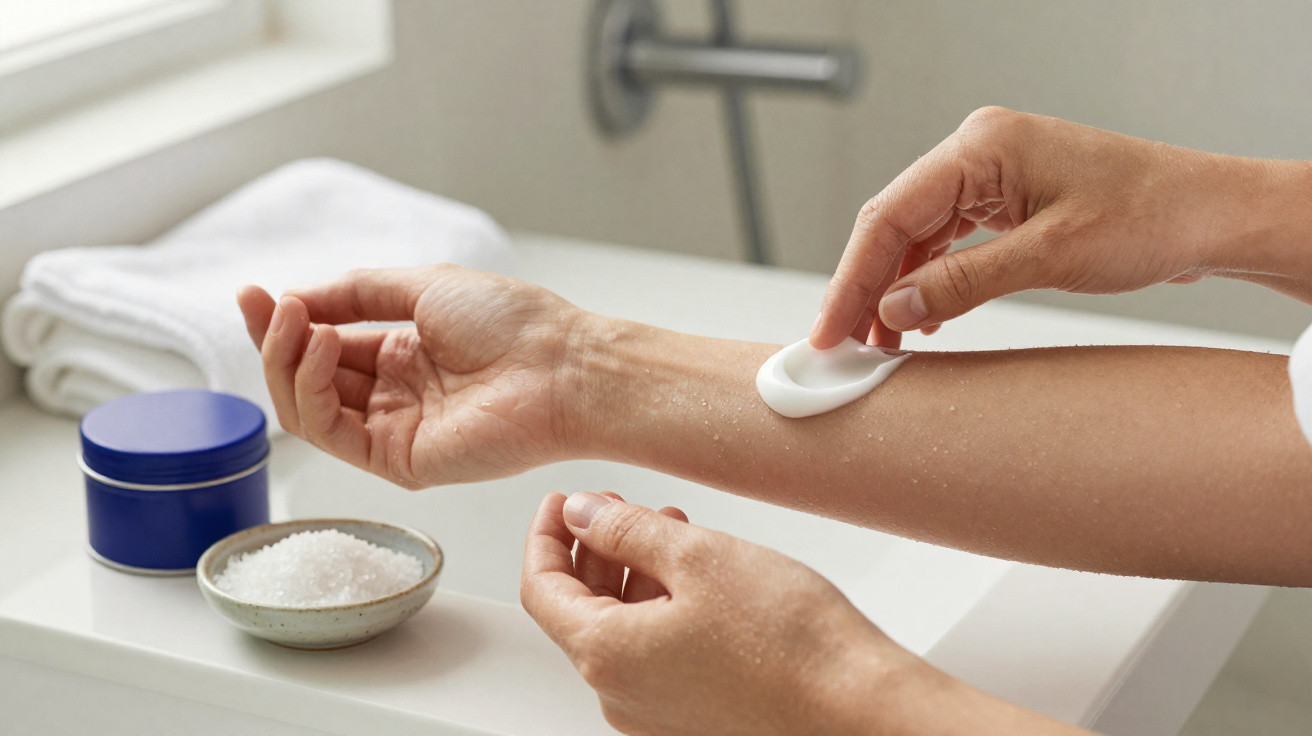
Dry elbows, rough knees and heels that catch on socks are common annoyances, particularly in autumn and winter when indoor heating, hot showers and cold weather can leave body skin feeling uncomfortable. One DIY idea is to mix a little cream from the blue Nivea tin with fine sea salt to create a quick body scrub.
The appeal is straightforward: the salt provides light physical exfoliation, while the cream helps the mixture glide over the skin and leaves it feeling softer afterwards. The important part is restraint. Use a tiny amount, choose fine salt, keep the pressure light and save it for healthy, tougher areas of body skin - never the face.
What the cream-and-salt mixture is for
This is a homemade physical exfoliant, not a treatment for a skin condition. When used briefly on damp skin, fine salt crystals can help remove some loose surface skin. The cream provides slip, so the salt is not being rubbed directly over dry skin, and it can leave behind a moisturising layer after rinsing.
People tend to use it on naturally tougher areas, including:
- elbows;
- knees;
- heels and the sides of the feet;
- hands, especially dry knuckles.
The immediate result may be smoother-feeling skin, but it is temporary. It will not fix persistent cracking, eczema, a rash or ongoing itch. In fact, frequent scrubbing can make dryness and irritation worse.
The aim is to loosen dry surface skin gently, then moisturise - not to sand the skin down.
Why people recommend it
The combination is often recommended because it is cheap, simple and uses things many people already have at home. Salt is granular, so it creates friction during massage. A thick cream makes that friction easier to control and can reduce the tight feeling that sometimes follows exfoliation.
Cream from the blue tin is rich and fragranced, which some people enjoy, but it will not suit everybody. Fragrance and other ingredients in any moisturiser can trigger irritation or contact allergy in some people, particularly on already dry or reactive skin.
Salt is not automatically gentle because it is a kitchen ingredient. Coarse flakes and large crystals can feel scratchy, while salt can sting sharply on tiny cuts, shaving nicks and irritated patches. Think of this as an occasional grooming step rather than an essential part of body care.
Choose fine salt and make only what you need
Use fine sea salt, not large flakes, chunky crystals or salt from a grinder. Fine grains are easier to spread through the cream and less likely to feel abrasive.
Make a small fresh portion each time. Do not prepare a large jar to keep in the bathroom: dipping wet fingers into it can contaminate the mixture, and any water introduced into the cream can alter its texture.
How to make a small batch
- Put roughly a teaspoon of cream into a clean bowl or onto a clean palm.
- Add a small pinch of fine sea salt.
- Mix gently with a clean fingertip.
- If it feels harsh or overly gritty, add more cream rather than more salt.
- Use it immediately and discard any remaining mixture.
There is no need for exact measurements. It should still feel like cream with a slight graininess, rather than a thick, scratchy paste.
How to use it on elbows, knees and heels
Use the mixture on clean, damp skin. A warm - not hot - shower or bath can soften surface dryness, which means there is less temptation to scrub forcefully.
A gentle routine
- Apply a small amount to one area at a time.
- Massage with very light circular movements for no more than 10 to 20 seconds.
- Stop straight away if there is stinging, burning, soreness or sharp scratching.
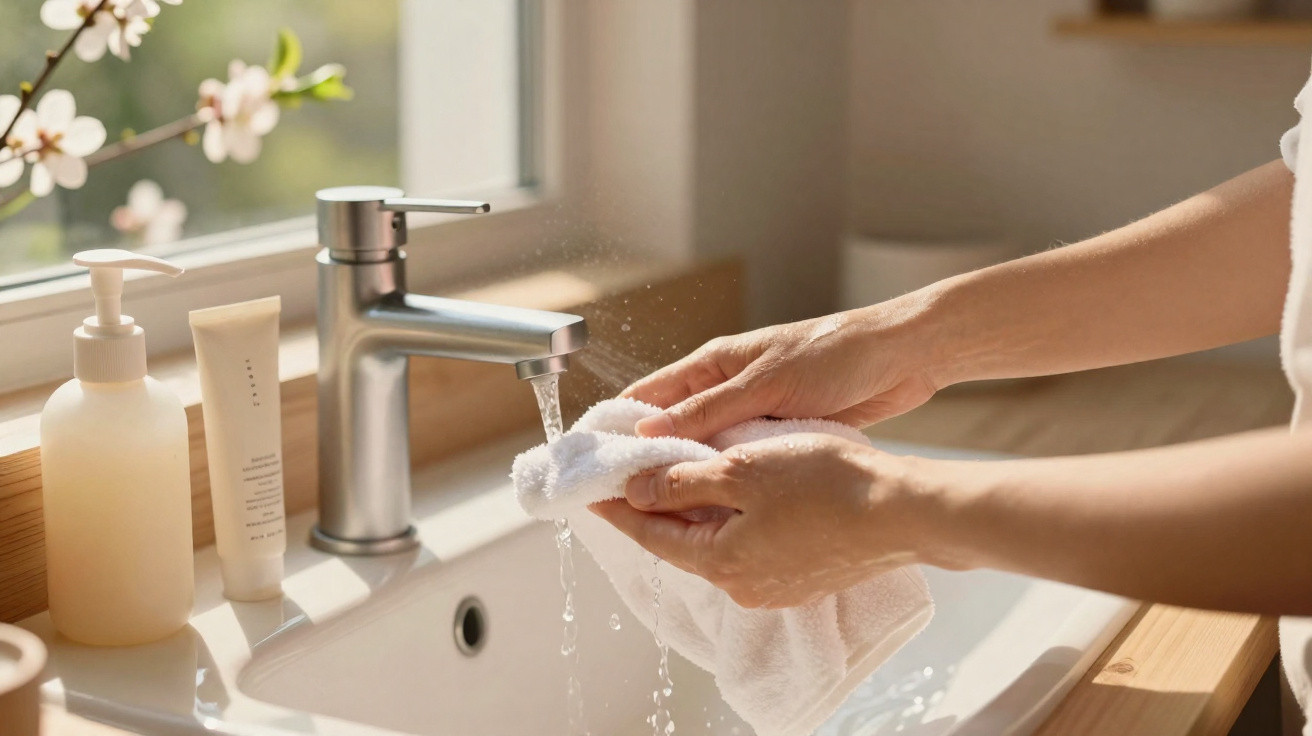
- Rinse thoroughly with lukewarm water.
- Pat dry with a towel; do not rub the area vigorously.
- Apply a plain moisturiser afterwards if the skin feels dry.
Take particular care with heels. Thickened skin can make it tempting to use more pressure, but aggressive exfoliation can leave feet sore. For regular heel dryness, daily foot cream and a gentle foot file used according to its instructions may be more useful than repeated scrubbing.
How often is sensible?
For resilient areas of body skin, once every week or two is usually more than enough. Some people will find that even this is too frequent, especially if their skin becomes red, dry or sensitive easily.
Avoid the scrub on the same day as other potentially irritating steps, including:
- shaving, waxing or hair-removal cream;
- a body product containing exfoliating acids or retinoids;
- another scrub, exfoliating mitt or rough flannel;
- applying self-tan if the skin has become red or sore.
If you use it on an exposed area such as the arms or lower legs, protect the skin from strong sun afterwards with suitable clothing or sunscreen. Newly irritated skin is more likely to feel uncomfortable in the sun.
Where not to use it
Do not use this mixture on the face. Facial skin is generally more delicate than skin on the elbows and heels, and manual scrubs can worsen redness, sensitivity and breakouts.
Avoid it on:
- broken, bleeding, cracked or sunburnt skin;
- eczema-prone, inflamed or actively irritated areas;
- spots, ingrown hairs or folliculitis;
- freshly shaved or waxed skin;
- rashes or unexplained changes in skin colour or texture;
- intimate areas.
If you have diabetes, reduced feeling in your feet, poor circulation, or a foot wound, do not use a DIY scrub on your feet without advice from a healthcare professional. Small injuries can be easy to miss and may need proper assessment.
Softer skin after one use can be pleasing; persistent burning, swelling or redness means rinse it off and do not use it again.
Common mistakes that make it harsher
The biggest mistake is treating the mixture as a remedy for very dry or thick skin and scrubbing for too long. More pressure does not mean better exfoliation.
Other common mistakes include:
- using coarse salt or large flakes;
- applying it to completely dry skin;
- using it on the face, chest or intimate skin;
- scrubbing after hair removal;
- making a large batch to store;
- using it several times a week;
- continuing despite stinging or visible redness;
- skipping moisturiser afterwards.
If you have never used the cream before, test the cream alone first. Apply a small amount to an unbroken patch of skin and leave it for up to 48 hours, following the product label if it gives different advice. This cannot guarantee that the scrub will suit you, but it may reveal an obvious reaction.
Gentler alternatives for rough body skin
A fragrance-free moisturiser applied after bathing is often the most useful first step for dry-feeling body skin. Products made for rough areas may contain ingredients such as urea, glycerin, lactic acid or salicylic acid. Use them exactly as directed, avoid broken skin and stop if they irritate.
For a simple low-scrub routine, apply a rich cream to damp skin after washing and use a soft flannel on a separate day if needed. Keeping showers warm rather than very hot, and moisturising within a few minutes of drying, can also help during the colder months in the UK.
The practical bottom line
Mixing cream from the blue Nivea tin with a pinch of fine sea salt can be an occasional scrub for healthy, less sensitive areas such as elbows, knees and heels. Its main benefit is the short-term combination of gentle exfoliation and a moisturised feel.
Keep the portion small, the salt fine and the pressure light. Rinse well, moisturise afterwards and stop if your skin objects. For persistent roughness, cracking, itching or sensitivity, choose a product designed for the concern or ask a pharmacist, GP or dermatologist for individual advice.












Comments
No comments yet. Be the first to comment!
Leave a Comment