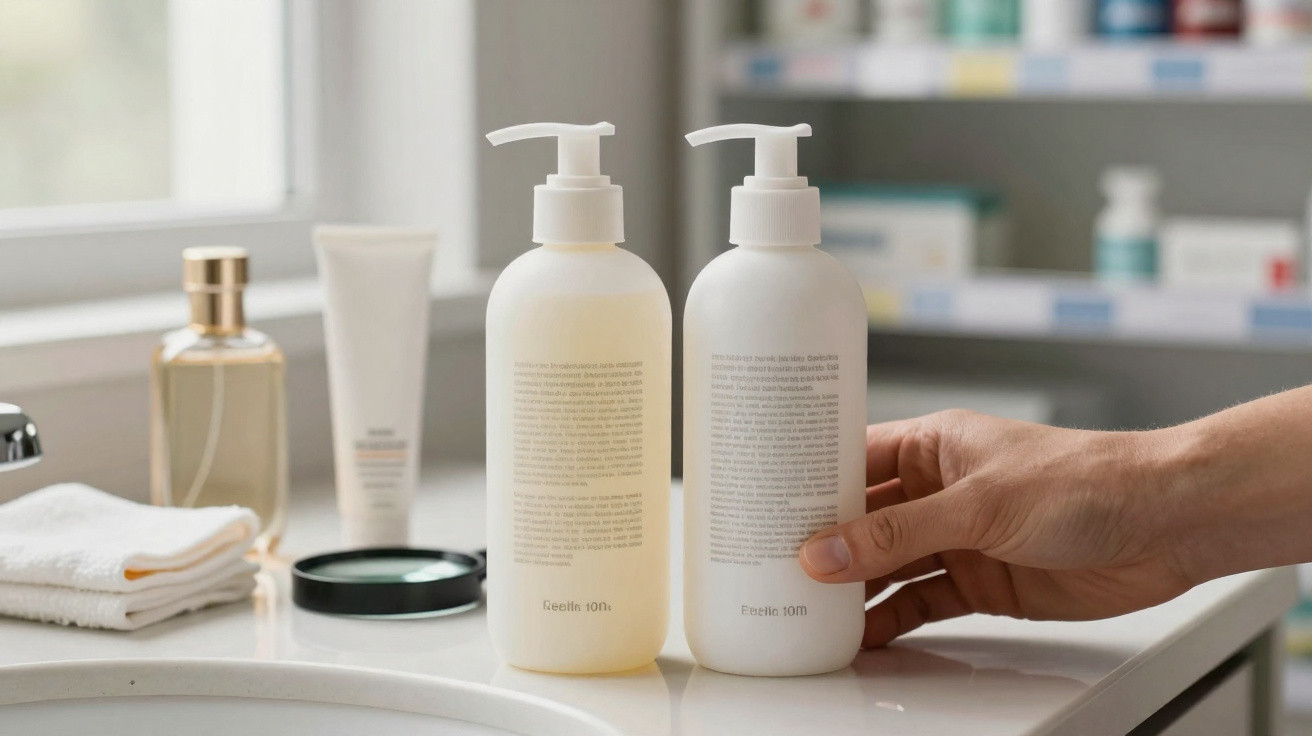
A longer ingredients list on a familiar deodorant or body lotion can look worrying, particularly if the packaging has not otherwise changed. The main point is simple: EU rules now require more fragrance allergens to be named individually on cosmetic labels, rather than appearing only within broad terms such as Parfum.
This is most useful for people who already know that certain fragrance ingredients do not suit their skin. It does not automatically mean a product has been reformulated, become less safe or contains more fragrance than before. For UK shoppers, the change matters chiefly when buying cosmetics in EU countries, from EU-based retailers, or when comparing an EU pack with a version sold in Great Britain.
What changed on 1 August 2026?
From 1 August 2026, cosmetics newly placed on the EU market must follow expanded fragrance-allergen labelling requirements. The rules apply to products including:
- face and body creams
- shampoo and conditioner
- deodorants
- make-up
- perfumes and body sprays
- soap and shower gel
- sun cream
- hair styling products.
Previously, 24 fragrance allergens had to be declared individually when they were present above specified levels. The updated EU requirements add 56 more substances, bringing the total to 80 that may need to appear by name.
Fragrance ingredients can come from essential oils, plant extracts or manufactured fragrance blends. They may give a product a floral, citrus, woody or fresh scent. In the past, many of these components could be included within the wider term Parfum on an ingredients list.
The change is about clearer disclosure, not an automatic change to the formula in the bottle.
Why a familiar product may now have a longer label
An ingredient named on a newer pack may have been present in the product all along. What has changed is the legal requirement to identify it separately at relevant concentrations.
This can be easy to miss when replacing a trusted moisturiser or shampoo. Cosmetic ingredients use the international INCI naming system, so they can look technical whether a product was bought in a supermarket, chemist or airport shop.
A label may still say Parfum, followed elsewhere in the list by individual fragrance substances. That is not, by itself, evidence that the manufacturer has reformulated the product.
However, formulas do change from time to time. If you need to avoid a known ingredient, always check the pack you are buying rather than relying on an old online image, review or saved photograph.
The labelling thresholds still apply
The rules do not mean that every tiny trace of a fragrance allergen must appear on every cosmetic label. Individual declaration is required once an ingredient reaches set concentration thresholds.
For leave-on products, the threshold is 0.001%. This category includes products such as body lotion, hand cream, foundation, deodorant and perfume.
For rinse-off products, the threshold is 0.01%. Examples include shampoo, conditioner, shower gel, liquid soap and facial cleansers that are washed away.
The difference reflects how long the product is intended to remain in contact with the skin. It can also explain why an ingredient appears on the label of a perfume but not on a similarly scented shower gel.
What it means for shoppers in the UK
Rossmann and dm are well-known European drugstore chains, rather than UK high-street retailers. UK residents may come across their products while travelling, receiving gifts from abroad or shopping with European online sellers.
The new rules apply to cosmetics placed on the EU market. Great Britain has its own cosmetics regime, so the label on an equivalent product sold here may not match an EU-labelled version. Northern Ireland has separate market arrangements, which can also affect the packaging used for a product.
You may therefore see:
- an EU product with a more detailed fragrance-allergen list;
- a UK version with fewer individually named fragrance ingredients;
- older and newer packs of the same product sold at the same time;
- minor differences in ingredients panels between countries.
A shorter UK ingredients list does not make a product counterfeit or inferior. Equally, a longer EU list does not prove that a product has been reformulated.
Why previous-style packs may still be sold
The EU change is not an immediate removal of every product carrying the earlier style of label. Cosmetics placed on the EU market before 1 August 2026 may continue to be made available until 31 July 2028.
For some time, then, retailers may have both older and newer packs in circulation. This is particularly likely in larger stores, discount outlets, airport shops and online listings that use old product photography.
The important detail is the ingredients panel on the specific item in your hand. A legitimate older pack can still have the previous label format during the transition period.
Think of the ingredients list as a snapshot of that exact batch and pack, rather than a permanent description of every version of a product.
How to check a product before buying
1. Find the ingredients panel
Look for Ingredients or INCI on the back, base, outer carton or a peel-back label. Small products may carry the information on a leaflet, tag or accompanying card.
2. Look beyond Parfum
Parfum may still be listed. Check the full ingredients panel for any names you have been advised to avoid, rather than assuming that the broad term tells you everything.
3. Compare the exact item, not just its name
A product can keep the same scent, name and bottle shape while its formula or labelling changes. Check each replacement, especially after a redesign.
4. Keep a record of known triggers
If a clinician has identified an ingredient linked to your reaction, save its exact INCI name on your phone. That is more reliable than trying to remember a long ingredient name while shopping.
5. Ask for current information online
If a retailer’s photo is blurred or outdated, contact the retailer or manufacturer for the current ingredients list. Online descriptions do not always keep pace with packaging changes.
Common mistakes when reading the new labels
- Assuming every declared ingredient will cause a reaction. The labelling helps people identify ingredients they already know they need to avoid; it cannot predict what will suit every person.
- Treating a longer list as proof of a more heavily fragranced product. It may simply reflect the new disclosure rules.
- Overlooking essential oils. Natural fragrance sources can contain the same fragrance components that require declaration.
- Relying on old social-media posts or retailer photos. They may show a discontinued pack or a formula from another market.
- Assuming ‘unscented’ always means fragrance-free. Read the ingredients list and any manufacturer guidance.
- Buying damaged or poorly labelled products. Use reputable retailers, check that seals and packaging are intact, and avoid products without the required product information.
Sensible skin-safety steps
If a cosmetic product causes irritation, itching, a rash or swelling, stop using it. Speak to a pharmacist, GP or other suitable healthcare professional if symptoms are severe, persistent or concerning. Seek urgent medical help for breathing difficulties, facial swelling or signs of a serious allergic reaction.
When trying a new product, introduce one item at a time and follow the maker’s instructions. A patch test may be suggested on some packaging, but it cannot guarantee that a reaction will not develop later or elsewhere on the body.
Do not dilute perfume with household products or mix cosmetics with cleaning chemicals. Keep aerosols and alcohol-based fragrances away from flames and heat. Avoid applying fragranced products to broken or badly irritated skin unless a healthcare professional has advised it.
The practical takeaway
The updated EU rules give shoppers more detail about fragrance ingredients, especially those who already know they react to a particular substance. They do not mean that everyone needs to replace existing products or avoid anything with a longer ingredients list.
When buying cosmetics from Rossmann, dm or elsewhere in Europe, check the pack in front of you and use the extra information where it is useful. Buy from trusted sellers, keep note of ingredients that have caused you problems, and seek professional advice if a reaction is severe or does not settle.










Comments
No comments yet. Be the first to comment!
Leave a Comment