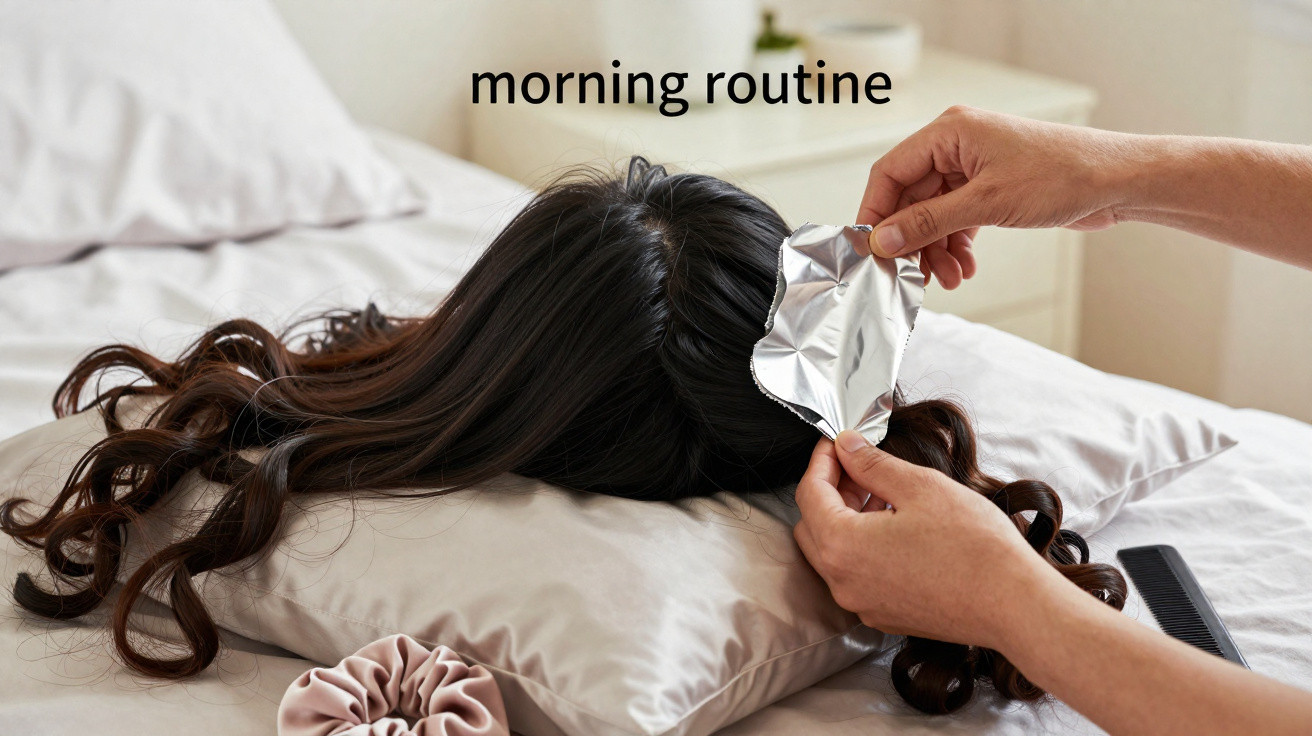
Waking up with a flattened fringe, stretched-out curls or a halo of flyaways can make a good hair day feel short-lived. In damp autumn weather, after a night of central heating and tossing on a pillow, hair can look quite different by breakfast.
You may have seen videos showing sections of hair wrapped in kitchen foil before bed. The realistic aim is simply to hold a pre-shaped curl or fringe in place for a short time. It is not a standard overnight hair-care method, though, and there is no need to sleep in foil to protect your style. In fact, its sharp edges, noise and tendency to catch strands make it a less comfortable option than purpose-made alternatives.
What foil is supposed to do to hair
The idea is usually to curl or bend a dry section of hair, then fold foil around it so it cannot easily fall straight again. In theory, the foil acts as a loose shell around the strand.
It cannot repair damaged hair, add moisture, seal split ends or block humidity. Nor does it offer the controlled heat used in a salon service. Any result comes from the hair having already been shaped before the foil goes on.
Online claims sometimes suggest that metal reduces static. Static, frizz and flattened roots are more often linked to friction, dryness, humidity and the way you sleep. Crinkled foil can itself rub against hair, especially if it moves during the night.
Foil may hold one small dry section temporarily, but it is not a treatment for frizz, dryness or damage.
Why hair can look different in the morning
Hair is exposed to repeated friction when you sleep. It rubs against a pillowcase, other sections of hair and, for some people, the duvet or pyjamas. This can leave the outer surface of the hair less smooth, making flyaways and tangles more noticeable.
Humidity can also affect the look of a style. Hair can absorb moisture from the surrounding air, which is why a smooth fringe or defined curl may lose some of its shape overnight. This is particularly familiar during wet British weather, but it can happen indoors too.
The effect may be more noticeable if your hair is:
- naturally curly, coily or wavy;
- long and prone to tangling;
- bleached, coloured or heat-styled often;
- dry through the mid-lengths and ends;
- styled with a blow-dry, rollers or curling tools.
None of this means your hair is doing anything wrong. It usually means it needs less friction and less tension while you sleep.
Why sleeping in foil is not the best option
Kitchen foil is not designed to be worn on the head overnight. It can crease into firm edges, shift as you turn, snag individual hairs and make it difficult to get comfortable on a pillow.
It is particularly unhelpful if the foil is folded near the scalp, ears, face or neck. A tight wrap may pull at the roots, while rough or torn edges can scratch skin. Large pieces also create bulk that can press against your head for hours.
Do not wrap wet or damp hair in foil. Wet hair is more prone to stretching and breaking, and keeping it enclosed can leave the scalp feeling hot and uncomfortable.
Foil should never be used with heat while it is in the hair. Do not apply straighteners, curling tongs, a heated roller or a hot hairdryer to foil-wrapped hair. The metal can heat unpredictably and may burn skin or damage hair.
If you are curious, choose a brief daytime test instead
If you want to see whether foil helps a particular fringe or curl hold its shape, it is safer to try it while you are awake rather than wear it to bed.
1. Use one fully dry section
Start with a small, detangled section that has already been curled or directed into place. Do not pull the hair tightly from the roots.
2. Keep the foil smooth and loose
Use a small piece with folded-in edges, placing it loosely around the shaped section. It should not touch the scalp tightly, press against the skin or catch around the ear.
3. Remove it after a short time
Unfold the foil rather than tugging it away. Hold the hair close to the section as you open it. If it catches, stop and carefully flatten the foil before trying again.
If the method feels scratchy, pulls at the hair or causes discomfort, abandon it. There are easier ways to keep a style looking neater overnight.
Better ways to protect hair while sleeping
A simple bedtime routine usually does more for hair than an improvised wrap. The best option depends on your length, texture and usual style, but comfort should always come first.
Try one of these lower-friction options
- A satin or silk-style pillowcase: This can help hair glide more easily than a rougher pillowcase. It will not stop every flyaway, but it may reduce snagging.
- A loose pineapple: Gather curls high on the head with a soft fabric scrunchie. Keep it loose enough that there is no pulling at the roots.
- Soft braids or twists: These can reduce tangling in longer hair and create a relaxed wave by morning.
- A satin bonnet or scarf: A comfortable, properly fitted option for curls, coils and braids. Avoid tight knots or elastic that leaves marks or causes tension.
- Sleep-friendly rollers: Foam, fabric or flexible rollers are more suitable than hard rollers if you want a heat-free set.
- A loose bun: Useful for keeping hair off the face, provided it is secured gently and not worn in the same tight position every night.
For hair that has gone flat at the roots, dry shampoo used in the morning may help. Use it according to the product instructions, brush or massage it through properly, and avoid relying on it instead of washing your scalp when it needs cleansing.
The most useful overnight style is one that protects the hair without pulling at the scalp or disturbing your sleep.
Common mistakes that cause more frizz or breakage
Trying to force hair into place overnight can sometimes create more problems than it solves. Watch out for these common habits:
- sleeping with wet hair tightly tied up;
- using tight elastics, especially in the same spot every night;
- wrapping or braiding hair so firmly that the scalp feels sore;
- using rough, torn foil near the skin;
- pulling snagged hair free instead of gently loosening it;
- using hot tools repeatedly to correct the same overnight flattening;
- applying too much oil, cream or serum and leaving hair greasy or weighed down.
If hair is repeatedly rough, tangled or difficult to style, focus on the basics: conditioner after shampooing, gentle detangling, a heat protectant when using hot tools, and trims when the ends become worn. A hairdresser can also suggest a cut or styling routine that suits your hair texture and daily habits.
When to skip overnight styling altogether
Avoid any overnight style that causes pain, headache-like pressure, itching or a tight feeling at the roots. If you have scalp irritation, broken skin, significant shedding or persistent discomfort, keep products and accessories simple and seek advice from a pharmacist, GP or qualified hair professional if needed.
Children should not sleep with foil in their hair. It can move, crease and become uncomfortable, and it should never be placed where it could slip over the face or become entangled around the neck.
Also keep foil away from open flames, heaters and electrical appliances. Never use it as part of a DIY heat treatment.
The practical verdict
A loose piece of foil may temporarily hold one dry, pre-shaped curl, but it is not a reliable solution for overnight frizz, humidity or flattened hair. Sleeping in it is usually more awkward than helpful.
For a neater morning style, start with dry hair, reduce friction with a smooth pillowcase or bonnet, and use a loose protective style that you can genuinely sleep in. Save kitchen foil for the kitchen, or at most treat it as a short, cautious daytime experiment rather than part of your regular bedtime routine.










Comments
No comments yet. Be the first to comment!
Leave a Comment