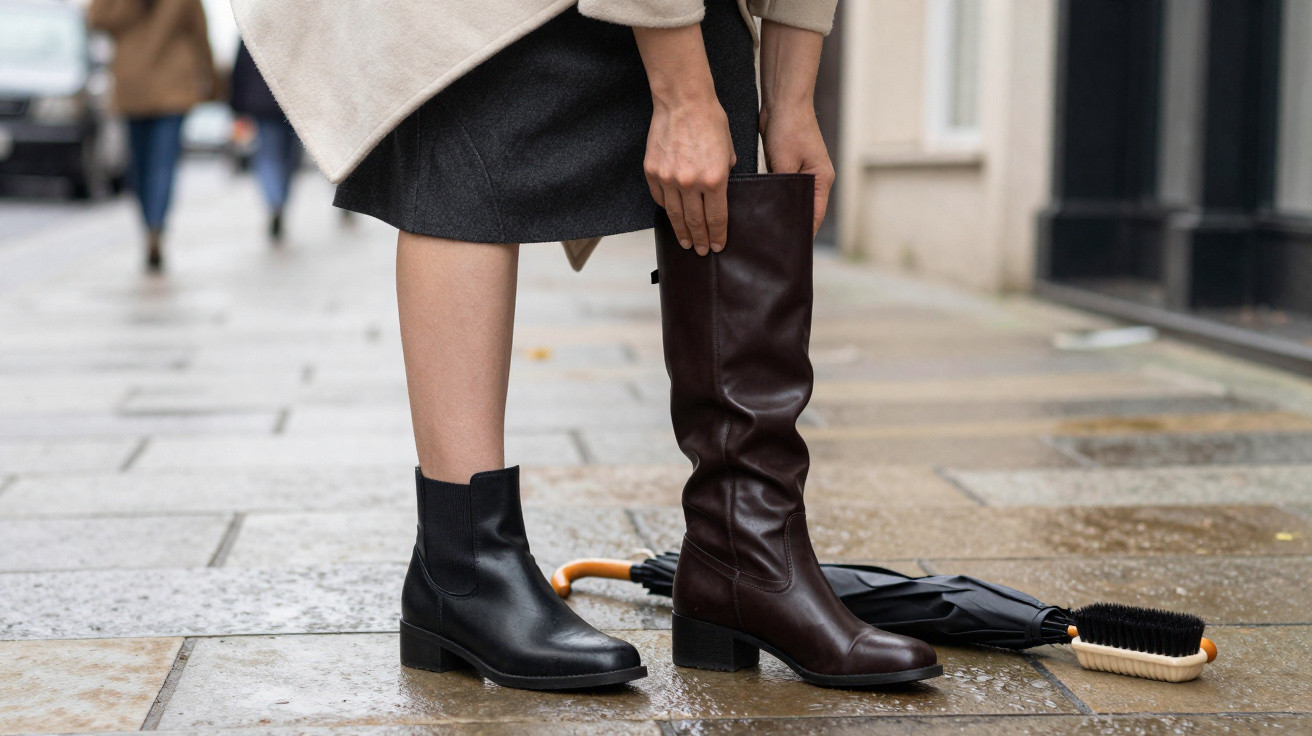
Knee-high boots can be awkward territory: too fitted and they can feel dated; too loose and they may seem difficult to style. Yet the softer, retro-inspired tall boot is proving useful again this autumn, particularly in dark leather, suede and understated riding-boot shapes.
The simplest way to wear them is not to recreate a full outfit from a previous decade. Let the boots provide the personality, then pair them with clean knitwear, dark denim, tailored coats and uncomplicated skirts. The result is warmer, more practical and more interesting than another pair of ankle boots.
The most wearable retro boot is not a costume piece. It is a versatile neutral with a little more texture and movement.
Why relaxed knee-high boots work now
Fashion tends to move between crisp, structured shapes and softer silhouettes. After years of chunky soles, close-fitting ankle boots and trainers, a tall boot with a relaxed shaft offers a different proportion without demanding a completely new wardrobe.
The look draws on several familiar references: 1970s bohemian suede, practical riding boots and the gently crumpled tall boots associated with early-2000s styling. What keeps it looking modern is restraint. Wear them with a plain wool coat, dark-wash jeans or a simple knitted dress rather than lots of obvious vintage details.
They also suit a British autumn and winter. A knee-high shaft gives useful coverage with skirts and dresses, while leather options can feel more protected than low-cut shoes on chilly, wet days. Suede is best saved for dry forecasts and shorter walks.
Three styles worth considering
1. Slouchy boots for softer lines
Slouchy boots have a supple shaft that forms folds around the ankle and calf. Look for a style with enough structure to hold its shape rather than one that simply collapses.
They work especially well with:
- midi skirts that partly cover the shaft;
- straight or lightly fitted knitted dresses;
- slim jeans tucked into a wider shaft;
- long coats and fine-knit roll necks;
- shorter hemlines with opaque tights.
A low or mid-height heel is usually the most practical choice for everyday wear. If the shaft is gathered or the heel is distinctive, keep the rest of the outfit simple.
2. Riding boots for an understated option
Riding-style boots tend to have a low heel, rounded or almond-shaped toe and minimal decoration. They are a good choice if you want the tall-boot effect without a high heel or a noticeably bohemian feel.
Try them with a wool midi skirt, narrow trousers, a blazer dress or a belted coat. Avoid adding too many equestrian details at once: the boot itself is enough of a reference.
3. Suede boots for warmth and depth
Suede brings a softer finish to knitwear and tailoring. Chocolate, chestnut, dark olive and deep burgundy are useful alternatives to black, particularly with autumn colours such as cream, navy, charcoal and dark denim.
A brown suede boot need not be matched with an all-brown outfit. It can simply add warmth to grey, navy or ecru.
A rich brown boot can be the note that makes a simple grey or navy outfit feel more considered.
How to style them without looking dated
Balance one retro feature with current, straightforward clothes. If your boots have a gathered shaft, curved heel or large buckle, skip the fringe, Western accessories, statement belt and busy print.
Three reliable outfit formulas
The knitted-dress formula
Wear a straight midi knitted dress with knee-high boots and a long coat. A side split can reveal the boot shaft without making the outfit feel overly styled.The jeans-and-coat formula
Tuck slim or narrow straight jeans into a boot with enough room at the calf. Add a plain jumper and a long wool coat. Dark indigo with brown leather is an easy combination; black or charcoal denim with black boots creates a cleaner line.The skirt-and-knit formula
Pair flat riding boots with a wool midi skirt, fine knit and tailored jacket. The practical boot keeps softer fabrics from looking too formal.
Wide-leg jeans can work with knee-high boots, but wear the boots underneath rather than forcing the trouser legs into the shafts. An almond or pointed toe may still show beneath the hem.
Fit, proportions and buying checks
Boot height, calf width and hem length matter more than a supposed rule about what anyone “should” wear. When shopping, take account of the clothes you actually reach for: the jeans, tights and skirts you plan to wear with the boots.
A shaft that sits just below the knee is often adaptable with midi lengths and long coats. Check that it does not press painfully behind your knee when sitting down.
A practical fitting checklist
- Try boots on later in the day. Feet can be slightly fuller after walking and standing.
- Wear your usual socks or tights. Thick socks can alter both foot and calf fit.
- Walk on a firm surface. Check for rubbing, heel lift, toe pressure and instability.
- Test the zip gently. It should close without force. Do not strain a zip that is tight around the calf.
- Inspect the sole. Smooth leather soles may be slippery on wet pavements. A reputable cobbler can advise on suitable protective soles or grips.
- Sit down and bend your knee. A tall boot should not dig sharply into the back of the leg.
Leather may soften slightly through normal wear, but boots should not be painfully tight in the expectation that they will stretch. Persistent rubbing, numbness or pinching are signs that the fit or size is not right.
If you need more room around the calf, seek wide-calf fittings, elasticated panels, adjustable gussets or softly structured shafts. A properly fitting boot looks better and is more comfortable than one pulled tight across the leg.
Colours and finishes with staying power
Black smooth leather remains a straightforward first choice, especially with black tights, dark tailoring and monochrome outfits. It can also be easier to maintain through damp weather than pale suede.
Dark chocolate and chestnut are versatile alternatives that soften navy, grey and cream. Consider:
- chocolate boots with a cream knit and dark-wash denim;
- cognac leather with navy wool and simple gold-toned jewellery;
- black leather with a grey midi skirt and charcoal coat;
- burgundy boots with black, camel or muted pink;
- dark olive suede with ecru denim and a navy jumper.
Animal print, bright colours and sculptural heels can be enjoyable, but they are likely to be less flexible. For a pair you expect to wear repeatedly, prioritise a comfortable fit, restrained shape and a colour that works with your existing coats and bags.
Common mistakes to avoid
- Recreating an entire period outfit. Let the boots reference the past; keep the rest of the look calm.
- Tucking bulky jeans into narrow shafts. It causes uncomfortable bunching and can distort the boot.
- Ignoring the weather. Suede is vulnerable to heavy rain, standing water, salt and road grit.
- Buying only for the mirror. Walk, sit and, where possible, use stairs before deciding.
- Choosing an impractical heel. A heel that feels manageable indoors may not suit wet paving, station platforms or a full day out.
- Neglecting repairs. Worn heel tips, dry leather and damaged soles can make otherwise good boots look tired and may affect grip.
Caring for boots through a British winter
Protect suede and nubuck with a suitable footwear protector before wearing them, following the manufacturer’s directions. Test any treatment on a hidden area first, as some products can affect colour or finish. Avoid taking suede out in heavy rain where possible.
If suede gets wet, blot excess moisture with a clean cloth and let it dry naturally, away from radiators, fires and direct heat. Once dry, use a suede brush gently to lift the nap.
For smooth leather, remove mud and salt marks with a barely damp cloth, then allow the boots to dry naturally. Use a leather conditioner sparingly and only if it is suitable for that finish. Boot shapers or loosely rolled acid-free paper can help tall shafts retain their line between wears.
Never use bleach, washing-up liquid, harsh solvents or household cleaning sprays on footwear. These can stain materials, strip finishes and damage adhesives. For serious staining, mould or sole damage, take the boots to a shoe-care specialist or reputable cobbler.
Make the look work for your wardrobe
There is no single right way to wear a retro-inspired knee-high boot. The most successful pair is one that suits your normal clothes, your walk to work and your comfort with heels. Dark brown or black leather is usually the most flexible starting point; suede is best when you are happy to be more weather-conscious.
Use the boots to refresh what you already own rather than building a new wardrobe around them. A relaxed tall shaft under a midi skirt, knitted dress or long coat can make familiar autumn outfits feel considered, practical and genuinely wearable.












Comments
No comments yet. Be the first to comment!
Leave a Comment