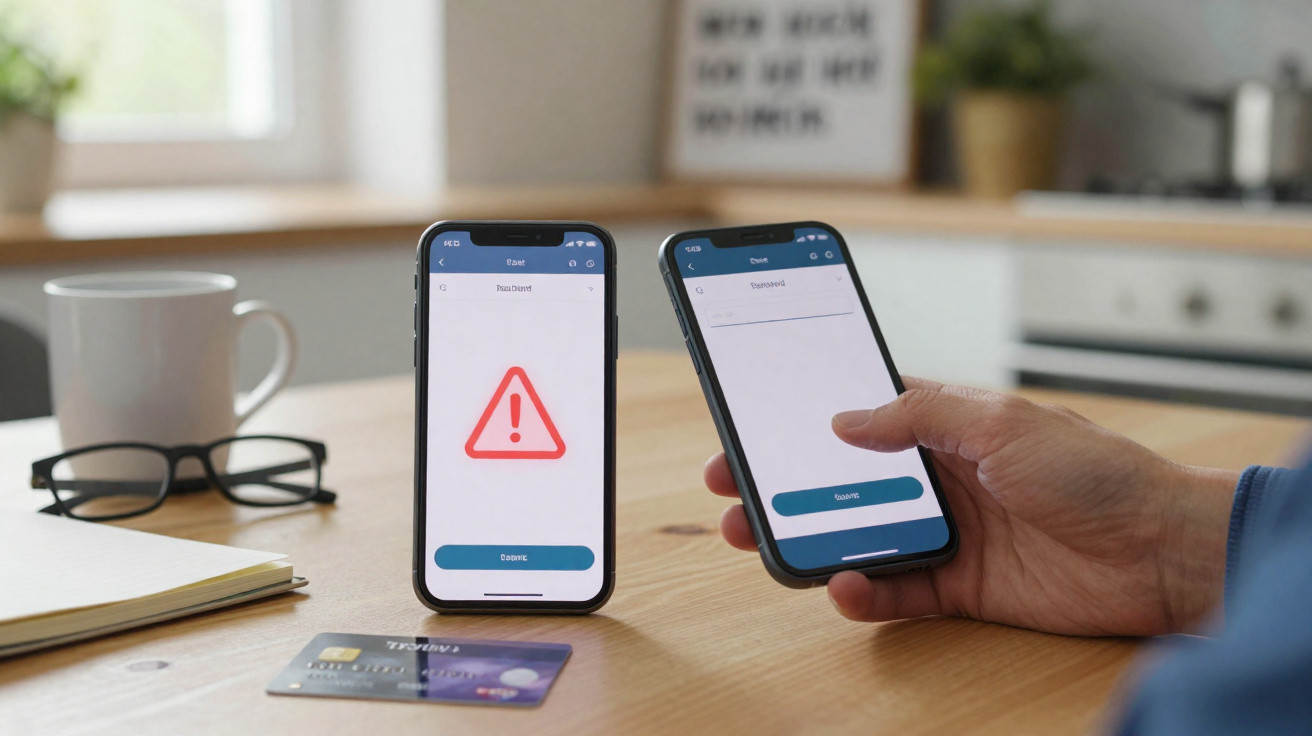
A convincing scam rarely starts with an obvious red flag. It can look like a bank alert, a bargain on a marketplace, a message from a new romantic interest or an investment promoted by a familiar-looking social-media account. What many scams have in common is pressure: act now, keep it private, do not stop to check.
The most useful response is simple: pause, then tell someone what is happening. A five-minute conversation with a friend, relative or colleague can interrupt the urgency a criminal is trying to create. Before you send money, share a code or click a link, stop and check the request through a route you trust.
Why being rushed makes scams convincing
Scammers aim to create an isolated, stressful moment. They may say your bank account has been compromised, a parcel is waiting, an investment opportunity is about to close, or a buyer has overpaid for something you are selling.
The story changes, but the tactics are familiar:
- Urgency: “Act now or your account will be frozen.”
- Authority: a caller claims to be from your bank, the police, HMRC or a delivery company.
- Fear: they say your identity, account or money is at risk.
- Opportunity: a supposedly exclusive job, investment or bargain is available for a very short time.
- Isolation: they discourage you from checking with your bank or talking to someone you trust.
A legitimate organisation may contact you about a problem, but it should not pressure you into making a transfer, revealing security details or installing software while you are on the call.
If a message makes you feel you must pay before you can think, that is a reason to stop - not a reason to hurry.
Make the five-minute scam check a habit
Use this routine before sending money, sharing a one-time passcode or following a payment link. It works for personal banking, online selling, freelance work and small-business payments.
1. Stop the conversation
Do not reply, click a link, call back on the number displayed or continue a screen-sharing session. If someone is on the phone, end the call.
If you are concerned there may be a genuine issue, find contact details independently. Use the number on the back of your bank card, your bank’s official app or a web address you type in yourself. Do not rely on a number in a text, email, pop-up or search advert.
If you have been called on a landline, use a different phone to contact your bank if possible. Do not assume the line has disconnected just because the caller says it has.
2. Tell one other person
Explain the situation out loud, including exactly what you have been asked to do. A second person may spot the unusual detail: an unfamiliar payee, a request for a deposit before viewing an item, or a supposed bank employee asking for a code.
For workplace payments, use a clear internal rule: a change to supplier bank details, or a large transfer, should be independently checked by more than one person. Do not approve a change solely because an email or caller appears genuine.
3. Verify through a separate route
If a friend asks for money on WhatsApp, call them using a number you already have. If a marketplace buyer proposes an unusual courier arrangement, remain within the platform’s usual process.
If an investment advert has caught your eye, check the Financial Conduct Authority’s Financial Services Register before sending money. Remember that criminals can impersonate real authorised firms, so use contact details from the Register rather than details supplied in an advert, message or social-media post.
4. Read your bank’s warning carefully
Your banking app may flag a new payee, an unusual payment or wording associated with a known scam. Do not tap through those warnings automatically. If the warning resembles your situation, cancel the payment and contact your bank independently.
5. Leave it until tomorrow
A genuine bill, purchase or investment should withstand a pause. If someone says it cannot wait, treat that as important information. Fraudsters often return with more pressure; repetition does not make a request legitimate.
Scams that need extra caution
Some frauds use polished fake websites, cloned voices or AI-generated videos. Others are basic messages sent at the moment you are busiest. These situations deserve particular care.
Investment and cryptocurrency offers
Be wary of claims of reliable high returns, “insider” tips, celebrity endorsements and group chats filled with screenshots of apparent profits. Criminals can create professional-looking websites and may sometimes allow a small withdrawal to build confidence before demanding larger payments.
Check whether a firm is authorised, but do not stop there. Fraudsters may clone the name, logo and registration details of a genuine business. Contact any firm using details you have found independently.
Romance and friendship scams
An online relationship can become emotionally intense quickly before turning towards a financial crisis, investment proposal or request for help. Do not send money, cryptocurrency, gift cards or bank details to somebody you have not met and independently verified.
Bank impersonation and remote-access scams
A genuine bank will not ask you to move money to a “safe account”. It will not ask you to reveal a full password, passcode or one-time security code, either. Do not install software that gives a caller access to your phone, tablet or computer.
End the call, then contact the bank directly using a trusted number or its official app.
Marketplace and selling scams
When selling a car, phone or piece of furniture, be careful with buyers who ask you to pay a courier, claim they have overpaid, move the discussion away from the platform or send a payment link.
Check your own bank account before handing over an item. Do not rely on an email, screenshot or notification supplied by the buyer as proof that money has arrived.
What reimbursement protection may cover
UK payment firms must reimburse many victims of authorised push payment, or APP, fraud under rules introduced by the Payment Systems Regulator. APP fraud is where somebody is tricked into authorising a bank transfer to a criminal.
The rules can cover eligible UK payments, including many Faster Payments and CHAPS transfers, but the detail matters. The type of payment, when it was made, who sent it and the circumstances of the scam can all affect what protection applies.
Points worth knowing include:
- there is a reimbursement limit for eligible claims, currently set by the regulator;
- firms are expected to deal with straightforward claims promptly, while complex cases can take longer;
- an excess may apply in some circumstances, although there are protections for vulnerable customers;
- protection does not extend to someone who has acted dishonestly;
- card payments, cash withdrawals, international transfers and cryptoasset payments may be covered by different arrangements, or not covered in the same way.
Contact your bank or building society as soon as you realise something is wrong. It can explain the relevant process and may be able to try to stop or recover a transfer, although recovery cannot be guaranteed.
Reimbursement protection is a safety net, not a reason to ignore a payment that feels wrong.
If you think you have paid a scammer
Embarrassment is common, but delay can help the criminal. Contact your bank immediately using the number on your card or in the official banking app. Say clearly that you believe you have been scammed and ask it to act urgently.
Then take these steps:
- change passwords for affected email, banking and shopping accounts;
- contact your mobile provider if your phone number or SIM may be at risk;
- report the fraud to Report Fraud in England, Wales and Northern Ireland; in Scotland, report it to Police Scotland through the appropriate route;
- forward suspicious texts to 7726 and report suspicious emails to the National Cyber Security Centre’s Suspicious Email Reporting Service;
- keep messages, payment details, usernames, links and screenshots, but do not keep engaging with the scammer;
- warn people who may also be targeted, particularly if the criminal has impersonated you.
If you installed remote-access software, disconnect the device from the internet. Get trusted technical help before using it for banking or entering passwords again.
Common mistakes that make scams easier
Anyone can be caught out. The point is not to blame yourself, but to remove the openings criminals depend on.
- Trusting caller ID: numbers can be spoofed, so a call appearing to come from your bank proves nothing.
- Treating verification codes as harmless: one-time codes can approve a login or payment. Never share them.
- Using links in unexpected messages: open the official app or type the address yourself instead.
- Assuming a familiar profile is genuine: friends’ email and social-media accounts can be compromised.
- Believing a payment screenshot: check your own account, not an image or email sent by a buyer.
- Keeping worries private: a quick conversation can expose the implausible part of the story.
Make stopping to check part of everyday life
Set up banking alerts for payments and new payees. Use strong, unique passwords, turn on two-step verification where available, and keep your phone, browser and apps updated.
For bigger payments - such as a vehicle, holiday rental, home-improvement deposit or investment - make a household rule that no money is sent during the first conversation. Verify the business independently, read reviews cautiously and choose a payment method with suitable protection where possible.
The most practical defence is not knowing every scam. It is having the confidence to stop, check and talk before your money leaves your account.
















Comments
No comments yet. Be the first to comment!
Leave a Comment