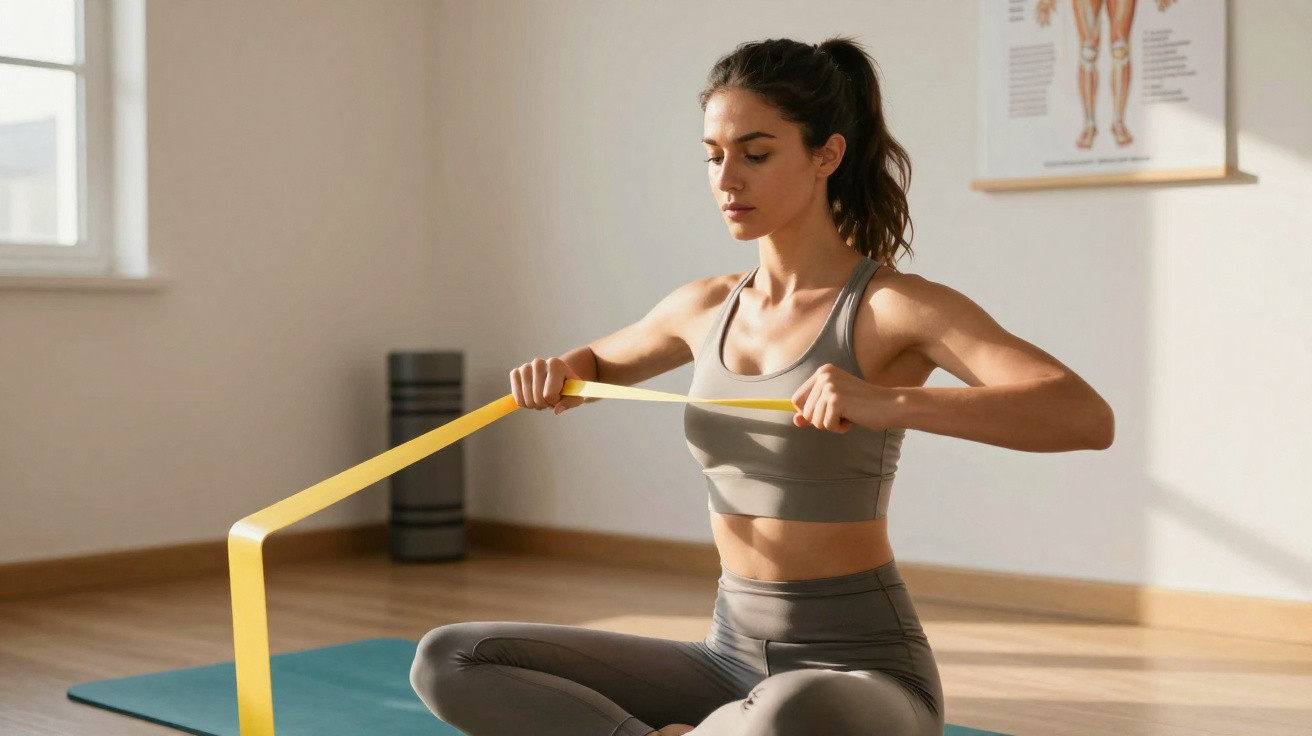
Forward-drooping shoulders often develop when the body spends hours in a closed position, with too little active engagement from the trunk and back. In this situation, improving alignment relies on rebuilding stability and support through the body’s centre.
Why does the core affect the shoulders and posture?
Body posture is shaped by how the body manages balance and support both at rest and in motion. When the centre becomes less efficient, the trunk and shoulder girdle operate with reduced control and less co-ordination.
This explains why shoulders that sit forward rarely involve only the upper body. The issue commonly extends through the postural foundation, placing greater demands on the lower back, neck, and the muscles responsible for support and alignment.
Five benefits illustrate how this work fits together:
- Stable foundation: a steadier trunk provides better support for the upper body.
- Improved alignment: posture develops when the body organises its centre more effectively.
- Less compensation: people who spend a great deal of time on mobile phones and computers can benefit significantly from this.
- Better movement: co-ordination between the centre and the back helps limit repeated tension.
- Greater protection: the body becomes less reliant on excessive adjustments through the neck.
How do you perform the reverse plank to open the chest and activate the trunk?
For the reverse plank, sit on the floor with your hands placed behind your body and your legs extended in front of you. Then lift your hips to create a longer line from the shoulders through the trunk to the legs, maintaining firmness and alignment.
Begin with three sets of twenty to thirty seconds. Keep the chest open and do not allow the shoulders to collapse. The aim is to hold the body without losing central stability or excessively extending the neck and lower back.
How can you do the superman without straining the spine?
Lie face down, lengthen your arms and legs, then gently raise your limbs without any sudden movement. The exercise requires the back and trunk to engage, always with control and moderation, rather than making the lower back do all the work.
Superman with an emphasis on the back
Raising a little with good form is more valuable than lifting too high
Lift your arms and legs only until you feel comfortable activation along the back of the body. The purpose is not to create an exaggerated arch, but to strengthen the back and centre at the same time.
Perform three sets of eight to ten repetitions, taking a brief rest between sets and moving slowly on both the lift and the return.
This exercise can help people who spend their days leaning forwards because it strengthens the posterior muscles, which are often underused during screen-based routines. When performed correctly, it can improve presence and balance in how the trunk is supported.
Before starting, pay attention to the following points:
- keep your gaze directed downwards rather than throwing your head back;
- lift only a few centimetres, using a slow and deliberate action;
- stop if sharp pain or unusual lower-back discomfort appears;
- favour clean repetitions over excessive range of movement.
How can you use a resistance band row to correct forward-drooping shoulders?
For the resistance band row, sit or stand with a neutral spine, holding the band in front of you with your arms extended. Slowly draw your elbows backwards, bringing the shoulder blades closer together with strength and precision.
Three sets of ten to twelve repetitions are usually a suitable starting point, provided the movement does not become a swing or a jerk. This exercise directly addresses forward-drooping shoulders by training the back of the body with greater support and organisation.
To get more from the row, keep these details in mind:
- do not raise your shoulders as you pull;
- keep your abdominal muscles engaged to support the trunk;
- return slowly to the starting position instead of releasing the band at once;
- choose a band that allows control from start to finish.
How can these 3 exercises fit into a better posture routine?
These movements work best as part of a short routine performed three or four times a week, always with sound technique. To build on this work, a simple exercise to strengthen the core can provide consistency and progression.
Ultimately, correcting shoulders that project forwards is not simply about remembering to “stand up straight”, but about strengthening the right areas of the body. With a more active centre and back, posture gains support and ease, while the neck is likely to be under less strain.















Comments
No comments yet. Be the first to comment!
Leave a Comment