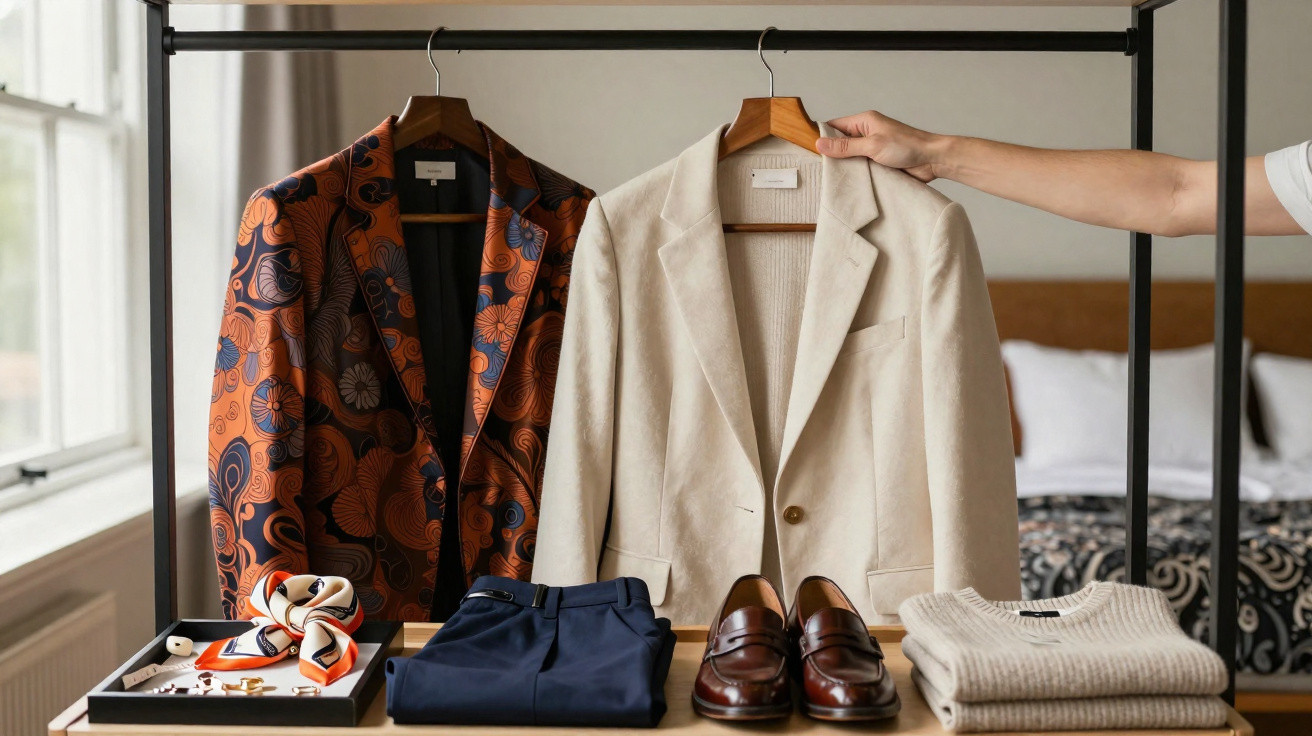
Finding your own style can feel surprisingly difficult when you have grown up admiring someone else’s wardrobe. It might be your mother, an older sibling, a friend or the woman on the train who always looks effortlessly put together. The useful trick is to borrow the idea behind a look rather than copying the outfit itself.
Personal style is not about rejecting the people who influenced you. It is about noticing what genuinely appeals to you - a love of colour, an eye for good fabric, confidence in tailoring - and adapting it to your body, budget, routine and values.
Style inspiration is not the same as imitation
There is nothing wrong with taking inspiration from other people. Family wardrobes, films, music, street style and vintage finds can all help you work out what you enjoy. The problem begins when getting dressed feels like wearing a costume.
A look can be beautiful and still be impractical for your life. You may love a dramatic silk blouse but spend most days working from home with a toddler. You may admire pencil skirts on somebody else but dislike feeling restricted. Or you may enjoy looking at maximalist jewellery while preferring to get ready in five minutes.
The aim is not to recreate another person’s image. It is to identify the principle behind it.
A personal style works best when it supports your real life, rather than asking you to perform somebody else’s.
For example:
- You might admire a relative’s neutral palette, but wear it through relaxed knitwear and wide-leg trousers rather than formal dresses.
- You may like a friend’s vintage look, while choosing one second-hand accessory instead of dressing head to toe in retro pieces.
- You can appreciate a parent’s taste for designer clothing while prioritising repairs, alterations and well-made high-street basics.
Start with the clothes that already feel like you
Before buying anything, look at the pieces you reach for repeatedly. They often tell you more than a saved social-media post or an aspirational mood board.
Set aside an hour with good daylight, a full-length mirror and a cup of tea. Choose ten garments that make you feel comfortable, capable or quietly pleased with how you look. They do not need to be your newest or most expensive clothes.
1. Look for repeated patterns
Ask what those pieces have in common:
- Are they fitted, oversized or softly structured?
- Do you favour a defined waist, straight lines or layers?
- Which fabrics do you actually enjoy wearing: cotton, denim, wool, jersey, linen or silk?
- Do you return to muted colours, high contrast, warm tones or brights?
- Which shoes do you choose most often: trainers, loafers, boots or heels?
You may find that what you had called a lack of style is really a clear preference that you had not put into words.
2. Notice how you move in them
The best clothes affect more than your reflection. A well-fitting blazer may make you stand taller. A dress that stays in place lets you concentrate on your day. An outfit that does not need constant tugging or adjusting is usually one you will wear again.
This is valuable information. Style should make life easier, not leave you worrying about straps, hems or whether you look ‘too much’.
3. Write a short style sentence
Create a description that is specific enough to guide you but flexible enough to grow with you. For example:
- “Relaxed tailoring with interesting trainers.”
- “Practical layers in soft colours.”
- “Simple outfits with one bold accessory.”
- “Classic shapes, but never too formal.”
Use it as a filter when shopping and on rushed mornings.
Take lessons from a family wardrobe, thoughtfully
Many people first learn about clothes at home: by trying on oversized shoes, watching a parent get ready for an occasion or noticing how a good coat can transform an ordinary outfit. Those memories can be useful, but they do not have to dictate your taste.
If there is a family member whose style you admire, ask what you are responding to. Is it their confidence? Their attention to fabric? Their willingness to wear colour? The fact that they always seem prepared?
Then translate that quality into something that suits your own routine.
A grandmother’s pearl earrings might inspire a simple pair of silver hoops. A parent’s silk scarves could lead you to a patterned neckerchief with a plain trench coat. A father’s care for his shoes may encourage you to have favourite boots resoled rather than replacing them.
Borrowing values rather than exact outfits is often what makes an inherited influence feel current.
Build around the life you actually lead
Personal style is most useful when it works on an average Wednesday, not only for a dinner reservation or a holiday photograph.
Think through a typical fortnight: commuting, school runs, office days, supermarket trips, evenings out, walks, family occasions and changeable British weather. Your wardrobe needs to serve the life you have now.
It can help to sort your clothes into three broad groups:
- Everyday foundations: jeans, trousers, knitwear, T-shirts, shoes and outerwear worn regularly.
- Smarter options: clothes for meetings, meals out, birthdays, weddings or theatre trips.
- Expressive pieces: colour, print, jewellery, bags or jackets that make an outfit feel more personal.
If most of your spending goes on statement pieces while your everyday foundations are worn out, getting dressed can become frustrating. On the other hand, a wardrobe made entirely of basics may feel uninspiring. The balance is individual, but recognising the gaps helps you shop with more purpose.
True style is not a fixed aesthetic. It is a practical set of choices that can change with your circumstances.
Develop your eye without turning it into shopping
Fashion is only one source of inspiration. Art, architecture, photography, gardens, old family photographs and even the colours in a favourite café can help you recognise what you are drawn to.
Try visiting a local exhibition, looking through fashion and photography books at the library, or paying attention to shop windows while you are out. Ask yourself:
- What catches my eye first?
- Is it shape, texture, proportion or colour?
- Would I want to wear it, or do I simply enjoy looking at it?
- Could I use one small part of the idea in an everyday outfit?
You might admire a sculptural catwalk silhouette but only adopt the oversized cuff detail. A painting may make you notice that moss green and russet work well together, which could become a jumper-and-scarf combination. Inspiration does not need to be literal to be useful.
Common mistakes when finding your style
Buying a whole new identity at once
A dramatic clear-out followed by a large online order can be expensive and wasteful. Test a new direction with one or two items first. Wear them in ordinary situations several times before buying more.
Dressing for an imagined life
It is easy to shop for the city break, gallery opening or garden party you might attend. Buy for your usual diary first. Occasionwear is easier to choose when you have a real event and know what you need.
Treating discomfort as elegance
Uncomfortable clothes are not automatically chic. Good fit, cared-for shoes, clean lines and a thoughtful colour combination can look polished without painful heels or a restrictive waistband.
Keeping clothes only because they were costly
Price does not guarantee that an item suits you. If something no longer fits, belongs to a past version of you or cannot be altered into something useful, consider selling it, passing it on or donating it to an appropriate local scheme.
Ignoring repairs and alterations
A shortened hem, replaced button or adjusted waist can make a neglected garment wearable again. Choose a reputable alterations service and check care labels before washing delicate fabrics.
Care for clothes and shop safely
Take a little care before changing, repairing or buying an item. Check whether a garment can be altered without affecting its shape, and ask for a price estimate before authorising work. Delicate fabrics, sequins, leather and vintage pieces may need specialist cleaning or repair.
When buying second-hand, inspect seams, zips, linings and soles in good light. Wash washable purchases before wearing them, following the care label. If an item has a persistent musty smell, visible mould or signs of pests, it is generally best to leave it behind rather than trying to rescue it at home.
Avoid using harsh cleaning products on clothing unless the care label permits them. Never mix household cleaners, and keep products away from children and pets.
Make room for change without losing yourself
Your style at 20, 35 or 60 does not need to look the same. Jobs change, bodies change, priorities shift and confidence grows. There is no need to settle on one permanent look and defend it forever.
Keep a few useful anchors: colours you enjoy, proportions that make you feel good, favourite jewellery, reliable shoes or a preference for quality where it matters most to you. Everything else can evolve around those foundations.
Being true to yourself in fashion can be as simple as wearing clothes that let you take part fully in your own day. Keep what has meaning, learn from the people who have shaped your eye and allow your wardrobe to become recognisably yours.












Comments
No comments yet. Be the first to comment!
Leave a Comment